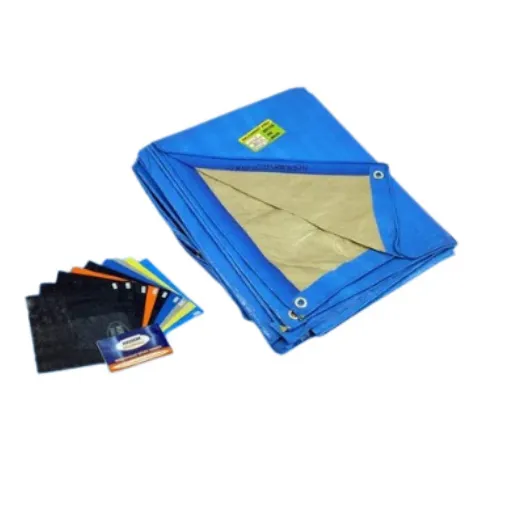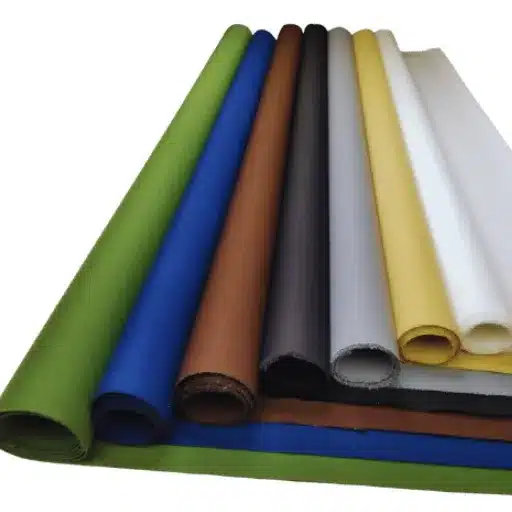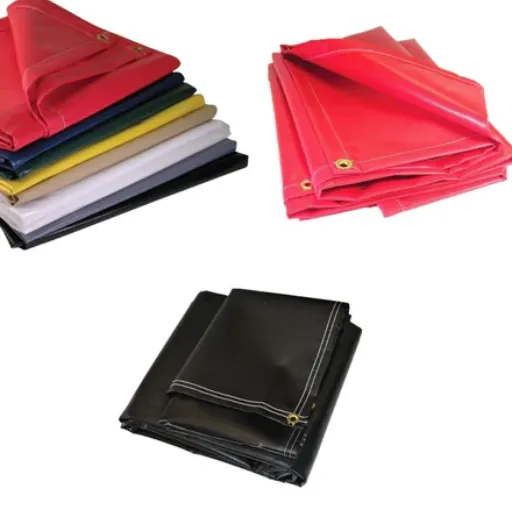
Keeping an American football field in a perfectly clean state is an uphill task, indeed. Pitches for football are, however, no less than battlefields open to the elements and heavy-duty play. Their very existence can be at stake when the condition of the field is compromised due to games played on it and mother nature’s whims. And it is here that pitch protection covers step in to the scene. These devices are like a laser beam that draws a line between the field and the danger from the above-mentioned elements; thus, your field stay football-ready all season long, under the very same circumstances that used to ruin it. In this article, we will delve into the reasons that pitch protection covers are a necessary item for every football field, what role they play in protecting your possession, and the various possibilities that exist to cater to your individual requirements. A field manager or a sports lover, this manual will certainly make you realize how significant it is to keep your football field ready for the game throughout the year.
Understanding Pitch Protection Covers
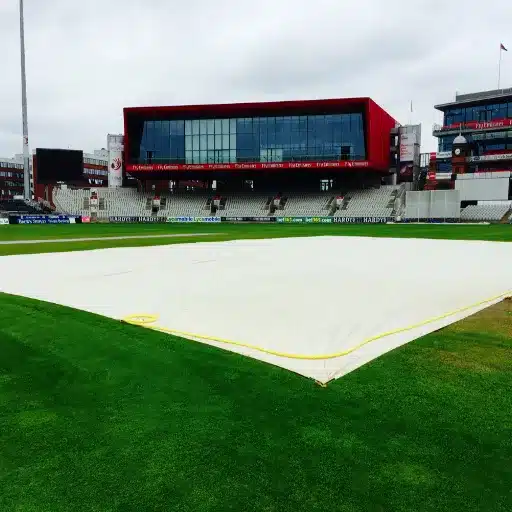
What are Pitch Protection Covers?
Pitch protection covers are one-of-a-kind materials that keep football fields and other sports surfaces safe from destruction, wear and tear, and unwelcome weather conditions. The underlying principle of these coverings is to act as a wall that defends the grass from the hard usage of human and animal feet, heavy equipment, and the most common and extreme elements such as rain or snow. Usually, these covers are made from all-weather, super-tough, and completely resistant materials, which can include PVC or polyethylene, thereby guaranteeing that they will not fail even if the conditions are very steep. Just by preserving the field’s integrity, the maintenance cost will be reduced and the pitch will be available for playing at all times and in all seasons. Present-day alternatives often provide flexible sizing and drainage systems as additional features, making them usable for different types of fields and their respective uses.
Types of Protection Covers Available
1. Full Field Covers
Full field covers are large-scale covers designed to provide protection to the entire field surface. They are particularly effective in the case of heavy rain as they do not let the field get flooded, which means that it is ready for playing soon after the bad weather has passed. Full field covers are common in professional sports arenas and they are made of very strong, water-resistant materials.
2. Pitch-Wicket Covers
In cricket or other sports with dedicated field areas, pitch-wicket covers are used to protect not only the main playing area but also the rest of the field. These covers are lightweight, easy to manage, and hence, ideal for quick protection in case of unexpected weather conditions.
3. Mesh Covers
Mesh covers allow air and light to pass through while at the same time providing protection. The grass can be mowed less often, and the weather is not nearly as directly impacting as it would otherwise be, thus leading to the ability to grow healthier grass and prevent heat build-up.
4. Inflatable Covers
Inflatable covers utilize an air-supported dome over the field through technological advancements. They are very good at handling temp and moisture so they can work in cold climates or be used for longer protection.
5. Customizable Section Covers
Specific areas of the venue that need protection will be covered by custom-made section covers that fit the requirements of individual measurements perfectly. Multi-purpose fields are the best candidates for such a solution since some areas will need more protection than others.
Note: The availability and selection of pitch protection covers rely on the type of field, the expected weather conditions, and the priorities of maintenance. Modern options that arose thanks to advances in material technologies and designs combine durability with quick installation, thus providing effective protection for any outdoor field.
Benefits of Using Football Field Covers
Football field covers come with a bunch of indispensable benefits that guarantee the field’s usability and lifetime even in the most negative of conditions. To start with, they cut down on the playing surface being soaked with water due to bad weather like heavy rain or snow, which are known to cause waterlogging that can kill the turf and make the field unsafe for players. With strong and weatherproof materials, the covers also reduce maintenance costs since there will be no need for extensive repairs.
Key Benefits at a Glance:
- Prevents Waterlogging: Protects against heavy rain and snow damage
- Reduces Maintenance Costs: Minimizes need for extensive repairs
- Maintains Consistency: Keeps playing quality consistent through off-seasons
- UV Protection: Blocks harmful UV light preventing grass discoloration
- Temperature Control: Protects from extreme temperatures
- Easy Installation: Lightweight and simple to set up
- Eco-Friendly Options: Customizable and environmentally conscious solutions
Besides, football field covers are very good at helping keep playing consistent even through off-seasons or inactivity periods. They block UV light and extreme temperatures, thus the grass does not run the risk of getting dried up or changing color. Besides, these covers are light-weight and easy to set up, so they are a great help to the ground staff without any loss in the protection factor. Recent trends show the growing demand for the eco-friendly and customizable covers, which is a reflection of both the environmental concerns and the specific needs of the sports facilities. In general, the practice of using football field covers keeps the field in the best possible condition which, in turn, leads to better player performance and longer life of the field.
Types of Football Field Covers
Temporary Covers: Pros and Cons
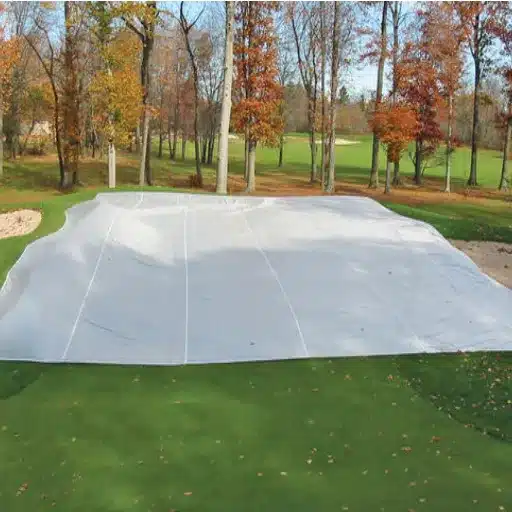
Covers for temporary football fields can be regarded as a multi-functional approach for the protection of the fields during adversities of nature or other events. Among their many advantages, the first that comes to mind is the fact that they are lightweight and easy to install, enabling quick deployment and removal of the covers. This feature makes them particularly suited for temporary requirements such as preventing the field from getting wet due to rain before a match or shielding areas that are being worked on. The costs associated with these temporary covers are usually lower than those of permanent installation, which is why a wide range of sports facilities can afford them.
On the other hand, these temporary coverings have certain downsides as well. They are not meant for long-term use and thus there is a chance that they will not be very durable and may even tear quicker under heavy use or extreme conditions. Moreover, they might provide less insulation or overall protection compared to the larger and sturdier permanent installations. The data from the search engine indicates that temporary covers have become a major point of interest for many sports facilities due to their affordability and convenience. However, there is still a frequent emergence of concerns regarding the sustainability of the materials used, which directs the attention of the manufacturers toward making innovations in the production of reusable and durable designs that can tackle the issue of material quality effectively.
Covers Installed Permanently
Covers installed permanently are the ones that offer great strength and endurance qualities, which is why they are the first choice in places where there is a need for long-term usage. User queries through search engine data ask about the pros of permanent installations over the temporary ones. The advantages are primarily better structural integrity, enhanced insulation, and lower maintenance costs over time. Besides that, the materials and technologies used in the modern permanent covers are so advanced that they not only allow for easy and efficient use but also keep the environmental concerns at bay while attracting more users through their energy-efficient and weather-resistant features. Consequently, even though the initial price is higher than that of temporary covers, the long-term advantages often surpass the investment at the beginning, particularly for those buildings that prioritize the quality of their services and performance.
Why Choose Permanent Covers?
- ✓ Superior structural integrity
- ✓ Enhanced insulation properties
- ✓ Lower maintenance costs over time
- ✓ Energy-efficient and weather-resistant
- ✓ Better long-term return on investment
- ✓ Ideal for professional facilities
Tarps with Weather Resistance
Heavy-duty tarps are created specifically to resist severe weather conditions and offer versatile protection for residential and industrial use. The materials used for making these tarps include high-density polyethylene (HDPE), vinyl, or canvas which are then treated to be UV resistant, water repellent, and tear-resistant. The latest trends and information from the search engine reveal that durability and longevity are the main concerns of consumers who are looking for weather-resistant tarps. The premium quality products can withstand sun exposure, torrential rains, and winds for a long time without losing much of their functional capability, thus they become a necessity for keeping equipment, cars, and outdoor areas safe from elements.
Advanced Weather-Resistant Features:
Reinforced Grommets
Enhanced anchoring points for secure installation
Heat-Sealed Seams
Prevents water penetration and increases durability
Multi-Layer Coatings
Extended lifespan in harsh conditions
Meanwhile, new technologies and methods have come up with some new features such as reinforced grommets, heat-sealed seams, and multi-layer coatings. With these innovations, the tarps are given a much longer life and thus they are able to provide reliable performance even in very harsh conditions. Specialized tarps are then used across various applications like creating temporary shelters, building construction, agriculture, etc., and they continue to be a reliable solution for weatherproofing needs while addressing the problems linked to climate change.
Installation of Pitch Protection Covers
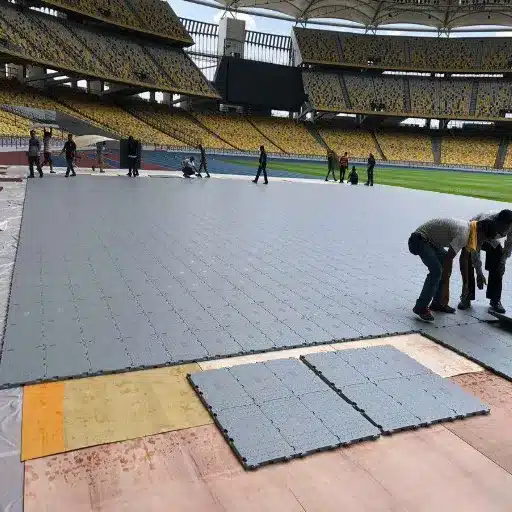
Step-by-Step Installation Guide
Step 1: Prepare the Area
Make sure the area where the cover will be applied is clean and without any dirt. This step will prevent rugs from being placed unevenly and also reduce the chance for the material to get damaged.
Step 2: Unpack the Cover
Open the cover that protects the product with care and look for any damages, cuts, or faults in making it. Place the cover on a clean area that is close to where the covering will be done.
Step 3: Position the Cover
The next step is to put the cover on the pitch evenly. First, you take one side and then go o the other side, making sure that the edges are in the right place for the covering.
Step 4: Secure the Edges
Reinforced grommets are used to secure the cover’s edges with ropes or stakes. The cover should be tight but not too tight so that it does not put strain on the material unnecessarily.
Step 5: Anchor for Stability
In case it is necessary, place extra weights, like sandbags, at the edges and corners. This will help great the cover resist wind or other factors in the environment.
Step 6: Reinspect and Adjust
After placing the cover, look over the area again to check for gaps that were not covered or edges that were not properly secured. Adjustments should be made to ensure that there is no place where the pitch is not covered.
💡 Pro Tip: The advice in this guide and the intel from the search engine have indicated that the correct covering of a pitch with protection has the advantage of maxing up their use as well as longevity. The areas protected by well-placed covers are less prone to damage caused by the elements, and so remain emit and safe. Those who want more tips and examples of use should consider consulting the manufacturer’s guidelines and online tutorials as they are very reliable sources.
Tools and Equipment Needed
Using the correct set of tools and equipment is a must for the proper cover installation and maintenance process. In line with the expert perspectives and insights from the search engine data, the following are still required:
Essential Tools Checklist:
- Heavy-duty tarpaulin or pitch covers: Make sure they are of the correct size and material to cope with environmental stressors.
- Sandbags or weights: To weight the covers down and stop them being blown away by strong winds.
- Fasteners or straps: For extra anchoring to hold the covers in place.
- Ground anchors or stakes: Best for giving more stability, especially in spots that get heavy winds.
- Protective gloves: So that safety is maintained when the materials are being handled.
- Storage bags or containers: For sorting and keeping covers when not in use.
The combination of these tools guarantees a smooth installation process and also the pitch protection system’s full functionality. Moreover, adjusting the equipment depending on the particular weather conditions can raise the efficiency of the setup considerably.
Common Installation Mistakes to Avoid
When one sets up a pitch protection system, even the least mistakes can bring about negative effects in terms of the system’s effectiveness and its durability. The following is a list of mistakes that one should steer clear of:
⚠️ Critical Mistakes to Avoid:
1. Improperly Securing of Covers
If the covers are not secured correctly, they can shift their position or get damaged during bad weather. Check and make sure that all fastening mechanisms are tightly secured.
2. Ground Preparation Not Done
Not cleaning or leveling the ground before the installation may lead to unevenness in the system and hence reduced stability.
3. Using Wrong Tools
If you depend on the wrong or poor quality tools, it will be a waste of time and might even ruin the materials.
4. Environmental Factors Ignored
If the local environmental issues, such as wind direction or rain intensity, are not taken into account the system’s performance can be significantly impaired.
5. Overtightening Materials
If too much pull is exerted on the covers when securing, the material will eventually develop tears or lose its strength in the seams.
Understanding and correcting these common mistakes will allow the user to have a strong and efficient pitch protection system that will be able to face the environmental challenges while also having its performance optimized. Moreover, regular maintenance and following the manufacturer’s guidelines will indicate better long-term results.
Maintaining Your Football Field Covers
Essential Maintenance Tips for Longevity
🧹 Regular Cleaning
The accumulation of dirt, debris, or organic matter can lead to possible damage on covers in football fields. Use a soft broom or low-pressure washer to regularly clean the covers, keeping them free from stains and buildup.
🔍 Inspect for Damage
Carry out regular checks on small rips, holes, and seams that are worn out. Taking care of these tiny damages right away maintains the cover’s strength by not allowing the damage to spread.
📦 Proper Storage
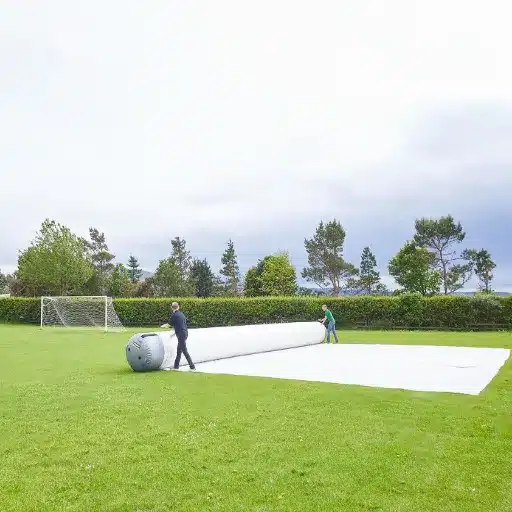
If there is no use of covers, keep them in a cool, dry place. Ensure that they are either folded or rolled tightly to prevent creasing and reduced that would otherwise increase stress on the material.
☀️ Avoid Prolonged UV Exposure
Many covers can stand UV light, but sunlight for very long can still break down the material of the cover over a period of time. As much as possible, avoid exposing the covers to outdoor conditions for long periods outside of the necessary usage times.
📋 Adhere to Manufacturer Guidelines
The manufacturer guidelines are made for the specific material and construction of the cover, so always follow them for the use, cleaning, and maintenance of the cover.
These maintenance practices when applied to football field covers can lead to their maximum lifespan and reduce the frequency of replacements as well as provide regular performance. The search data of recent trends shows that users looking for “field cover maintenance” put cleaning and damage prevention as the most important aspects pointing out the necessity of these proactive measures.
Cleaning and Storing Covers
The right way of cleaning and storing football field covers is the key factor in their quality and life span. To clean and store field covers, it is important to start cleaning by a brush or blower removing the surface slowly with loose debris. For tough stains, a mild soap solution plus a non-abrasive sponge will work wonders. Always rinse thoroughly so that no residue is left that might cause the cover’s material to deteriorate.
For storage, the main thing is to make sure the covers are dry all the way through before they are rolled or folded as that would encourage the growth of mold or mildew. Keep them in a cool and dry place out of the reach of direct sunlight to prevent UV exposure and material degradation. It is very wise to use specially designed storage racks, bags, or bins as they help to keep the covers organized while also cutting down the wear incurred unnecessarily. Adhering to these best practices is not only in line with common concerns that come up in search trends but also helps your covers to remain effective for many years.
Seasonal Checks and Repairs
The lifecycle of your covers can be greatly extended through regular seasonal checks and by repair when necessary. “How often should I inspect my covers” is a question that frequently pops up among users according to search data. To experts, a minimum of two inspections yearly is recommended. One done before the peak season and the other before storage. During these checks, look for signs of wear such as tears, fraying seams, or weakened areas caused by exposure to weather conditions. Use suitable repair kits designed for the material type to promptly patch small rips, as any delays may cause the damage to become worse. Besides, proper cleaning and conditioning can help the fabric maintain its durability over time by not allowing dirt or contaminants to build up. Proactive measures like this can save money on replacements and ensure that your investment is protected year-round.
📅 Recommended Inspection Schedule:
- Pre-Season Inspection: Before peak usage period
- Post-Season Inspection: Before long-term storage
- Mid-Season Check: Quick visual inspection every 2-3 months
- Post-Storm Review: After severe weather events
Choosing the Right Cover for Your Football Field
Factors to Consider: Venue Size and Usage Frequency
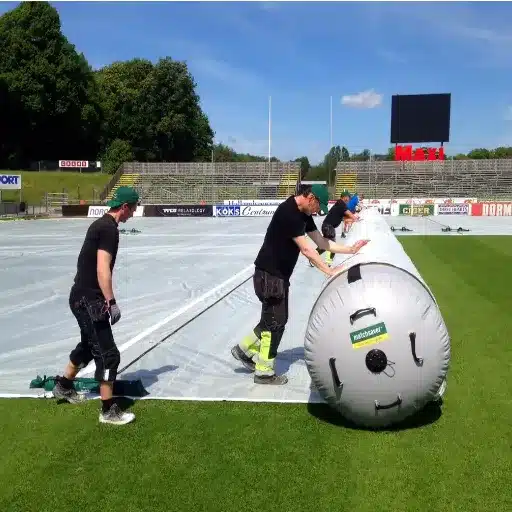
In making a decision about your football field cover, the venue size and the frequency of its use have to be considered as a priority. If the venue is on a larger side, like a multi-purpose stadium, the coverings must be made of heavy-duty materials so that they can ensure longevity and provide enough cover to the whole area that is affected. However, in case of smaller venues, the covering which is light and portable may be preferred as they are easy to move around and set up.
The frequency of a venue’s usage is another factor that has a big influence. Grounds that are often used for games and events and thus constantly degraded, need more powerful protective covers which have better resistance to the weather. In case of fields where the use is infrequent, then any budget-friendly option will do provided it keeps the grass from occasional environmental elements such as rain or excessive sunlight. From the trend data from the search engine, users are to ask for weatherproof and customizable covers that can cater to their venue-specific requirements. This demonstrates the rising need for flexible solutions that can adapt to different conditions and provide both functionality and durability. Considering these factors together will not only help the football field to get the maximum performance but also to be preserved.
Weather Challenges and Their Impact on Cover Selection
The field’s exposure to weather challenges is still a crucial factor in determining the cover to be used for a football field. Heavy rains, very hot weather, or sudden changes in temperature can all adversely affect the field and its lifetime if the field is not adequately covered. According to the current data from the search trends, users are usually looking for covers that can effectively manage the conditions of a high UV exposure or that of a long wet period.
Weather-Specific Cover Recommendations:
☔ Heavy Rain Regions
Waterproof materials with drainage systems; reinforced edges
☀️ High UV Exposure
UV-resistant polyethylene or PVC; reflective coatings
💨 Windy Areas
Reinforced edges; secure anchoring systems; heavy-duty fasteners
❄️ Cold Climates
Inflatable covers; frost-resistant materials; temperature control
Therefore, to tackle these challenges in a proper manner, one should go for coverings made from strong, weatherproof materials such as polyethylene or PVC. These materials are capable of providing moisture barrier and UV protection so that your field stays in the best condition all year long. Besides, custom-made covers with added features like drainage systems or fortified edges are gaining the favor of heavy rains or wind areas a lot. Investing in the types of covers that specifically cater to the climatic challenges of your region will result in the prolonging of the field’s life and granting it consistent performance, all while satisfying the growing demand for flexible and eco-friendly solutions.
Budget Considerations for Field Protection
When deducing how to protect the field from nature’s whims, it is most important to consider the budget constraints and what quality one obtains for that price, assuring value over the long run. Trends data provides evidence of the increasing demand for field covers that are inexpensive but last for a long time, a trend that is indeed pointing towards cost-effective types of solutions that possess the same performance capabilities as the more expensive ones. Materials like polyethylene or PVC can be used as protective layers at low prices relative to the premium ones, still being able to offer good environmental wear and tear resistance.
💰 Smart Budget Planning Tips:
- Consider Total Cost of Ownership: Include initial investment, maintenance, and replacement costs
- Explore Modular Systems: Allow for gradual investment over time instead of large one-off outlay
- Budget for Maintenance: Include regular inspections and minor repairs to prevent larger expenses
- Choose Cost-Effective Materials: Polyethylene or PVC offer good protection at lower prices
- Research Thoroughly: Understand specific needs to make informed decisions balancing performance and cost
Moreover, also gaining more acceptance are the modular systems as they provide a facility for gradual investment over time instead of a large one-off outlay. There is also the need to include ongoing maintenance in your budget, so that it includes regular inspections and minor repairs which, if neglected, would lead to larger expenses in the future. Conducting thorough research and having clear understanding of the specific needs of your area will go a long way in helping you make the right choices which will be the best in both performance and cost-efficiency.
Frequently Asked Questions (FAQ)
Key Takeaways
- ✓
Essential Protection: Pitch protection covers are critical for maintaining football field integrity against weather conditions, heavy use, and environmental factors. - ✓
Multiple Options Available: From full field covers to mesh and inflatable solutions, there are various types to suit different field requirements and budgets. - ✓
Cost Savings: Quality covers reduce maintenance costs, extend turf life, and minimize the need for extensive repairs. - ✓
Proper Installation Matters: Following correct installation procedures ensures maximum protection and longevity of both the cover and the field. - ✓
Regular Maintenance Required: Cleaning, proper storage, and seasonal inspections are essential for maximizing cover lifespan and performance. - ✓
Consider Your Specific Needs: Venue size, usage frequency, weather challenges, and budget all play crucial roles in selecting the right cover. - ✓
Player Safety Enhancement: Quality covers contribute significantly to player safety by maintaining optimal field conditions and reducing injury risks.
Conclusion
American football pitch protection covers represent a vital investment for any sports facility committed to maintaining high-quality playing surfaces throughout the year. As we’ve explored in this comprehensive guide, these protective solutions offer far more than simple weather protection—they serve as a critical defense system that preserves field integrity, reduces maintenance costs, and ensures player safety across all seasons.
The diverse range of cover options available today—from temporary lightweight solutions to permanent heavy-duty installations—ensures that every facility can find a protection system tailored to its specific needs, budget, and environmental challenges. Whether you’re managing a small community field that sees occasional use or overseeing a professional stadium with high-frequency games and events, the right pitch protection cover will deliver measurable benefits in terms of field longevity, playability, and overall performance.
Proper installation, diligent maintenance, and strategic selection based on venue size, usage patterns, and local weather conditions are the cornerstones of maximizing your investment in field protection. By avoiding common installation mistakes, adhering to regular cleaning and inspection schedules, and choosing materials that align with your specific climate challenges, you can ensure that your football field remains in pristine condition year after year.
As environmental concerns continue to shape industry practices, the growing availability of eco-friendly and customizable cover options demonstrates how protection technology is evolving to meet both performance and sustainability goals. By investing in quality pitch protection covers and implementing the best practices outlined in this guide, you’re not just protecting a field—you’re safeguarding the future of your sports program, enhancing player experiences, and ensuring that your facility remains competitive and game-ready for years to come.
📚 Reference Sources
Michigan State University – Extending Field Use With Covers: Discusses the benefits of using covers to protect football fields from water damage and maintain field quality. Source
Iowa State University – Management of SportGrass for Athletic Fields: Explores the management and maintenance of athletic fields, including the use of protective measures like covers. Source
PubMed Central – Padded Helmet Shell Covers in American Football: While focused on helmet covers, this study provides insights into protective measures in American football, which can be extended to field protection. Source