For its unmatched strength, flexibility, and weather resistance, coated PVC tarpaulin has been widely recognized as on par with one of the foremost components used in the carriage of goods, construction, advertising, and even leisure. This work is expected to be in-depth research through the expert eyes of coated PVC tarpaulin, with its chemical structure as the most significant characteristic and its practical applications in production. Regardless of whether you are someone into making products, a builder, or just a curious person about the potential of this material, this article will deliver to you all the ideas you need to not only appreciate but also be part of the daily professional application that coated PVC tarpaulin is involved in. Be ready to dive into the engineering of its dependability and see how it can be applied to address your unique requirements.
Understanding PVC Tarpaulin

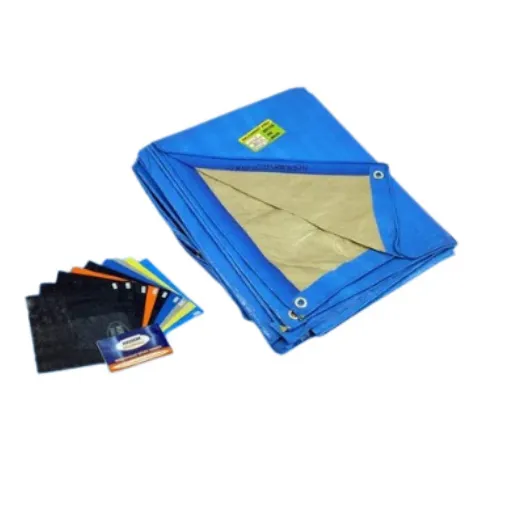
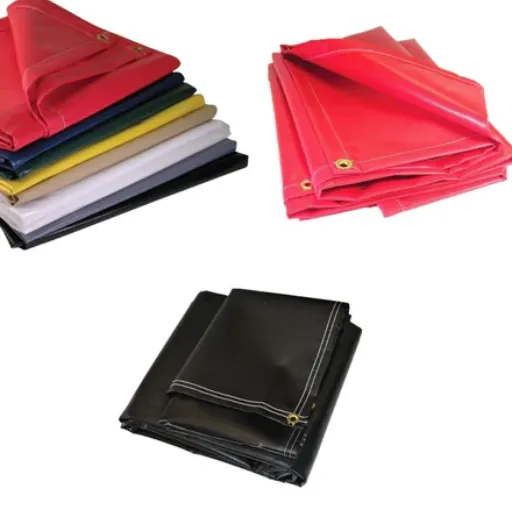
Durable, flexible, and characterized by coated PVC tarpaulin, it is a material made from a polyester fabric base coated with polyvinyl chloride (PVC). Strong, waterproof, and UV-resistant in one go is what we are talking about in terms of the product, and this is the kind of product that can be highly durable in harsh conditions. This product is mainly used in the trucking industry as truck covers and tents; in the industrial sector, it is made into curtains; and, lastly, outdoor banners are where it finds a home. The material offers a wide range of strengths, including high tensile strength, weather resistance, and long life, which is why it is the foremost choice.
What is PVC Tarpaulin?
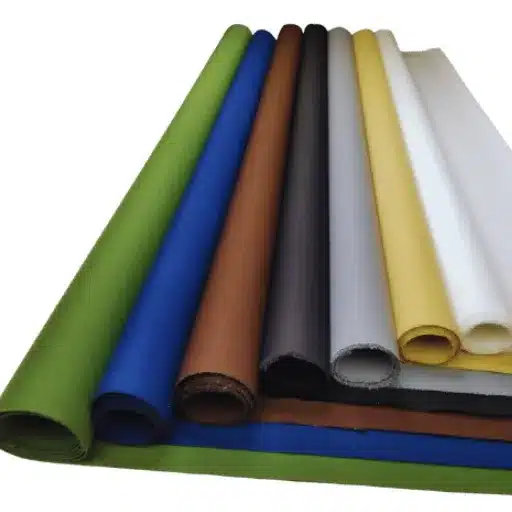
PVC tarpaulin is a highly specialized material; it is a strong, close-woven polyester base with a polyvinyl chloride (PVC) coating. Its unique configuration guarantees a long service life by combining the polyester core’s extreme flexibility with the PVC layers’ protection. This material is excellent for outdoor or industrial use because it can resist UV rays and extreme temperatures, as well as withstand moisture.
Waterproofing of the material is achieved through the PVC coating, and the material remains stable even under very harsh conditions. Besides that, PVC tarpaulin is fireproof, scratch-resistant, and resistant to chemicals, which in turn makes it suitable for a wide range of uses across most industries. There have been new trends in the production of PVC tarpaulin, such as the use of lacquer and the introduction of anti-fungal treatment, making it more appealing and durable while reducing maintenance.
Features of PVC Coated Fabric
High Tensile Strength
PVC-coated fabrics, with their exceptional tensile strength, are well-suited for long-lasting products subject to stress. In terms of their specific types, the fabrics have a medium tensile strength, generally ranging from 2000 to 4000 N/5 cm, and are the best choice for structures such as tensile membranes and truck covers.
Waterproof Properties
The PVC film contributes to the waterproof shield and, therefore, provides total resistance to water penetration. These fabrics underwent hydrostatic testing of 2000 mm or more, which makes them reliable outdoor materials for use in rainy and wet conditions.
UV Resistance and Weatherproofing
PVC-coated fabrics treated to resist the outdoors use UV stabilizers to prevent ultraviolet light from degrading the fabric. This would result in long-lasting fabrics for outdoor applications, as demonstrated by many examples that have lasted for a good number of years without any visible changes in structure or coloration.
Flame Retardancy
PVC-coated fabrics are flame-resistant due to the presence of special flame-retardant agents, which also give them the strength to withstand the rigorous tests of ISO, NFPA 701, and DIN 4102-B1; hence, their use in public areas, event tents, or anywhere safety is a primary concern.
Chemical Resistance
The fabric can be exposed to various chemicals, including acids, alkalis, and oils, and still serve for a long time, especially in industrial environments with chemical corrosion and at chemical storage sites.
Abrasion Resistance
The fabric has a rigid surface that resists damage of all kinds, making it ideal for heavy-duty applications. Its abrasion resistance generally reaches and even exceeds 50,000 cycles in Martindale rub tests, depending on the product type.
Comparison with Other Tarpaulin Materials
| Parameter | PVC-Coated Fabric | Canvas | Polyethylene (PE) | Nylon |
|---|---|---|---|---|
| Water Resistance | Fully waterproof | Water-resistant | Fully waterproof | Water-resistant |
| Chemical Resistance | Excellent | Poor | Moderate | Poor |
| Abrasion Resistance | High | Moderate | Low | Moderate |
| Tear Strength | Excellent | Good | Moderate | High |
| UV Resistance | UV-stable | Moderate | High | Low |
| Weight | Medium to heavy | Heavy | Lightweight | Lightweight |
| Durability | Long-lasting | Moderate | Short to medium lifespan | Moderate |
| Flexibility | Moderate | Low | High | High |
| Cost | Moderate to high | Moderate | Low | Moderate |
| Maintenance Effort | Low | High | Low | Moderate |
Key Benefits of PVC Coated Tarps

Superior Tear Strength
Tarps with PVC coating are resistant to tearing, making them a good fit for applications that require high strength and durability.
Enhanced UV Resistance
PVC-coated tarps are UV-resistant and can be exposed to sunlight for extended periods without significant degradation or discoloration.
Longevity
PVC-coated tarps are recognized for their high durability and low replacement rate, making them a long-lasting performance material.
Low Maintenance Requirements
These tarps require only a little maintenance and will look and function like new, which is owner-friendly.
Versatile Applications
PVC-coated tarps can be used for industrial, commercial, and outdoor applications due to their “middle ground” flexibility.
Durability and Weather Resistance
The main advantage of PVC-coated tarpaulins is that they can withstand the most challenging environmental conditions and offer excellent durability and weather resistance. The strong PVC coating is a waterproof layer that keeps moisture out, and, along with shielding against UV radiation and extreme temperatures, it protects the entire material. The material’s high resistance practically reduces the risk of spoilage, so no cracking, fading, or mold would occur over an extended period under rough conditions. The latest advances in polymer science have greatly improved the mechanical strength and durability of PVC tarps. As a result, they are now widely used across various industries, including construction, logistics, and agriculture. Furthermore, the fact that they can perform in very dissimilar climate conditions has led to their becoming a very competent and strong player in both permanent and temporary applications.
Cost-Effectiveness and Versatility
PVC cloth coverings are the least expensive solution, and in addition, their strength and long lifespan reduce replacement frequency and keep maintenance costs very low. Their being the right thing for whatever use one has in mind is achieved by designing them for the purpose, e.g., to protect goods stored outside from the weather, to keep goods from getting wet, and to shield machinery from the cold. There has been a noticeable increase in the use of PVC fabric in the transport and agricultural sectors, mainly because of its quietness and the price of an adaptable product. Also, the market is strongly driven by modular designs that can be easily dismantled and custom-made sizes that fit the user’s requirements, which are added features that do not add to the cost. As the markets mature, new uses and customer requirements emerge. The PVC fabric and the significant benefits it offers, such as low cost, strong protection, and ease of cutting and forming into different shapes and sizes, have already replaced other traditional fabrics, with little competition in the market.
Heavy Duty Applications
PVC tarps are designed to withstand severe conditions, making them ideal for heavy-duty industrial applications such as construction, agriculture, and logistics. The main reason PVC tarps are tough is that they contain the special, robust material known as the polyester scrim, which is covered by several layers of PVC coating that protect against wear, tear, and environmental factors, including UV exposure and moisture. In construction, tarps are laid on when workers have gone home or when severe weather is expected, so that heat does not escape, as this is the easiest way.
For this application, the same tarpaulins used for the other applications can be employed. Also, in agriculture, tarps are used to shield crops, equipment, and animals from rough weather over a long period, while maintaining the tarp’s structure. Research indicates that PVC tarp with a weight of 18 ounces or more per square yard is especially well-suited for a heavy-impact environment. To opt for a tarp with this feature, should there be a need, will keep the cost of the tarp high, but the time until it needs to be changed will be far off. Their sturdiness and flexibility make them the most essential item in harsh operating conditions.
Applications of PVC Tarpaulin

PVC tarpaulin is a very sturdy and flexible mainstay in many industries. And some of the sectors in which it is being widely applied to are:
- Construction: It is common to use this as a shelter from the sun, a cover for scaffolding, and to enclose construction sites to ensure the weather does not affect the projects.
- Agriculture: Farmers put covers on their crops, tractors, and, to some extent, farm animals to protect them from the weather and reduce exposure to air, water, and light.
- Transportation: Protective tarpaulins used on trucks and trailers are the most common and are well known for securing and protecting goods during the journey.
- Recreation: It is very common to see the material used in the construction of gazebos, marquees, and even bouncy castles for carnivals and funfairs.
- Industrial Use: It meets the needs of applied science for membrane-type structures, storage covers, and curtains, especially in applications that demand high-security fabric.
By utilizing these examples, the quality and reliability of the material for a large number of activities will be clearly demonstrated.
Construction Industry Uses
Advanced materials are widely used in the construction industry in the form of coated fabrics and reinforced polymers, significantly enhancing the longevity, flexibility, and weatherability of the final product. They are widely used for the erection of scaffolding, as they not only prevent debris from falling off but also provide a physical shield and weather resistance. Alongside, the UV-resistant and waterproof building wraps are contributing significantly to maintaining energy efficiency by reducing air infiltration and protecting uncured buildings from the severe effects of moisture damage. The new architectural membranes, which are not only structural but also aesthetic elements, are serving as roof and facade materials in tensile structures, offering the advantage of being lightweight yet very strong, while also delivering design ideas that are both unique and sustainable. The combination of these materials not only increases construction operational efficiency but also meets safety and economic requirements while minimizing environmental impact.
Agricultural Applications
Nowadays, agriculture greatly benefits from new materials and technologies, which have made the industry greener and more efficient. Agricultural films, for example, are very effective in increasing crop yield and reducing water use by controlling soil temperature, retaining moisture, and preventing weed growth. The use of greenhouse covering materials to the highest standards, such as polyethylene films with UV-blocking and anti-drip features, ensures efficient natural light transmission and reduced wear on building materials. And one of the most essential components in spray and drip irrigation systems is porous membranes and geotextiles, which provide even water distribution and control erosion.
Environment-friendly practices, including controlled irrigation with micro-drippers, drip irrigation, and fertigation, combined with the development of climate-smart solutions, will enable the most efficient agricultural systems to meet the growing global market demand for food. The application of these innovative technologies marks a significant transition toward all-around sustainable farming practices that will not only conserve resources but also maximize productivity.
Transportation and Truck Covers
Truck covers, also known as tonneau covers, are essential for making commercial vehicles more efficient and secure. The use of new materials in combination with the latest manufacturing technologies has enabled the production of even stronger and lighter truck covers, including aluminum alloys, fiberglass, and high-grade polymers. The primary purpose of these covers is to decrease air resistance, which is the reason behind the higher fuel consumption in the first place. The right choice of a tonneau cover can reduce fuel consumption by 10%, in turn saving logistics companies on total costs.
In addition, from a current affairs perspective, there are several weather-related damages that cargo is going to endure. This can be avoided with truck covers, especially if heavy rain or storage in the sun is a concern. Besides, the risk of robbery will be reduced to a minimum while the goods are in transit. A significant number of them in the market are really high-tech, such as remote locking systems, reinforced panels, and weather-sealing technologies, which together will reach the highest security level. It can be said that the trend is towards the use of retractable or folding covers as an added convenience and flexibility to support the successful transportation of goods. The employability and acceptance of such state-of-the-art solutions are clear indications of the implementation of modern technology and the high level of efficiency in the field of transportation in the logistics business.
Manufacturing Processes of PVC Coated Tarpaulin

A combination of PVC coating and fabric reinforcement is used to make PVC-coated tarpaulin. It all started with selecting a robust base fabric, usually made of polyester. However, before the fabric coating begins, the base material is treated with PVC (polyvinyl chloride) in the form of a liquid, which is then evenly distributed or coated by a variety of novel coating methods, like knife coating or calendar coating. Subsequently, the coated fabric is heat-treated so that the PVC layer adheres firmly to the base fabric, providing strong overall strength and water-, UV-, and environmental-wear-resistant properties. Quality control measures are implemented throughout the process to meet exacting standards for high durability and performance under harsh conditions.
Raw Materials and Production Techniques
Choosing the right ingredients for the production of PVC-coated fabrics that excel even under high-beating conditions should actually begin with a genuine focus on the base fabric and the specialized PVC compounds. The base textile is either polyester or nylon, and an extremely flexible, warm, coating-process-compatible material is selected. Polyester, known for its excellent thermal resistance and dimensional stability, has the highest prevalence of use ever in the most challenging industrial applications.
The PVC compound, serving as the coating agent, comprises main components such as plasticizers, stabilizers, and additives, including UV absorbers and flame retardants. Plasticizers contribute to softness, while stabilizers increase heat and weather resistance. The presence of UV inhibitors and fire retardants is an assurance of the fabric’s suitability for outdoor and safety-critical uses.
The coating process kicks off once the raw materials are prepared. The PVC is applied evenly to the fabric substrate using state-of-the-art technologies, such as knife-over-roll coating or rotary screen printing. Highly automated machinery takes the heavy duty of precise control over coating thickness and, consequently, of producing a uniform layer that meets the most exigent specifications. After the coating, the fabric is heat-cured, a pivotal process that enhances the adhesion of the PVC layer and, at the same time, ensures the material maintains its flexibility and durability.
Electronic quality control systems are incorporated into the production line and continuously monitor critical factors such as coating thickness, surface strength, and finish quality. The result is that the end product would meet the set performance standards very strictly and would be suitable for many different heavy-duty applications, including, but not limited to, architectural structures, industrial tarps, and protective coverings. The manufacturers could then produce PVC-coated fabrics that meet different needs, with top-notch strength and environmental resistance, thanks to the right mix of raw materials and creative production techniques.
Quality Control Standards
Quality control in the production of PVC-coated fabrics is a rigorous process throughout the manufacturing process. To ensure the product meets specific mechanical and structural criteria, the use of the best testing methods is essential; these include tensile testing, tear resistance assessment, and dimensional stability analysis, among others. In addition, PVC adhesion tests are conducted to verify the strength of the PVC layer under various atmospheric conditions, including UV exposure, extreme temperatures, and moisture. On the other hand, external sources such as ISO and ASTM, which define the minimum requirements for these materials, are also used to prevent plagiarism of the product; in this way, the global market is assured of standardized quality and reliability of the material. Through advanced monitoring systems, manufacturers continuously scrutinize real-time production data, which serves as the foundation for identifying and removing potential faults, thereby producing products that exceed the quality benchmark and meet the needs of specialized application areas.
Innovations in Manufacturing
The progress of the manufacturing sector has increasingly been driven by innovative technology, automation, and sustainable practices. One of the innovations that has become crucial is 3D printing, also known as additive manufacturing. It has provided the opportunity to design and make the most complex, custom, and material-efficient parts that were previously impossible. The use of methods such as laser sintering and stereolithography has had a tremendous impact on the production of high-quality components with minimal waste, particularly in the aerospace and healthcare sectors. In addition, the adoption of Industrial Internet of Things (IIoT) systems at scale has greatly improved factory productivity. The use of intrinsically connected sensor devices and real-time data analytics by manufacturers enables tracking of machinery performance, predicting maintenance needs, and reducing downtime. By this, robotics and artificial intelligence (AI) can serve as intelligent means for productivity enhancement by delegating synthetic or complex tasks in the most efficient possible way. Moreover, the limit of being established as a very environmentally-friendly process is so high that much of the power used in the production process will come from renewable sources, and the materials used in the production process will be recyclable.
Maintenance and Repair of PVC Tarps

It is essential to properly care for PVC tarps to ensure a longer service life and excellent performance. You should inspect the tarp for any damage signs, such as rips, ravelings, or weakened seams of the surf regularly. Use mild soap and water to ease the cleaning process, as dirt and debris accumulation will not be allowed, which will, in turn, lead to material degradation over time. The use of strong chemicals or abrasive brushes is required, as they will eventually destroy the PVC coating. If you got ripped off, you could always use a PVC tarp patch kit for repair; all you have to do is lay the patch on a clear, dry surface to ensure it sticks well. However, for more significant damage or if the seam splits, it would be better to get help from professionals. Meanwhile, keep the tarp in a dry, shaded storage place and avoid exposing it to direct sunlight or extreme temperatures for long periods, as this can cause it to crack or fade. Furthermore, it is advisable to keep your tarp clean and to regularly follow the care instructions provided by the provider to extend its lifespan.
Maintenance Tips
Regular Cleaning
To preserve the integrity of the tarp, it is essential to clean it regularly to remove dirt, debris, and mold, which can damage the fabric over time. Use cold water and mild soap in cleaning, avoiding harsh chemicals that might weaken the PVC coating. The studies have revealed that the tarp’s duration can be even 30% longer when cleaning is a factor.
Inspection After Use
Inspect visually after every single usage to detect any physical damage, such as holes, frayed edges, or seam separations. Addressing minor issues early prevents them from worsening and reduces the cost of significant repairs by up to 40%.
Proper Storage
Always have the tarp in a suitable place, that is, a cool, dry place that is not exposed to too much sunlight or heat when it is not being used. In material aging studies, it was found that the tensile strength of the material could be reduced by up to 50% when continuously exposed to UV light.
Avoid Overloading
However, stay within the tarp’s specified load capacity to avoid undue stress or tears. Overloading by just 20% can either cause permanent deformation or tearing when exposed to high stress.
Apply UV Protection
Apply the UV-protectant spray made for PVC tarps to resist weathering from sunlight. The easy treatment enhances UV resistance by about 2 times compared to uncovered materials.
Prevent Sharp Contact
Do not rest the tarp directly on the floor or any sharp objects, as this can easily cause holes. Going more to the industrial side, the use of protective bottom layers or pads can save up to 25% of wear.
Repairing Damaged Tarpaulin
A good technique for mending a broken tarpaulin involves proper evaluation and the use of the right materials and methods in the repair process. The spot to be repaired should be cleaned thoroughly with mild soap and water to remove dirt, oils, and debris. This is to make the adhesive materials bond well. The surface must be left to dry out until there is absolutely no more humidity in the air. Also, you must have a high-quality repair tape for PVC, made for tarpaulin. You will want to cut the tape into a rounded shape so it isn’t easy to peel off and has a minimum of 2 inches of edge all around the damaged area. Next, starting from the corner, keep pressing to ensure the adhesive fully adheres to the surface. In this manner, you will ensure there is no air left between the adhesive and the surface.
For significant damage, it is recommended to enlist the aid of professionals and use a PVC patch along with an adhesive compound that has been developed explicitly for the repair of industrial tarps. Progress should start by cutting out a patch larger than three inches in all directions than the injury. The adhesive is applied evenly to the tarp and the patch, and the patch is allowed to become tacky in accordance with the manufacturer’s instructions before it is secured. The pressure should be applied until the entire patch is in place, and the use of a roller or similar tool is recommended for closing gaps and solidification of the seal. It is essential to consider the climate and the adhesive instructions when setting up the curing time, which is usually around 24-48 hours.
Reference Sources
Developments in an Industry-Led R&D Program for Recycling PVC Products in Japan
Summary: This study highlights advancements in recycling PVC products, including tarpaulins, in Japan.
Potential Applications of Post-Consumer Vinyl Flex Banner (PCVFB) Materials
Summary: This paper explores sustainable management approaches for post-consumer vinyl banners, including their reuse as tarpaulins and roofing materials.
Frequently Asked Questions (FAQs)
What are the key specifications of 18 oz vinyl-coated polyester tarpaulin fabric?
Vinyl-coated ted slabs and placemats that use 18 oz vinyl polyester tarpaulin fabric usually mean polyvinyl chloride, rot-resistant, bound to the woven polyester core by the tarp material, useful for heavy-duty covers that can withstand the same tear. The standard way of making things involves either liquid pvc or pvc resin being applied as a laminate, or a polyvinyl chloride resin-coated polyester finish, to improve the material’s peeling strength and mildew resistance. The final product of this pvc tarpaulin material can be broadly accompanied by the use of a reliable producer who subjects the product to tests in order to prove that it is anti-static and withstands high temperatures.
How does PVC-coated tarpaulin perform as a tarp material for outdoor inflatable products?
Nylon tarpaulin PVC coated is most commonly used in the production of inflatable products because the vinyl coated with PVC gives a smooth, airtight surface as well as a good peel strength between the layers of the laminate for preventing the material from splitting under pressure. In the engineering aspect, the tarp can be made from PVC-coated polyester, and the result will be a product with a hard-wearing woven core and a pliant vinyl fabric that is not only mildew-resistant but also tear-resistant. Suppliers offer anti-static finishes and high-temperature grades that differ in their suitability for various climates and operating conditions, while pvdf coating and special resins enhance the surface’s UV resistance.
Why choose polyester fabric or coated polyester for vinyl tarps and truck cover applications?
Polyester fabric combined with a vinyl laminate is regarded as the ultimate selection for tarps and truck covers made of vinyl because the woven polyester base grants dimensional stability and tear-resistant strength to the material, while the pvc vinyl topcoat acts as a weather barrier. Tarp materials made from PVC,, like PVC-coated polyester or pvc without coating, are available in various weights from 18 oz up to 30 oz in order to be both strong and soft for the purpose of lifting, securing, and fastening many times over. It is pretty common for many brands to sell their products coated with pvdf or to add UV-resistant additives to the material to safeguard it against the sun’s harmful rays, thereby prolonging the material’s life and preventing mildew in humid climates, which makes it very important to do so.
Are PVC-coated polyester and PVC-coated polyester the same in terms of mildew resistance and durability?
The same composite is generally described by terms such as PVC-coated polyester and PVC-coated polyester: a polyester fabric core which is coated with pvc vinyl to create a tarpaulin fabric. This fabric is durable, mildew-resistant, and tear-resistant. The durability of the tarpaulin fabric depends on factors such as the quality of the pvc resin, the thickness of the coatings (which could be 18 oz or 18 grade), and other finishing treatments such as pvdf or UV-resistant. One of the ways to improve the delivery strength and to diminish the risk of delamination with time is by proper production methods, such as ensuring adequate adhesion and curing of the liquid pvc layer.