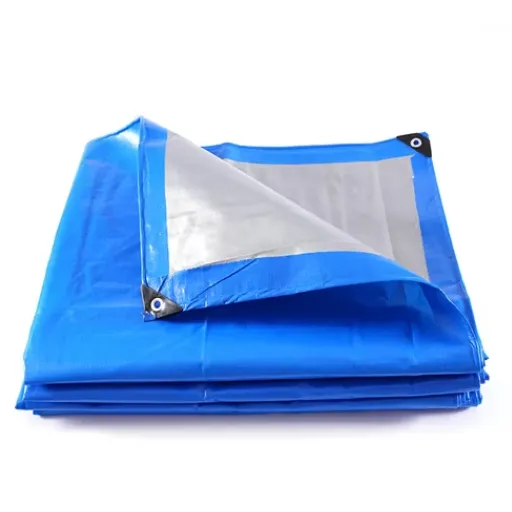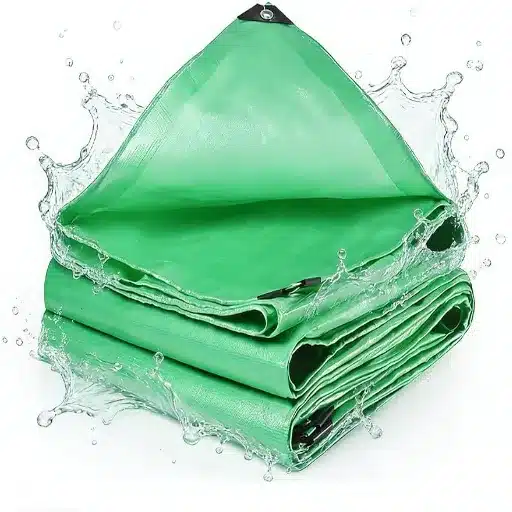
Aquaculture has become an important industry and it all started to address the food production issue especially that in the present times the world is becoming overpopulated. tarp or impounded pervious irrigation ponds for fish. The latter is becoming much more popular due to the widespread availability of 1-1 mm HDPE fish ponds, which do not require any soil for construction, and can be easily installed by members of the farming community, with very minimal training, at 30% or less of the cost of concrete fish tanks. This blog post serves as a guide on tarpaulin fish tanks and dives into various construction tips, maintenance strategies, and some best practices for tarpaulin fish farming. Furthermore, we shall also provide guidelines on how to design concrete ponds of more suitable and manageable sizes anywhere in the country. These considerations follow the idea that fish judge every food particle they eat and therefore it is convenient to feed them in the water tanks where it is easy to manage feeding.
Introduction to Tarpaulin Fish Farming

The new agricultural technology is “open field aquaculture” alias tarpaulin fish farming which entails rearing fish in square or round tanks which are covered by a strong, clean and opaque tarpaulin sheet. Ponds made of tarpaulin are very cost effective, easy to install and remove, and re-use. These double tarpaulin plastic lined pond can be used either for small scale or on commercial fish farming. This method is ideal in rural areas with limited water sources or places with unfavorable soil structure for the traditional pond design. By incorporating advances in the system, such as improved nutrient conversion rates, optimal temperatures, ideal stocking densities, and micronutrient regulation, the fish is expected to grow faster than normal, whether it is tilapia, catfish, carp, or any other cultivatable fish. This means that it minimizes on environmental degradation for the purpose of recycling fish farming waste.
What is Tarpaulin Fish Farming?
The rearing of fish in ponds constructed using tarpaulin is known as tarpaulin fish farming. This is a cost-effective and feasible method for fish aquaculture, where one uses strong and resistant tarp to build a floating or relegated pond in which water is poured so that the fish are reared. These ponds have liners that hold the water and are designed to suit the growing need for farmed fish especially the water use scenarios where water scarcity and sometimes bio-security as the ponds are non lined. In the majority of these cases, the tarpaulin used is of UV-resistance and high tensile strength qualities hence minimum maintenance and long usage.
When choosing a suitable ground and setting up a tarpaulin pond, the very first step is making the pond more substantial by introducing metallic or wooden keels or by similar means. The tarpaulin fish pond is at this point filled, other parameters like pH, oxygen levels, temperature levels are measured and adjusted as those values are working for farming fish. Such systems under management contain advanced mechanisms for aeration and sartorius as an example of the common bioreactors to ensure that water is always clean and disease-free.
This system essentially restricts the extent of water spilling in contrast to other proven modes of agriculture because water is not lost once it enters the system since recycling becomes possible. The tarpaulin fish farming is an easily manageable type of an activity which is very well recognized by most of the small and medium scale farmers. It’s also applicable especially in urban areas, which can be a vital way of increasing the efficiency of food self-sufficiency in such regions with few to minimal resources.
Benefits of Tarpaulin Fish Tanks
Tarpaulin pond construction is a form of containment system that aims to help in water conservation. More water-saving capabilities can be realized even up to almost 70% by transferring fish farming from conventional open pond type to an enclosed system such as this. This is particularly helpful in regions limited with water resources.
Tarpaulins are less expensive than constructing traditional concrete ponds and their initial capital investment is also low. Importantly, tarpaulins are light weight and relatively robust thus, reduce long-term repair, maintenance and other costs; hence they are affordable even to the majority of small and medium scale farmers.
These can be large or small for their portability. This means they can be put up or taken down within minutes to keep pace with fast changing production volumes.
Tarps differ from tarred covers in that they help to track the parameters of water residing in tanks in a dispensable way measuring pH, temperature, and oxygenity among others. The perfect growing environment which is provided buys a high possibility in increasing the output rates by about 30-40% when compared very natural bodies of water where the conditions cannot be changed.
With traditional aquaculture systems, quite large expanses of land have to be used, a post which tarpaulin tanks can be quite challenging to set up to a usable point while all available space should be utilized located within an urban or rural area. For procedural, take an example, if you had 100 square feet of land, it would be sufficient to put up a tank that will be efficient for production.
Tarpaulin tanks help in preventing the infiltration of water into the soils, thus promotion environmental protection enhanced by helping minimize fugitive nutrients. In addition to improving the quality of farming by ensuring soil fertility in the pond area is constantly upheld, tarpaulin tank technology helps in filtration of infiltration water as it contains some anaerobic components.
Planning Your Fish Farm

Plotting your aquaculture installation, establish first the species which you wish to raise as this will shape the design of the tanks, the quality of the water and the times within which the food should be bought. Next up, evaluate the area and from it, pick a convenient spot that has access to clean water, good drainage and minimal interferences by the environment as a whole. Try to establish a comprehensive plan which will allow for the maximum level of output with the possibility of further exhibition of the output with less or no change to the design.
In addition, keep aside initial capital for operating the entire farm, fees for all other requirements, feeds and labor. Check existing legal norms in your area to ensure the project’s processes comply with the law and the environment. Concluding, have a proper workable program which also involves routine water checkups, how to feed, and how to prevent such diseases in farming of fish for improvement purposes.
Choosing the Right Location for Your Tarpaulin Pond
Choose carefully in what exact spot to set up your tarpaulin, as the sustainability and effectiveness of your tarpaulin will be greatly influenced by your location. Start with a brief survey of the terrain considering that it is easier to install an impoundment on a flat or a mildly sloping landscape than in many other places. To reduce construction difficulties and improve the drainage, study, understand and recognize the soils you get at the site. The composition of soil and presence of relatively high clay soil content may probably help in suppressing seepage and thereby increasing the stability of the pond in such locations. Access must also be considered – a location with major roads or markets nearby will enhance transportation and supply chain services.
Hydrology studies are crucial to determine whether there are rivers, boreholes or rainwater collection points that can supply quality clean water that has not been contaminated. The amount of risk is generated in an area when it’s exposed to such natural elements like sunlight or wind. Full sun may lead to an overgrowth of algae that are likely to be feeding on the fish as some fish species consume algae. Strong winds, however, also have potential impacts on tarpaulin such as causingites shrinkage or even detaching the cover completely.
Types of Materials for Tarpaulin Fish Tank
| Material Type | Key Properties | Advantages | Disadvantages |
|---|---|---|---|
| PVC Tarpaulin | Durable, water-resistant, UV-protected | Long-lasting, easy to clean | May degrade under prolonged sunlight |
| Nylon Reinforced Tarpaulin | High tensile strength, lightweight | Strong under tension, flexible | Higher cost than regular tarpaulin |
| Polyethylene Tarpaulin | Cost-effective, weather-resistant | Affordable, widely available | Less durable than PVC or nylon |
| Canvas Tarpaulin | Eco-friendly, breathable material | Natural, biodegradable | Prone to mold and water absorption |
| Rubberized Tarpaulin | Highly elastic, watertight | Excellent for leak prevention | Expensive and less readily available |
| Vinyl Coated Tarpaulin | Heavy-duty, resistant to abrasion | Easy maintenance, resistant to chemicals | Heavier and harder to handle |
| Laminated Tarpaulin | Lightweight, UV-resistant | Easy to install, cost-efficient | Limited durability in harsh conditions |
Understanding the Circular Economy in Aquaculture
Innovative ideas have been adopted in economy ecosystems such as this circular approach to aquaculture which fosters efficiency not waste and promotes the use of materials through recycling or reuse in production systems. Unlike nature which is replenishable and naturally bound to gravity, linear processes – which take more than they need and deposes contents elsewhere over time – neither exhibit such properties. In the application of the principle of the circular cluster, aquaculture operations can allow the cultivation of higher types of technologies and also reduce the use of such natural resources as water, feeding, and especially energy.
Advanced techniques such as integrated multitropic aquaculture or IMTA benefit the ability of different species or types of aquatic organisms to be farmed together in such a way that the waste produced by one type of organism can be converted and used to feed another, e.g., using waste products of fish to cultivate shellfish or seaweed crops. In addition, more attention is being paid to the reuse of organic waste, such as transforming fish waste into biofertilizer or bioenergy. One prominent area that has seen great progress is the innovations in material designs, quite noticeable is the advancement of making bio degradable nets and reduction of the use of plastics, which complements the circular aquatic economy concept.
Global studies have indicated that for the aquaculture industry transitioning to a circular economy would potentially result in a reduction of greenhouse gas emissions, increased biodiversity, and improve resource efficiency. However, a lot of solutions offered are unsustainable, thus providing a short-term rather than long-term growth path.
Building Your Tarpaulin Fish Tank

-
1Select a Suitable Location
It is advised to identify a raised, iron sheet constructed area to protect the reservoir from the harsh outer weather. Such an area should also be connected to a water source and a way must be identified through which the contaminated waste water can be handled correctly.
-
2Prepare the Frame
While erecting a shed of tarpaulin utilize-reinforced-concrete and or galvanized iron poles, such scaffold should be done within the plan left for the tanks; this accommodates the desired tank and fish species to be reared.
-
3Install the Tarpaulin
Cover the above fabrication using a firm waterproof tarp. The edges should be pulled and fixed tight so that a good joint is achieved to prevent leakage and displacement and also ensure that what you use is of industrial standard free of lead contaminants as it is also going to have marine food crops.
-
4Add a Water System
Ensure that there is both an inlet for introducing fresh water and an outlet for withdrawing waste water. An appropriate air stone and filter needs to be employed in order to optimize oxygen conditions and retain high water quality adequate to the number of fish and their nature of being.
-
5Fill and Test
Fill the complete water into the tank clean and carry out a test run to check for any unwanted escapes, the level of pH and the temperature of the water. Please adjust where necessary in order to be able to create the suitable environment for the fish.
-
6Site Preparation for Stocking
After confirming that the tank is untroubled and ecological conditions are constant, prepare it for the introduction of fish. It is better to minimize stress shock and in so doing the addition of fishes should be done in a way that allows individual fish to acclimatise each time.
Assembling the Tarpaulin Fish Tank
Construction of a tarpaulin made fish pond must be carried out with great precision in compliance with the principles that ensure its stability as a structure and the environment conducive to the growth of fish. An elevated structure made of a sturdy material such as hard-wearing UV-treated tarpaulin is chosen first of all to ensure it is resilient and remains visually and structurally intact under all conditions that may pose damage to most structures. Before proceeding, a cover is fixed to the preconstructed frame made of tarpaulin supports which could be steel-painted. This crafting or welding of tarpaulin on a steel or wooden frame prevents the tarpaulin from rapid degradation and corrosion.
Furthermore, it is essential that a flat, debris-free surface is made available for the placement of the tank and to eliminate tarpillen. The installation of a sump at the base of the tank is especially important for cleaning, water changes, and feed supplement addition tasks among others. These improved systems also include recirculating approaches that help in the sustenance of aquatic organisms. The control of temperature and ph levels for instance in fish tanks should also be constructed during the installation processes. The tanks serviceability is also measured by how well built its structure is and how well it performs in relation to its primary function during this period.
Ensuring Structural Integrity and Safety
Aquaculture systems need to adhere to strict standards concerning safety as well as structural issues that may arise. Failure brings about great consequences on daily operations and the environment. For these reasons, the maintenance of these Systems calls for the appropriate material strength that offers loadbearing strength as well as withstanding the effects of corrosion and UV. Stainless steel, FRP (Fiber Reinforced Polymer), and high-density polyethylene (HDPE) are commonly used materials due to their resistance and durability when submerged in water.
It is highly important to go through the process of checking for possible leaks and ensuring pressure keeps stable especially in cases of large water body volume stress or tanks that are self-contained, for example in recirculating aquaculture systems. This is also extended to the electrical sections of the system, as water and electric power usually do not go well together. Insulating wires and ensuring efficient grounding of the electrical conduits as well as use of waterproof enclosures all represent logical practices that mitigate such issues. Through effective maintenance and infrastructure reinforcement, the anticipated activities can be achieved competently without manipulation of safety features over time.
Choosing the Right Fish for Your Farm

The first step in selecting species for your aquarium is to consider three major criteria. They are environmental needs, the demand for farming, and what the harvest is to meet. At the beginning of the decision-making process consider water temperature and pH values to know where in the biosphere a species is more likely to thrive. It is known that a species like a tilapia will be more productive in warmer waters, while others such as trout prefer cold waters. There are many other steps one can take before deciding on the species to be cultivated. Such as sporadic peaks of head nett dry light when groups of fishes are regionally popular but quickly change. Lastly, relate the fish species you are farming to the production that your farm is capable of whether you envisage a lot of growth or would rather lower profit losses, respectively.
Best Fish Species for Tarpaulin Tanks
Fishing is a livelihood for many people across the globe and also a safe and accessible source of animal lean protein. Fisheries in India still depend on traditional free-flowing or intimate water bodies, while tank-based systems are increased areas of commercial fish farming. therefore, according to the Integrated Fish Farming Database, aquaculture of Indian major carps through tank approach of system has within the recent years been adopted by farmers. Bass, an edible fish belonging to the order Perciformes and suborder Percoidei, would find it somewhat difficult to adjust to a crowded tank environment.
The first strategy that many local farmers experience success with is the growing of catfish. Catfishes are the most common aquaculture species in almost every locality in Kenya. This is contributed by the fact that besides the commonly practiced zero-grazing keeping of small ruminants and dairy cows, fish has got wider markets. The ease of reproduction is the greatest reason that more fish farmers can cope with the farming technique of catfish.
Focus on Catfish Farming
Aquaculture as a branch of agriculture has been practiced for quite some time back. But catfish farming, aspect focuses on raising the fish species, the cat fish, however it is the recent form of aquaculture that has attained a lot of attention. Aquaculture can be done in earthenponds, artificial ponds, tanks and ponds. Catfish is among the fishes that can do the best in captivity hence its popularity among the farmers. Once again, since catfish grow faster than most fish, they require less time to reach the preferred size.
Fitting the business perspective, catfish production is worth every penny spent as the species takes a relatively short grow-out period that is usually 5 to 8 months relying on the fish species and the method of production. The fact that it only takes this short period to produce catfish facilitates high annual production rates. This way, farmers are able to respond in time to various market changes. Catfish is a very rich source of protein and it can comfortably lie in most bars and restaurants providing a significant portion of protein in the diet. It becomes the food of choice in markets like North America, West Africa and parts of Southeast Asia where restaurants commonly order fresh or processed catfish.
Market Demand and Fish Selection
Factors such as consumer preferences, cultural orientations of various regions and extent to which fish is priced in relation to other protein sources in the preference scales, heavily affect the market demand for catfish. One can easily notice from the recent industry reviews that access, dependable quality and a range of products also is appreciated by the consumers, hence the continuous search for fresh, frozen and some consumer-ready processed catfish. Therefore, it is quite expected that regions with better annual fish production will also have increased demand mostly in the retail and food service outlets.
Catfish would be the first choice because it can be grown under very intensive aquaculture systems, and the feed standard is low. For example, fingerlings of catfish species such as Ictalurus punctatus in the U.S. are among the most popular fish among aquacultural breeders due to their higher growth rates, ease of handling, and suitability for intensive culture. Also, African catfish known as clariasgaripinus is preferred by individuals in West Africa and Southeast Asia due to their ability to live even in low oxygen areas which can be good for areas that have few facilities or whose weather changes.
Further, companies that foresee a change in market conditions and are planning to make the most of such changes need to take into account factors such as stocking density, feed conversation ratio and the extent they can scale up or down their production levels. Through adoption of innovative and genomics assisted aquaculture and effective selection of better species, farmers can satisfy consumers while increasing yields and revenue.
Long-Term Maintenance Strategies

In the long run, the sustainability of the business in working as intended is key. The best practices focus on making sure that the maximum output of the plant is as economical as possible and with the least negative impact on the environment. These include tracking water quality using performance tools to ensure optimal yields; establishing preventive maintenance systems to control diseases; and implementing cattle-feeding schedules in a specific way to ensure maximum conversion of any food the cows eat.
Routine Maintenance of Tarpaulin Fish Tanks
While managing water in fish tanks covered with canvas, there is a certain path you can follow to prevent the breach of the aquatic environment and extend the life of the pond. It is necessary to wash the canvas in the tanks on a regular basis in order to prevent the rapid growth of algae and biofilm, which greatly affect the water’s quality and can potentially harm the aquatic life within. It is advised that soft cleaning materials that are safe for fish and a mild cleaning solution that is safe of such detergents is as well a reasonable solution is adopted rather than using damaging chemicals that may ruin the established marine life populations raw materials.
It is also of great importance to check the water quality especially pH, dissolved oxygen levels, ammonia, temperature and other parameters in the water. The removal of organic wastes and the preservation of the pristine conditions can be engineered into the development of the system by placing such systems. Also, it is a must In addition, that the aquarist practices regular water change. This is because water changes normally 20% to 30% of the water and helps to control the accumulation of wastes and some nutrients.
Understandably, structural assessments are no less crucial. Therefore diligence should be observed in observing both tears and leakages in the covering material and seams as well as without forgetting to mention to holes in the liquid storage container. Fixing patches for tarpaulin materials is also paramount since they do not need any more procedures compared to the adhesive ones. Generally, the tank’s components including its supporting structures have to be corrosion and wear free to lower the chances of a collapse or destruction during work.
Also, the use of a suitable filtration system in relation to the tarp’s volume helps in preventing the water from getting dirty or containing particles. Such systems should be regularly maintained in order to perform at their ultimate level. These are the maintenance procedures owned by operators that, when well followed, to do with increased efficiency, improved fish welfare and the lengthened existence of fish tanks made from tarpaulin.
Sustainability Practices for Ongoing Success
Given the great potential aquaculture holds in using fish tanks of tarpaulin in a sustainable manner, it is crucial to integrate strategies for advancing sustainability in this practice. Making gravimetric fish crop aquaculture through the use of recirculating aquaculture system, reduces the use of water in the most effective way, while ensuring good quality for fish health. The incorporation of alternative energies, such as wind farms or solar panels, into the systems increases system efficiency while minimizing cost and environmental impact. It is also considered that certain requirements of the process of feeding must be improved to achieve higher feed conversion ratios and reduce wasteful behavior in the course of growth of aquatic organisms.
Waste management is no less important in the framework of ergonomics. Such practices as the installation of biofilters or anaerobic digesters have the potential to break down organic waste and convert it into useful bio-products, in this case biogas and minerals in the form of fertilizers. Among disposable measurement techniques, there may be mentioned the smart sensors which measure certain characteristics of the water, such as its pH, dissolved oxygen, and ammonium concentration. Sustaining the resource-saving causes-and-effects principle, that is, stability is maintenance in which all available resources are utilized to the minimum.
It can also be noted that biodiversity can be improved by introducing a mixture of species in the same production system, which is called poly culture. If the aquaculture producers looking forward to these technologies for improving the management strategies of their systems give consideration even to the environmental issues which are typically ignored in most cases, it is obvious that new solutions which implement agroecologically balanced aquaculture can provide higher efficiency.
Reference Sources
-
1Aquaculture in Sweden: Challenges and Opportunities
-
2A Survey of Fish Culture Facilities in Edo South, Nigeria