
Shielding your truck against harsh weather elements goes a long way in keeping your truck looking values and protecting its contents. It may include covering the truck against rains, harsh sun rays, and rough surfaces of dust flying everywhere. This calls for proper fitting of a replacement truck cover at all times. However, it is seldom that accuracy in fitting is achieved since most people overlook or fail to understand the necessity of using precise measurements in this case. All the basic steps you need to take for a more precise measurement of a custom replacement truck cover is laid down in this guide. This article will educate you effectively on the selection of such a cover that is neither too big nor too small, but instead has a combination of some degree through tolerance values that are acceptable of such a level of exactness the cover you are looking for.
Understanding Your Truck Bed
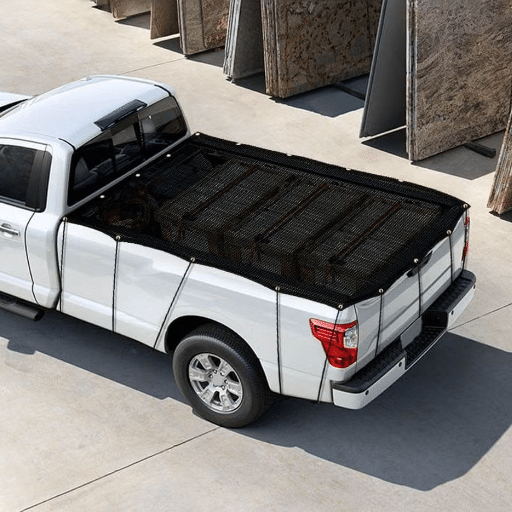
The first thing that should be done while determining the size of a truck bed is to detect the length. This measurement is calculated by measuring from the inside edge of the tailgate to the inner distance of the bulkhead which is behind the truck cab. More so, ensure the measurement is done in a straight line, use a tape measure to do so. In most situations, the standard units are often perceived in intervals of foot and rounded up (e.g., a 5.7-foot bed might be advertised as a 6-foot bed). Furthermore, it is important to understand that you need to be aware of any unusual features. These can include wheel wells, points of attachment of cargo, auxiliary boxes thus interfere with the storage. All this relates enough to fit for accessories protecting the shelter bed so that the edges align and are fully sealed against any access.
Types of Truck Beds
| Type of Truck Bed | Key Features | Common Dimensions | Best Uses |
|---|---|---|---|
| Standard Bed | Most common style | ~6–7 feet long | General use, hauling cargo |
| Short Bed | Compact and maneuverable | ~5–6 feet long | Everyday use, light loads |
| Long Bed | Extra cargo space | ~8 feet long | Construction, heavy equipment |
| Step-Side Bed | Narrow bed, exterior wheel wells | Varies, ~5–8 feet | Style-focused, reduced bed width |
| Flareside Bed | Similar to a step-side design | Varies, ~6–8 feet | Aesthetic and customization |
| Flatbed | Open and versatile surface | Customizable dimensions | Transport large, irregular items |
| Utility Bed | Includes built-in tool storage | Varies by configuration | Service and maintenance vehicles |
| Dually Bed | Dual back wheels for stability | ~8 feet with wider sides | Towing heavy trailers |
| Composite Bed | Made from non-metal materials | Varies, lightweight design | Reduced bed weight, durability |
Importance of Accurate Measurements
It is very important to take precise dimensions measurements on the pickup truck bed so that it can accommodate all requirements of various purposes, be it for personal or commercial use. Precision enables all accessories such as tonneau covers, bed liners, or even toolboxes fit snugly and directly, resistant to any potential damage and wear. Additionally, it is important that one knows the measurements of the space accurately for them to be able to tow or transport anything taking note of the center of gravity and load limits which help in preventing health hazards that come along with the things being loaded abrasively or out of position.
As is the case with the current redesigns of trucking mechanisms where they still weatherwise aerodynamic, robust and with a large load carrying capacity, there is increased development within materials science. This emphasis on the precision is mainly due to the fact that this precision allows for repairs of the truck bed of a truck that has undergone the elevated reason where the truck bed was mostly used as containers of goods.
Common Truck Bed Sizes
Box size for trucks is confined into short beds, standard beds, and long beds. These sizes usually express functional needs and peculiarities in the use of each size. The short bed is the smallest, it measures approximately 5 to 5.5 feet and is often found more on small to medium size trucks providing a good balance for urban driving which requires ease in parking and ease of access, yet having enough space to carry lots of load. The normal beds run from 6 to 6.5 feet; they are very utilitarian – the dual-purpose nature of the bed is what endears it most for people using trucks for personal or professional uses. The long beds come in 7 to 8 feet, they are meant for very heavy tasks or for any sectors where the unit has some bulky goods to transport such as the building or agricultural sector. As with any measurement, there is a range there can be some slight variation for the manufacturer in these lengths.
How to Measure Your Truck Bed

To accurately measure your truck’s bed length, do the following:
- 01
Lower the Tailgate — To ensure that you get to the bed, the very first thing that you do is loosen and drop the tailgate.
- 02
Use a Measuring Tape — Let the measuring tape fall starting from one end of the tailgate, along the length.
- 03
Measure to the Bulkhead — Continue with the tape measure up until the driver’s rear wall (the wall behind the seats).
- 04
Record the Length — Copy the measurement in inches. If using feet, remember to divide by 12.
The length in question is that of your truck bed. The accuracy of the measurements can be ascertained more from a straight tape than a curved one.
Tools Needed for Measurement
There are some inaccuracies as a result, it is not enough to measure truck beds without knowing that the measurements came out perfectly, Arrangement of the most minimal tools aims at putting their exact function in check. These are listed below:
- TAPE MEASURE
It should be at least 25 feet long and of a high quality to be used when measuring the length of the truck bed, even for this type of measure. Sometimes it comes with a locking mechanism to make the process a bit easier. - MEASURING STICK OR STRAIGHT EDGE
Helps to keep the tape straight, especially when the task involves measuring the length over an irregular area. - NOTEPAD AND PEN
It requires a pad and a pen to write down the measurements so as not to forget any of the important key dimensions as they are taken onsite. - LEVEL TOOL
Not required, but recommended, since it helps keep things in place and keeps track of uneven ground, if any. - FLASHLIGHT
For those operating under low light conditions or low visibility conditions, this handy tool will light up that section or any measuring plank points it may cover on location. - DIGITAL CALIPER (IF NEEDED)
Where the dimensions are very small, for example, the thickness of bed liners or rails, a digital caliper is used for very accurate measurements.
An added range of tools enhances the accuracy of truck bed measurements as they may be set in preparation to order accessories, build a default stereo system, or just for record purposes. The presence of these tools reduces errors and time loss in the performance of measurements.
Step-by-Step Measuring Process
-
1
Determine the Starting and Ending Points
Start by describing the specific points to be measured. In the case of truck beds, this usually entails calculating the distance from the interior part of the headboard (the part that limits the cargo space) to the inner part of the closed tailgate. Any measurement should first and foremost address these kinds of sources.
-
2
Measure the Length of the Truck Bed
Using a measuring tape which is believed to be accurately measured, slant it across the bulkhead to the edge of the tailgate. The tape ought to be tight and in a suitable position along the and at the edge of the bellow which extends to the sides of the bed. And by so, they are determined and the conservation of such a will adjust to how straight the measurement is. Write down the measurements using feet and inches or convert them into your desired unit of measure for standardization.
-
3
Verify the Width Between the Bed Rails
Calculate the distance of the room granted between the flanges, in the bed rail walls, at the point where they are in their maximum position. For some trucks, this distance may be uneven along the length therefore, it is suggested that the given measurements be done multiple times to ensure accuracy. Always keep the decision of the lowest measurements if the intent is to mount accessories.
-
4
Determine the Depth of the Bed
Bring the measuring tape to the base of the truck bed and stand the measuring tape vertically up to the highest point of the sidewall. In some edges such as bed liners and toolbox fitments, depths are essential to ascertain compatibility hence these tubes are utilized in such areas.
-
5
Check Wheel Well Intrusion
While the wheel well is inside the bedding, only with trucks that have the wheel well extending in the bed, its lengthwise clearances should be taken from the edge of the Wheel well closer to an opposing wall. Record the length and width of the wheel well because they will be used to section off areas with specific accessory cuts.
-
6
Document the Measurements Clearly
When all necessary dimensions have been taken, you should reconfirm the data to ensure that it is correct. Also, indicate each dimension properly; this will help in avoiding any mix-up when further adjustments and additional purchases are made. To store and obtain information, it is recommended to create an electronic or paper format for ease of use.
Factors Affecting Measurements
- Truck Model and Year — The size of the truck bed may depend on the particular design and model year. The structure of the pickup is often dealt with at a later date and it may change the length, width or even the rigidity of the work areas. For example, some of the most recent models may come with in-built wheel apertures or even accessory fitting points that were not present in the earlier versions of the same model design.
- Bed Type and Configuration — Pickup trucks have a variety of truck bed types that have different lengths – regular, short, and long. There are also specialty configurations, such as stepside and fleetside beds, in some trucks which alter the sidewall design border, and the cargo area is adversely affected in the process. Lastly, the presence of other mechanisms such as tailgates that can be folded or functionalities that can increase the space in the bed also determine the total lengths of the bed.
- Modifications and Aftermarket Additions — Truck bed accessories such as bed liners, toolboxes, tonneau covers, and an assortment of side rails enhance the look and functionality of a truck. While the usefulness of those truck accessories is evident, they usually come at a cost in terms of usable space, and that too is coordinated to the particular truck’s load-bearing capacity, making it necessary for precise measurements to be taken when using or mounting any vehicle accessory.
- Regional Market Variations — It cannot be ignored that trucks manufactured for different markets may differ regarding the dimensions of the loading area because of the cultural and egoistic features of drivers, passenger transport or other societal vehicles, and other factors. As such, most probably an approximate dimension or even an original one will lead to an error as regarding the measurements.
- Material Construction and Manufacturing Tolerances — When it comes to making truck beds, the materials and design techniques utilized can be a source of dimensional deviation which is one of the aspects encountered during production due to tolerance restrictions. High-capacity versions are likely to be crafted from hard-wearing steel or aluminum, which could therefore affect the layout as well as carrying loads.
Choosing the Right Tonneau Cover
-

Choosing the Right Tonneau Cover - 1
Compatibility with Your Truck Model — Make sure the included tonneau is precisely intended for the specified make, model and bed of the truck. Since the dimensions are even slightly wrong, it is expected that the operation will be affected.
- 2
Purpose and Usage — Judge thereby considering whether the cover requirement is to secure items, to protect them from elements, or to increase the aerodynamics of the truck. If you will use it under a heavy workload, consider the tough material covers also known as hard fold and retractable covers.
- 3
Material and Durability — Select what materials are appropriate based on one’s design of soft covers for preserving floor finishes and hard cover versions for maximum safety and stability for goods placed under the covers.
- 4
Installation and Ease of Use — Rate the installation process of the cover — simple, difficult, labor-consuming, or the most efficient, etc. Some versions coming with an easy no-drill set up will not consume a lot of time on the cover poster installation process.
- 5
Weather Resistance — When working under cars in undesirable temperatures is something that is common, go for a cover, which is also coated with waterproof membrane that can protect your luggage and its contents.

It is by considering these basic requirements that you will achieve the best tonneau cover that matches your exact expectations and operational demands wholeheartedly.
Different Styles of Tonneau Covers
| Style | Material Type | Opening Mechanism | Best For | Key Benefit |
|---|---|---|---|---|
| Roll-Up | Vinyl or soft fabric | Rolls along the bed rail | Versatility and easy access | Simple to operate |
| Folding | Hard or soft panels | Tri-fold or bi-fold design | Quick partial bed access | Durable and secure |
| Retractable | Aluminum or hard composite | Slides along tracks | Frequent cargo access | Sleek and lockable design |
| Hinged | Hard material | Lifts up on hinges | Full access when open | Robust and weatherproof |
| Toolbox-Compatible | Mixed materials | Various, depending on type | Trucks with toolbox setup | Extra functionality |
| Snap-On | Vinyl or fabric | Secured by snaps | Cost-effective and lightweight | Easy to install/remove |
| One-Piece Solid | Fiberglass or ABS plastic | Entirely solid cover | Maximum security/weatherproofing | High durability |
Selecting the Best Cover Size
Selecting the right size bed cover for your pick-up truck needs the consideration of many important aspects so as to ensure a good fit as well as optimum functionality. To begin with, you should take proper measurements of the exact length and width of the truck bed starting from the bulkhead up to the inside line of the tailgate. Manufacturers of the bed covers often manufacture custom-made covers for different models and sizes of trucks and also within the model years. Due to this, truck users should be able to correlate the details of the truck such as the make, model and year with the most appropriate cover. Besides, one should be aware that the base types of truck beds such as standard, short and long beds, may affect the required size requirements.
More recent styles of tonneau covers are becoming flexible to support truck accessories such as tool chests and cargo racks. Nevertheless, such abilities cannot be utilized unless proper body lengths are determined to allow the fitment of other hardware. For example, if your ride has a toolbox you should get a model that has ‘toolbox compatible’ written on the product information sticker to avoid fitting problems. Always go through product specs and the installation instructions accompanying them, as these will offer more information on dimensions and any necessary modifications that might be needed. Getting the very right fitting cover is about more than just protecting the truck and creating an effective product, as it also results in higher speed levels and low fuel consumption which makes it a considered factor when one is buying.
Compatibility with Accessories
Whether tonneau covers are interoperable with truck accessories it is also crucial to assess how these connects with other regularly used components like ladder racks, bed extenders, or even tie down systems. Several tonneau covers in the market are made to be compatible with some (if not all) accouterments and even come with internal apparatus, which help in positioning the accessories correctly, e.g., they have drilled holes or compatible crossbars. In some cases, the best tonneau covers to get are the folding and the retractable covers. This is because in contrast to other types of tonneau covers, these ones can be completely or partially opened without intervening with the use of accessories.
Also, even with one accessory thing and for a particular truck some additional accessories may be provided from the same brand but with specific mounts that will blend easily with their cover designs inside the truck bed. Technical details on the cover and the accessory mount if any, are always important so that fitting issues are reduced and the truck’s work capacity increased.
Measuring for Specific Truck Bed Accessories

Please follow these tips to make sure the accessory you are buying for your truck bed will be the right size.
- 01
Measure the Bed Length — Take a tape measure and take a measurement of the distance from the inside edge of the tail gate to the inside edge of the bulkhead. Measures in inches, because the accessories are usually supplied in standard bed sizes: 5.5′, 6.5′, or 8′ for instance.
- 02
Assess the Bed Width — In the case of the parallel surfaces, the width is measured on the maximum level. This will specifically help to accommodate accessories, which are usually bed liners or mats.
- 03
Check for Bed Features — It is better to look twice, checking the presence of any enhancements, if any, such as factory utility rails, tie downs or the tonneau cover mounting kit which may affect how well an accessory can be fitted into the space.
- 04
Consult Manufacturer Guidelines — Consult the accessory application guide or fitment functioning kits, as many accessory manufacturers supply them, to avoid loose fitting accessories with vague specifications, which may not even fit the truck upon completion of the installation.
With precise measuring, there are almost no chances of fixing the wrong accessories or poor working of the acquired accessories within the vehicle’s setup.
Measuring with a Bed Liner
It is important to measure a truck bed that has already had a bed lining included as regards the thickness of the bed’s lining, as it may cause minor discrepancies in the net measurements to be taken. It is best to measure the bed through the interior space at the rear of the truck, including the rigid length which is the interior space form the end of the bulkhead to the tailgate. With regard to the width, the most appropriate measurement must be at the widest part inside the walls considering that the measurements may differ as a result of the liner’s fabric. As you do this, be keen on some edges that might be slanting inward or relieved, as may be the case when provided vents as these may not in other cases allow fitting of certain commodities, such as lockable toolboxes or cargo control systems.
It is also important to measure the height and depth of the bed liner at various spots to take care of imperfections–which are likely to be presence is especially in the case of molded or sprayed-on liners. This shows how precautions in size may result in a thing that does not fit neatly, for example, tonneau covers. It is advisable to use the value of the thickness of the original equipment as appropriate when the electronics warranty is in effect. Dimensions of the component should be checked against any accessible measurements of secondary or primary devices. Proper measurement practices ultimately enhance the functionality and longevity of the installed accessories.
Tools and Toolboxes Considerations
When taking measurements for tools and toolboxes fitted inside the cargo spaces such as in the truck bed, there should be high level of accuracy in determining the placement of the components for effective usage. Primarily, the situation of the area should be surveyed. This includes the width at the wheel wells, the front-to-back length and the height. These will need to be cross-referenced against the dimensions of the tool case or tool storage alternative and ensuring it does not collide with other features or take up a considerable portion of the bed space.
In addition, it is worth noting where the toolbox will be installed across the bed rails, into the center of bed, or along the sidewalls. These differ either in terms of construction feature or mounting method, and arrangements must be prepared as regards the use of appropriate means of fixings. The measures taken should also take into consideration access to the tools, provisions for opening the lid on the tool chest and how practical it is to use the tonneau covers, and even the racks or any other associated accessories. The design of the toolbox shall be such that it doesn’t require maintenance frequently however, the economic factor of including weather-coated materials should also be calculated to ensure the longevity of the product under all foreseeable climatic conditions.
Finalizing Your Measurements

To complete the measurements of the truck bed, the measurements of length, width and depth have to be precise. To measure the width, put a decent measuring tape which will measure the inside of the truck bed from front to back accurately inside and measure the length from where the bed starts to the front lip of the tail gate. For depth, you measure the distance between the top surface of the bed to the highest point of the bed on the bed wall. These dimensions should be double checked to make sure that they measure up correctly as any discrepancies could affect the performance of custom devices or such accessories. Make sure that all applied measurements are assessed in relation to the additional equipment or payload specifications provided by the manufacturer.
Double-Checking Your Measurements
Although errors can hamper installations and equipment suitability, it is always important to make an effort in the midst of other activities. It is important to make an effort to improve the accurate dimensions of the area that is difficult to reach. First of all, to check whether instructions in the manual or the website of the specific brand and car model are available. Then, it is necessary to check that the dimensions you have reached are expected within the permitted positive deviation.
Take extra care, and search the most appropriate sources such as the online communities of car owners, or experts, and mechanism tools, which are especially designed for such operations, in order to reduce the threats of bias, miscalculations or mistakes that can occur. Get that durable tool even as far as a caliper with an industrial or shop-grade measuring tape with a capacity that ensures greater accuracy. Assess risks associated with the place of the measurement accuracy like the ground appearing to be rough or the carriage being over the top. Another important step is to carry out a perfect audit lest the accessories such as bed liners, covers, and racks cannot be properly attached without inflicting damage on the vehicle’s functionality or exceeding its cargo limit.
How to Record Your Measurements
When considering that you may need to match it up with certain additional parts or particular loading conditions, record the correct dimensions of the loading space characteristics. It is advisable to start from determining the bed length which is the tailgate side point in the position of the gate closed up to the truck cab point. To facilitate this task recommend that she use a neat adhesive measure so as to obtain a perfect length – this measure ought to be a straight ruler, possibly a strong wooden one. Here, make sure that there are no bed liners on the edge or there is no tear on the edge of the bed.
Then, evaluate the bed width by calculating the length between the two walls of the bed at their maximum span. When some parts of the bed are gradually smaller or outward inclined, keep the shorter dimensions to enable a smooth adaptation to certain bedfittings. As for bed depth, you need to compute the distance between the top edge of the side walls and the bottom make of a truck bed. This depth is particularly necessary for the fitting of covers or any other encasing systems.
On top of that, attention should be paid to the dimensions of the wheel arches built inside the bed, because they can influence the usable width and the spacing of storage containers. Please record these measurements accurately both in inches and millimeters to cater to the various requirements set by companies. Obtaining precise information and recordings of the measurements is imperative to integrate well any accessories and make the best use of the truck bed in practical terms.
Frequently Asked Questions
Reference Sources
- Mapping Heavy-Duty Truck Alternatives
ucs.org — UCS Mapping Heavy-Duty Truck Alternatives Methodology (PDF) - Balancing Regulation and Innovation: The Future of Greenhouse Gas Emissions Management in US Heavy-Duty Transportation
papers.ssrn.com — Abstract ID 4950185