Being a US-based importer, finding wholesale tarpaulins can be regarded as both a beneficial asset and a challenging task at the same time. Regardless of whether it is in relation to building sites, agriculture, or on the other hand general supply coverage, it can not be overemphasized how one must look for the best tarpaulins at the lowest cost because this enhances the structure of the supply chain. We go through all this in the intention of learning how to find reliable suppliers, interpret product substance, and work with trade barriers, to give effective management control over the situation and responsibilities of the department. At the end of this material, you will possess the understanding required about the sourcing aspect and improving this dimension of your business as well as gaining other relevant tips.
Understanding Tarpaulin Types

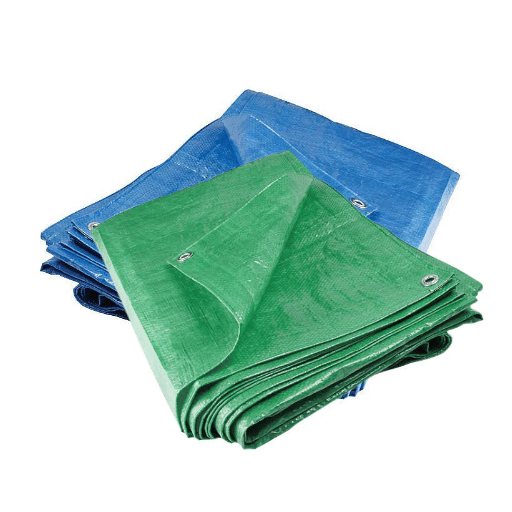
It is possible to differentiate tarpaulins on the basis of the material used which provides specific features and benefits to suit different applications:
-
01Polyethylene (PE) Tarpaulins
PE plastics are light, water-resistant, and affordable. This makes the material useful as sheltering during constructions, particularly in the instances where they are needed only for a short period of time. Such materials also find their application in design, since they can also be used in agricultural functions, for the soil protection measures. -
02Polyvinyl Chloride (PVC) Tarpaulins
PVC tarps enjoy popularity in the market thanks to their features related to their power, elasticity, and resistance to changeable weather conditions. Declaratively, PVC tarps are up for industrial use, heavy-duty outdoor tasks, and automotive covers in view of their hardiness with respect to scratching and their water repellent abilities. -
03Canvas Tarpaulins
Woven using natural fibers, canvas tarps are air-permeable and resilient at the same time. These are typically used to shield machines which have the tendency to produce condensation or some other forms of applications that do not need waterproofing, where waterproofing is required or operations coming to a stop such as truck beds or house paint works. -
04Mesh Tarpaulins
Mesh tarps are designed for use where air movement as well as partial or total shading, is required. They are commonly used in building, like pipe/scaffolding, shade sails and perimeter screens and boundaries which do not resist the wind except for normal wind loads that are weak.
Every tarp performs a specific task based on its own design, hence the identification of the intended use helps in selecting the appropriate solution.
Overview of Different Tarpaulin Materials
| Material Type | Durability | Waterproofing | UV Resistance | Best Applications |
|---|---|---|---|---|
| Polyethylene (PE) | High | Fully waterproof | Excellent | Construction, agriculture, storage covers |
| Polyvinyl Chloride (PVC) | Very high | Fully waterproof | Superior | Truck covers, industrial use, heavy-duty |
| Canvas | Moderate to high | Water-resistant when treated | Moderate | Camping, temporary shelters, artistic use |
| Mesh | Moderate | Not waterproof | Good | Shade structures, windbreaks, privacy fencing |
| Nylon | Moderate | Water-resistant | Limited | Lightweight covers, temporary outdoor use |
| Rubberized | Very high | Fully waterproof | Average | Extreme weather covers, industrial tarps |
| Silnylon | Moderate | Waterproof with silicone coat | Limited | Ultra-lightweight, backpacking tarps |
PVC Tarpaulin vs. Other Materials
Renounce from netted coverings as covers which are supposed to help in repelling water or protect you against the UV radiation and wind can even benefit with using PVC materials. It seems that the canvas or nylon covers could be a better option but due to the high tear and abrasion thresholds, PVC material is better suited for the heavy operations where the lifecycle of the cover is extensive, such as for the trash heaps, truck covers and more. In the event of rain showers or hailstones, it is not easy to tear even compared to the most common netted roof coverings. For example, it does not only give water on every tile fall, but also shields against the ultraviolet rays from the sun, and there is no wind effect.
Targeting the rubber materials, PVC laminated tent performs effectively without incurring heavy costs. Some rubberized textile definitely offers better protection from penetration of water, but it is also heavier and does not adhere to as many uses as PVC coating. It can also mean that ultralight fabric, such as silnylon, has great strength to weight ratio, but PVC material is stronger in design and construction methods, so it tends to tear in a relatively easier way than other types of PVC coated material. This very quality makes PVC laminated tarpaulin, a better choice both in heavyduty and light duty uses when durability is important. Moreover Variable chemistry of the plasticard has improved rendering it strong even when subjected to harmful elements such as dampness, heat, and chemicals.
Heavy-Duty Tarpaulins and Their Applications
Heavy duty tarpaulins are specialized textiles that are used to fulfill the needs of both industrial and outdoor applications. Construction, agriculture, transportation, and relief services tend to use heavy duty tarpaulins because of their robust nature, waterproofing, and their ease of use. Heavy duty tarpaulins built especially for construction sites are used to drape facades of other buildings and certain equipment to protect them from rain, snow, and especially ultraviolet light. Farmers appreciate the efficiency of the coatings for rake silage, construct quick tents, or anchor fertilizing tanks firmly to the ground in order to prevent unwanted disposal.
It is important to highlight that heavy-duty tarpaulins are involved in the organization of transportation. These tarps, which in some cases are used as truck bed fillers, will protect whatever is inside the truck from rain and the weather. They are even used to provide shelter in times of calamities such as flooding. Not only do they provide shelter, but tarpaulins are equally used to cover supplies, damaged infrastructure, and make shelters as required to aid the affected individuals promptly. The above reasons are the basis to consider tarpaulins as an imminent threat in special restoration endeavors. Thanks to the numerous reinforced layers making it difficult for the tarp to tear, the tarp is most importantly very resistant to tearing.
Selecting the Right Tarpaulin

When determining the most suitable canvas, it is advisable to carefully assess the requirements of the application. The first thing should be to select the type of canvas to be used, either polyethylene or PVC on the basis of features such as suitability, adequacy or water permeability. Additional aspects that need to be looked at include the size of the tarp and its thickness to see if the entire area can be covered and if the fabric will withstand the pressure it is intended for.
When the weather is heavy prolonged exposure to the sun or rain, it is important to look at the weather protection wear and tear, in terms of UV protection and waterproofing, as well as if other means are not possible. Equally important is the provision of other features such as reinforcing bends, placing of grommets and resistance to tearing to attack-proof, which is most enhanced in case of the exposure to materials for a longer time. Finally, ensure that you get an item that is crafted to your specifications and that meets the standards of each sector regarding quality and service supply.
Key Features to Consider
-
01Material Composition
The longevity and utilization of tarps are influenced dramatically by the materials comprising these sheets. Primary materials are known as polyethylene, canvas, and vinyl. For instance, polyethylene tarpaulin is light in weight yet still waterproof; therefore it is mostly used in making temporary shelters to cover items. Canvas is used in stitching fabric, which allows air to pass through but most importantly, can also take on heavy activities. -
02Thickness and Weight
The measure of thickness of tarpaulins is in mils (thousandths of an inch) while that of its weight is in square yards of ounces. Generally, thicker tarps, say 10 mils or more, are much better when it comes to resisting tearing and being more durable though for protective use, they may depend on the weight, mils under 5. -
03Weather Resistance
Advanced technology has bestowed various qualities for tarpaulins such as water resistant, UV protection and also mold repellent in the polymer materials. A well-crafted tarp must not only stand up to more than a few degrees of heat, it should be waterproof to resist even the heaviest downpour. Also, check for a weatherproof coating like polyethylene, which is a solid advantage for the user. -
04Reinforced Edges and Grommets
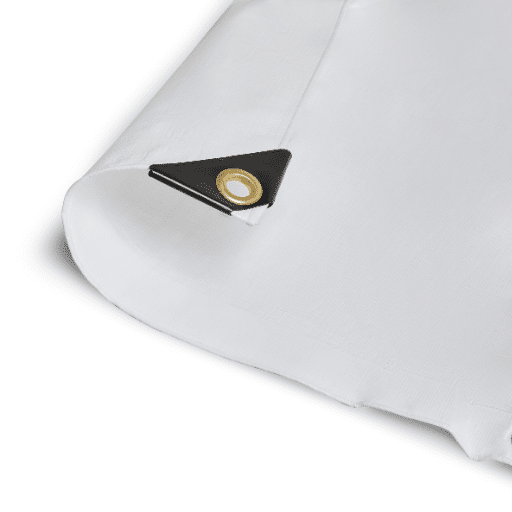
Check where tarpaulin does have heat-sealed edges, and offset the grommets so that they prevent appearance of rust after all, in such a way both techniques facilitate effective usage and reinforce the structure. Higher rectifications are made on tear resistance including edge reinforcement that sanctifies a metal hole in tarp pit. -
05Tear and Abrasion Resistance
If the environment or use becomes too demanding, there are tarps that have been made greater resistance towards being torn or abraded. Aspects such as the fabric content in the tarp being greater in terms of the denier makes it stronger thereby making such a tarp good for heavy duty or extreme stress use. -
06Size and Customization Options
Ensure that the size matches, taking ample margins or slack into consideration while ensuring that there is enough interest in the finished product. Finally, the opportunity to select colors that will blend into or contrast with the surrounding environment can be a luxury for every man or woman.
Understanding GSM and Its Importance
Fabric’s weight is expressed in terms of GSM, that is, grams per square meter and impacts the strength, thickness, and wear resistance of the tarps directly. This is why GSM increases are normally proportional with the thickness of the fabrics since thicker fabrics perform the best under such stress. To further this, applications calling for the use of fabric could push lower end weight generally around a minimum of 70 GSM to a maximum of 100 GSM. Indeed, heavier tarps may exceed 250 GSM or way above this offering better protection against tear, wear and environmental aggressions reinforcing this point even further.
The importance of GSM is that it enables comparison of materials in an efficient way. The higher GSM of the tarp can help in providing better weather protection properties, higher UV protection properties and higher load bearing capacity. Therefore, it’s important to choose the most appropriate GSM for a product depending on the purpose; be it because equipment is to be used in very harsh environments or when carrying goods. Making a comparison of GSM with others such as for instance, waterproofing coatings or reinforcing of its edges is essential in striking an efficient solution – where form meets function.
Choosing the Right Grommet Options
When choosing among various grommet options, one should mostly focus on the nature of the material, as well as its positioning and the purpose of its use, so that maximum optimality is achieved. Grommets are normally produced using materials depending on what is most suitable for the application, typical of which includes but not limited to, stainless steel, brass, plastic or rubber with specific properties for most applications. For instance, stainless steel grommets display superior resistance to corrosion, and are therefore a good choice for outdoor and marine applications, whereas brass grommets are preferred because they are hard wearing when applied to industrial uses.
Furthermore, the distribution of grommets and the frequency at which they are placed play a significant role in load transfer and structural safety. The absence of adequate spacing promotes uneven stress distribution, which increases the probability of fabric failure. It is also feasible to use custom grommets made of heavy duty components or bolt through washers for strength improvements, especially in high load cases. If we go in depth on each of these issues, it is possible to enhance the properties and lifespan of grommeted materials used in wide-ranging applications.
Identifying Reliable Tarpaulin Suppliers

In order to find tarpaulin suppliers that you can trust, prioritize the ones whose products regularly maintain a certain quality. I would advise you to coordinate with such manufacturers or sellers that explain details of their products such as composition, strength, anti-UV additives, weight, thickness, and so on. Learn if the said fabric conforms to any standards, since it is a sure bet that the marked goods meet a set of requirements specifications and other conditions of safe use. Think and select potential suppliers that provide the options to modulate the final product as it is an indicator of their capabilities and works beyond the set standards. The experience and judgment of clients that have worked with the seller previously, some of them being very complicated, are ideals. Lastly, have the company have cases with the client’s warranty because it would make the partnership more trustable and reliable.
Researching Tarpaulin Manufacturers
When choosing the right advertising truck maker, start with the acquisition of information regarding the organization’s accomplishments and resources for the manufacture of such materials. It is the reason many top performing manufacturers use rather practical techniques for instance high-frequency welding, as well as precision coating to guarantee toughness and robustness following environmental exposure. It is important to establish the materials, particularly cells either through polyethylene, PVC, or cotton and what is more, to ensure they will not be affected by other factors such as ultraviolet, water, and the risk of ripping.
Moreover, assess how wide and how extensive their distribution chain is. These are the firms that are preferred as they can control the supply chain effectively and reduce delivery time. In this respect, it would not be reasonable for you to overlook installation of facilities and their enlargement. Also industry reviews can provide much-needed information on whether such companies are compliant with the standards of quality assurance such as ISO 9001.
Yet also, do keep yourself updated on any new methods or technologies in the manufacturing of tarpaulins like in eco-friendly fabrics or even stronger and lighter materials. For this reason not only you will be able to choose the best supplier whose technologies are most advanced, but your choice will be absolute and long-term recourse on the aspect of sustainability concerning the methods.
Evaluating B2B Platforms for Sourcing
Before you start short listing a few B2B sourcing platforms, keep in mind the importance of the provider’s standing, trustworthiness, and the number of their suppliers. In solution areas where search algorithms and supplier databases are complex and involve advanced technology, more exact and detailed requirements can be matched more accurately. Look at the verification program available on the site for compliance of suppliers with the market requirements and the need of reputable suppliers obligations to be seen as satisfactory. Similarly, solutions that have the functionality of filtering applications will help to screen based on elimination factors such as location, certification, and product offering. Do not forget to pay the most attention to the customer feedback and the success stories, as they would be the practical indicators of how useful the solution can be. Such a thorough probe enables companies to find the right vendors sooner and to manage vendor selection risk.
Assessing Supplier Reliability and Reputation
Addressing the reliability and reputation of the supplier necessitates a comprehensive method – one that consists of both quality and quantity data. Start by examining the supplier’s industry certifications and rules conformity, they usually set the standards for virtues. In addition to examining this information, it is advisable that the company analyzes the trends of certain performance indicators such as the percent of deliveries that were on time, the quality of the product, and how likely customers are to repurchase over a certain period.
Another significant issue is the financial outlook of the supplier, which is why it was important to verify it from annual reports or credit ratings. An established as well as a sound financially supplier always ensure that there are no hiccups within the production or the delivery of services. Besides, they tend to deploy rather detailed due diligence processes inquiring about the opinions of the users of the services and third parties. This can include industry testimonials or even studies and reports provide that can draw an opinion with respect to supplier’s standards, deliveries, and readiness to adjust where assistance is needed.
And, especially because such limitations reduce the company’s exposure to such suppliers, companies must directly engage in existing clients’ networks and conduct surveys or interviews. According to this, it is the existence of a cause-and-effect relationship that guarantees that the decisions made are backed up by trustworthy references. This minimizes the risk involved in forming wrong alliances and enhances more reliability in the entire systems of the supplier evaluation.
Navigating the Import Process

-
01Understand Import Regulations
Look for the requirements for importing goods to be followed in your particular jurisdiction such as the need for licensing, customs taxes and therefore an accompanying product. For a comprehensive report on figures, it is recommended that we use the information from government trade sources or customs offices. -
02Classify Your Goods Correctly
Categorize all the goods you plan using the Harmonized System (HS) code. This method helps in correct filing of documents, accurate payment of duties and speed clearing at ports. -
03Verify Supplier Compliance
When working with partners that meet the requisite quality and certification activities, most businesses will do business following internationally accepted best practices. Besides, when it comes to all the additional documentation such as invoices and packing lists, make sure there done properly. -
04Select a Reliable Freight Forwarder
Using the services of a freight forwarder for managing shipments is helpful because they can take care of shipping, customs clearance and warehousing in case, possible. -
05Prepare Documentation Thoroughly
Most important documents usually include the order form, invoice, certificate of the area of origin and also the waybill. Remember to ensure that the documents conform to all the customs requirements as that can lead to clearance delays. -
06Monitor Shipment Progress
Instead of holding back, avail relevant freight handling tools such as those offered by carriers and keep track of goods in the pipeline. This of course, implies that potential operational deficiencies such as storage, overstock or understock, material handling, just to mention a few will be completely avoided due to advance warning systems.
Understanding Tariffs and Import Regulations
Applying several tarpaulins, it is useful to locate the respective harmonised tariff classification codes and relevant Customs regulations even before ordering sails. Most commonly, these codes are known as the Harmonised System (HS) and outline the duty rates and taxes that are imposed on goods once they are brought into the country. In relation to carpets or plastic, these codes are of two types- based on the industries the commodity is classified under. This is why accurate classification is important, not only to ensure compliance but also to minimize the risks related to fines or any kind of delays.
Import regulations also differ by country but may include such matters as minimum standard/specified provision of indicators, labelling requirements, and environmental protection compliance standards are also provided. For example, in very high risk countries certain fire ratings for insulation and also use of polyvinyl chlorides (PVC) may be restricted. In such cases, it is advisable to either seek advice from the customs office or use an appropriate database search to clarify the information.
Moreover, the updated global trade policies and protocols redesigning, it will have an influence on the cost of operations and role that importation plays in the business. Regular reviews for any duty reductions, exemptions and changes in customs formalities is important if one intends to continue profit generation and running the business without any hitches. All this said, it is important not to just know but integrate these facts into the purchasing activities so as to improve the way in which imports are handled and prepare to face any unknown challenges that may arise.
Documentation Required for Importing
The successful transportation of goods from one country also relies on the provision of voluminous paperwork the contents of which much depends on the goods being transported and the country to which they are to be transported. Standard documents list also includes a commercial invoice, which contains information about the goods being sold and their price, a packing list that lists the contents of the shipment, a bill of lading or airway bill as the document proving the existence of the agreement between the carrier and the shipper. The document process also requires the inclusion of a certificate of origin, which is used for determining the origin of the goods and their eligibility under some trade agreements or community preferences.
Additional documents may be import permits that are required to enter certain countries, say for agricultural or high industrial machines, inspection certificates to see if things do meet all the standards. Customs documentation is very important and it involves the proper classification of items under the Harmonized System (HS) thereby specifying relevant duties and taxes. Policies evolve and new measures are put in place such as updates to sanitary and phytosanitary measures or the introduction of electronic documents to ease compliance. Having the necessary paperwork perfect and brief also makes it easier to get through customs and this way risk of penalties or loss time is reduced.
Quality Control Measures

Striking the quality of the tarpaulin that is imported implies the necessity of following strict procedures throughout its inspection. A few key points include assessing composition to ascertain how strong and resistant it is to factors such as UV radiations, water and tearing. It is important to evaluate the seams and also the tension while in use, so as not to be too porous and weak. Another checkpoint would be to assure the dimensional part as to verify that the tarp that has been bought is according to the specified size and also its thickness. Where possible, flame retardant examination will be necessary as well. Evaluating the credibility of suppliers and their conformation to the various international standards such as ISO 9001 is done additionally to ensure that the quality of products remains unaffected throughout the chain.
Ensuring Product Quality with Inspections
There are many common faults that could affect the functionality of any imported tarpaulin and in a few instances, the durability as well. Uneven or incompletely applied coats or laminates is a particular problem that can affect the material’s water repellency. It is advisable to check for holes or other external features of the material that might readily facilitate moisture transmission. Also, check the stitching or heat sealing of the seams for how well they are done, since poor or bad seams may tear even at normal service loads.
It is also important to account for color fastness of exposed Tarpaulins when subjected to extended Ultraviolet (UV) light, as there may be fear of unpleasant fade-out which can hint possible physical deterioration. Out-of-shape conditions wrapping, such as oversize and under- or oversized is thin, should also be made, including their impacts on feasibility of uses, underperformance. Where applicable, UV and fire tests should be conducted to confirm that the required standards are met and that the use of the material is appropriate. The manufacturer of rubber seals for example will know how to protect them from UV exposure when he makes up the additional specifics. Organisations can deliver top quality tarpaulins while avoiding risks through quality control exercises conducted in any of quilt organizations as a result of addressing these concerns surfaces systematically.
Heat-Sealed Seams and Their Benefits
In the tarp production of today, seam heat protection is a must mainly in the case of the imported tarp, because its quality and performance are of a greater priority. This is an operation that allows covering the tarp clips with few overlapping layers, and then the excess material will have to be heated or undergone high frequency or ultrasonic waves after which the two plastics will be sealed. Unlike sewing method, heat binding increases the capacity of a tarp cover to withstand other chemicals and includes possibilities of resisting wetness, air, UV rays, heat and at worst mechanical shock-vector applicable for ultimate weather and engineering systems.
Research indicates that the heat-sealed finishing of the materials is capable of improving the life of a polyethylene tarpaulin in severe conditions by 20 to 30%, contrary to sewn options where the finish is within the thread count. In addition to this, when external elements like sunlight or water comes in contact with such seams, there is a large risk that they could start decomposing, which is not the same for the cut-and-sew materials since there are no heads of stitches for the threads to break away.
The same stitched seams are weaker in confined areas where the strap is sewn to the fabric and stretched and the fabric may be disposed in a short span of time as the fabric breaks.
Establishing Quality Standards with Suppliers
When importing tarpaulin, there is a need to set rigorous quality benchmarks that can be met by the suppliers. The evaluation always covers the scope and proportion of materials, the efficiency of production methods and of course, the confirmation of adherence to various international certifications. Other important features to be considered would be the tensile strength, the UV resistance of the material used for the tarpaulin, its capacity in waterproofing, any popular measure known as GSM grams per square meter, that has a direct influence on the strength and durability of the tarp and its operational capacity. Recent findings in the manufacturing field maintain that blends of high density polyethylene (HDPE) and polyvinyl chloride (PVC) are quite effective since they show notable wear and tear resistance as well as other environmental elements.
Vendors should be compelled to supply accredited lab-verified test certificates confirming quality management system as per ISO 9001 and coated fabrics as per ISO 1421. Moreover, effective methods of quality control at each stage of operation and prior to dispatch are important not to avoid missing any untoward incidents. Analysis shows that proactive quality control enables a significant decrease in the rate of defects up to 25%, thus minimizing losses and ensuring consistent production of high quality products for the end-users. The adoption of such policies not only ensures the reliability of the products but also enforces better relationships with suppliers as there is a kind of adherence in every shipment that is made.
Frequently Asked Questions
Which tarp materials are best for industrial applications and different industries?
What is the importance of GSM and seam integrity when selecting a tarpaulin?
How do lead time and production capacity affect sourcing a tarp from overseas wholesalers?