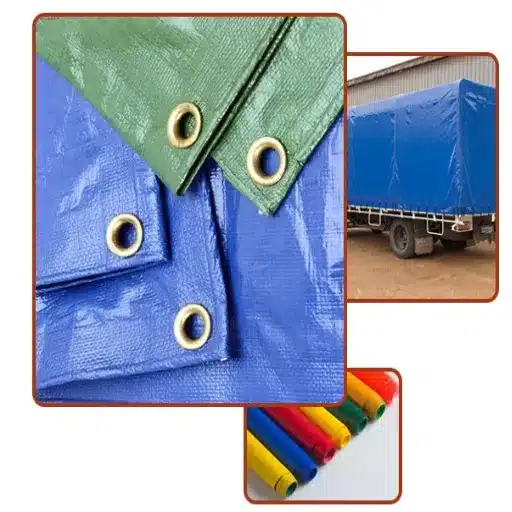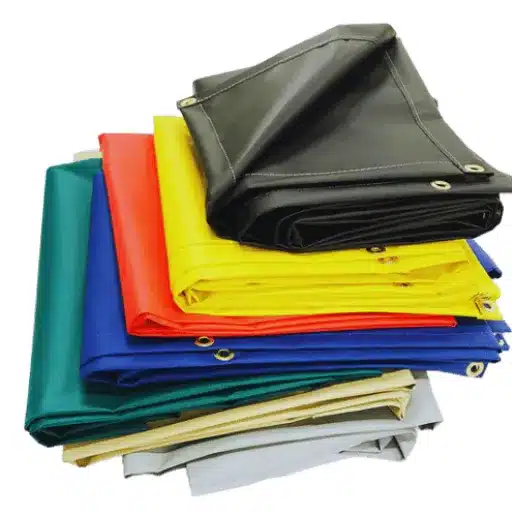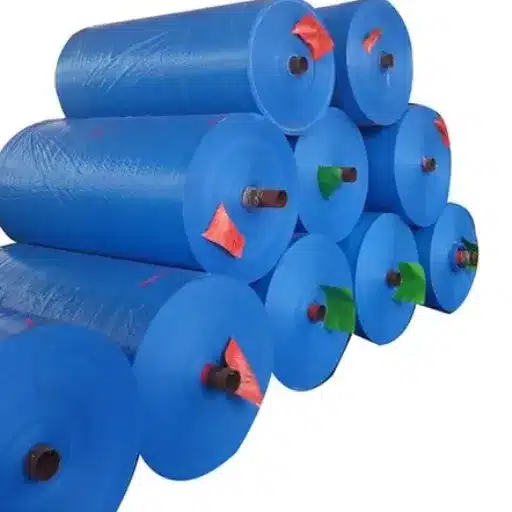
Clear PVC tarpaulin is a transparent, knife-coated polyvinyl chloride sheet that transmits 80 to 88 percent of visible light while delivering full waterproof protection and a 5 to 10 year outdoor service life when properly UV-stabilized. It is the material of choice when you need to keep a space dry without losing visibility or natural light.
After three monsoon seasons, the patio enclosures at a Singapore restaurant chain still looked nearly new. The owner had specified one detail at order time that made all the difference: UV-stabilized 0.5mm clear PVC tarpaulin with white-reinforced edges. Most clear tarps on the market do not last that long. They yellow, haze, and crack within 18 to 24 months because buyers don’t know which specifications matter.
This guide walks you through the four specifications that determine clear PVC tarpaulin performance, thickness, UV stabilization, reinforcement, and grommet pattern, and shows you how to match them to your specific use case.
Key Takeaways
- Quality clear PVC tarpaulin transmits 80 to 88 percent of visible light and stays fully waterproof for 5 to 10 years.
- Standard buyer thicknesses range from 0.3mm (light DIY) to 0.8mm (heavy industrial), with 0.5mm covering most outdoor enclosures.
- Yellowing and haze come from missing UV stabilizers and plasticizer migration, not from clear PVC itself.
- Custom factory orders let you spec thickness, width, reinforcement color, and grommet spacing without distributor markup.
- Verify quality with a sample request, a cold-crack rating, and accelerated weathering test data before placing a bulk order.
What Is Clear PVC Tarpaulin?
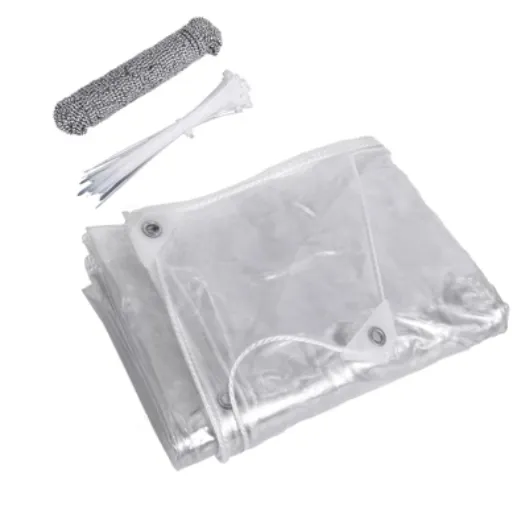
Clear PVC tarpaulin is a transparent waterproof sheet made from polyvinyl chloride, manufactured either as a homogeneous PVC film or as a PVC layer bonded to a clear reinforcing scrim. Unlike opaque PVC tarpaulin, the formulation skips colored pigments and uses optical-grade resins that let light pass through.
The result is a material that protects against rain, wind, and dust while preserving visibility and daylight. Crystal clear tarpaulin is the marketing term for the highest-clarity grade, where light transmission can reach 88 percent. Standard clear PVC tarpaulin sits in the 80 to 85 percent range, which is still higher than most window glass.
Clear PVC tarpaulin pairs well with the wider PVC tarpaulin product range when you need a mix of opaque and transparent panels in the same project. It is the natural choice for buyers who want PVC’s durability and waterproof performance without sacrificing line-of-sight.
Thickness Guide: Mil, mm, and What They Mean
Two measurement systems show up in clear PVC tarpaulin specs. Mil is common in North America (1 mil equals 0.0254mm). Millimeters dominate in Europe, Asia, and most factory-direct sourcing. Below is a buyer’s reference chart for the most common grades.
| Thickness (mm) | Thickness (mil) | Light Transmission | Best Use |
|---|---|---|---|
| 0.12 to 0.3mm | 5 to 12 mil | 85 to 88% | DIY covers, short-term projects, indoor partitions |
| 0.3 to 0.5mm | 12 to 20 mil | 83 to 86% | Patio enclosures, gazebo curtains, light greenhouse use |
| 0.5 to 0.8mm | 20 to 30 mil | 80 to 84% | Heavy-duty outdoor enclosures, restaurant patios, industrial partitions |
| 0.8 to 1.0mm | 30 to 40 mil | 78 to 82% | Permanent structures, marine environments, extreme weather |
| 1.0mm+ | 40+ mil | Varies | Custom industrial applications, OEM specifications |
Two thickness ranges cover most B2B buyers. The 0.5mm grade is the workhorse for patio enclosures, restaurant covers, and standard outdoor installations. The 0.8mm grade handles industrial partitions, year-round outdoor structures, and high-wind environments.
For thicker custom grades, a factory-direct manufacturer can quote 1.5mm or 2.0mm clear PVC tarpaulin for niche industrial applications.
Need a specific thickness for your project? Request a custom quote and our team will recommend the right grade based on climate, duration, and load conditions.
Top Applications for Clear PVC Tarpaulin
Clear PVC tarpaulin earns its place in projects where opaque covers would block too much light or visibility. The most common applications fall into five categories:
- Outdoor dining enclosures: Restaurants, cafes, and bars use clear PVC side curtains to extend patio seating into shoulder seasons and rainy weather without losing street appeal.
- Greenhouses and cold frames: High light transmission supports photosynthesis while the PVC layer outlasts standard polyethylene film by 5 to 8 years.
- Patio, porch, and pergola enclosures: Residential and hospitality buyers use clear panels as removable side walls for protection without sacrificing the view.
- Industrial partitions and curtain walls: Workshops, warehouses, and food production facilities use clear PVC to separate zones while preserving line-of-sight for safety and supervision.
- Equipment viewing windows and inspection panels: Manufacturing lines, livestock barns, and storage facilities use clear PVC where monitoring conditions or processes matters.
A Texas greenhouse operator named Daniela had been replacing 6 mil polyethylene film every spring for nearly a decade. The recurring cost and the labor of seasonal replacement eventually pushed her toward 0.5mm UV-stabilized clear PVC tarpaulin. The upfront cost was about four times higher than PE film, but seven years later, her cover is still serviceable. Total cost of ownership dropped by roughly 60 percent over that span.
Clear PVC tarpaulin also works well in seasonal applications such as outdoor event tents, mobile food vendors, and pop-up retail structures, where the customer needs to see the product or the chef.
Clear PVC vs Opaque PVC: When to Choose Each
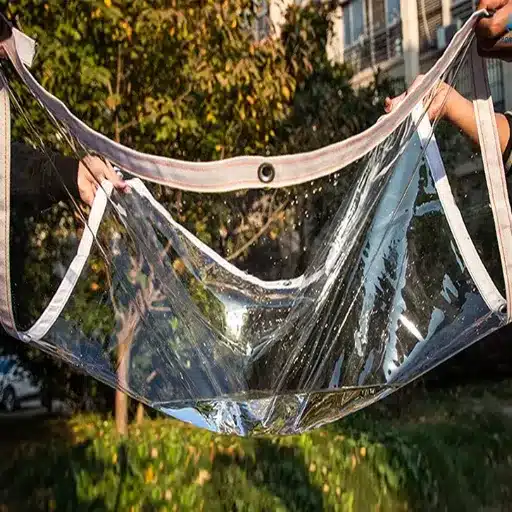
The choice between clear and opaque PVC tarpaulin comes down to four factors: light, heat, visibility, and cost.
| Factor | Clear PVC Tarpaulin | Opaque PVC Tarpaulin |
|---|---|---|
| Light transmission | 80 to 88% | 0 to 5% |
| Heat absorption | Lower (light passes through) | Higher (light absorbed by pigment) |
| UV exposure to interior | Higher (UV partially blocked by stabilizer package) | Minimal (UV blocked by pigment + coating) |
| Visibility through cover | Full | None |
| Cost (per square meter) | 10 to 25% higher | Baseline |
| Best for | Greenhouses, patios, partitions, inspection windows | Truck covers, machinery, storage, fire-rated applications |
Choose clear PVC tarpaulin when natural light, visibility, or plant photosynthesis matters to the application. Cold-climate greenhouses, hospitality patios, and inspection-critical industrial partitions are textbook fits.
Choose opaque PVC tarpaulin when you need maximum UV blocking, heat reflection, fire-retardant certifications, or when visibility is unnecessary. Truck and trailer covers, machinery storage, and long-term construction tarps fall into this category. The heavy-duty waterproof tarpaulin range is built primarily for these applications.
Many B2B projects use both. A restaurant patio might combine an opaque roof with clear side curtains. A workshop might mix clear partitions with opaque outer walls. Specifying the mix at the factory level is more cost-effective than sourcing from multiple suppliers.
Lifespan, Yellowing, and How to Prevent Haze
The single biggest complaint buyers have about clear PVC tarpaulin is haze. After 12 to 24 months of outdoor use, low-quality covers turn milky, lose transparency, and start cracking along stress lines. Understanding why this happens is the difference between a cover that lasts two seasons and one that lasts ten years.
Three failure modes drive haze and yellowing:
- UV degradation: Ultraviolet radiation breaks the chemical bonds inside PVC. Without compounded UV stabilizers (Hindered Amine Light Stabilizers and UV absorbers at 3 to 5 percent concentration), the polymer chains break down and the surface clouds over.
- Plasticizer migration: PVC contains plasticizers that keep it flexible. In low-quality formulations, those plasticizers migrate to the surface over time and create a hazy, oily layer.
- Surface contamination buildup: Dirt, pollutants, and bird droppings react with the PVC surface if not cleaned regularly, leaving permanent staining.
A genuine UV-stabilized clear PVC tarpaulin lasts 5 to 10 years outdoors before haze becomes noticeable. The same product in temperate climates with proper maintenance routinely reaches the upper end of that range. Tropical and high-UV environments shorten the range to 3 to 5 years even with the right formulation.
For deeper coverage of the chemistry behind UV protection, see our UV-resistant PVC tarpaulin guide, which walks through HALS, UV absorbers, and inhibitor concentration specifications.
Maintenance habits that extend clear PVC tarpaulin life:
- Clean monthly with mild neutral soap and lukewarm water. Avoid detergents, solvents, and abrasive scrubbers.
- Rinse thoroughly and let the surface dry completely before folding or storage.
- Store rolled, not folded, to prevent permanent crease lines and stress whitening.
- Inspect grommets and reinforced edges every quarter; replace fastening hardware before failure.
Custom Specifications Worth Asking About
Most clear PVC tarpaulin sold through retail channels comes in fixed sizes with limited options. Factory-direct sourcing opens up custom specifications that meaningfully change cost-per-use and project fit. Worth specifying:
- Thickness in 0.1mm increments: Factory production can hit exact targets such as 0.45mm or 0.65mm when standard 0.5mm or 0.8mm is not quite right.
- Width: Standard rolls run 1.5m to 3.2m wide. Custom widths are available for OEM applications, including narrow strips for curtain wall systems and extra-wide for seamless coverage.
- Reinforced edge color: White is standard. Custom edge colors (gray, brown, contrasting brand colors) are common for hospitality and architectural projects where aesthetics matter.
- Grommet spacing: 20 to 24 inches is the default. Custom spacing of 12, 16, or 18 inches is available for high-wind areas or precision-mounted installations.
- Grommet type: Brass, stainless steel, or zinc-plated. Stainless is preferred for marine and food-production environments.
- Edge reinforcement type: Welded hem, double-stitched webbing, or rope-edge depending on load and aesthetic needs.
- Sheet vs roll format: Pre-cut sheets to your dimensions or bulk rolls for fabricator processing.
- MOQ flexibility: Factory orders typically start at 500 to 1,000 square meters, but OEM programs can accommodate lower MOQ for specialty projects.
A German workshop owner named Andreas needed 0.8mm clear PVC partition walls to contain coolant spray in his indoor machining bay. Standard 0.5mm products were too flexible for the wind generated by his ventilation system. A custom 0.8mm spec with 16-inch grommet spacing solved the problem in a single order.
How to Verify Quality Before Ordering
Specifications on a product page are easy to write. Verification is what separates a reliable supplier from a risky one. Five steps before placing a bulk order:
- Request a physical sample: A fingertip test reveals coating thickness and flexibility. A fold test exposes brittleness that data sheets hide.
- Ask for cold-crack rating: Quality clear PVC tarpaulin stays flexible to −30°F (20 mil) or −40°F (30 mil). Get the rating in writing.
- Request accelerated weathering test results: ASTM G154 or ISO 4892 simulate years of UV exposure in a lab setting and provide proof of UV-stabilizer performance.
- Verify the inhibitor package: For outdoor use, the supplier should be able to confirm a UV stabilizer concentration of 3 to 5 percent.
- Confirm the manufacturing method: Knife coating bonds PVC into a reinforcing scrim with stronger durability than calendered or laminated processes. Ask which method is used.
A supplier that answers these questions clearly is worth trusting. A supplier that deflects or refuses to share specs is sending a signal worth heeding.
For technical reference, the American Society for Testing and Materials (ASTM) publishes the standard methods used to test PVC weathering performance, and the International Organization for Standardization (ISO) maintains the global ISO 4892 weathering protocol.
Frequently Asked Questions
Is clear PVC tarpaulin waterproof?
Yes. Clear PVC tarpaulin is 100 percent waterproof when manufactured with a continuous knife-coated PVC layer. Quality covers also resist mildew, chemicals, and grease, making them suitable for restaurants, greenhouses, and industrial use.
How long does clear PVC tarpaulin last outdoors?
A UV-stabilized clear PVC tarpaulin lasts 5 to 10 years outdoors in temperate climates and 3 to 5 years in tropical or desert conditions. Untreated PE alternatives typically need replacement every 2 to 3 years.
Why does my clear PVC tarp turn yellow?
Yellowing and haze come from three causes: UV degradation in tarps without proper stabilizers, plasticizer migration in low-quality formulations, and surface contamination from dirt and pollutants. A genuine UV-stabilized product paired with monthly cleaning largely prevents all three.
Can clear PVC tarpaulin be used in a greenhouse?
Yes. Clear PVC tarpaulin transmits 80 to 88 percent of visible light, which is enough for most plant photosynthesis. It lasts 5 to 8 times longer than PE greenhouse film, making it a cost-effective choice for permanent and semi-permanent greenhouse structures.
What thickness do I need for a patio enclosure?
Most residential and restaurant patio enclosures use 0.5mm (20 mil) clear PVC tarpaulin. This grade balances clarity, flexibility, durability, and cost. For windy locations or large unsupported spans, step up to 0.8mm (30 mil).
Can clear PVC tarpaulin be custom printed?
Logo printing on clear PVC is possible but usually limited to small graphics on the reinforced edge area. For full-coverage branding, a translucent or opaque PVC tarpaulin is a better fit, and the PE tarpaulin range also accepts large-format printing.
Conclusion: Match Your Specs to Your Use Case
Clear PVC tarpaulin is a high-value material when the project needs both protection and visibility. The difference between a cover that lasts two seasons and one that serves a decade comes down to four spec choices: thickness, UV stabilization, reinforcement, and grommet pattern.
Three takeaways for buyers ready to source:
- Match thickness to application: 0.3mm for light DIY, 0.5mm for standard outdoor enclosures, 0.8mm for industrial and high-wind use.
- Insist on UV stabilization: 3 to 5 percent inhibitor concentration is the threshold between a 2-year tarp and a 10-year tarp.
- Use the custom spec channel: Factory-direct orders unlock thickness, width, edge color, and grommet spacing that retail listings cannot match.
Chenlai manufactures clear PVC tarpaulin to project-specific specifications, with over 20 years of production experience and global logistics support for bulk and OEM orders. Whether you need 500 square meters for a restaurant rollout or a single container for an agricultural project, the right specification is one quote away.
Ready to spec your clear PVC tarpaulin order? Request a custom quote with your thickness, dimensions, and application, and our team will match the right grade to your project.