An OEM tarpaulin manufacturer produces protective covers under your brand name, using your specifications or proven standards, so you can sell private-label tarps instead of generic resale stock. This shift transforms distributors from middlemen into brand owners with full control over margins, quality, and customer loyalty.
The global tarpaulin market reached approximately $10.37 billion in 2026, growing at 4.77% annually. Direct factory partnerships now represent 58% of the sales mix, and distributors who private-label consistently report stronger margins and repeat business than those who resell unbranded products.
Yet many distributors hesitate. They worry about quality consistency, hidden costs, and the complexity of managing a factory relationship across borders. These concerns are valid. Material inconsistencies alone cause 15-20% of premature tarpaulin failures, and the total cost of a bad supplier choice can exceed the original purchase price by 240%.
This guide explains exactly how OEM tarpaulin manufacturing works, what you can customize, how to control quality, and how to choose a manufacturing partner you can trust.
Key Takeaways
- OEM tarpaulin manufacturing lets distributors sell branded tarps under their own label with full specification control.
- The standard OEM process moves from specification to sample approval, trial order, production, and delivery in 30-60 days.
- Typical OEM MOQs start at 3,000-5,000 square meters for standard materials, with pilot runs available for testing.
- Quality control depends on raw material traceability, in-process inspection, and documented batch testing.
- Protecting your brand requires clear agreements on specification ownership, market exclusivity, and confidentiality.
What Is OEM Tarpaulin Manufacturing?
OEM tarpaulin manufacturing is the production of tarpaulins under your brand name, packaging, and specifications. You provide the brand identity. The manufacturer provides the production capability, quality control, and logistics. The result is a product that carries your logo, meets your standards, and ships directly to your warehouse or customers.
Distributors, retailers, B2B supply companies, fleet operators, and construction brands all use OEM tarpaulin programs. The common thread is a desire to move beyond resale margins and build a proprietary product line.
The business case is straightforward. When Erik Lundqvist, a Swedish industrial supply distributor, switched from reselling generic truck tarps to a private-label PVC line, his gross margin improved by over 30%. More importantly, his customers stopped price-shopping. They associated his brand with consistent quality and direct support, not a commodity they could source cheaper elsewhere.
OEM vs ODM: Know the Difference
| Factor | OEM Tarpaulin | ODM Tarpaulin |
|---|---|---|
| Definition | Your brand on proven standard specs | Custom formulation engineered from scratch |
| Best For | Distributors, private-label brands, fleet operators | Specialized applications, unique chemical requirements |
| MOQ | 3,000-5,000 sqm | 10,000-15,000 sqm |
| Lead Time | 15-25 days after sample approval | 25-45 days |
| Customization | Size, color, printing, packaging, hardware | Full material formulation, weave structure, coating chemistry |
| Risk Level | Lower (proven specs) | Higher (new development) |
For most distributors, OEM is the right starting point. You get a branded product with controlled quality without the cost and timeline of ground-up development.
The OEM Process: From Concept to Branded Product
A well-managed OEM program follows a clear sequence. Each stage has specific inputs from you and deliverables from the manufacturer.
Step 1: Specification and Consultation
You define the application, material type, GSM, dimensions, color, hardware, and finishing details. A capable manufacturer reviews your requirements and advises on feasibility, alternatives, and cost drivers. This consultation often reveals opportunities to optimize specifications for production efficiency without sacrificing performance.
Step 2: Sample Production and Lab Dip Approval
The manufacturer produces a physical sample, often called an A4 lab dip, that matches your specifications. You evaluate the sample for color accuracy, hand feel, hardware placement, and print quality. Color deviation should not exceed Delta E 1.5 for commercial acceptability. Sign written approval before any production begins. This step alone reduces quality disputes by approximately 85%.
Step 3: Trial Order and Quality Validation
A small pilot run, typically 500-2,000 square meters, tests production consistency at scale. Inspect the trial batch for GSM tolerance, coating adhesion, dimensional accuracy, and packaging integrity. Use this batch for field testing or limited retail release.
Step 4: Branded Production Run
After trial approval, the manufacturer schedules full production. In-house quality control monitors raw materials, coating weights, welding temperatures, and finished dimensions. Your branding, whether printed logos or sewn labels, is applied during this stage.
Step 5: Packaging, Labeling, and Logistics
Private-label cartons, hang tags, barcodes, and pallet markings are applied according to your retail or warehouse requirements. The shipment moves under your agreed Incoterm, typically FOB or CIF for international orders.
Typical Timeline: From specification to delivery, expect 30-60 days for a first OEM order. Repeat orders often compress to 20-30 days because specifications and approvals are already locked.
Customization Options for OEM Tarpaulins
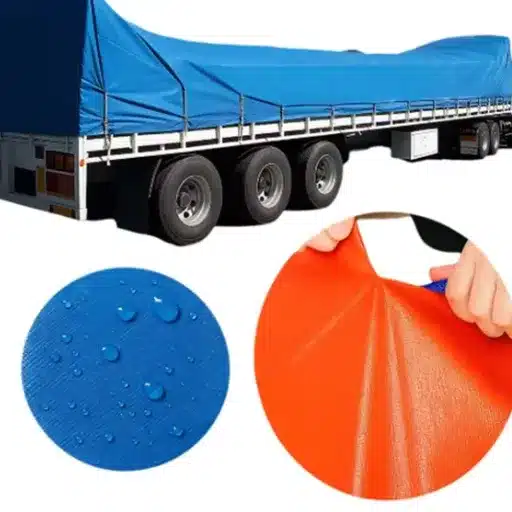
One of the strongest advantages of working with an OEM tarpaulin manufacturer is the breadth of customization available. You are not limited to stock sizes and colors.
Materials
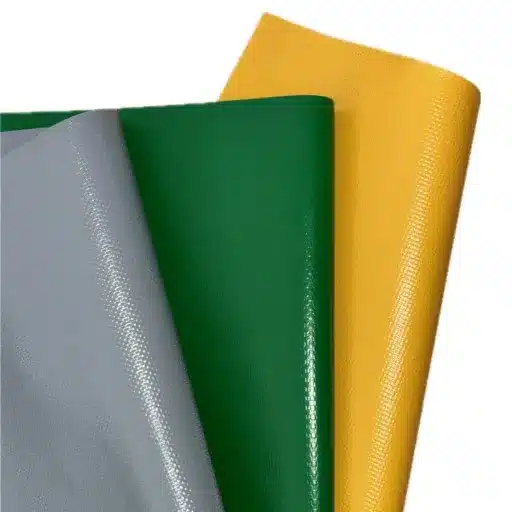
Select the base material that matches your market. PVC tarpaulin specifications offer heavy-duty, fire-resistant, and chemical-resistant performance for industrial and transport applications. PE tarpaulin production delivers lightweight, cost-effective protection ideal for agriculture and construction. HDPE woven tarpaulin balances strength, recyclability, and UV resistance for outdoor and greenhouse use.
Sizes and GSM
Standard rolls or finished covers can be produced to exact dimensions. GSM, or grams per square meter, determines weight and strength. Common ranges span 80 GSM for lightweight PE up to 900 GSM for industrial PVC. Specify tolerance limits, typically plus or minus 3-5%, to ensure consistency.
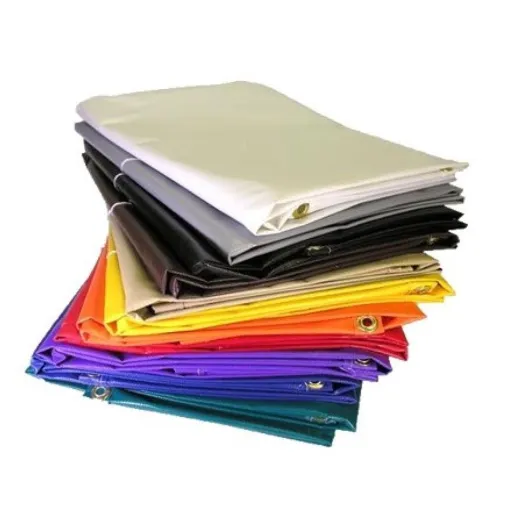
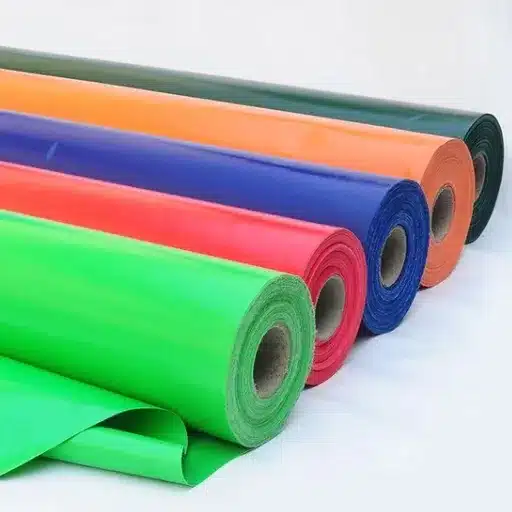
Colors and Pantone Matching
Most manufacturers can match Pantone references or provide color swatches for approval. Batch-to-batch consistency depends on controlled pigment dosing and recorded formulations. Always retain the approved lab dip sample for future comparison.
Logo and Printing
Screen printing, heat transfer, and digital printing each offer different durability and resolution characteristics. For truck tarps and construction covers that face abrasion, screen-printed logos with ink formulated for PVC or PE substrates last longest. Specify print placement, size, and minimum line weight to avoid distortion.
Hardware and Finishing
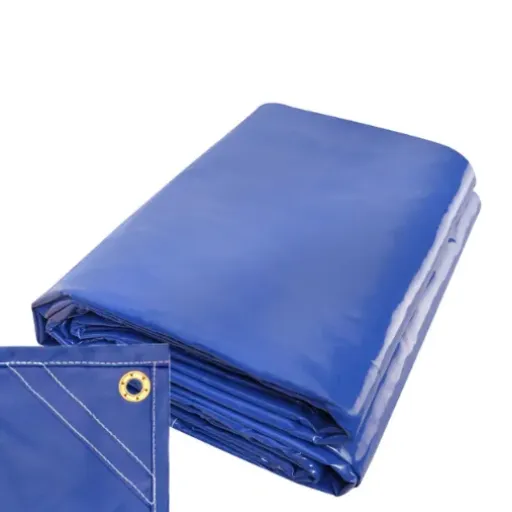
Grommets, D-rings, reinforced hems, rope edges, and corner patches can all be configured to your requirements. Weld strength and stitching patterns should be specified for critical applications. These details often separate professional-grade tarps from disposable covers.
Packaging
Retail-ready packaging is where branding becomes tangible. Private-label cartons, polybags with printed headers, barcode labels, and pallet wraps all reinforce your brand identity. A construction supply company we partnered with requested custom carton graphics, multilingual handling instructions, and individual UPC codes. Their retail presence improved immediately, and reorder rates increased because customers recognized the branded packaging on site.
Ready to see what materials fit your OEM program? Explore our PVC tarpaulin specifications to compare performance data for your target application.
MOQ, Pricing, and Commercial Terms
Minimum order quantities and pricing structures vary by material, customization depth, and manufacturer capability. Understanding what drives these numbers helps you negotiate effectively.
Typical OEM MOQ Ranges
| Material Type | Standard OEM MOQ | Pilot Run Option |
|---|---|---|
| PE Tarpaulin | 3,000-5,000 sqm | 1,000-2,000 sqm |
| HDPE Tarpaulin | 3,000-5,000 sqm | 1,000-2,000 sqm |
| PVC Tarpaulin | 5,000-10,000 sqm | 2,000-3,000 sqm |
| Custom Printing | 3,000-5,000 sqm | 1,000 sqm (with setup fee) |
MOQs exist because coating lines, weaving machines, and lamination equipment require minimum runs to achieve efficient material usage and stable process parameters. A manufacturer who accepts any quantity without question may be outsourcing production or compromising on consistency.
Pricing Structure
OEM pricing typically includes several components:
- Sample cost: Often credited against the first order
- Tooling or screen setup: One-time charge for logo screens or cutting dies
- Unit price: Based on material, GSM, dimensions, and volume
- Packaging add-ons: Custom cartons, labels, and palletization
- Freight and duties: Determined by Incoterm and destination
Payment Terms
Standard practice in the industry is 30% deposit with order and 70% against bill of lading copy. For established partnerships, open account terms or letter of credit arrangements become possible.
Total Cost of Ownership
The sticker price is only part of the equation. Factor in quality consistency, defect rates, logistics reliability, and after-sales support. A lower unit price from an unverified supplier often evaporates when you account for rejected batches, emergency air freight, and lost customer trust.
Want exact pricing for your private-label project? Request a custom quote and receive a detailed specification sheet and pricing breakdown within 24 hours.
Quality Control for Branded Products
Your brand is on the product. That makes quality control non-negotiable. A reliable OEM tarpaulin manufacturer operates quality checkpoints at three stages.
Raw Material Verification
Premium manufacturers source virgin polyethylene or PVC resin with documented lot numbers. They trace each production batch back to specific raw material deliveries. This traceability prevents the batch-to-batch variation that causes field failures. Ask for confirmation that recycled content, if any, is disclosed and controlled. Uncontrolled recycled blends are a common source of weakness and inconsistency.
In-Process Checks
During production, operators monitor coating adhesion, GSM weight, color consistency, and weld strength. Coating adhesion should meet or exceed 100 newtons per 5 centimeters under ISO 2411 testing. GSM variance should stay within your agreed tolerance. Inline color monitoring with spectrophotometers ensures Delta E remains below 1.5.
Finished Goods Inspection
Before packing, inspectors check finished dimensions, hardware placement, print registration, and surface defects. Random sampling follows AQL standards appropriate to your quality requirements.
Documentation
Technical Data Sheets, Certificates of Analysis, and batch records should accompany each shipment. These documents are your evidence of compliance if a customer raises a quality concern.
Maria Gonzalez, a procurement manager for a Spanish agricultural distributor, learned this lesson the hard way. Her first OEM order from an unverified supplier arrived with a 12% color deviation between rolls. The tarps were functionally fine, but her retail customers noticed the mismatch immediately. On her second partnership, she insisted on lab dip approval, inline spectrophotometer checks, and written batch records. The difference was stark. Eighteen months and twelve repeat orders later, she has not received a single color complaint.
Handling Discrepancies
Even with strong controls, occasional issues occur. The mark of a good manufacturing partner is how they respond. Clear escalation procedures, root-cause analysis, and corrective action reports should be standard practice. Avoid suppliers who dismiss discrepancies or delay responses.
Protecting Your Brand: IP and Exclusivity
Private-label manufacturing creates valuable intellectual property. Protect it from the start.
Specification Ownership
Clarify who owns custom formulations, unique size patterns, and proprietary hardware configurations. In most OEM arrangements, you own the specification while the manufacturer owns the production process. Document this distinction in your supply agreement.
Market Exclusivity
If you have invested in developing a specialized product for your region or channel, negotiate exclusivity. Geographic exclusivity prevents the manufacturer from selling your exact specification to competitors in your territory. Channel exclusivity prevents direct sales to end users if you operate as a distributor.
Confidentiality
Your pricing, customer lists, and sales volumes should be protected under a non-disclosure agreement. A professional manufacturer treats your business data with the same confidentiality they apply to their own operations.
Non-Compete Considerations
Some manufacturers produce their own branded lines alongside OEM work. Ensure your agreement includes reasonable non-compete provisions that prevent the factory from undercutting your branded product with an identical house brand in your market.
Choosing the Right OEM Tarpaulin Manufacturer
Not every factory that claims OEM capability delivers it. Vet your partner carefully before committing.
Five Critical Vetting Criteria
- Vertical Integration: Manufacturers who control weaving, coating, cutting, and finishing in-house maintain better consistency than those who outsource steps. Ask which processes are performed internally.
- Export Documentation: Request ISO 9001:2015 certification, factory audit reports from accredited bodies like SGS or Bureau Veritas, and compliance declarations for REACH or RoHS if you serve European markets.
- Sample-to-Production Fidelity: Compare the approved sample to the trial order carefully. If the trial does not match the sample, the production run will not either.
- Communication Quality: A reliable partner explains limitations as clearly as possibilities. They discuss lead time drivers, material alternatives, and where reinforcement matters. Be wary of suppliers who say yes to everything without technical detail.
- Repeat Order Stability: Ask for references from long-term OEM clients. Consistent quality across multiple orders is harder than producing one good batch. It requires disciplined process control and raw material management.
Red Flags to Avoid
- Refusal to provide factory video or live virtual tours
- Vague answers about production capacity or equipment
- Inability to trace samples to raw material lots
- Every request met with “no problem” and no technical follow-up
- Pricing that seems substantially below market without clear explanation
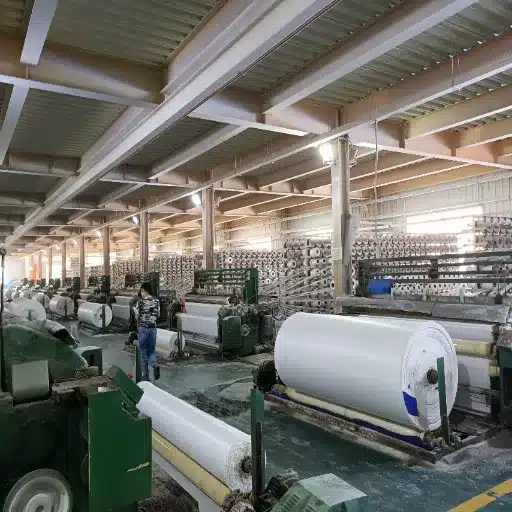
Our factory capabilities include in-house weaving, lamination, coating, and finishing equipment. With over 20 years of manufacturing experience, we maintain full-process quality control from raw materials to loaded containers.
Conclusion
OEM tarpaulin manufacturing transforms distributors into brand owners. It replaces thin resale margins with controlled pricing, stronger customer loyalty, and market differentiation. The process is not complicated, but it demands the right partner.
Start with clear specifications. Validate with approved samples and trial orders. Scale with a manufacturer who values consistency as much as you do. Protect your brand through clear agreements on ownership, exclusivity, and confidentiality.
The global demand for tarpaulins continues to grow across construction, agriculture, and logistics. Distributors who private-label now are positioning themselves as the trusted brands of the next decade, not just resellers of the present.
Ready to build your private-label tarpaulin line? Contact our team to discuss your OEM requirements, review material options, and receive a tailored quotation for your first production run.