Section 01
Understanding Waterproof Coatings

Waterproofing is the coating that is done to the surfaces to prevent waters and moisture from getting in. These coatings effectively defend water in two ways: deflecting it far away from the coating or barring it from the underneath layers of the material. Those are the two techniques that are commonly used in order to attain water resistance: film-coating and penetrating treatment sealers.
Type 01
Film-Forming Coatings
Films of this type ban moisture by saying one phrase: we do not let you in, as they are confined to the surface without any gaps. The most common examples are acrylic and polyurethane coatings which are meant for durable surfaces as well as high load ones.
Type 02
Penetrating Sealers
As opposed to coatings with a film structure, these types of sealers merge with the material and change its composition to prevent water infiltration. They are in addition, good for materials that are porous and very absorbent such as concrete and stone.
The choice of the suitable companion depends on the scope of the specific project, situation, weather conditions and customer’s requirement.
What are Waterproof Coatings?
The fundamental focus of this essay is waterproof coatings instead of an arbitrary discussion of materials. These special materials are supposed to block the flow of water or liquid materials in any given structures. However, before moving to the primary discussion it is important to state the reason for this being so – waterproofing is intended to provide protection of the building constructions from both internal and external sources of moisture.
Mainly, waterproof coatings can be classified as liquid-applied, drop-in-place and reactive. Liquid-applied systems, such as the polyurethane and acrylic-based systems, are painted on and so they provide relatively high elongation and distortion and therefore follows the profile more effectively. Drop-in place membranes, typically composed of rubber or plastic-like materials, are a particularly helpful and effective solution for high moisture areas since they are installed in sheets like roofing and flashing. Reactive sealants, alternatively, become a part of the substrate as they cure; hence the bond is very strong and permanent.
To some degree, the performance of a waterproofing coating is dependent on several factors, that is, the type of chemicals in a waterproofing coating and the substrate, and lastly the particular exposure it will have to elements. And in addition to this, due to the technological advancements today, such coatings bearing attributes like UV resistance, better stretch abilities and also some can heal, are being developed for use covering all angles of concepts.
Importance of Waterproof Coatings in Textiles
The innovative deposits of waterproofing compounds inside fibers is very significant for improving the possibilities and the lifespan of fabric materials, especially, under tough conditions, like industries, outdoor activities, and work-wear, where high level of performance is needed. This seeks to thwart water penetration and thus lessen environmental damage, mold growth and structure disintegration. The most recent textiles innovation have adapted nanotechnology in order to achieve more effective rate of hydrophobicity yet maintaining breathability, which is very beneficial for sportswear and outdoor clothing.
Fabrics treated with advanced waterproof coatings have been shown to resist water pressure of over 10,000 mm H₂O, which is above opposition to ISO 811 performance criteria.
Furthermore, the new recipes have environmentally friendly formulations allowing companies to move away from conventional dangerous fluorochemicals and focus on increasing environmental performance. What’s mostly important though is the fact that the applicability of these coatings in textile engineering process is another aspect which makes them more suitable and active in such applications.
Overview of PVC and Its Applications
Polyvinyl chloride (PVC) is an artificial material that has a wide claim in various manufacturing activities of different areas among other things for the following reasons. Its chemical stability, durability and availability make it one of the most used materials in the manufacturing of polyvinyl chloride (PVC). There are two main types of PVC: rigid and flex PVC which is customarily used in special purposes. Consequently, rigid PVC is mainly applied in the construction sector particularly in the production of pipes and fittings and window sills in view of its strength and insusceptibility to environmental changes. On the other hand, flex PVC has just a little waxy plasticising substance, thereby remains a solid especially useful for making electrical cables covering, floor coverings and can be used for medical purposes like intravenous tubing and bags.
The production of PVC continues to undergo innovation with a view to improving its environmental impact. For the past few years, clean methods of polymer processing have been topical. The so-called green PVC that utilize renewable resources has started catching up with the conventional ones. Part of this sustainability effort involves significantly increasing recycling practices, mechanical and chemical ones, for PVC in an effort to manage waste and elongate its lifecycle. In other words, there is no reluctance on high copying of PVC due to the qualities that it depicts putting aside enhancing its share. These solution-oriented advancements resonate with the use of PVC within the layout of contemporary facilities, its role in healthcare, and factors that consider promoting environmental improvement.
Section 02
PVC Lamination

PVC lamination is a procedure that involves covering or sealing the surfaces under treatment with polyvinyl chloride in order to make them more durable, appealing, and functional. This technology is commonly used in the construction, furniture, and automobile manufacturing sectors. Due to enhanced properties of the respective, the laminating surface becomes more resilient to wear-and-tear such as moisture, chemicals, and scratches, so it is most suitable for use in conditions that put heavy demands on the durability of the surface. Moreover, PVC, thanks to lamination, also serves the purposes of enhancement and upgrading various textures of the material, be it matte or gloss finish with good technical properties intact. Its adaptability and endurance help reinforce the status of PVC lamination technology as the best way to go when dealing with form and functionality.
Definition and Process of PVC Lamination
PVC lamination means affixing a polyvinyl chloride (PVC) film on the surface of a base material, such as timber, metal, or composite, for improving the durability and aesthetic quality of the said material in addition to functionality. It is very usual in industries of building and interior furnishing or vehicle design and manufacture because it is relatively cheap, flexible and very good delivery.
Normally, there are steps to be taken so that lamination can be successful. The first one is where the surface has to be cleaned very well as an effort of getting rid of salts, impurities and the like that can stop bonding. The other is application of adhesive using either a roller or spray depending on the characteristics and purpose of the material treated. The cover film made of PVC is applied tightly onto the surface that has been prepared to perfectly cover the entire surface. Lastly, using the laminating equipment with the film lay-up, the film produces a firm adhesive and a final product is formed.
Lamination Process Steps
Surface Cleaning — The surface has to be cleaned very well as an effort of getting rid of salts, impurities and the like that can stop bonding.
Adhesive Application — Application of adhesive using either a roller or spray depending on the characteristics and purpose of the material treated.
PVC Film Application — The cover film made of PVC is applied tightly onto the surface that has been prepared to perfectly cover the entire surface.
Lamination & Bonding — Using the laminating equipment with the film lay-up, the film produces a firm adhesive and a final product is formed.
Advantages of PVC Lamination in Fabric
Waterproofing and Moisture Resistance
PVC lamination serves as a barrier against water and moisture which makes it ideal to be used on boat and marine structures. It has been found in research that the effectiveness of the water-proof ability has the ability to decrease the rate of water absorption between the Polyvinyl coated fabrics by at least or even more than 95% thus making its service under those conditions improved.
Enhanced Durability and Tensile Strength
The application of lamination ensures that the wearability and integrity of the initial fabric is much more than that of carbon. Hence the fight against wear and tear and puncture being enhanced as it should be. Reason being that empirical data do support that laminated fabrics made of PVC can resist elongating forces which are about 250% more than those made of untreated.
Chemical and UV Resistance
PVC laminates also has a high level of resistance to different chemicals and ultraviolet light. This is significant as users can be guaranteed the retention of the materials colour, or structure of the fabric over the materials life span and none of this reduction in the quality.
Ease of Maintenance
PVC Laminated Fabrics disallow high maintenance as their dull surface restricts attraction of dirt and stains resulting quick cleaning process. Laminated fabrics are washable that exists a quick way to clean such fabric; thus carpets also prove less costly on cleaning, especially to busy environments, if one can clean their Laminated carpet very quickly.
Customization Flexibility
Due to the range of PVC lamination capabilities, customization is enhanced as it includes numerous textures, shades, motifs and finishes. Thanks to this customization, the materials fit the design and performance requirements, particularly those of the fashion, automotive and home decor industry designs.
Cost-Effectiveness
PVC fabric with laminate is a high-performance product, which is also surprisingly affordable if you consider the benefits it delivers over the alternative materials. Its wear and tear resistance, coupled with less downtime costs makes it very low in cost over its useful life.
Section 03
PVC Coating
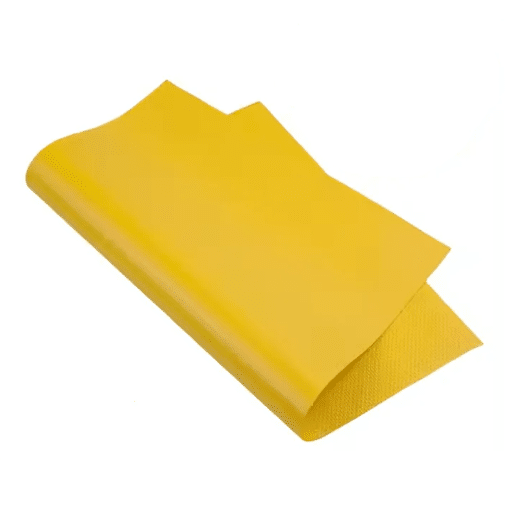
The design of PVC-coated materials usually involves an application of a polyvinyl chloride (PVC) on a variety of carriers such as hooked up fabrics and their standards. This enhances damage and corrosion resistance as well as chemical insensitivity within the substance. That is the thing that the usage of PVC covers in building positions itself in extreme conditions. The packaging bags, tissue paper, packaging boards, and industrial polyvinyl chloride (PVC) materials are used throughout the manufacturing process mainly due to their efficiency, versatility and low cost. The finish can as well be formulated in various thicknesses and textures and colors depending on the intended functional or aesthetic purposes.
Definition and Process of PVC Coating
The representation that is produced in the form of polyvinyl chloride is the PVC coating. You apply synthetic polymer materials onto textile, metal, or other bases enhancing their physical and chemical properties. You first clean and prepare the part by de-greasing or priming so that there is good adhesion. Different types of coating processes are carried out such as hot dip, spraying, or castings, depending on the component to be coated and the nature of the substrate to be used.
During one of the steps in coating, PVC is mixed as well and combined with plasticizers, stabilizers, and other chemicals that impart softness, resiliency, protection from abrasion and adverse external factors such as sunlight, humidity, and aggressive media, etc. After the material is coated, it is put through a curing cycle to finish the process. The curing causes the liquid layer to solidify, creating an unyielding and smooth topcoat of the film. Besides, PVC coating advances have allowed for new methods of treatment to become more efficient such as the reduction of VOC (volatile organic compound) release and use of materials, increased energy conservation through the recycling of these materials, thereby making sure that environmental concerns are met in such economical ways as well. This is important for the reason that it is possible to enhance the performance of PVC-coated articles with reference to the present-day ecological norms.
Benefits of PVC Coating for Water Repellency
Superior Moisture Barrier
Due to the fact that polymer substrates are rather hydrophobic in their composition, PVC-coating protects the polymer objects from water penetration effectively. There is evidence that PVC coatings can reduce water permeability by up to 95%, preventing the possible degradation of the basic substrate due to the long-term dampness.
Resilience Under Harsh Conditions
The stiff characteristics of PVC-coatings allow them to resist high-temperature conditions and severe climate conditions such as heavy showers, hot humid conditions, or even temperature shifts. Conversely, it also ensures its long-term performance, particularly in outside zones, in which sustainability is particularly critical.
Enhanced Material Longevity
The PVC coatings provide a solution to the water ingress problem as it covers the core material and prevent it from any future problems like rust, and mold, etc. In this respect, the coated product can have a longer service life, thereby reducing the cost of maintenance and repair of the roof component or any other material.
Lightweight Water Rejection
Without altering the main material, the PVC coating gives water resistant property, making it practical for such industries as textiles, automotive industries and construction, where weight is very important.
Adaptability to Application Needs
PVC coating can be engineered according to the particular water repellency specification by varying the film thickness and by planned enhancements, guaranteeing exact performance to the different industrial environment.
Cost-Efficiency
Thanks in part to its easy accessibility and simple application, PVC coating provides an economical answer to the need of high water resistance. Add to the potential operational savings from less repair and replacement and prolonged use of the product, it provides excellent overall cost-benefit worth.
Section 04
Comparative Analysis: PVC Lamination vs. Coating

While PVC lamination differs from PVC coating, the primary difference lies in the method they are applied and the results that are achieved. In the former, a PVC film is fixed onto a supporting layer which provides the necessary strength and rigidity as well as increases the resistance to high temperatures, scratch, heat, and other enhanced need of comfort technology. It is also a well-known fact that this technique is often used in decoration applications for obtaining smooth external protective coating that also protects from possible damage.
PVC coating involves coating surfaces with PVC, but not in a film form; it is carried out through the application of liquid PVC solutions and, upon drying, forms a membrane. It helps enhance the water-tightness and also standing water properties especially in the construction and textile industry where environmental conditions are a concern. Lamination however, makes the finished product look more beautiful while coat is more useful for working on nonstandard surfaces and cost-saving.
Differences Between PVC Lamination and Coating
| Parameter | PVC Lamination | PVC Coating |
|---|---|---|
| Application Method | Adhesive binding of PVC films | Liquid PVC applied directly, then cured |
| Surface Adaptability | Best for flat, smooth surfaces | Suitable for irregular or curved surfaces |
| Aesthetic Appearance | Offers enhanced visual and glossy finish | Less emphasis on aesthetics |
| Cost Efficiency | Higher material and application costs | Generally more cost-effective |
| Water Resistance | Excellent | Excellent |
| Flexibility | Limited in certain applications | High flexibility |
| Durability | Long-lasting under wear and tear | Durable but may wear faster over time |
| UV and Heat Resistance | Moderate resistance to UV and heat | Higher resistance to UV and heat |
| Primary Industries Used | Furniture, automotive, interior décor | Textiles, construction, protective gear |
| Environmental Impact | May use more energy-intensive processes | Lower energy requirements in application |
Performance in Water Resistance
PVC lamination is the foremost choice for use in water due to its adhesive and non-porous sealing, which will not let water into the product or substrate. This entails sticking a layer of PVC to a substance, which serves as a barrier and makes it difficult for water to infiltrate. This property provides a good number of end users to use it for activities that need extreme protection from moisture, such as marine equipment and furniture that can be stationed outside.
PVC coating, on the other hand, has considerable efficiency as far as water exclusion is concerned but depends much on the evenness of the film coating and the film coating thickness used. Coatings are subject to more variables that can cause various deficiencies and after a while there is a chance that some micro-porous points, or leakages that were not addressed, will emerge. However, a number of new techniques for coatings incorporation particularly with the application of polymer-based additives, have vastly increased the wear and waterproofing properties.
Laminated PVC is consistently better at resisting long-term and high pressure water immersion than other commercial products. PVC laminates function well under standard conditions but they are less stable under extreme environments. This means there are important differences between the two processes in terms of water resistance and the considerations to be taken into account when selecting the process.
Durability and Longevity
Similarly, the resistance of PVC should be aligned with the type of bonding process used, that is, lamination and coating as each of them offers their own advantages, which however depend for what purpose they are being used. It was seen that laminated PVC has qualities that makes it heavy-duty grade in more frequent usage, as it multi-layered helps enhance the strength of the material and the stretching and tearing thereby further improvement. Consequently, it is efficient construction materials for industrial applications having strong load-bearing ability and requiring a longer commercial period, e.g., heavy-duty tarpaulins, sandwiched between conveyor belts, or dilatable structures.
In contrast, coated PVC offers remarkable resiliency with high levels of tests involving extreme physical stress. In general, this substrate is most suitable for applications which basically appreciates lightweight and cost effective properties such as banners, soft signage and short term covers. Studies have proven that incorporation of advanced UV stabilization technologies in coated PVC significantly helps in increasing its lifespan by minimizing temporal photodegradation and discoloring processes.
Moreover, the level of environmental conditions affects to a substantial degree the durability of the materials. Another direction, where there are differences, is the type of the structure being very robust as far as the working under conditions featuring constant loading is concerned. Unlike the other, this method may even necessitate the application of other finishes, to compare durability. Therefore, the choice between the considered options for modifying PVC should carefully take into account the level of anticipated mechanical stress, the extent of exposure and preventive measures needed, and regular maintenance to guarantee their best performance and economize in the long run.
Section 05
Choosing the Right Option

When it comes to choosing between PVC lamination and PVC coating, think also about the specific needs of the installation you are working on, or want to protect. The application of PVC lamination is recommended for such cases as these, which would involve durability and resistance to wear, especially in environments that are subjected to frequent stresses by machines. The process involves enveloping the object with a protective film, the film which is impervious to withstand use even without proper maintenance.
Although it is very labor-intensive and demanding, another one is PVC coating, which is the most recommended procedure for all treatments requiring elasticity. Coating is more suitable where lightweight or cost-effective designs are involved though it may be necessary to include further steps to resist wear or tear such as abrasion. The selection is eventually based on some of the practical realities of the location including potential stressors, structural life expectancy and financial resources to enable the completion of such a project.
Factors to Consider When Selecting Laminated or Coated Fabrics
-
1.Intended Application and Use Environment
The preference of laminated or coated fabrics should be dictated by the use to which the fabric will be put and the conditions that the fabric will have to endure. For instance, laminated materials are often used if the application calls for high levels of water and vapor resistance, for example, in clothing for climbing, working out and babies, and waterproof healing is generally used in tents or medical equipment. -
2.Material Properties and Performance
It is really essential to check on some of the physical and chemical properties of the fabric material. Laminated fabrics, for instance, are known to provide better protection against mechanical wear and tear due to the several various layers of which they are made. On the other hand, coated fabrics are likely to resist the penetration of air, water, and oil but may however require further waterproof top-coating for maximized use in harsh environments. -
3.Durability and Maintenance
Laminated textiles have a tendency to live longer in high stress environments, but they can bear heavy costs as well. As for the coated textiles, they are good from the basis of economy though they can be used only with semi-liberal maintenance as there is a need to provide them with a fresh chemical coating every certain period of time. It is very important to estimate the long-term expenses on repair and maintenance as part of the overall project life cycle. -
4.Weight and Flexibility
Use of such equipment where lighter materials are needed, e.g., the design of aircraft or light equipment will be biased towards the use of laminated fabrics for rational dosages. Whereas, woven and knitted fabric coatings allow more elasticity especially to products where movements are necessary or where the space available for storage is too minimal. -
5.Cost Analysis and Budgetary Constraints
Though it is much more cost-effective than current technologies, laminated and glued fabrics may be dismissed as fragile and requiring more care while being used on harsh conditions, due to being more expensive technology when compared to the cost of raw woven fabric goods. Coated textiles on the other hand, are the most appropriate option in some instances, but the performance decreases value for money. -
6.Regulatory and Environmental Compliance
Standards for material and environment in production are also enforced now more consistently than before. In particular, some lamination or coating applications may contain substances that have been recognized and banned for those functions by law and regulations in some markets. Because of this, the use of polyurethane coatings which are excellent coatings, but still, may have some setbacks for use in production that must be ‘green’ may become an issue.
Industry Applications for PVC Laminated and Coated Textiles
Transportation Sector
Ease of transport due to adequate durability and water resistance makes tarpaulins, car seats, and vehicles of any description. The durable materials that are weatherproof and can be exposed to UV radiation serve their dual function: they are advantageous for both aesthetics and functionality in the automotive and boat manufacturing industries.
Construction and Infrastructure
Polyvinyl chloride (PVC) coated textiles are largely used for making temporary shelters, tensile membranes and awnings; for aesthetic purposes combined with architecture. The fact that these textile can function in indirect but harsh environmental conditions, are resistant to fire and water and colors do not bleed, ensures their trustworthiness whether on should applies it in temporary or permanent works.
Advertising and Signage
Polyvinyl chloride-coated, thin-filmed textiles have become the norm for advertisements such as billboards, banners, and props. Their fine detailed designs are not lost in replication because they are easily fine tuned with high res digital processes to last longer and impress saturated audiences.
Healthcare and Medical Equipment
In hospitals and medical centers, PVC-coated fabrics can also be found as linen for beds, used as wallpaper, or even utilized as partition screens. The surfaces of these fabrics are smooth in texture, they do not provide suitable conditions for the growth of bacteria, which is important in maintaining hygiene against infection in the most critical of settings.
Furniture and Interior Design
Extensive passport of the sentence history automakers use PVC films to decorate genuine sofas, chairs as well as other furniture items providing a cheaper and more practical solution than leather and insure less cost to the final product. Relief is added by the fact that a lot of textures exist which help to improve the flexibility of the designs as well as improving the high traffic withstand of the frillinox.
Personal Protective Equipment (PPE)
Without a doubt PVC coated textiles are useful in manufacturing the composites needed to create hazardous substance-proof suits, gloves, and aprons that do not tear under the force of the application. Used as PPE, the responsiveness to the working environment is especially useful in many practices such as in production, laboratories, and also emergency situations.
Section 06
Frequently Asked Questions
How does PVC coating affect water-repellent laminated fabric?
When PVC is added it forms a layer that can protect the surface against environmental factors specifically water and does not allow liquid to pass through. In other words, it makes the material waterproof. All of the above methods will involve processes involving heat and pressure or a film or membrane that is glued or welded to the fabric whether it is polyester or even cotton. The amount of coating and kind of the coating used will determine the permanent qualities of the clothing, properties of scratch and abrasion resistance as examples. Due to this challenge, manufacturers need to choose their protective coating and physical reinforcement materials carefully.
Can polyvinyl coating and laminated fabric provide better abrasion resistance?
High level of abrasion resistance and tensile properties as compared to the board which solely have textile layers, can be attained from coatings and laminations containing polyvinyl and PVC materials. These also enhance mechanical properties through incorporation of a solid coating into the textile structure, such as those on polyester or cotton cloth, which is in most cases applied by dip or other means of coating technology. Some heat-activated or pressure-sensitive adhesives may involve release liners so as to form a bond between the substrates. The integration of these techniques enriches the fabrics in terms of barrier resistance and functional properties rendering them ideal for end uses that need the strength of the fabric of the heaviest quality.
Is a water-repellent laminate preferable to a PVC-coated textile for outdoor use?
Laminated fabrics that are treated to resist water may offer a slightly lower weight and added flexibility. The PVC-coated fiber designed to offer a thicker PVC layer, acting as a more effective barrier hence offering more protection for prolonged use. Coating or laminating processing differences affect the printing of air permeable, flame retarding and abrasion-resistant additives in the resulting fabric; hence it will depend greatly on fabric construction and more importantly barrier requirements, as well as the requirement for fabric product finishes mixture. The deposition of the coatings as well as the mass of the coatings determines the above-water repellency and wash resistance of the membranes against water from the evaporation of drops of water over the surfaces.
How does fabric surface preparation influence polyvinyl coating adhesion?
Before the application of the polyvinyl polymers, the textile surface has to be cleaned, and a suitable base fabric such as polyester or reinforced cotton can be selected. There are also methods for prime bonding, such as those using plasma treatments or primers, which prevent the separation of coated composites under load. The application technique, either by direct coating on the fabric or coating films followed by lamination, has a major effect on the capability of the coating to stick and fill the entire fabric surface. Corrosion inhibitors in coatings improve the overall look of the coated polyester or laminated fabric by way of effective surface pretreatment and choice of binder for the coating.
Reference Sources
Driving Sustainability in the Automotive Industry: Bio-Coated Materials and Modern Strategies
Polyvinyl Chloride Applications Along with Methods for Managing Its End-of-Life Items: A Review