01
Introduction to Tarpaulin Welding
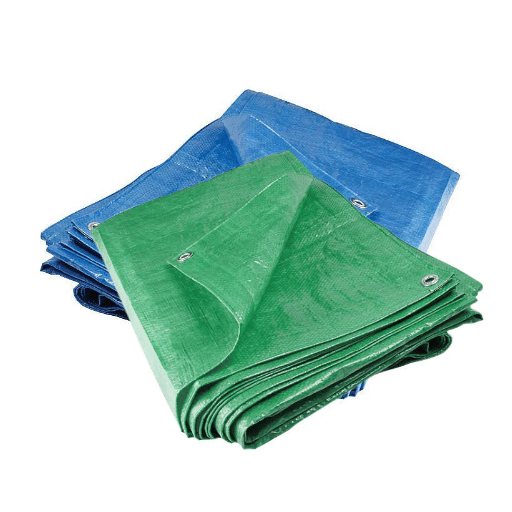
Tarpaulins are joining materials used in the welding process to bond themselves without the presentation of any gaps. This process tarpaulins welding mends the tarpaulin avoiding overlapping. From the volume of heating effects, bearing in mind there are no filler materials, and the main process the tarpaulin material will be fused together. Objective-oriented tarpaulin materials welding involves heat and pressure in different capacities. Methods that are used in welding the tarpaulin include hot air welding, which entails the abutting of plastics and heating the surfaces, and pressing them together.
High-frequency welding, on the other hand, allows the plastic to be bond accurately and without any efforts due to the incorporation of electromagnetism. Such methods are essential in the production of durable and resilient products such as tarpaulins in the construction, transportation, agriculture industries and more. The choice of the most suitable form of welding process will largely be determined by such factors as the type of material, the envisaged forces, the environment, etc.
What is Tarpaulin?
Canvas or more commonly known as tarpaulin is a sturdy, waterproof or water-resistant cloth which is made of the heavy-duty material, for example polyethylene, canvas or even PVC. It is developed to be durable, supple and able to withstand the elements of weather, accordingly appreciated for its utility across a wide variety of applications. Nowadays tarps are produced with special a coat and overlay, which is much better in terms of withstanding damaging effects of ultraviolet rays, friction or cutting. Transparent sheeting is widely employed for securing or isolating cargo, building temporary shelter and protecting structures from rain and the like. These tarpaulins are graded notching performance levels and could be of different thicknesses and dimensions, in that case, it enables certain specifications in terms of the challenges encountered.
The Importance of Seam Welding
Seam welding is an inherent part of tarpaulins manufacturing and it encompasses some key functionalities such as endurance, proofing, design among others. The method involves using heat and pressure in order to bring two materials the point of joining for a subsequent elimination of all gaps. Stitchless joining of textiles where high-frequency welding and impulse welding play significant roles has benefits, based on the nature of the materials used and performance considerations.
The strength of the seam line formed by well-set parameters is very important particularly for the tarpaulins that are to be used in very harsh weather conditions. For instance, in commercial and farm applications, seam quality is a very important function that any tarpaulin should be able to protect goods from being wet. Also, advanced methods of welding improve the grade a which allows for such tarpaulin to take care of even the heaviest wind loads, sizable carrying and more so handle shakes and flexing.
Contemporary automation often incorporates smart seam welding machines that facilitate high quality output and best industrial performance with no errors. Seam welding with reinforced edges can be associated with long-term durability especially at areas that experiences high stress. Seam welding though should not be misconstrued as only an activity; it forms an integral component that significantly impacts the performance and service life of awnings in a variety of sectors.
Overview of Welding Methods
| Welding Method | Key Points | Parameters |
|---|---|---|
| Hot Air Welding | Uses heated air to bond material | Temperature control is critical |
| Hot Wedge Welding | Precision bonding with heated wedge | Ideal for long, continuous seams |
| RF Welding | Radio-frequency waves melt and bond layers | Best for PVC and polymer materials |
| Ultrasonic Welding | High-frequency sound waves create heat | Suitable for thin, synthetic layers |
| Impulse Welding | Electrical current heats sealing bars | Common for seam finishing |
| Laser Welding | Uses laser beams for precise joining | High accuracy, minimal distortion |
↔ Scroll horizontally on smaller screens
02
Heat Seal Welding

For joining tarpaulins, heat-seal welding is regarded as one of the most efficient methods known, particularly because it ensures strong, long-lasting and weather-resistant joints. Welding is done by the application of head and pressure in order to melt plastics, for example, PVC or polyethylene, which are used in the manufacture of tarps. It is advantageous for tarps because it is beautiful and waterproof, it does not tear easily, and large, even areas can be worked on. What’s more, it guarantees no over-lapped edges in seam sewing which is very vital to tarpaulins that are subjected to extreme weather conditions.
Understanding Heat Seal Technology
Capacity crucial advancement manifested itself in the technology of binding heat seal. Particularly, heat seal has had a revolutionary effect on the manufacturing of heavy-duty tarpaulins, a market for industrial tents and covering systems where high strength and long service life are required. The method operates by heat and pressure assisting in the formation of a bond, a molecular bonding, unlike the case of PVC or polyethylene, where traditional stitching or adhesive is used. The welding instruments have attained new fashioned features due to the design and assembly of the modern age welding equipment, and the capability of controlling the temperature focuses on the small zones, reducing excessive effect to the material being joined.
The use of heat sealed surfaces, or hot-pressed seams, has been reported to improve the strength of the tensile taps as it was found to be as good as the strength of the main material in some cases. Also, the Hot Sealing method allows the eco-friendly technologies through the reclaiming of different thermoplastics to fabricate new products at the expense of throwing away materials as has been the case. The manufacture of heat-sealable films is designed to be impermeable to liquids, block UV light and also be protected against the effects of chemical reactions in order to increase its availability under severe conditions. These features are the reasons why heat-sealing tarpaulins serve a variety of purposes, right from Agricultural covers to strong industrial shelters.
Advantages of Heat Seal Welding
-
- 01
Enhanced Durability
The use of heat welding ensures that the fabricated materials will have strong sewn lines, which are more durable compared to stitching done by hand. Studies indicate that the breaking lengths of heat sealed seams are up to 30% higher than their equivalent conditions sewn with a needle. This assists in distance tolerances against external tensile loads and soft resistance against mechanical forces applied.
- 01
-
- 02
Superior Waterproofing
One can ensure that the needle holes and gaps always stay in check by performing heat seal welding. This makes the whole lining impermeable to water, which is very much needed when such materials are applied to agricultural, protection sheets, and naval environments to which water is an obligatory element of their usual operation.
- 02
-
- 03
Resistance to Environmental Extremes
Also, UV resistance, extreme temperature tolerance as well as effects of chemicals has proven to be greater for heat – sealed UV tarpaulins than for the other alternative tarpaulins. A variety of laboratory tests indicate that such materials work even from -30°F to 176°F, and so, they are able to be put to different climatic conditions.
- 03
-
- 04
Cost-Effective and Efficient Production
It is often argued that the heat sealing process is advantageous as this approach is easy to carry out and due to this aspect cost of production and time of the process is less, very negligible wastage because hardly any materials are lost, about 70% to 75% in conservation.
- 04
-
- 05
Improved Aesthetics
Due to heat sealing technology, welding is clean, perfect and with no visible threads or glue marks. There are such poorly anchored weaknesses in a tarp. As a result, many factors are indispensable in creating perfect tarp angles. This means that the market can supply self-composed tarpaulins through this process.
- 05
- 06
Customizable Solutions
Heat seal welding works for various types of tarp materials, sizes and designs. This reliability allows for making particular designs of arranged goods to match a particular area, which can range from U-shaped geomembrane liners to powerful truck covers.
03
Ultrasonic Welding

Ultrasonic welding refers to a delicate process to fuse tarpaulin materials that are based on applying high-frequency motion at the top of the joint area. One of the advantages of this method is its efficiency in joining thermoplastic materials without using adhesives or solvents. It is known to provide a high quality task in which the joints are made efficiently without too much distortion of the material. This is appreciated as far as light weight and fragile tenting/ tarpaulin is concerned, as the technology is quiet reliable even at high temperatures. Besides, ultrasonic technique is environmentally friendly, does not produce high levels of noise, requires minimal maintenance and is rather useful in various industries.
How Ultrasonic Welding Works
In simple terms, ultrasonic welding is where the welding between two materials is achieved as a result of high-frequency quick mechanical vibrations. It is easy to notice the presence of the ultrasonic transducer; these vibrations travel through the material that is to be welded and on friction produce heat. The resultant heat causes the material at the boundaries of the respective layers of tarpaulin to soften and weld thereby combining them into one object on cooling. Being most commonly fashioned from materials such as polyethylene, polyurethane, PVC foil, the ultrasonic welding helps ensure that the joints will not contain any residual stress.
It has been indicated that the success of the ultrasonic in combining materials is dependent on a number of factors such as the wealth of the ultrasonic equipment and this can range from 20 to 40 kHz, the thickness of the material, and the welding pressure. Present day ultrasonic welding systems often incorporate smart parameters and sensors to prevent the process wear and tear during the fast speed of the operation. Such a very comfortable span of active work provides an opportunity for industrial applications that require water and airtight junctions such as roofings, awnings and flexible protective enclosures. Last but not least is the joint seam formed is nuclear and therefore there is no need for glue and in its place one has the sonic welding technique.
Benefits of Ultrasonic Welding
- 01
High Durability and Strength
Ultrasonic welding creates high-resistant units due to the effects on the surface that bonds the molecular structure of the materials. Indeed ultrasonic welds form with tearing strength which is 80-90% of that of the base tarpaulin, i.e., it is able to endure high enough loads without any damage caused to it. This is the ideal solution for applications that are made to prevent any damage from occurring in the field of use or even withstand a relatively small load.
- 02
Precision and Consistency
The controlled precision-oriented design of the ultrasonic welding equipment guarantees perfect tackling and it faces no challenge on repeating it. The capability to sustain very narrow tolerances eliminates much of the complications in traditional sewing or adhesive bonding approaches. For an Industrial uses fabric such as tarpaulin, such a high level of predictability is necessary, simply because there are no exceptions to uniformity.
- 03
Waterproof and Airtight Seams
Bonded and assembly materials at a smaller molecular scale by ultrasonic welding ensure joints are un-seamable, water impervious, and air-tight. Such quality is desirable for the containment of water in canvas-covered tanks or areas that may attract water, or any other item to be moved in a damp climate.
- 04
Enhanced Efficiency and Speed
Use of the Welding Equipment is on the faster edge of the scale, with the majority of seams being completed in minutes, a huge decrease in time when compared to the traditional methods. This is equivalent to improved efficiency for the production environment, resulting in more output as well as cost-cutting on the part of the manufacturers.
- 05
Environmentally Friendly Process
Better than in adhesive requiring method is that the friction welding, acupuncture welding eliminates the use of chemical elements. Additionally, the practice produces very little waste, lowering the entire operation’s carbon footprint in tarpaulin manufacture.
- 06
Cost-Effectiveness
Supplementary sum for the initial purchase of gears would be beneficial, as the expenses saved as a result of increased production rates, combined with longer lifespan of the equipment and elimination of consumables, e.g., thread or glue, will result in long-term reduction in expenses.
04
Comparative Analysis: Ultrasonic vs. Heat Seal for Tarpaulins

01
Process Efficiency
Ultrasonic welding involves reduced processing times, due to the instant nature in which bonding occurs. For example, Heat Sealing although quite dependable, more often than not, is time-consuming because the materials have to be heated, then given time to cool down which may stretch the production cycles more.
02
Material Compatibility
While heat sealing can cover a wide variety of thermoplastic materials, the process may exhibit less control, especially when the materials in question are thin or delicate, due to the threat of damage by melting. Ultrasonic welding is quite close to these types of synthetic fabrics which are compatible, leaving clean and accurate joints without causing damage to the material.
03
Durability of Bonds
Ultrasonic welding produces strong and even seals which do not break even when under mechanical or environmental stresses. Also, such bonds are durable but they may deteriorate after some period if exposed to above-average temperatures or UV rays.
04
Energy Consumption
The welding processes using ultrasonic technology compare well with heat sealing when it comes to energy use, since the former employs high-frequency wave motion in a controlled manner compared to the later which uses wide heating surfaces, thus moderate energy utilization. Heating under no pressure typically consumes more energy as it involves high temperature for a longer period.
05
Cost Implications
It has been proven that the use of ultrasonic welding equipment requires initial somewhat significantly high cost, but saving benefits due to decreased energy and time consumption in the course of use countering the high cost at the establishment. Heat sealing is cheaper to implement and install in the industry but will have more operational costs because it is manufactured in long production cycles due to the consumption of energy.
Energy Efficiency Comparison
Evaluating the energy efficiency of ultrasonic welding versus heat sealing in tarpaulins reveals a number of crucial aspects. Ultrasonic welding is more pragmatic as regards, for it depends on vibrations instead of prolonged heating for joining purposes. This ensures that energy is used up only at the joint seam and not the material around it unlike the heating process. In general, a liberating energy saving aspect is highlighted concerning manufacturing processes in that ultrasonic welding can save up to 75% of the energy lost due to traditional heat sealing applied in continuous belt fabrication especially where higher energy requirements are concerned.
Heat sealing, in contrast, calls for increased application of temperatures in bonding and adherence to this state for extended periods, mostly with such materials as PVC, or polyethylene found in most tarpaulins because they are difficult to bond. This practice of maintaining the bonding temperatures for a long time leads to more energy being utilised which is more pronounced when there are extensive applications of such thermal energy processes.
Moreover, heat sealing systems are said to be energy dissipative as some heat is usually lost to the surrounding air unlike ultrasonic welding that has no such losses. Efficiencies due to energy conservation also play against heat sealing which then makes ultrasonic welding the better option in that respect since it is tailored towards the areas of concern. For both energy consumption and emission concerns, ultrasonic welding becomes the thinnest and most productive method while in use at the operational level.
Material Compatibility
The weldability of materials is a critical aspect of the discovery of appropriate tarpaulins. It is well known that heat sealing typically depends on the thermoplastic properties of materials which melt when heated; or else become moldable. This is especially suited for use in PVC or any other polymer with low melting points but when using other materials, the situation is different. Problems occur when working with multilayered or reinforced tarpaulins within the process as more heat would deform the material or weaken the tenacity properties of the tarpaulin.
Meanwhile, advanced technology in ultrasonic welding allows it to work with a larger number of different materials, from thermoplastic composites to woven and non-woven substrates. This involves the transmission of high-frequency waves aimed at the interface where friction causes heat and a thermal bond is created, eliminating the necessity to bring any component close to its melt point. This way, the process of ultrasonic welding is less damaging and harmful to the intricacies of the materials being used and, as a result, guarantees the survival of the final design for an extended period of time without possible alterations that may come as a result of the welding.
Differences Between Ultrasonic and Heat Seam Welding
| Parameter | Ultrasonic Welding | Heat Seam Welding |
|---|---|---|
| Heat Source | High-frequency vibrations | External heat application |
| Material Compatibility | Similar and dissimilar materials | Limited to thermoplastics |
| Energy Efficiency | High due to localized heat | Moderately efficient |
| Speed | Rapid and precise | Moderate |
| Equipment Costs | Higher due to advanced technology | Lower compared to ultrasonic |
| Operational Temperature | No melting point required | Heat near material melting point |
| Environmental Impact | Minimal due to no fumes | May produce emissions |
| Bond Strength | High with durable joints | Strong, dependent on melting adhesion |
| Automation Compatibility | Easily integrated with automated systems | Compatible but requires careful control |
| Maintenance Requirements | Higher due to specialized equipment | Lower, simpler machinery involved |
| Versatility | Wide range of materials and settings | Less flexible, suited for specific jobs |
| Joint Aesthetic | Neat, professional-looking | May vary depending on temperature control |
↔ Scroll horizontally on smaller screens
05
Practical Considerations for Manufacturing Professionals

In the process of making tarpaulins, they have to consider the choice of materials as well as the technological processes that are used, taking into account the usability and the strength of the tarpaulins. Some important requirements are:
- ▪
Material Durability — Use such materials as polyethylene or PVC as they are highly durable with respect to weather, UV light and strength, thus extending the duration of service in various environments.
- ▪
Sealing Technique — Use of high sealing temperatures is the best due to their ability to construct solid and non-water leakages. This method at the same time has the ability to provide finishing which is very neat meaning it can be ideal for a number of applications.
- ▪
Automation Integration — Check the facilities of the production whether any automations and if so, the quantity can be used without compromising on the quality or production efficiency are cheaply fitted in there.
- ▪
Maintenance Plans — Choose equipment that is not far from the scale of the production and that will discourage downtimes due to simple maintenance work.
- ▪
Environmental Considerations — Utilize materials and process that are friendly to the environment and that will help save the planet and avoid breaking any state rules and regulations.
Choosing the Right Welding Method
There are a number of factors to consider when choosing the best welding procedure for manufacturing tarpaulins, especially when taking some factors such as the type of fabric, the quantity, and the mode of use into consideration. In most industries, the three common types of welding are hot air sealing, hot wedge sealing, and RF sealing, each associated with certain benefits.
Method 01
Hot Air Welding
This technique involves using hot air to bond thermoplastic materials together. It is especially effective when heat-sealing PVC and other pliable materials. Also, the hot air welding process can cater to regular mass production or tailor-made projects therefore effective for smaller quantities such as repairs or production of repairable tarpaulins.
Method 02
Hot Wedge Welding
Hot Wedge Welding has advantages in high-throughput production, as it applies a heated wedge to affix layers of materials due to speed and energy savings. Many welding applications require the use of Hot Wedge Welders because accurate temperature controls are necessary for the welding process. This form of welding is most effective for continuous seams in large-scale tarp, either side of the seam being flat, thereby reducing thermal distortion between the two materials.
Method 03
High-Frequency (HF) Welding
The most common method is the use of High-Frequency (HF) Welding. It is the process of bringing two materials together in order to fuse them at a molecular level through the use of electromagnetic energy. HF welding is especially useful for thermoplastics welding as it can produce very high quality airtight welds, for example, waterproof tarpaulins meant for use in very tough conditions.
Every welding condition is always weighed to fit the specific type of tarpaulin material being treated at that time such as Polyethylene, Polypropylene, PVC. Cost parameters related to seam strength, weather proofing, and the level of productivity expected are some of the factors that will determine the method of welding used. Increased production costs due to rejection of welded parts not meeting the firm’s requirements will be experienced when the process is not the correct one. On the other hand, the perfect method of doing the job ensures that the product serves the purpose intended, meets quality requirements and is cheap in comparison to other methods of production.
Best Practices for Tarpaulin Welders
To ensure accuracy and longevity during tarpaulin welded process. A number of main best practices expected of the operator needs to be done. First of all, while working on a plain tarp, operators make sure the welding machine has been calibrated taking into account the exact material in use so that temperature and pressure can be adjusted. Excessive heat has an effect in value of the materials, as well as causes the material to deform, weak joints happen when there is excessive heat. It is worth adding that preparatory operations are also very important. This includes cleaning the surface being connected. It is supposed to rid the surface off any dirt, oil or moisture that might compromise the strength of the bond.
Furthermore, aligning the most proximate edges of the joint correctly does also calls for proper quality monitoring within the welding environment. The welds with such seams can have less tensile strength and could undergo proportional failure measure due to loading. The application of formally approved welding systems which are either automatic or even semiautomatic greatly improves the spatter control and reduces the chances of error for personnel during the execution of high-volume production activities. Alternatively, the use of materials having high adhesive features, additives and secondary seals can help to improve further the impermeability and efficacy of welded joints.
Last but not least, many mechanical tests such as the so-called angle peel tests or simple tension or shear tests confirming the performance of seam in actual service conditions should be carried out. Such a regime does not only secure conformity towards any possible norms but also clearly boosts the performance of industrial equipment by assuring the client’s positive perception and smooth running of the plant.
Reference Sources
- “Seam welding of aluminum sheet using ultrasonic additive manufacturing system” — Read more here
- “Optimization of ultrasonic welding parameters for better seam performance” — Read more here
06
Frequently Asked Questions
How does an ultrasonic welder compare in welding quality?
The process of ultrasonic welding is such that it offers the best quality welding by focusing energy in the localization of the join, and, at the same time, reported to reduce the same quality of a seam in some films compared to radio frequency welding. In comparison, knife gap issues within both sealing methods are minimized with Ultrasonic systems due to the fact that an anvil and sonotrode are used rather than conduction through heat sealing jaws. For a PVC tarpaulin, an ultrasonic film welding system can deliver much higher productivity and lower energy consumption in bonding as opposed to conventional conduction sealing.
What is the ultrasonic heat-sealing process and how does it work?
The principle of ultrasonic welding consists in the use of an ultrasonic stack and high-frequency vibrations to induce molecular friction, which creates heat confined to the welding area, causing the materials to melt with no need for external heat application. The ultrasonic applicator maintains the parts together during welding while the sonotrode applies pressure and vibration such that the formation of an ultrasonic seal occurs much faster and with less energy than in the case of broad conduction techniques. Savings of material by overcoming the dead material and can be improved by adjusting the cutting edge within both sealing processes to contain the link size between the two.
Does ultrasonic offer lower energy consumption for tarp welding?
Of course, ceteris paribus, work performed through ultrasonic bonding generally entails less energy and power than work accomplished through the use of heat sealing jaws or conduction because it communicates only to the molten layer of the materials via friction at the joint. The use of machine-produced high-frequency waves along with the ultrasonic stack directs the energy to the spot with the seal line and enables the removal of the material equivalents leading to savings and the energy consumption reduction for conduction sealing handling equipment during a given period. Due to the low power requirement, the production speed achieved by ultrasonic systems is higher, which reduces energy cost, further improving the energy efficiency of the process.
Which film type responds best to ultrasonic sealing and heat sealing?
Materials compatibility is a result of polymer designing; most thermoplastics have the correct chemical bond that allows for welding as opposed to other especially conductive technology welding processes where that polymer cracks, rendering it useless. Moreover, PVC tarpaulin usually carries out ultrasonic welding or sometimes it uses heat sealing although these processes can change depending on the additives or PVC tarpaulin coating type. Fail-safe testing is conducted to guarantee seam strength. Heat sealing and timely temperature is imperative making for easy and consistent joining of materials but for ultrasonic tools perfect in the welding process it is the proper anvil and sonotrode which is necessary.