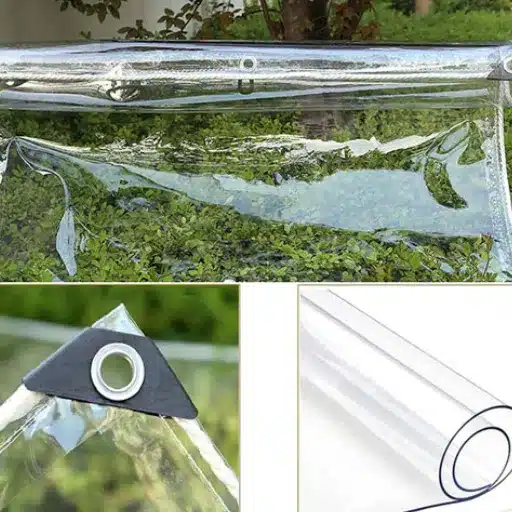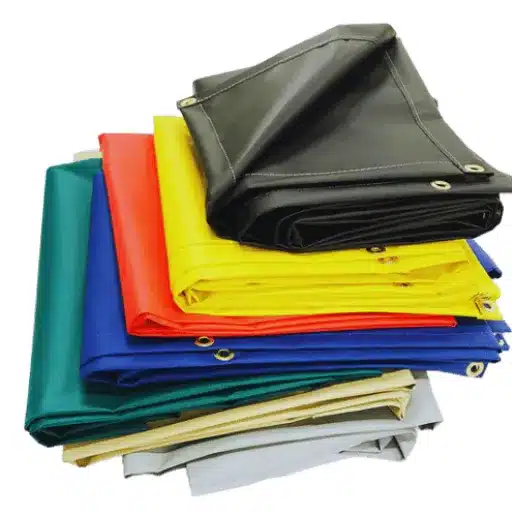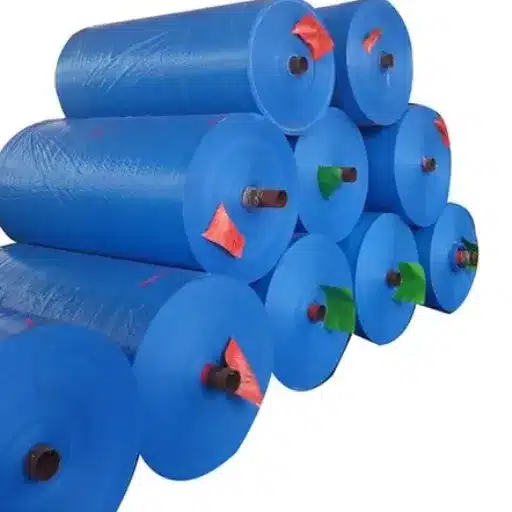
A tarpaulin manufacturer is a factory that produces protective covers from materials like polyethylene (PE), polyvinyl chloride (PVC), and high-density polyethylene (HDPE), controlling the entire production process from raw material selection through quality-controlled finishing. Unlike distributors or trading companies, manufacturers own the production equipment, employ the technical staff, and manage every step that determines product quality, pricing, and delivery reliability.
But here is the problem most buyers discover too late: not every company that calls itself a manufacturer actually operates a factory.
Last year, a construction supply distributor in South Africa placed a 50,000-square-meter order with a supplier who advertised “direct factory pricing” and showed impressive product photos. The tarps arrived three weeks late. The GSM was 15 percent below specification. The eyelets rusted within two months. When the distributor demanded answers, the “manufacturer” confessed they were a trading company with no control over the actual production facility. The distributor lost a major client and spent six months rebuilding trust in his market.
This guide draws on over two decades of manufacturing experience to show you exactly how to evaluate, verify, and partner with the right tarpaulin manufacturer. You will learn how the manufacturing process works, what separates real factories from trading companies, which certifications actually matter, and how to structure a partnership that delivers consistent quality at competitive pricing.
Key Takeaways
- A true tarpaulin manufacturer controls the entire production process, while trading companies outsource to third-party factories with no quality oversight.
- Verify any manufacturer by requesting live video tours, reviewing ISO 9001 certifications, and testing samples against technical data sheets.
- China produces 35 to 45 percent of the world’s tarpaulins, but buyers must distinguish between established factories in industrial clusters and middlemen operating from residential addresses.
- OEM and private-label manufacturing allows distributors to build branded product lines with controlled specifications, packaging, and labeling.
- The global tarpaulin market exceeds $2 billion annually, with consistent demand from construction (40 percent), agriculture (25 percent), and logistics (20 percent) sectors.
What Is a Tarpaulin Manufacturer?
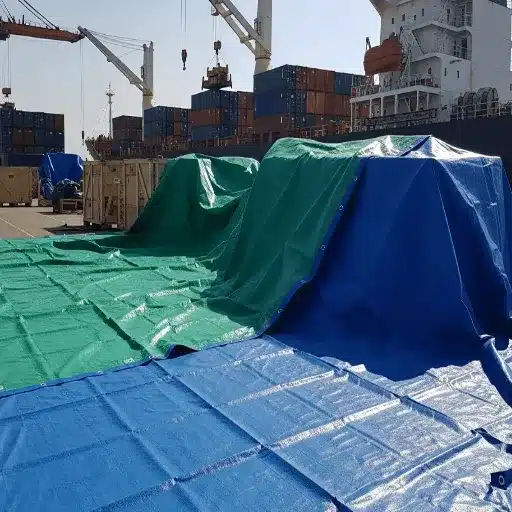
A tarpaulin manufacturer is a production facility that transforms raw materials into finished protective covers. The scope of work extends far beyond simple cutting and sewing. A full-service manufacturer manages raw material sourcing, fabric weaving or extrusion, coating and lamination, precision cutting, edge reinforcement, hardware installation, quality testing, and packaging.
This end-to-end control matters because every production stage influences performance. The grade of polyethylene pellets determines tensile strength. The lamination temperature affects waterproof integrity. The spacing of grommets impacts load distribution during installation. When one company controls all these variables, consistency improves and accountability is clear.
Manufacturer vs. Distributor vs. Trading Company
Understanding the difference between these three business models can save you from costly mistakes.
| Type | Controls Production | Customization | Price Level | Quality Accountability |
|---|---|---|---|---|
| Manufacturer | Yes | Full flexibility | Factory-direct | Direct responsibility |
| Distributor | No | Limited | Marked up | Relies on supplier |
| Trading Company | No | Outsourced | Variable | Often unclear |
Manufacturers own production lines, employ technical staff, and manage quality control. They offer the best pricing, full customization, and direct accountability. Distributors purchase from manufacturers and resell with a markup. They provide local stock and faster small-order fulfillment but cannot customize specifications. Trading companies act as brokers, forwarding your order to a factory they do not control. Many pose as manufacturers online, making verification essential.
When Maria, a procurement manager for a European logistics company, began sourcing heavy-duty PVC truck covers, she visited three supplier websites that all claimed to operate their own factories. Only one could provide a live video tour showing extrusion lines and calibration equipment. The other two offered excuses about “security protocols” and sent generic photos found on multiple Alibaba listings. Maria chose the verified manufacturer. Her first production run matched specifications exactly. Two years later, she has expanded to four product lines with the same partner.
Explore our manufacturing capabilities and request a detailed quotation for your project.
How Tarpaulins Are Manufactured
Understanding the production process helps you evaluate whether a supplier truly controls quality or simply brokers orders. Here is how professional-grade tarpaulins move from raw material to finished product.
Raw Material Selection
The manufacturing process begins with material selection. For PE tarpaulin, the factory purchases polyethylene pellets, typically high-density polyethylene (HDPE) for the woven base and low-density polyethylene (LDPE) for the lamination coating. For PVC tarpaulin, the factory sources polyester base fabric and PVC paste resin, then adds plasticizers, stabilizers, and optional fire-retardant additives.
Material quality varies dramatically. Virgin-grade pellets produce stronger, more consistent fabric than recycled material. Some trading companies quote low prices because they substitute recycled content without disclosure. A reputable manufacturer provides material certificates and welcomes third-party testing.
Fabric Production and Coating
For PE tarps, the base fabric is woven on water-jet looms. The weave density, measured in threads per inch, determines tear resistance and dimensional stability. Higher weave counts produce stronger fabric but require more material and longer production time.
After weaving, the fabric moves to lamination. Hot-melt or extrusion lamination applies a waterproof coating to both sides of the woven base. Temperature control during this stage is critical. Insufficient heat creates weak adhesion. Excessive heat degrades the polymer chains. Experienced manufacturers calibrate equipment daily and test adhesion strength on every production batch.
PVC tarpaulin production follows a different path. The polyester base fabric passes through calendering rollers that apply liquid PVC coating in multiple layers. Each layer cures before the next applies, building thickness and uniformity. The number of coating passes, combined with base fabric weight, determines the final GSM (grams per square meter).
Cutting, Hemming, and Hardware Installation
Once the coated fabric passes quality inspection, automated cutting machines slice rolls into specified dimensions. Precision matters. A one-centimeter cutting error multiplied across thousands of units creates significant waste and sizing problems.
Edges are hemmed and reinforced with heat-sealed tape or industrial stitching. Reinforced corners and rust-resistant aluminum eyelets are installed at specified intervals, typically every 50 to 100 centimeters depending on application requirements. High-stress applications like truck covers may require rope-in-hem construction or additional D-rings.
Quality Control Checkpoints
Professional manufacturers test at multiple stages:
- Incoming materials: Verify pellet grade, resin purity, and base fabric specifications
- In-process testing: Measure coating thickness, adhesion strength, and weave integrity
- Finished goods: Test waterproof performance, tensile strength (ISO 1421), tear resistance (ISO 4674), and dimensional accuracy
- Batch traceability: Link finished rolls to specific raw material lots for quality tracking
Factories without documented QC protocols often skip these tests. Ask to see quality control records from recent production runs. A manufacturer that cannot produce them is not managing quality systematically.
Types of Tarpaulins Manufacturers Produce
A full-service manufacturer produces multiple tarpaulin types to serve different applications and budgets. Understanding these categories helps you match material to need and evaluate whether a manufacturer offers genuine versatility or merely resells a narrow product range.
PE Tarpaulin
PE tarpaulin is constructed from woven polyethylene fabric laminated with waterproof coating on both sides. It is lightweight, cost-effective, and suitable for general-purpose protection. Standard GSM ranges from 60 to 260, with higher weights offering greater durability.
PE tarps excel in applications requiring temporary coverage, easy handling, and low cost. Construction site protection, agricultural crop covering, and short-term outdoor storage are common use cases. However, PE has lower UV resistance than PVC and a shorter lifespan under continuous outdoor exposure.
PVC Tarpaulin
PVC tarpaulin uses polyester base fabric coated with polyvinyl chloride, creating a heavier, more durable product. PVC tarps resist tearing, abrasion, UV degradation, and chemical exposure significantly better than PE. They are the standard choice for truck covers, industrial equipment protection, long-term outdoor installations, and applications requiring fire-retardant properties.
Standard PVC tarpaulin ranges from 300 to 900 GSM, with industrial applications often requiring 500 GSM or higher. PVC also accepts printing and custom surface treatments more readily than PE, making it ideal for branded covers and specialized industrial applications.
HDPE Tarpaulin
HDPE tarpaulin uses high-density polyethylene woven fabric, offering higher tensile strength than standard PE while maintaining lighter weight. The woven structure provides excellent tear resistance, and many HDPE products are recyclable, supporting sustainability requirements.
Agricultural buyers frequently choose HDPE for greenhouse covers, crop protection, and livestock shading. Construction companies use HDPE for debris netting and scaffold enclosures where airflow is required alongside debris containment.
Canvas and Specialty Tarps
Canvas tarps use cotton or polyester-cotton blend fabric, offering breathability that plastic-based materials cannot match. They are preferred for applications where condensation control matters, such as equipment storage in humid climates. Canvas requires treatment for waterproofing and is heavier than synthetic alternatives.
Specialty tarps include mesh tarps for wind and shade applications, fire-retardant tarps meeting B1 or NFPA 701 standards, and reflective tarps for high-visibility safety applications. A versatile manufacturer offers these options alongside standard products.
Key Factors to Evaluate in a Tarpaulin Manufacturer
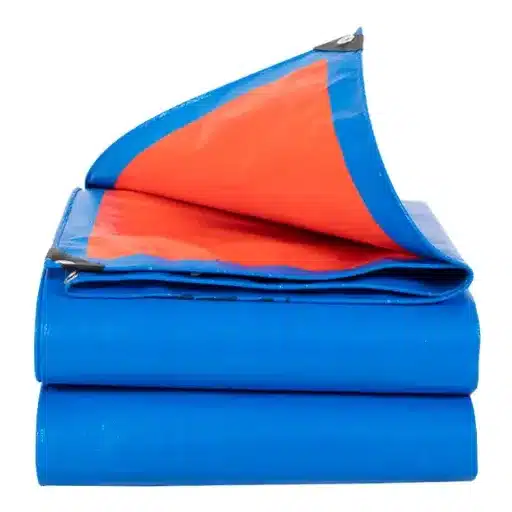
Choosing a manufacturing partner requires systematic evaluation across multiple dimensions. Price alone is a poor selector. The lowest quote often signals substituted materials, skipped quality tests, or a trading company hiding behind a factory facade.
Production Capacity and Equipment
Verify that the manufacturer operates sufficient equipment to handle your volume without outsourcing. Ask specific questions:
- How many extrusion lines or water-jet looms do you operate?
- What is your daily or monthly production capacity in tons or square meters?
- Can you share production schedules from recent months?
Established PE manufacturers typically operate 50 or more water-jet looms with daily output of 50 to 100 tons. PVC manufacturers should have multiple calendering lines with capacity of 30 to 60 tons daily. Vague answers or refusal to disclose capacity details are warning signs.
Quality Certifications and Standards
Certifications provide independent verification that a manufacturer maintains systematic quality management. The most relevant include:
- ISO 9001: Quality management system certification, indicating documented processes and continuous improvement
- ISO 14001: Environmental management for buyers prioritizing sustainability
- Fire resistance ratings: B1, B2, or NFPA 701 for applications requiring flame retardancy
- REACH/RoHS: Compliance for European market access
- Third-party test reports: SGS, Bureau Veritas, or TUV testing for tensile strength, tear resistance, waterproofing, and UV aging
Request certificates and verify them on the issuing body’s official website. Some trading companies present photocopied or expired certificates from factories they no longer work with.
Customization Capabilities
A true manufacturer adapts products to your specifications. Evaluate flexibility across:
| Feature | Customization Range |
|---|---|
| Sizes | Standard rolls (2m, 4m width) or cut-to-length custom dimensions |
| Thickness/GSM | Full range from lightweight (60 GSM PE) to heavy-duty (900 GSM PVC) |
| Colors | Pantone matching, multi-color, striped patterns |
| Hardware | Aluminum eyelets, brass grommets, reinforced corners, rope-in-hem, D-rings |
| Surface treatments | UV stabilization, fire retardancy, anti-mildew, anti-static |
| Packaging | Kraft paper wrapping, palletization, private-label retail packaging |
If a supplier claims to be a manufacturer but offers only fixed catalog items, they are likely a distributor or trading company.
Export Experience and Logistics
International shipping requires expertise beyond production. A manufacturer experienced in global export understands:
- Proper trade terms (FOB, CIF, DDP) and when each applies
- Export documentation including certificates of origin, packing lists, and commercial invoices
- Container loading optimization for cost-efficient shipping
- Pre-shipment inspection protocols with third-party agencies like SGS or Bureau Veritas
- Import regulations in destination markets
Request references from buyers in your region. Experienced manufacturers can provide contactable clients who can verify delivery reliability and documentation accuracy.
Communication and Responsiveness
Technical discussion reveals whether you are speaking with factory engineers or sales intermediaries. A genuine manufacturer employs staff who understand GSM tolerances, coating formulations, and lamination parameters. Trading company representatives often struggle with technical specifics.
Evaluate communication during the quotation phase. Response time within 24 hours, willingness to conduct video calls, and ability to answer technical questions precisely all predict future support quality. Poor communication during evaluation rarely improves after contract signing.
Contact our technical team to discuss your specific material and specification requirements.
Tarpaulin Manufacturing in China: What Buyers Should Know
China dominates global tarpaulin production. The country hosts over 1,300 enterprises in the sunshade and tarpaulin industry and exports products to more than 72 countries. China’s PE tarpaulin market alone reached approximately 3.4billionin2025,withthetruckplastictarpaulinsegmentvaluedat3.4billionin2025,withthetruckplastictarpaulinsegmentvaluedat1.15 billion and growing at 9.8 percent annually.
This scale creates both opportunity and risk. The sheer number of suppliers makes finding the right partner challenging. However, China’s complete industrial chain, from petrochemical raw materials through manufacturing to export logistics, enables cost advantages and production flexibility unmatched elsewhere.
Key Manufacturing Regions
Tarpaulin manufacturing concentrates in specific industrial clusters:
- Shandong Province (including Linyi): Major hub for PE and HDPE tarpaulin production with extensive weaving and lamination infrastructure
- Zhejiang Province: Strong concentration of PVC-coated fabric and technical textile manufacturers
- Jiangsu Province: Diverse production including specialty and industrial-grade tarpaulins
Manufacturers located in these clusters benefit from established supply chains, skilled labor pools, and logistics infrastructure optimized for export.
How to Verify a Chinese Factory
Trading companies frequently present themselves as manufacturers on B2B platforms. Use these verification methods:
- Request a live video tour of production lines, not just a photo slideshow. A real manufacturer will show extrusion equipment, looms, coating lines, and QC stations.
- Check the business license for the manufacturing scope. Trading companies hold commercial licenses, not manufacturing permits.
- Use Google Maps satellite view to verify the facility size. A manufacturer serving international markets typically operates 10,000 square meters or more. Residential or small office addresses suggest a trading company.
- Review shipping records through Panjiva or ImportGenius to confirm the company exports under its own name, not through intermediaries.
- Ask for production schedules from recent months. Trading companies cannot provide these because they do not manage production.
Common Pitfalls and Red Flags
- Pricing 20 percent below market average: Usually indicates recycled material substitution, underweight GSM, or omitted surface treatments
- No third-party test reports or ISO certification: Unverifiable quality claims
- Refusal of pre-shipment inspection: Hidden production issues
- Vague material composition: Potential deception about virgin versus recycled content
- Communication gaps exceeding 48 hours during quoting: Poor future problem resolution
- No fixed factory address or refusal to show production: Likely a trading company or nonexistent facility
OEM and Private Label Manufacturing
OEM (Original Equipment Manufacturing) tarpaulin production allows distributors, retailers, and B2B brands to sell products under their own labels without investing in production infrastructure. A manufacturer produces to your specifications, applies your branding, packages according to your design, and ships ready for resale.
Who Benefits from OEM Tarpaulin Manufacturing?
- Distributors building a branded product line to differentiate from competitors selling identical factory brands
- Retailers requiring private-label products with controlled margins and exclusivity
- B2B brands serving specific industries with customized specifications not available in standard catalogs
- E-commerce sellers needing branded packaging and consistent supply for marketplace listings
The OEM Process
A structured OEM engagement follows this sequence:
- Specification development: Define material, GSM, dimensions, colors, hardware, and surface treatments
- Sample production: The manufacturer produces prototypes for testing and approval
- Branding design: Logo printing methods, label design, and packaging specifications are finalized
- Production confirmation: Approved samples become the production standard with documented tolerances
- Manufacturing run: Full production with batch testing and quality verification
- Packaging and shipment: Products are packed, labeled, and prepared for export
Customization Options for OEM Orders
Beyond product specifications, OEM partnerships include:
- Logo printing: Screen printing, heat transfer, or woven labels depending on material and durability requirements
- Custom packaging: Individual polybags, retail-ready boxes, or bulk pallet wrapping with branded labels
- Specification sheets: Technical data sheets and user guides branded with your company information
- Color exclusivity: Some manufacturers offer exclusive color formulations for high-volume partners
MOQ requirements for OEM orders vary by manufacturer and product complexity. Simple color and size changes may require 1,000 to 5,000 square meters. Full private-label programs with custom packaging typically require 10,000 square meters or more per production run.
Custom Tarpaulin Manufacturing
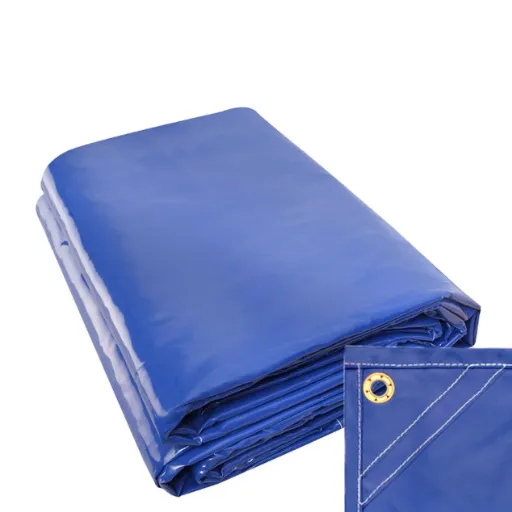
Even buyers who do not require full OEM branding often need products tailored to specific applications. Custom manufacturing addresses dimensions, performance specifications, and features that standard catalog items cannot satisfy.
What Can Be Customized
A full-service manufacturer offers flexibility across:
- Dimensions: Any length and width within material roll width constraints, with seam welding for oversize applications
- Thickness/GSM: Specified precisely for the required durability and weight balance
- Color: Standard colors or Pantone-matched custom shades for branding or functional purposes
- Reinforcement: Reinforced corners, double-stitched hems, webbing strips, and stress-point padding
- Hardware: Eyelets, grommets, D-rings, snaps, zippers, and ropes installed at specified intervals
- Surface treatments: UV stabilizers, fire retardants, anti-mildew agents, and anti-static coatings
The Custom Order Process
Custom manufacturing begins with a detailed specification document. Provide exact dimensions, material type, GSM target, color references, hardware requirements, and intended application. The manufacturer reviews feasibility, confirms material availability, and provides a quotation with production timeline.
Sample production typically requires 7 to 14 days. Once samples are approved, production lead time depends on order volume and current schedule, generally ranging from 15 to 45 days for standard custom orders. Rush production may be available for urgent requirements.
For the past three years, James has sourced all his agricultural tarps from the same manufacturer. His operation covers 2,000 hectares of grain production across three climate zones, each requiring different specifications. The humid coastal zone needs anti-mildew treatment. The inland plains require maximum UV protection. The northern fields use lighter-weight covers for frost protection. One manufacturer handles all three product lines with consistent quality and synchronized delivery schedules. James estimates the custom program has reduced his tarp replacement frequency by 40 percent compared to standard catalog products he used previously.
Applications by Industry
Tarpaulin manufacturers serve diverse industries, each with unique performance requirements. Understanding these applications helps buyers communicate specifications clearly and evaluate whether a manufacturer has relevant experience.
Construction
Construction sites demand tarps that withstand abrasion, wind loading, and prolonged UV exposure. Common applications include scaffolding sheeting, debris containment netting, equipment covers, and temporary weather protection. Fire-retardant properties are often mandatory on job sites governed by safety regulations.
Construction buyers prioritize tear resistance, reinforced edges, and grommet strength. Multi-site projects require consistent quality across large volumes and reliable delivery schedules to prevent work stoppages.
Agriculture
Agricultural applications include crop protection covers, greenhouse films, silage covers, livestock shade structures, and equipment protection. PE and HDPE tarpaulins dominate this sector due to cost-effectiveness and adequate durability for seasonal use.
Agricultural buyers balance cost against lifespan. A tarp that lasts two seasons at a lower price may outperform a more expensive product lasting three seasons if the application changes annually. UV resistance is critical, as agricultural tarps often face continuous summer exposure.
Logistics and Transportation
Truck tarpaulins and cargo covers must secure loads, protect against weather, and comply with transportation regulations. PVC tarpaulin is the standard for long-haul trucking due to superior durability and resistance to road spray and wind stress.
Transportation buyers require precise dimensional fitting, reinforced tie-down points, and compatibility with existing fastening systems. Fleet operators may need multiple sizes standardized across their vehicle pool.
Industrial and Specialty
Industrial applications include equipment covers, containment systems, welding screens, and temporary shelters. These often require specialized properties like chemical resistance, extreme temperature tolerance, or certification to specific industry standards.
Manufacturers serving industrial clients must demonstrate capability beyond standard production. Custom formulation, third-party certification, and technical documentation support are typically required.
Frequently Asked Questions
How do I verify a tarpaulin manufacturer’s quality?
Request ISO 9001 certification and verify it on the certifying body’s website. Ask for third-party test reports from SGS, Bureau Veritas, or TUV covering tensile strength, tear resistance, and waterproof performance. Request samples and test them under your actual application conditions. Conduct a live video factory tour to confirm production equipment and quality control stations exist.
What is the typical MOQ for custom tarps?
Minimum order quantities vary by manufacturer and product. Standard sizes in common materials may have MOQs as low as 1,000 square meters. Custom colors, sizes, or specifications typically require 3,000 to 5,000 square meters. Full OEM programs with custom packaging usually require 10,000 square meters or more. Some manufacturers offer flexibility for first-time buyers willing to commit to larger follow-up orders.
How long does manufacturing and shipping take?
Sample production typically takes 7 to 14 days. Bulk production requires 15 to 45 days depending on order size and current factory schedule. Shipping adds 15 to 40 days for sea freight depending on destination. Air freight reduces transit to 5 to 10 days but increases cost significantly. Experienced manufacturers provide realistic timelines and communicate proactively if delays occur.
What certifications should a tarpaulin manufacturer have?
At minimum, a manufacturer should hold ISO 9001 quality management certification. For European markets, REACH and RoHS compliance are essential. Fire-retardant applications require B1, B2, or NFPA 701 certification. UV resistance should be documented per EN ISO 4892. Always verify that certifications apply to the specific products you are purchasing, not just the factory generally.
Can I visit the factory before ordering?
Established manufacturers welcome factory visits. Many offer virtual tours via video call for international buyers who cannot travel. Physical visits allow you to inspect equipment, review quality control processes, meet technical staff, and assess working conditions. A supplier that refuses any form of facility verification should be avoided.
What is the difference between a manufacturer and a trading company?
A manufacturer owns production equipment, employs technical staff, and controls the entire production process. A trading company brokers orders to third-party factories, often without disclosing this relationship. Manufacturers offer better pricing, full customization, and direct quality accountability. Trading companies may offer lower apparent prices but introduce quality inconsistency, communication delays, and limited customization.
Conclusion: Start Your Manufacturing Partnership
Choosing the right tarpaulin manufacturer is not a transaction. It is the beginning of a supply relationship that directly affects your product quality, customer satisfaction, and business reputation. The manufacturers that earn long-term partnerships share common traits: transparent operations, documented quality systems, responsive communication, and willingness to prove their capabilities rather than merely claim them.
The evaluation process demands attention but rewards the effort. Verify factory ownership. Review certifications independently. Test samples under real conditions. Ask technical questions that separate factory engineers from sales intermediaries. And always remember that the lowest price rarely delivers the lowest total cost when quality failures, delivery delays, and replacement expenses are counted.
The global tarpaulin market continues to grow, driven by infrastructure investment, agricultural demand, and logistics expansion. Buyers who establish reliable manufacturing partnerships now will serve these growing markets from a position of supply confidence. Those who choose suppliers based on price alone often spend their first year recovering from the consequences.
If you are evaluating tarpaulin manufacturers for your business, start with a clear specification and a systematic vetting process. The right partner will welcome your scrutiny, answer your questions directly, and demonstrate capabilities that justify your confidence.