The best way to choose a tarpaulin manufacturer is to evaluate seven core factors: material expertise, production capacity, quality control systems, customization capabilities, pricing transparency, export experience, and communication quality. Buyers who follow a structured framework avoid costly mistakes and build long-term supplier partnerships that protect their projects and their profits.
Marcus Chen, a procurement manager for a mid-sized construction firm in Australia, learned this lesson the hard way. In early 2024, he needed 5,000 square meters of heavy-duty tarpaulin for a six-month site project. He sorted Alibaba listings by price, picked the cheapest quote, and placed a 12,000order. The tarps arrived on time. They looked fine. But within eight weeks, the UV coating started flaking. By week fourteen, seams were splitting along the reinforced edges.Marcushadtoemergency−reorderfromadifferentsupplierat4012,000order. The tarps arrived on time. They looked fine. But within eight weeks, the UV coating started flaking. By week fourteen, seams were splitting along the reinforced edges. Mar had to emergency-reorder from a different supplier at 40 28,000 loss.
This guide exists so you do not repeat Marcus’s mistake. Whether you are buying PE tarpaulin for agricultural coverage, PVC tarpaulin for truck fleet protection, or HDPE sheeting for construction site shelters, the manufacturer you choose determines whether your investment performs for years or fails within months. You will learn a practical seven-factor framework for evaluating any tarpaulin supplier, the red flags that signal trouble before you place an order, and a step-by-step verification process you can apply to manufacturers in China or anywhere else.
Looking for a dependable tarpaulin manufacturer for your next project? Contact LY TRUSTLINK for professional support, flexible customization, and efficient production services.
Key Takeaways
- Evaluate manufacturers across seven factors: materials, capacity, quality, customization, pricing, logistics, and communication.
- Never skip the sample-and-test phase, even for “trusted” suppliers with strong references.
- Price per square meter is a poor standalone metric; calculate total cost of ownership including lifespan and replacement risk.
- China produces approximately 60-70% of global tarpaulin supply, making it the dominant sourcing hub for B2B buyers.
- Match manufacturer capabilities to your specific industry: construction needs heavy-duty tear resistance, agriculture needs UV stability, and logistics needs consistent OEM quality.
What to Look for in a Tarpaulin Manufacturer: 7 Key Factors
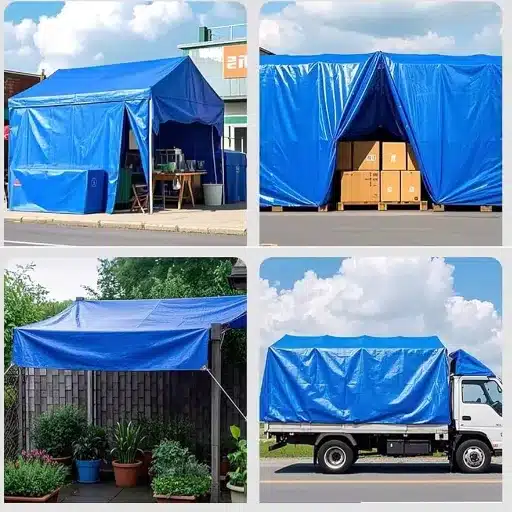
Choosing a tarpaulin manufacturer is not a one-time transaction. It is the beginning of a supply partnership that affects your product quality, delivery reliability, and bottom line for years. The seven factors below form a complete evaluation framework. Apply all seven to any manufacturer you consider. Skipping even one creates a blind spot that bad suppliers exploit.
1. Material Expertise and Product Range
A manufacturer who only produces PE tarpaulin cannot advise you properly if your application actually needs PVC. Material expertise is the foundation of every other quality metric. Start by confirming which materials the factory produces in-house.
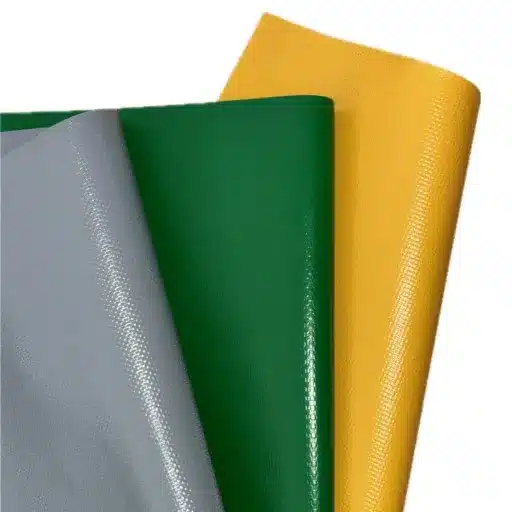
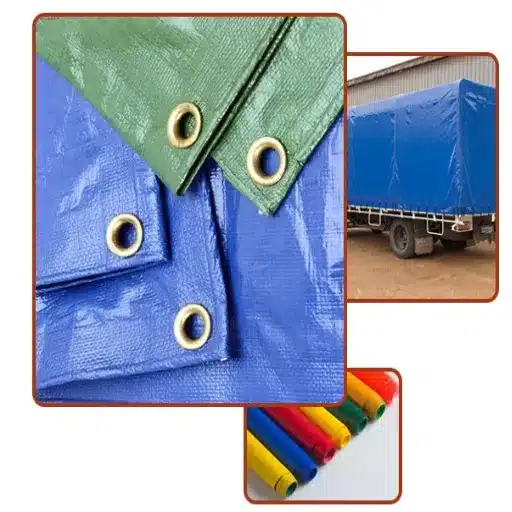
PE tarpaulin is lightweight, cost-effective, and ideal for short-to-medium-term coverage. It suits agricultural crop protection, temporary construction covers, and general-purpose outdoor use. PVC tarpaulin is heavier, more durable, and offers superior chemical and fire resistance. It is the standard for truck covers, long-term industrial applications, and extreme weather environments. HDPE tarpaulin sits between the two: stronger than standard PE, recyclable, and increasingly popular for greenhouse and agricultural use.
Ask prospective manufacturers directly: Do you produce PE, PVC, and HDPE in-house, or do you outsource any material lines? A factory that controls its own lamination lines, coating equipment, and weaving looms delivers more consistent quality than one that sources semi-finished fabric from third parties. If you are comparing materials for a specific application, our PVC tarpaulin guide breaks down the technical differences in detail.
Want to see which material fits your project? Explore our material comparison resources to match specifications to real-world applications.
2. Manufacturing Capacity and Equipment
Capacity matters even if your first order is small. A manufacturer with under-sized production lines may subcontract your order to a smaller factory without telling you. That introduces quality variability you cannot control.
Verify these capacity indicators:
- Daily or monthly output volume in tons or square meters
- Number of production lines for weaving, lamination, and coating
- Shift structure: single-shift, double-shift, or round-the-clock operation
- Equipment age and origin: Modern extruders and coating machines from reputable suppliers (e.g., Germany, Japan, or top-tier Chinese brands) produce more consistent fabric than aging manual equipment
Request a virtual factory tour via video call. Any manufacturer unwilling to show you their production floor is hiding something. During the tour, look for organized raw material storage, clean production areas, and finished goods inventory. Chaotic warehouses often signal poor process control.
3. Quality Control and Certifications
Quality control is where budget manufacturers cut corners first. A reliable tarpaulin manufacturer operates a full-process inspection system: raw material incoming checks, in-line production monitoring, and finished goods testing before shipment.
Key quality tests to ask about:
| Test | What It Measures | Minimum Acceptable Standard |
|---|---|---|
| Hydrostatic pressure test | Waterproof performance | 1,000mm water column or higher |
| Tensile strength test | Resistance to tearing under load | Varies by GSM; ask for test report |
| UV aging test | Resistance to sun degradation | 500+ hours QUV exposure |
| Abrasion resistance | Surface durability under friction | Martindale method, 5,000+ cycles |
Certifications to verify:
- ISO 9001: Quality management system
- REACH or RoHS compliance: For European export (chemical safety)
- Fire retardancy certifications: BS 7837, NFPA 701, or equivalent for PVC applications
- Third-party test reports: SGS, Intertek, or Bureau Veritas reports on specific product batches
Do not accept a generic “we have ISO certification” claim. Ask for the certificate number and verify it on the issuer’s website. Request actual test reports for the product specification you intend to order, not just a report from five years ago on a different material grade.
4. Customization and OEM Capabilities
Off-the-shelf tarpaulins work for some buyers. Most B2B buyers need customization. The right manufacturer should offer flexible specification control across:
- Size and dimensions: Custom cutting without excessive waste
- GSM (grams per square meter): From lightweight 80 GSM covers to heavy-duty 650 GSM industrial tarps
- Color: Standard colors and custom Pantone matching
- Coating and lamination: Single-sided, double-sided, or specialized coatings
- Reinforcement: Hemmed edges, rope-in-hem, reinforced corners, double-stitched seams
- Grommets and spacing: Brass, aluminum, or plastic eyelets at custom intervals
- Logo printing and branding: Silk-screen or heat-transfer for OEM orders
For distributors and private-label partners, OEM capability is non-negotiable. Ask whether the manufacturer can produce tarps with your branding, custom packaging, and specification sheets. At Linyi Chenlai, we support full OEM production with logo printing, tailored packaging, and flexible specifications designed to match your market requirements.
5. Pricing Transparency and Value
Price per square meter is the wrong starting point. The right metric is total cost of ownership: purchase price plus lifespan, replacement cost, and risk of project delay if the product fails.
When evaluating pricing, ask for a detailed breakdown:
- Raw material cost component
- Coating and lamination cost
- Cutting and finishing labor
- Packaging and labeling
- Export documentation and logistics
A manufacturer who provides this breakdown is being transparent. One who only gives a lump-sum quote is either hiding margins or does not understand their own cost structure. Both are warning signs.
Be especially cautious of prices 30% or more below the market average for a given specification. In tarpaulin manufacturing, there are three ways to cut costs: use lower-grade resin, reduce coating thickness, or skip quality inspection. All three lead to premature failure.
Sarah Okafor runs a agricultural supply business in Kenya. She learned to value transparency over the lowest bid after testing three suppliers in 2023. The cheapest quote used 20% less coating than specified. The middle-priced supplier met specification but offered no customization. The third supplier, priced 8% above the cheapest, provided full test reports, custom sizing, and a two-year quality guarantee. Sarah calculated that the premium option saved her 34% over three years because she eliminated replacement orders and customer complaints. She has been reordering quarterly ever since.
6. Export Experience and Logistics
International shipping is where inexperienced manufacturers fail. Even a perfectly produced tarpaulin becomes worthless if it arrives late, damaged, or with incorrect documentation that holds it in customs for weeks.
Verify these logistics capabilities:
- Export licensing: Does the manufacturer hold a valid export license, or do they rely on trading companies?
- Shipping modes: Can they handle FOB, CIF, DDP, or EXW terms based on your preference?
- Container loading experience: Proper palletization, moisture protection, and weight distribution prevent in-transit damage
- Documentation: Commercial invoice, packing list, bill of lading, certificate of origin, and any required certifications
- Delivery track record: Ask for references from buyers in your region or a similar logistics corridor
A manufacturer with established global logistics processes will quote realistic lead times and meet them consistently. One that promises “delivery in two weeks” without asking about your port or incoterms is guessing, not planning.
7. Communication and Support
The quality of pre-sales communication predicts the quality of everything that follows. Evaluate responsiveness, technical knowledge, and willingness to ask questions about your application.
Good signs:
- Replies to inquiries within 24 hours during business days
- Asks about your application, not just your order quantity
- Suggests material or specification adjustments based on your use case
- Provides clear, written answers rather than vague assurances
- Offers video calls and factory tours without hesitation
Bad signs:
- Pressure to order immediately without understanding your needs
- Inability to explain technical specifications in plain language
- Reluctance to provide samples or test reports
- Communication only through informal channels (personal WhatsApp with no company backup)
The best tarpaulin manufacturers act as technical partners, not just order takers. They help you choose the right GSM, the right coating, and the right reinforcement for your specific environment. That consultative approach saves money and prevents failures.
Red Flags: Warning Signs of an Unreliable Tarpaulin Supplier
Even with a solid evaluation framework, some warning signs demand immediate attention. If a manufacturer exhibits more than two of the behaviors below, remove them from your shortlist.
No factory visit or video call possible. Any legitimate manufacturer can arrange a video tour of their production facility. Refusal suggests they are a trading company posing as a factory, or their facility does not match their claims.
Refuses to provide samples. Sample production is standard practice in B2B manufacturing. A supplier who demands a full order before you can evaluate product quality is asking for blind trust you should not give.
Vague about materials and specifications. If you ask “What is the PE resin grade?” and receive “High quality, don’t worry” as the answer, you are dealing with someone who either does not know or does not want you to know.
Unrealistically low prices. As noted above, extreme underpricing indicates corner-cutting on materials, coating, or inspection.
No quality documentation. Test reports, certificates, and inspection records should be available on request. Their absence means there is no verifiable quality system in place.
Poor communication or delayed responses. If a supplier takes five days to respond to a pre-sales inquiry, imagine how they will handle a delivery problem or quality complaint.
No export experience or references. First-time exporters often underestimate documentation requirements, packaging standards, and shipping logistics. Unless you have the resources to guide them through the process, choose a manufacturer with proven export history.
How to Verify a Tarpaulin Manufacturer: Step-by-Step
Evaluation criteria are useful only if you apply them systematically. The five-step verification process below turns the seven factors into actionable due diligence.
Step 1: Request a Product Sample
Order samples of the exact specification you plan to purchase. Test them in real conditions: leave a sample outdoors for two weeks, soak it overnight, and apply mechanical stress to seams and grommets. Compare samples from two or three manufacturers side by side. The differences become obvious under real stress.
Step 2: Review Quality Certifications
Request copies of ISO 9001, product test reports, and any industry-specific certifications. Verify certificate authenticity through the issuing body’s online database. Cross-check test report batch numbers and dates to confirm they are current and relevant to your product.
Step 3: Conduct a Factory Audit
If your order volume justifies it, visit the factory in person or hire a third-party inspection service. For smaller orders, a detailed video call tour is acceptable. Observe production flow, equipment condition, raw material storage, and quality inspection stations. A well-run factory is organized, clean, and staffed by workers who know their roles.
Step 4: Check References and Export History
Ask for contact details of two or three existing customers in markets similar to yours. Contact them directly. Ask about delivery reliability, product consistency, communication quality, and how the manufacturer handled any problems. References are the most reliable indicator of future performance.
Step 5: Test with a Small Trial Order
Even after passing all previous steps, start with a trial order at 10-20% of your projected annual volume. This tests the manufacturer’s full process: production, quality control, packaging, documentation, and shipping. Only scale up after the trial order arrives on time, meets specification, and performs as expected in your application.
Matching Manufacturer Capabilities to Your Industry
Different industries place different demands on tarpaulin performance. A manufacturer excellent for agricultural buyers may lack the certification or material range that construction firms require. Match your selection criteria to your industry’s priority needs.
For Construction Companies
Construction tarps face mechanical stress, sharp edges, and prolonged UV exposure. Prioritize manufacturers who offer:
- High GSM options (200 GSM minimum, 400+ GSM for heavy-duty applications)
- Reinforced hems and double-stitched seams
- UV stabilization rated for 12+ months of continuous exposure
- Tear-resistant woven core fabric
- Flame retardant options for site safety compliance
Construction buyers should also verify that the manufacturer can produce custom sizes to fit scaffolding, equipment, and open excavation areas without excessive seaming.
For Agricultural Buyers
Agricultural tarpaulins protect crops, livestock, and equipment across seasonal cycles. Key manufacturer capabilities include:
- UV-resistant coatings that maintain performance through summer harvest seasons
- Breathable or non-breathable options depending on application
- Lightweight PE or HDPE for easy handling in field conditions
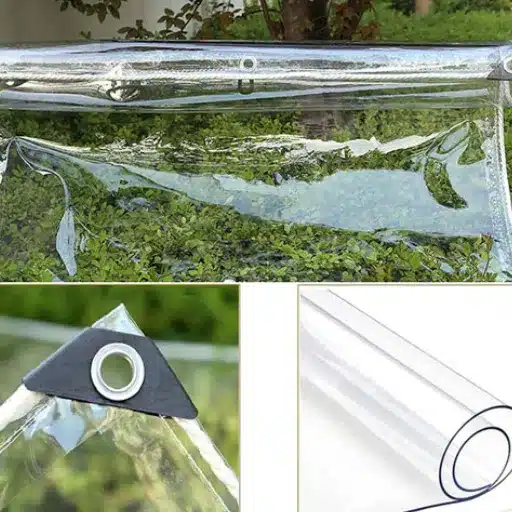
- Greenhouse-grade transparent or translucent options
- Resistance to agricultural chemicals and fertilizers
For agricultural buyers, long-term UV stability is the single most important factor. A tarp that degrades after one season forces premature replacement and increases total cost of ownership.
For Logistics and Transport
Truck tarpaulins and cargo covers must secure loads, resist highway wind speeds, and comply with transport regulations. Look for manufacturers who offer:
- PVC tarpaulin with high tensile strength for truck side curtains and top covers
- Custom dimensions matching specific trailer or container sizes
- Reinforced D-rings, buckles, and fastening systems
- Weatherproof sealing at seams and joints
- Consistent color and finish for fleet uniformity
Logistics companies buying for fleet operations often need OEM branding. Confirm that the manufacturer supports consistent logo placement, color matching, and packaging across large-volume repeat orders. Our truck tarpaulin guide covers material and sizing specifics for transport applications.
For Distributors and Wholesalers
Distributors need manufacturers who can act as a stable, scalable supply partner. Priority capabilities include:
- Flexible MOQ that grows with your business
- Full OEM support: private labeling, custom packaging, specification sheets
- Consistent quality across batches so your customers receive identical products every time
- Reliable lead times that let you plan inventory without overstocking
- Export documentation expertise so shipments clear customs smoothly
A distributor’s reputation depends on their supplier’s consistency. Choose a manufacturer with the capacity and systems to support your growth, not one that becomes a bottleneck as your orders increase.
Tarpaulin Quality Checklist: What to Specify in Your Order
Once you have selected a manufacturer, your purchase order must communicate exact requirements. Vague specifications lead to disputes. Use this checklist to ensure nothing is assumed.
Material and Construction:
- Base material (PE, PVC, or HDPE)
- GSM or total weight per square meter
- Weave density (threads per inch) for woven materials
- Coating type and thickness (single or double-sided)
Physical Features:
- Dimensions (length x width) with acceptable tolerance
- Hem style (single fold, double fold, rope-in-hem)
- Grommet material (brass, aluminum, plastic) and spacing
- Reinforcement at corners and stress points
- Color and surface finish (glossy, matte, embossed)
Performance Requirements:
- Waterproof rating (hydrostatic pressure in mm)
- UV resistance rating (hours of QUV exposure)
- Tensile strength (warp and weft, in N/5cm)
- Flame retardancy standard (if required)
Packaging and Labeling:
- Individual packaging (poly bag, bale, or roll)
- Outer carton or pallet requirements
- Label content (your SKU, barcode, country of origin)
- Shipping marks and handling instructions
Documentation:
- Test report for the production batch
- Certificate of origin
- Packing list with piece count and weights
- Commercial invoice with HS code
Frequently Asked Questions
What is the most important factor when choosing a tarpaulin manufacturer?
The most important factor is verifiable quality control. A manufacturer with documented testing procedures, recognized certifications, and transparent reporting delivers consistent products. Every other factor, from price to customization, depends on the underlying quality system.
How do I verify a Chinese tarpaulin factory without visiting in person?
Request a live video tour of the production facility. Ask to see specific equipment running, raw material storage, and finished goods inspection. Verify ISO certificates online. Order samples and test them. Contact their existing export customers for references. For large orders, hire a third-party inspection company such as SGS or Bureau Veritas to conduct an on-site audit.
What GSM tarpaulin should I choose?
GSM selection depends on application and expected lifespan. For light temporary coverage, 80-120 GSM PE tarpaulin is sufficient. For construction site protection, 200-400 GSM provides adequate durability. For heavy-duty industrial or long-term outdoor use, 500-650 GSM PVC tarpaulin is appropriate. Always match GSM to your mechanical stress and UV exposure conditions, not just your budget.
Should I prioritize price or quality when sourcing tarpaulins?
Prioritize total cost of ownership, which combines purchase price, expected lifespan, and replacement risk. A tarpaulin that costs 20% more upfront but lasts three times longer delivers lower total cost. Price-focused buying often leads to premature failure, emergency reorders, and project delays that cost far more than the initial premium.
How long does it take to receive a tarpaulin order from China?
Production lead time typically ranges from 15 to 30 days depending on order volume and customization complexity. Shipping time adds 20 to 45 days depending on the destination port and shipping mode (sea freight standard). Air freight reduces transit to 5-10 days but increases cost significantly. A manufacturer with established export experience will quote accurate, achievable timelines based on your specific order and destination.
Conclusion
Choosing the right tarpaulin manufacturer is one of the most consequential supply chain decisions a B2B buyer makes. The wrong choice leads to product failure, project delays, and hidden costs that multiply far beyond the original purchase price. The right choice builds a reliable supply partnership that supports your operations for years.
The framework in this guide gives you a systematic way to evaluate, compare, and verify manufacturers before you commit. Apply the seven-factor assessment. Watch for the red flags. Follow the five-step verification process. And always, always test with a sample before placing a bulk order.
The global tarpaulin market is substantial and growing, with China producing the majority of worldwide supply. That abundance of manufacturers is an advantage only if you know how to separate capable partners from risky vendors. Use the criteria, checklists, and processes outlined here to make that separation with confidence.
Ready to evaluate a manufacturer that meets every criterion in this guide? Contact our team at Linyi Chenlai to request samples, review our quality certifications, or discuss your project specifications. With 20+ years of manufacturing experience, full customization capabilities, and established global logistics, we deliver tarpaulin solutions engineered for your exact application.