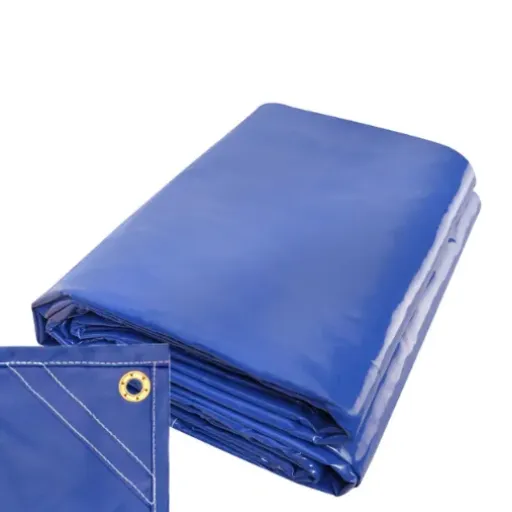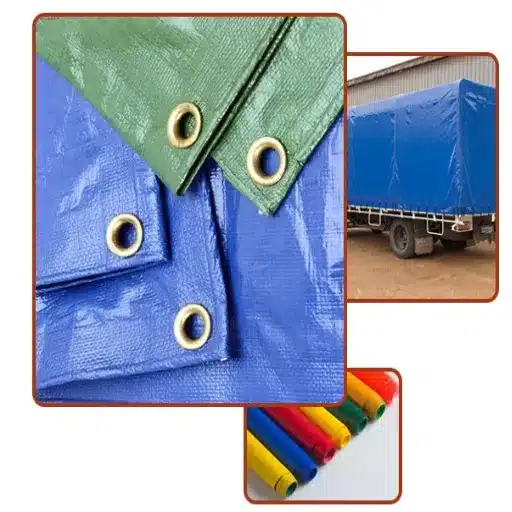
China tarp factory direct prices range from 0.12 per square meter for light-duty PE tarpaulin to 3.50 per square meter for heavy-duty PVC coated fabric. What you actually pay depends on material type, GSM weight, order volume, and whether you are buying from a real factory or a trading company.
Most B2B buyers never see real numbers before they contact a supplier. They browse Alibaba listings with vague ranges, read generic guides that avoid pricing entirely, and end up negotiating blind.
Marcus, a procurement manager for a construction firm in Poland, learned this firsthand. He sourced his first container of tarps in 2023. His supplier quoted 0.85 per square meter for 180 GSM PE tarps. Marcus accepted. Six months later, he found a Linyi factory selling the same specification at 0.42 per square meter. The difference was not quality. It was markup.
This guide gives you the real pricing landscape. You will learn actual factory-direct price ranges by material, how volume affects your per-unit cost, what drives price differences, and how to verify you are dealing with a real manufacturer.
Key Takeaways
- PE tarpaulin factory direct prices range from 0.12to0.12to1.10/sqm depending on GSM weight, while PVC ranges from 0.85to0.85to3.50/sqm
- Order volume creates sharp price drops: a 10,000 sqm order typically costs 25-40% less per unit than a 1,000 sqm order
- Linyi, Shandong factories offer the lowest PE prices; Zhejiang province leads on PVC quality and consistency
- Factory prices rose 3-5% in 2024-2026 due to labor and energy cost increases
- Three verification steps confirm you are dealing with a real factory, not a trading company
What Does “Factory Direct Price” Actually Mean for Tarpaulins?
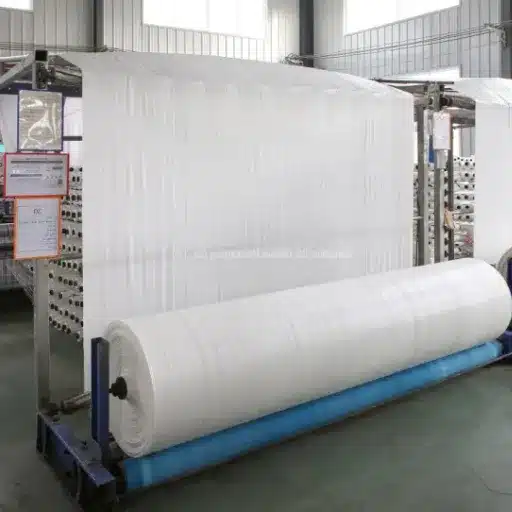
Factory direct price means you buy from the manufacturer. Not from a distributor. Not from a trading company. The price covers production cost plus a factory margin of 8-15%. No middlemen. No extra markup layers.
Trading companies add 20-40% on top of the factory price. They serve a purpose for small buyers who need low MOQs and consolidated sourcing. But for wholesalers, distributors, and contractors ordering thousands of square meters, that markup represents a significant cost. Understanding the difference is the first step to getting a fair price.
Factory Direct vs. Trading Company Pricing
A real factory owns equipment. It employs weaving and coating staff. It buys raw materials directly. A trading company rents an office. It matches buyers with factories. Both deliver tarps. Only the factory sets the floor price.
Factory direct buyers get customization options trading companies cannot match. Custom GSM. Exact color matching. Reinforced edges. Logo printing. These changes need direct communication with the production team. Trading companies add delay and cost to every request.
Want to understand what a real factory can customize for your order? Explore our customization options to see how direct manufacturing gives you control over specifications.
Why Factory Prices Vary by Region
China’s tarpaulin industry clusters into three main manufacturing regions, each with distinct pricing and specialization:
| Region | Specialization | Price Position | Key Advantage |
|---|---|---|---|
| Linyi, Shandong | PE and HDPE tarpaulin | Lowest PE prices globally | Raw material proximity, massive scale |
| Jiaxing/Haining, Zhejiang | PVC coated fabric | Mid-to-high PVC prices | Quality consistency, technical expertise |
| Guangdong Province | Specialty and premium PVC | Highest prices | Advanced coating technology, export focus |
Linyi alone produces over 60% of China’s PE tarpaulin output. The concentrated supply chain keeps raw material costs low and creates intense competition among factories. For buyers focused on PE or HDPE materials, Shandong province offers the best price-to-value ratio.
2026 Factory Direct Price Ranges by Material
The following price ranges reflect actual factory quotations from verified manufacturers in China as of early 2026. Prices are FOB China and assume standard specifications without premium treatments.
PE Tarpaulin Factory Prices
PE tarpaulin remains the most cost-effective option for general protection. The woven polyethylene core with laminated coating delivers waterproof performance at the lowest entry price.
| Grade | GSM Range | Price Range (FOB) | Typical MOQ | Best For |
|---|---|---|---|---|
| Light duty | 70-120 GSM | 0.12−0.12−0.30/sqm | 3,000-5,000 sqm | Short-term covers, agriculture |
| Medium duty | 120-180 GSM | 0.30−0.30−0.50/sqm | 3,000-5,000 sqm | Construction, transport |
| Heavy duty | 180-250 GSM | 0.50−0.50−0.75/sqm | 2,000-5,000 sqm | Long-term outdoor use |
| Extra heavy duty | 250-300 GSM | 0.75−0.75−1.10/sqm | 2,000-5,000 sqm | Industrial, extreme conditions |
PE tarpaulin is also priced by weight for bulk roll orders. Standard pricing runs 1,100to1,100to1,700 per metric ton, depending on GSM and coating specification. Roll orders above 10 tons often unlock the lowest per-kilogram rates.
PVC Tarpaulin Factory Prices
PVC tarpaulin commands higher prices because of its superior durability, chemical resistance, and longer service life. The polyester base fabric coated with PVC resin creates a material that lasts 5 to 10 years in outdoor conditions.
| Grade | GSM Range | Price Range (FOB) | Typical MOQ | Best For |
|---|---|---|---|---|
| Laminated | 300-450 GSM | 0.85−0.85−1.25/sqm | 1,000-3,000 sqm | General covers, temporary structures |
| Standard coated | 500-650 GSM | 1.45−1.45−2.10/sqm | 1,000-3,000 sqm | Truck covers, tents, industrial |
| Heavy duty coated | 700-900 GSM | 2.30−2.30−3.50/sqm | 1,000-3,000 sqm | Extreme duty, long-term outdoor |
| Fire retardant | 650-900 GSM | Base price + $0.30-0.50/sqm | 1,000-3,000 sqm | Safety-critical applications |
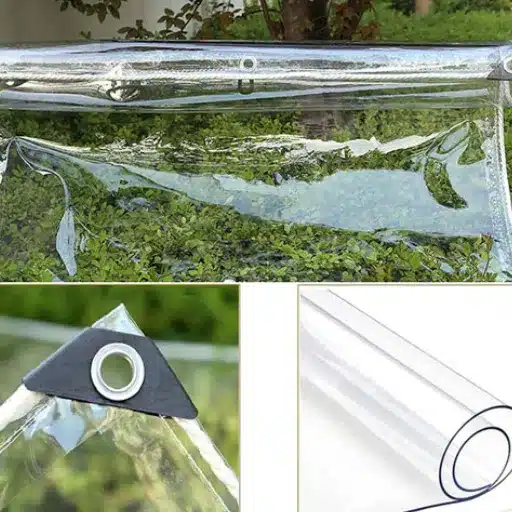
Transparent PVC tarpaulin, used for curtains and visual barrier applications, typically ranges from 1.50to1.50to4.00 per square meter depending on thickness and clarity grade.
HDPE Woven Tarpaulin Prices
HDPE woven tarpaulin occupies the middle ground between PE and PVC. It offers better tear resistance than standard PE while remaining lighter and more economical than PVC.
| Grade | GSM Range | Price Range (FOB) | Typical MOQ | Best For |
|---|---|---|---|---|
| Standard | 80-120 GSM | 0.12−0.12−0.35/sqm | 3,000-5,000 sqm | Agriculture, general covering |
| UV-resistant | 120-200 GSM | 0.35−0.35−0.65/sqm | 3,000-5,000 sqm | Greenhouses, long-term outdoor |
| Heavy duty | 200-260 GSM | 0.65−0.65−1.00/sqm | 2,000-5,000 sqm | Construction, industrial |
Need a custom quote for your specific GSM and quantity? Contact our sales team with your specifications and we will provide exact factory-direct pricing within 24 hours.
Volume Pricing: How MOQ Affects Your Factory Direct Price
Order volume is the single biggest lever for reducing your per-unit price. Understanding volume tiers helps you plan purchases and negotiate from a position of knowledge.
PE Tarpaulin Volume Tiers
For PE tarpaulin, the price curve flattens significantly above 10,000 square meters. Below are typical tier structures from Linyi-based factories:
| Order Volume | Price Impact vs. Base | Typical Use Case |
|---|---|---|
| 1,000-3,000 sqm | Base price + 15-25% | Trial orders, small projects |
| 3,000-5,000 sqm | Base price | Standard factory MOQ |
| 5,000-10,000 sqm | Base price – 10-15% | Regular wholesale orders |
| 10,000-50,000 sqm | Base price – 20-30% | Distributor stocking |
| 50,000+ sqm | Base price – 35-45% | Major distribution, OEM |
Elena, a buyer for a European agricultural distributor, learned this the hard way. For two years she placed monthly orders of 4,000 square meters. She paid the standard rate every time.
Then she tried something different. She consolidated three months of demand into one 12,000 square meter order. Her factory price dropped by 22%. The savings covered her warehousing costs for the quarter. Now she orders quarterly. She passes part of the savings to her customers.
PVC Tarpaulin Volume Tiers
PVC pricing is less elastic than PE because the raw material base is more expensive and coating production runs require minimum batch sizes. Still, volume matters:
| Order Volume | Price Impact vs. Base | Typical Use Case |
|---|---|---|
| 500-1,000 sqm | Base price + 10-20% | Samples, small specialty orders |
| 1,000-3,000 sqm | Base price | Standard factory MOQ |
| 3,000-10,000 sqm | Base price – 8-15% | Regular commercial orders |
| 10,000+ sqm | Base price – 18-25% | Large distribution, OEM partnerships |
When Smaller Orders Make Sense
Not every buyer benefits from maximizing volume. Trial orders of 1,000 square meters let you verify quality before committing to a container load. Custom specifications with unique colors, printing, or reinforcement patterns may require smaller initial runs while the factory adjusts production parameters.
For first-time buyers, we recommend a two-step approach. Order a sample batch at standard pricing to confirm specifications. Then negotiate volume pricing for your ongoing demand once quality is verified.
7 Factors That Drive China Tarp Factory Prices
Understanding what goes into your price quote helps you identify where to negotiate and where not to compromise.
1. Raw Material Costs
Polyethylene and PVC resin prices track global petrochemical markets. In 2024-2026, PVC resin prices stabilized after the volatility of 2022-2023, but remain sensitive to oil price movements. PE resin prices have been more stable, which is one reason PE tarpaulin pricing has been predictable.
Factories with long-term raw material contracts can offer more stable pricing. Ask your supplier whether they hedge raw material costs or buy spot market. The answer affects whether your future orders will see price adjustments.
2. GSM and Fabric Weight
GSM (grams per square meter) is the most straightforward price driver. Doubling the GSM from 100 to 200 does not exactly double the price, because coating and processing costs are partially fixed. But the correlation is strong. Every 50 GSM increase typically adds 0.08to0.08to0.15 per square meter for PE, and 0.20to0.20to0.40 per square meter for PVC.
3. Coating Technology
Laminated coating costs less than knife-coated application. Knife coating applies a thicker, more uniform PVC layer that creates superior durability and weldability. For applications requiring high-frequency welding or long-term UV exposure, knife-coated material justifies the 20-35% price premium.
4. UV and Additive Treatments
Standard UV stabilization adds 5-10% to material cost. Premium UV treatments with higher stabilizer concentrations add 12-18%. Anti-mildew additives for tropical climates, fire retardant treatments for safety applications, and anti-static coatings for industrial use each add their own cost increments.
5. Customization Requirements
Custom colors outside standard blue, green, silver, and orange typically add 5-10% to production cost. Logo printing adds setup fees plus per-unit printing charges. Custom sizes require cutting and finishing adjustments. Reinforced edges with double-folded hems and rust-resistant aluminum eyelets add material and labor cost.
6. Order Volume and Contract Terms
As shown in the volume tier section above, order size directly affects per-unit pricing. Long-term supply contracts with quarterly or annual commitments can secure pricing 5-10% below spot order rates, even at moderate volumes.
7. Seasonality and Market Fluctuations
Tarpaulin demand peaks before construction season in key markets. Ordering during Chinese New Year (January-February) or immediately after can affect both pricing and lead times. Factory capacity is tightest from March through June when export orders concentrate. Planning orders for July-September often yields better pricing and faster production slots.
2026 Market Context: Why Prices Are What They Are
Factory pricing does not exist in a vacuum. Understanding the market forces behind current rates helps you anticipate future changes.
Global Market Size and Growth
The global tarpaulin market reached approximately 9.5billionin2026.Industryanalystsprojectgrowthto9.5billionin2026.Industryanalystsprojectgrowthto13-17 billion by 2032-2036, driven by construction activity, agricultural modernization, and logistics expansion. Asia-Pacific holds roughly 48% of global demand, with China as the dominant producer and fastest-growing consumer market.
China Production Hub Dominance
China produces approximately 70% of the world’s PE tarpaulin and a significant share of PVC coated fabric. The Linyi region in Shandong province functions as the global center for PE tarpaulin manufacturing, with hundreds of factories producing millions of square meters daily. This concentration creates competitive pricing but also means that regional disruptions, such as environmental compliance inspections or energy rationing, can affect global supply.
Price Trends: Up 3-5% Year-over-Year
Factory direct prices increased 3-5% between 2024 and 2026 The primary drivers were rising labor costs in Shandong province, increased energy prices affecting coating operations, and stricter environmental compliance requirements that required factory upgrades. These increases are structural, not cyclical. Expect continued moderate price growth through 2026.
For buyers, this trend reinforces the value of long-term supplier relationships. A factory that knows your ongoing demand is more likely to absorb small cost increases rather than pass them through immediately.
How to Verify You’re Getting a True Factory Direct Price
Not every supplier who claims “factory direct” pricing actually owns a factory. Trading companies, cooperative groups, and agents all present themselves as manufacturers. Here is how to verify.
Red Flags: Prices Too Good to Be True
If a quoted price falls significantly below the ranges in this guide, investigate before ordering. A 120 GSM PE tarpaulin at $0.06 per square meter almost certainly means recycled material, reduced coating weight, or substandard weaving density. The product may look correct on arrival but fail within weeks of outdoor exposure.
Other warning signs include suppliers who refuse video factory tours, cannot provide production line photos, or give vague answers about equipment and capacity. Real factories know their machinery specifications and daily output.
Factory Verification Checklist
Before placing a substantial order, confirm these three things:
- Business license verification, The company’s registered business scope should include manufacturing, not just trading. Check on the National Enterprise Credit Information Publicity System or request a copy directly.
- Production capability evidence, Ask for photos or video of weaving machines, coating lines, and cutting equipment. A factory with 50+ water jet looms and automated coating lines has real capacity. A trading company shows you warehouse photos.
- Quality control documentation, Request material test reports, ISO 9001 certification, and third-party inspection records. Real factories maintain internal QC labs and can provide tensile strength, tear resistance, and waterproof test data.
Requesting a Proper Quotation
A professional factory quotation includes specification breakdown, not just a total price. Your quote request should specify material type, GSM, dimensions, color, edge treatment, eyelet spacing, packaging requirements, and target delivery terms. The factory’s response should address each point with corresponding pricing.
Vague quotes that say “$0.45 per square meter for blue tarp” without specifying GSM, coating type, or edge finish are invitations to receive the wrong product.
Getting the Best Factory Direct Price: Actionable Tips
Price negotiation is expected in Chinese manufacturing culture. Approaching it professionally and with knowledge produces better outcomes than aggressive demands.
Negotiation Strategies for B2B Buyers
Start with the factory’s cost structure. Raw materials make up 50-60% of PE tarp cost. For PVC, it is 55-65%. Labor, energy, and overhead cover the rest. You cannot negotiate below the raw material floor. But margin flexibility exists. That is where your leverage lives.
Offer value in exchange for better pricing. Commit to a 12-month supply agreement. Accept slightly longer lead times during peak season. Consolidate multiple SKU orders into single production runs. Each of these reduces factory cost and creates room for price concessions.
Be specific about your target price and justify it. “Your competitor quotes $0.38 for 180 GSM PE. Can you match that for a 15,000 square meter annual commitment?” This opens a factual conversation rather than an adversarial one.
When to Order for Best Pricing
Plan your purchasing calendar around factory capacity cycles. The ideal order windows are:
- July to September: Post-peak season, factories have capacity and incentive to fill lines
- October to December: Before the year-end rush, good for locking in annual contracts
- Avoid: February (Chinese New Year shutdown), March-May (peak demand, tight capacity)
Building Long-Term Supplier Relationships
Loyal customers get the best prices. Consistent orders. On-time payment. Clear specifications. These habits make you a preferred customer. Preferred buyers get first access to capacity. Priority on custom orders. Pricing that rewards the lower cost of serving a known account.
After two years with the same factory, most buyers see pricing 8-15% below their starting rates. The savings do not come from hard negotiation. They come from relationship efficiency.
Ready to lock in factory-direct pricing for your next order? Request a custom quotation with your specifications and volume requirements. Our team responds within one business day with detailed pricing breakdowns.
Conclusion
China tarp factory direct pricing offers real value in 2026. PE starts at 0.12persquaremeter.PVCruns0.12persquaremeter.PVCruns0.85 to $3.50 depending on grade. Volume discounts of 25-40% kick in at scale. Know what drives price. Verify your supplier. Time your orders right.
The buyers who get the best results share three habits. They understand specifications before they request quotes. They verify factory credentials before placing large orders. They build long-term relationships instead of chasing the lowest price on every transaction.
Armed with the pricing benchmarks and buying strategies in this guide, you can source tarpaulins with confidence. You will know when a price is fair, when it is too good to be true, and when volume consolidation can unlock significant savings.
For exact pricing on your specific material, GSM, and quantity requirements, contact our team directly. We provide transparent factory-direct quotations with full specification breakdowns.