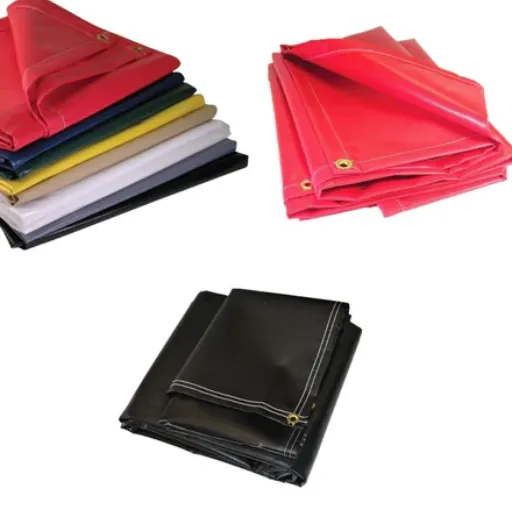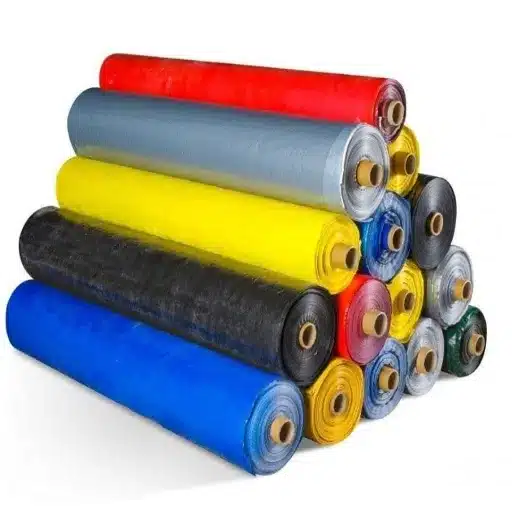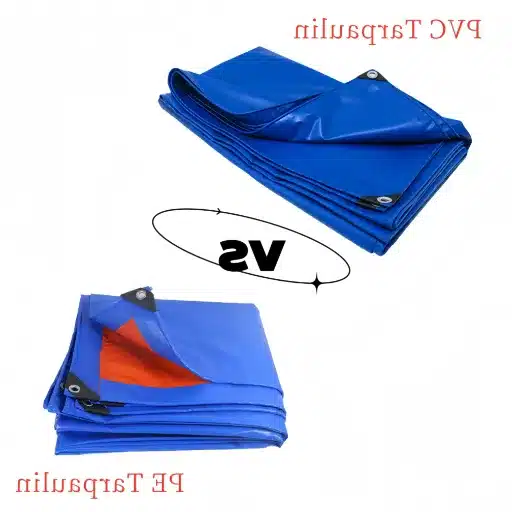
The best way to choose tarp material is to match the fabric, weight, and construction to your application, climate, and expected lifespan. PE and HDPE work well for temporary or cost-sensitive covers, while PVC gives you long-term protection in harsh industrial environments.
Most buying mistakes come from one assumption: that a heavier price tag always means a better tarp. It doesn’t. A 900 gsm PVC tarp is overkill for a one-week event cover. A 120 gsm PE tarp will fail within a year on an open construction site.
The right material is the one that solves your specific protection problem without wasting budget.
In this guide, you’ll learn how to choose tarp material using a simple five-step framework. We’ll compare PE, HDPE, PVC, canvas, and mesh, explain what GSM and denier actually mean, and show you how to talk to a supplier so you get exactly what you pay for.
Key Takeaways
- PE is the most cost-effective choice for short-term outdoor covers lasting 1–3 years.
- HDPE gives you stronger tear resistance than standard PE at a similar weight.
- PVC lasts 5–10+ years and is the best option for heavy-duty, UV-exposed, or fire-retardant applications.
- Canvas breathes and prevents condensation, but it is not fully waterproof.
- Mesh blocks sun and wind while letting air through, so it is not suitable for waterproof coverage.
- Always specify GSM, denier, grommet spacing, and seam construction rather than relying on “heavy duty” labels.
What Tarp Material Really Means
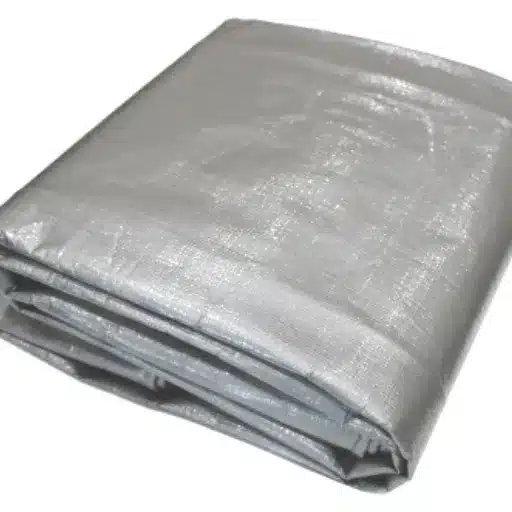
A finished tarpaulin is more than a single sheet of plastic. It’s a combination of a base fabric and a protective coating or lamination. The base fabric provides tensile strength.
Learning how to choose tarp material starts with understanding how these layers work together. The coating provides waterproofing, UV resistance, and chemical protection. How those two layers are manufactured determines how the tarp performs in the field.
When you read a product label, you’ll see terms like GSM, denier, mil, and mesh count. GSM measures weight in grams per square meter. Denier measures fiber thickness. Mil measures sheet thickness in thousandths of an inch.
Mesh count tells you how many threads cross each square inch. These numbers matter more than marketing words like “heavy duty” or “super strong.”
At Chenlai, we produce PE laminated rolls, HDPE woven fabrics, and PVC coated polyester. Each material starts with different raw materials and production lines. That’s why a PE tarp feels different from a PVC tarp, and why the same GSM number does not mean the same durability across materials.
Common Tarp Materials Compared
To know how to choose tarp material for a specific job, you need to understand how PE, HDPE, PVC, canvas, and mesh differ in weight, lifespan, and cost.
PE tarpaulin starts with woven polyethylene tape yarn that’s laminated on both sides. It’s lightweight, flexible, and cost-effective. Standard grades range from 60 gsm to 300 gsm. PE works well for temporary covers, seasonal agriculture, camping, and short-term construction protection.
However, the trade-off is lifespan. A basic PE tarp exposed to strong sun may show UV embrittlement within 12 months. UV-stabilized grades extend that to 2–3 years. PE isn’t the right choice if you need abrasion resistance or a cover that stays in place through repeated wind loads.
HDPE (High-Density Polyethylene) Tarpaulin
HDPE tarpaulin uses high-density polyethylene tape fibers woven into a tighter scrim. It’s stronger and more tear-resistant than standard PE at the same GSM. You’ll often see HDPE used for truck covers, scaffolding enclosures, and agriculture where the tarp is handled frequently.
In addition, HDPE is lighter than PVC, so it also reduces freight costs. A container load of HDPE tarps can cover roughly 30–50% more area by weight than the same shipment of PVC. For buyers balancing durability and shipping budget, HDPE sits in the practical middle ground.
PVC (Polyvinyl Chloride) Tarpaulin
PVC tarpaulin uses a polyester scrim base coated with PVC resin. It’s the heaviest and most durable option in common use. Grades range from 300 gsm to 650+ gsm.
PVC resists UV, chemicals, abrasion, and tearing better than PE or HDPE. It also supports welded seams, which are stronger and more waterproof than stitched seams.
If your project needs fire-retardant certification, long-term outdoor exposure, or protection from harsh chemicals, PVC is usually the right choice. You can read more about specifications in our PVC tarpaulin guide.
Canvas Tarpaulin
Canvas tarps are made from cotton or cotton-poly blends. They’re water-resistant and breathable, which makes them ideal for covering machinery, lumber, or equipment that could sweat under a non-breathable cover. Canvas is also quieter and less likely to scratch painted surfaces.
The downside is that canvas isn’t fully waterproof. Prolonged rain will eventually soak through. Canvas also weighs more than PE and can mildew if stored wet.
Mesh Tarpaulin
Mesh tarps are woven from polyethylene or PVC with open gaps between threads. They block wind, sun, and debris while allowing airflow. Common uses include shade structures, debris netting, and windbreaks. Mesh isn’t waterproof, so don’t use it where rain protection is the main goal.
Material Comparison at a Glance
| Material | Weight Range | Waterproof | Typical Lifespan | Best For |
|---|---|---|---|---|
| PE | 60–300 gsm | Yes | 1–3 years | Temporary covers, agriculture, camping |
| HDPE | 80–300 gsm | Yes | 3–5 years | Truck covers, scaffolding, frequent handling |
| PVC | 300–650+ gsm | Yes | 5–10+ years | Industrial, marine, fire-retardant, long-term |
| Canvas | Varies | Resistant | 2–5 years | Breathable equipment covers, machinery |
| Mesh | 70–200 gsm | No | 3–7 years | Shade, windbreaks, debris control |
When choosing between PE and PVC, our PE vs PVC tarpaulin comparison breaks down the cost and lifespan differences in more detail.
How to Choose Tarp Material in 5 Steps
The phrase “how to choose tarp material” sounds simple until you face a catalog full of GSM numbers, color options, and seam types. Use this five-step process to cut through the noise.
- Define the application and exposure duration. A two-week event cover has completely different requirements from a five-year industrial installation.
- Match the material to the environment. Consider UV intensity, wind load, rain, snow, and chemical exposure.
- Select the right GSM and construction. Higher GSM usually means more durability, but handling weight and flexibility also matter.
- Specify hardware and finishing. Grommet spacing, reinforced corners, and seam type affect installation strength.
- Validate supplier quality. Ask for test reports, samples, and batch consistency documentation.
Marcus runs a logistics fleet in Brazil. His team was replacing 120 gsm PE truck covers every six months because tropical UV degraded the fabric.
After switching to 180 gsm UV-stabilized HDPE with reinforced hems, the replacement cycle stretched to three years. The upfront cost was 40% higher, but his five-year material spend dropped by more than half. He didn’t expect such a big difference.
How to Choose Tarp Material for Your Application
Construction Site Covers
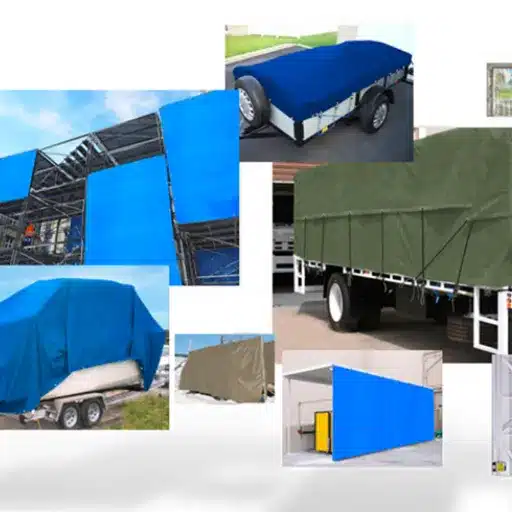
Construction sites demand tarps that resist tearing, UV exposure, and repeated handling. For short-term scaffolding enclosures, 120–200 gsm PE or HDPE is usually enough. For long-term building wraps or fire-retardant compliance, you’ll need 400+ gsm PVC. Always check local fire codes before ordering.
Agriculture and Greenhouses
Agricultural buyers need UV stabilization above all else. A 100–160 gsm UV-treated PE tarp handles seasonal crop covers and hay storage. For multi-season greenhouses, consider reinforced clear PE or 500 gsm PVC panels that transmit light while blocking rain.
Truck, Trailer, and Logistics Covers
For fleet operators, material choice directly affects downtime. Light trucks and short routes can use 160–180 gsm HDPE. Long-haul routes, abrasive loads, and open trailers benefit from 450+ gsm PVC with 1000D scrim and welded seams. Our heavy-duty tarp guide covers the specifications that matter most for transport.
Industrial Equipment and Outdoor Storage
Industrial covers face the toughest conditions: chemicals, abrasion, extreme temperatures, and constant UV. For these cases, 600+ gsm PVC with fire-retardant treatment is the safest choice. Canvas is an alternative when the equipment needs airflow to prevent condensation.
Marine and Coastal Use
Salt air, strong wind, and high humidity accelerate degradation. Marine-grade PVC with anti-mildew treatment and stainless or brass grommets outlasts PE by years in coastal environments. Welded seams are essential because stitched seams can wick moisture.
Ana manages a greenhouse operation in Spain. She started with 120 gsm silver PE covers for seasonal tomato tunnels.
The covers worked for two seasons, but replacing them every year became labor-intensive. After testing 200 gsm UV-stabilized HDPE, she found the material lasted four seasons and reduced annual cover costs by 35%. She’s now switching her entire farm over.
Tarp Thickness and Weight: GSM, Denier, and Mil Explained
Buyers often confuse thickness with strength. GSM, denier, and mil each measure something different. Knowing how to choose tarp material by weight means knowing which number matters for your use case.
- GSM (grams per square meter) is the total weight of the fabric. It is the most reliable single number for comparing tarp durability.
- Denier measures the thickness of individual fibers. Higher denier fibers resist abrasion better.
- Mil measures sheet thickness in thousandths of an inch. It is useful for comparing coated materials like PVC.
A higher GSM tarp is usually stronger, but it is also heavier and less flexible. For covers that are removed and reinstalled often, a lighter HDPE tarp may outperform a thicker PVC tarp simply because crews handle it faster and damage it less.
| GSM Range | Duty Level | Typical Applications |
|---|---|---|
| 60–120 gsm | Light duty | Temporary ground cover, dust sheets, frost protection |
| 120–200 gsm | Medium duty | General outdoor covers, farm use, standard truck covers |
| 200–300 gsm | Heavy duty PE/HDPE | Long-term outdoor storage, pond lining, temporary roofing |
| 300–500 gsm | Light/medium PVC | Garden furniture, awnings, temporary shade |
| 500–750 gsm | Medium/heavy PVC | Truck curtains, construction site protection, events |
| 750–1000+ gsm | Heavy industrial PVC | Mining, marine, permanent structures |
For a deeper look at how thickness affects durability, the tarp thickness guide from Tarp Supply provides useful benchmarks.
Total Cost of Ownership: Price vs. Lifespan
The cheapest tarp is rarely the least expensive over time. A 120 gsm PE tarp might cost 1.50persquaremeterandlastoneyear.A450gsmPVCtarpmightcost1.50persquaremeterandlastoneyear.A450gsmPVCtarpmightcost6.00 per square meter and last eight years. The PE option looks cheaper until you calculate replacement labor, freight, and downtime.
Part of knowing how to choose tarp material is budgeting for lifespan, not just the first invoice.
| Material | Upfront Cost per m² | Estimated Lifespan | 5-Year Cost per m² |
|---|---|---|---|
| PE (120 gsm) | 1.50–1.50–2.50 | 1–2 years | 3.75–3.75–12.50 |
| HDPE (180 gsm) | 2.50–2.50–4.00 | 3–5 years | 2.50–2.50–6.67 |
| PVC (450 gsm) | 5.00–5.00–8.00 | 5–8 years | 3.13–3.13–8.00 |
| PVC (650 gsm) | 8.00–8.00–12.00 | 8–12 years | 3.33–3.33–7.50 |
These ranges are estimates. Actual prices depend on order volume, customization, and freight terms. The point is to budget for lifespan, and don’t ignore replacement labor or downtime.
What to Tell Your Tarp Supplier
Therefore, once you know how to choose tarp material, the next step is communicating your needs clearly. A good supplier will ask the right questions. A great buyer will have the answers ready.
Here’s what to provide:
- The exact application and exposure conditions
- Required GSM, denier, or mil range
- Expected lifespan and UV rating
- Size, overhang, and fastening requirements
- Color, printing, or branding needs
- Fire-retardant or chemical-resistance certifications if required
- Quality documentation requests, such as tensile test reports or batch certificates
If you need custom sizes, colors, or printed logos, our custom tarpaulin manufacturing guide explains what you’ll need during the process. For help vetting suppliers, see our guide on how to choose a tarpaulin manufacturer.
Common Tarp Selection Mistakes to Avoid
Even experienced buyers make these mistakes:
- Choosing on price alone. Low-cost tarps often lack UV stabilizers and reinforced hems.
- Ignoring cut size vs. finished size. A “10 x 12 ft” tarp may finish closer to 9’6″ x 11’6″ after hemming.
- Under-specifying for UV. Standard PE degrades quickly in strong sun without UV treatment.
- Overlooking seam construction. Welded seams outperform single-stitched seams in waterproofing and strength.
- Forgetting about grommet spacing. Wider spacing creates weak points under wind load.
- Skipping samples. Always test a sample in your actual conditions before you’ve placed a bulk order.
Frequently Asked Questions About How to Choose Tarp Material
What is the best tarp material for outdoor use?
The best tarp material for outdoor use depends on duration. PE and HDPE are cost-effective for 1–5 years. PVC is the best choice for long-term, heavy-duty outdoor protection because of its superior UV and abrasion resistance.
Is HDPE better than PE for tarps?
HDPE is stronger and more tear-resistant than standard PE at the same GSM. It’s a better choice for applications that involve frequent handling, wind loads, or repeated installation.
How long does PVC tarpaulin last?
PVC tarpaulin typically lasts 5–10 years outdoors. Premium grades with proper UV stabilizers and maintenance can last even longer in moderate climates.
What GSM tarp do I need for construction?
For temporary construction covers, 120–200 gsm PE or HDPE is usually sufficient. For long-term scaffolding, building wraps, or fire-retardant requirements, use 400+ gsm PVC.
Is a thicker tarp always better?
No. Thicker tarps are stronger but also heavier and less flexible. A 900 gsm PVC tarp is unnecessary for a short-term cover and can be harder to handle than a lighter HDPE option.
Can tarps be recycled?
PE and HDPE tarps are recyclable where facilities accept mixed plastics. PVC recycling is less common and usually requires specialized processing. Ask your supplier about material disposal options if sustainability is a priority.
Conclusion
Ultimately, knowing how to choose tarp material comes down to three factors: the environment, the expected lifespan, and the total cost of ownership. PE and HDPE give you flexibility and value for short-to-medium term use. PVC delivers the durability that industrial, marine, and long-term applications demand. Canvas and mesh fill specific roles where breathability or airflow matter more than waterproofing.
Instead of trusting vague labels, specify GSM, denier, seam construction, and grommet spacing. Talk to your supplier like a partner, not just a vendor. The right material will protect your assets, reduce replacement costs, and keep your project on schedule.
Ready to choose the right tarp material for your project? Request a custom quote and our team will recommend a specification that matches your application, climate, and budget.
Sources