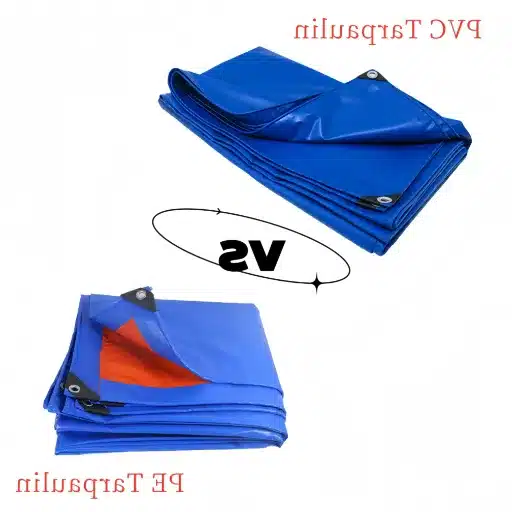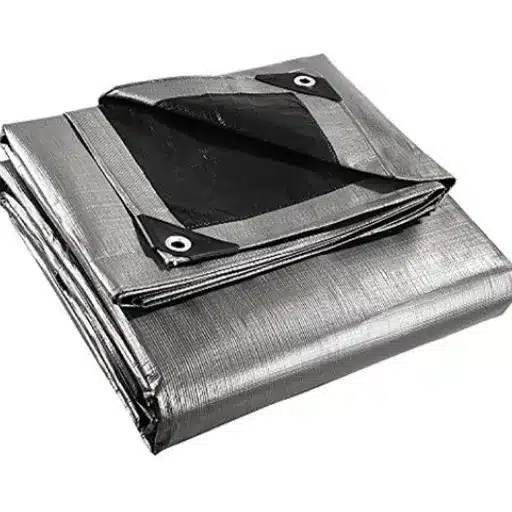
PVC tarpaulin outperforms HDPE in heavy-duty, long-term applications thanks to superior tear strength, welded seam integrity, and fire-resistant certifications. HDPE tarpaulin offers a lighter, more cost-effective solution for short-term coverage, seasonal agriculture, and projects where portability matters most. Your choice depends on project duration, environmental exposure, and total cost of ownership rather than upfront price alone.
When a procurement team selects the wrong material, the result is rarely a minor inconvenience. It means premature replacement, unplanned labor costs, and operational downtime that erase any initial savings. This guide breaks down the technical differences between PVC and HDPE tarpaulin so you can specify the right material for your project timeline and risk tolerance.
Key Takeaways
- PVC tarpaulin delivers 2-4x higher tear strength than HDPE and lasts 5-10+ years outdoors, making it the standard for logistics, construction, and industrial use.
- HDPE tarpaulin costs 40-70% less per square meter and weighs 50-75% less, which reduces both material and shipping costs for short-term or seasonal projects.
- Total cost of ownership over 5 years often favors PVC for multi-year installations, even though the upfront investment is higher.
- HDPE is recyclable through standard Type 2 plastic streams, while PVC disposal requires specialized handling in most regions.
- Fire-retardant certifications (NFPA 701, B1/M2) are only available with PVC, not HDPE.
What Is PVC Tarpaulin?
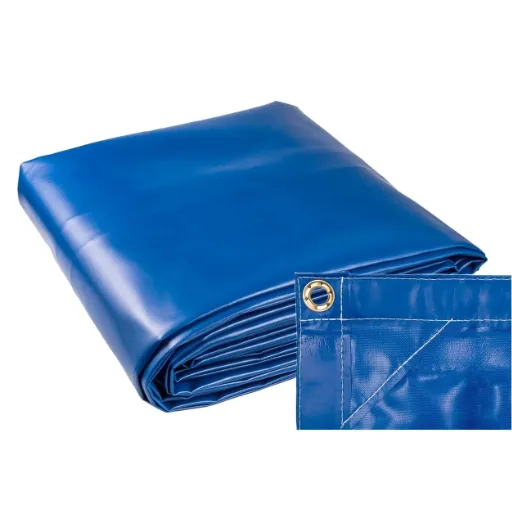
PVC tarpaulin is a coated fabric built from a woven polyester scrim base saturated with polyvinyl chloride resin. Manufacturers apply the coating through knife coating or calendering processes, creating a dense, impermeable barrier that resists water, chemicals, and abrasion.
The finished material typically weighs between 400 and 1,200 grams per square meter (GSM) and measures 0.35 to 1.0 millimeters in thickness. Because the PVC layer fully encapsulates the polyester threads, the material achieves 100% waterproofing without additional treatments. Seams can be heat-welded rather than sewn, which eliminates needle holes and creates leak-proof joints.
PVC tarpaulin also accepts fire-retardant additives during production. Certified grades meet NFPA 701, B1/M2, and BS 7837 standards. This makes PVC the default choice for construction sites, warehouses, and public event structures where fire codes apply.
The material remains flexible in temperatures as low as -30°C, and UV-stabilized formulations prevent brittleness under sustained sun exposure. For buyers who need heavy-duty PVC tarpaulin product details, the specifications page covers standard grades, custom thickness options, and certification documentation.
What Is HDPE Tarpaulin?
HDPE tarpaulin is manufactured from high-density polyethylene tape yarn woven into a base fabric, then laminated with low-density polyethylene (LDPE) coating on both sides. The extrusion lamination process bonds the waterproof layer directly to the woven core, producing a lightweight cover that folds easily and deploys quickly.
Standard HDPE tarpaulin ranges from 50 to 350 GSM and 6 to 30 mil in thickness. The material resists water effectively and includes UV stabilizers for outdoor use, though its lifespan under direct sun is shorter than PVC. Typical outdoor service life runs 1 to 3 years for standard grades, with heavy-duty woven versions reaching up to 5 years in moderate climates.
One of HDPE’s practical advantages is weight. At roughly one-third the mass of an equivalent PVC cover, HDPE is easier to handle, faster to install, and cheaper to ship. For bulk export orders, this weight difference can reduce container freight costs by 30-50% compared to PVC.
HDPE is also classified as Type 2 recyclable plastic in most markets. At end of life, it can enter standard polyethylene recycling streams, which matters for buyers with sustainability mandates or regional disposal regulations.
Head-to-Head Comparison: PVC vs HDPE Tarpaulin
The fastest way to evaluate these materials is to compare the specifications that matter most in the field.
| Specification | HDPE Tarpaulin | PVC Tarpaulin |
|---|---|---|
| Base material | HDPE woven tape yarn + LDPE coating | Woven polyester scrim + PVC resin |
| Weight | 50-350 GSM | 400-1,200 GSM |
| Thickness | 6-30 mil | 0.35-1.0 mm |
| Tensile strength | 500-1,200 N/5cm | 2,500-4,000 N/5cm |
| Tear strength | 600-1,300 N/5cm | 1,500-3,500 N/5cm |
| Waterproof rating | 99.99%+ water-resistant | 100% waterproof |
| Temperature range | -15°C to +70°C | -30°C to +70°C |
| UV resistance | Good (300-500 Kly) | Excellent with stabilizers |
| Fire resistance | Not available | NFPA 701, B1/M2, BS 7837 |
| Seam construction | Sewn or heat-sealed | Heat-welded (leak-proof) |
| Chemical resistance | Good for mild exposure | Excellent (oils, fuels, acids) |
| Lifespan (outdoor) | 1-3 years | 5-10+ years |
| Repairability | Tape or sewn patches | Heat-welded patches |
| Recyclability | Type 2 recyclable | Limited; specialized handling |
| Cost per m² | 0.50−0.50−1.50 | 2.50−2.50−8.00 |
This table reveals a clear pattern. PVC dominates in strength, longevity, and safety compliance. HDPE wins on weight, cost, and recyclability.
When to Choose HDPE Tarpaulin
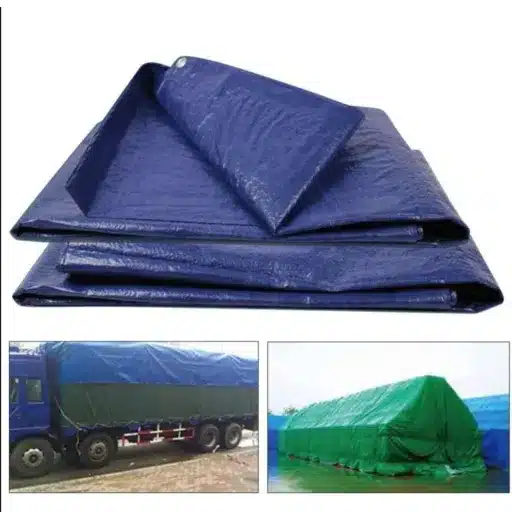
HDPE tarpaulin makes sense when your project timeline is under two years, when the cover will be handled frequently, or when budget constraints make the lower per-unit cost essential.
Agriculture and Seasonal Coverage
Farmers and agricultural buyers use HDPE for crop covers, greenhouse shading, and equipment protection during specific growing seasons. Because the material is light, workers can spread and retrieve it without heavy lifting equipment. At the end of the season, it folds compactly for storage.
Short-Term Construction and Scaffolding
For construction enclosures planned to last 6-18 months, HDPE provides adequate weather protection at a fraction of the PVC cost. Contractors on tight budgets or fixed-price contracts often specify HDPE for temporary site covers.
Disaster Relief and Emergency Response
Emergency teams need covers that deploy fast and travel light. HDPE’s low weight makes it ideal for rapid-response kits where every kilogram of cargo capacity matters.
Budget-Conscious Bulk Purchasing
Wholesalers and distributors who serve price-sensitive markets often stock HDPE as their entry-level option. The lower MOQ and faster production lead time also help buyers test demand before committing to larger PVC orders.
Marcus, a scaffolding contractor in Malaysia, learned this balance the hard way. He bid a 14-month project using HDPE enclosures to keep his material cost 40% below competitors. Month 11 brought monsoon-season winds that shredded seams on three sections. His team spent four days replacing covers and repairing water-damaged scaffolding boards. The emergency purchase and labor pushed his total material spend 12% higher than if he had specified PVC from the start.
When to Choose PVC Tarpaulin
PVC tarpaulin is the correct specification when failure carries significant cost, when safety codes require fire resistance, or when the installation must survive years of exposure without maintenance.
Heavy-Duty Truck Covers and Logistics
Flatbed and curtain-side trucks face constant abrasion from highway speeds, cargo edges, and repeated tensioning. PVC’s higher tear strength and welded seams withstand these forces. Fleet operators who switch from PE to PVC truck covers typically see a 50-80% reduction in cover replacements over five years.
Construction Sites Requiring Fire Safety
Building codes in many countries require temporary enclosures, debris netting, and site dividers to carry fire-retardant certification. Only PVC tarpaulin can be manufactured to meet NFPA 701, B1/M2, or BS 7837 standards. Specifying HDPE on a site with fire-code requirements creates compliance risk and potential project shutdowns.
Long-Term Outdoor Installations
Warehouses, sports facilities, and industrial yards that need permanent or semi-permanent covers should specify PVC. The material’s 5-10+ year lifespan eliminates the cycle of annual replacement, inspection, and labor that HDPE requires.
Cold Climate Applications
PVC retains flexibility to -30°C, while HDPE becomes stiff and brittle below -15°C. In northern climates or refrigerated facilities, PVC is the safer choice because it will not crack during installation or under wind load in freezing temperatures.
A fleet manager in Sao Paulo replaced 180 GSM PE truck covers that were failing at a 60% rate within 14 months. He switched to 500 GSM PVC covers and recorded zero material failures for four consecutive years. The higher upfront cost delivered return on investment in 22 months, and the elimination of emergency replacements saved his logistics team roughly 120 labor hours per year.
Application-by-Application Decision Matrix
Use this matrix to match material to your specific scenario.
| Application | Recommended Material | GSM Range | Rationale |
|---|---|---|---|
| Short-term construction (under 18 months) | HDPE | 120-200 | Lower cost meets project timeline |
| Long-term construction (2+ years) | PVC | 500-900 | Durability and fire compliance |
| Agriculture crop covers | HDPE | 80-150 | Lightweight, seasonal use |
| Agriculture greenhouse (permanent) | PVC | 400-700 | Long lifespan, UV resistance |
| Truck and cargo covers | PVC | 500-900 | Tear strength, welded seams |
| Outdoor events and tents | PVC | 400-650 | Fire safety, weather resistance |
| Industrial equipment cover | PVC | 600-900 | Chemical resistance, longevity |
| Disaster relief and emergency | HDPE | 100-180 | Portability, fast deployment |
| Marine and dock covers | PVC | 600-900 | Waterproofing, mold resistance |
| Permanent warehouse roofing | PVC | 900-1,200 | Structural load, decades of service |
Cost Analysis: Upfront Price vs. Total Cost of Ownership
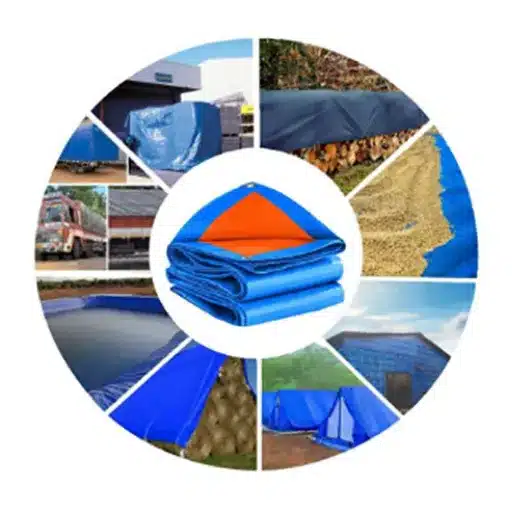
The price gap between HDPE and PVC is substantial. Standard HDPE runs 0.50 to 1.50 per square meter, while PVC ranges from 2.50 to 8.00 per square meter, depending on grade and certification. But the upfront price is only one line on the procurement spreadsheet.
Replacement Frequency
HDPE tarpaulin in outdoor conditions typically requires replacement every 1 to 3 years. PVC tarpaulin lasts 5 to 10+ years. For a five-year project, HDPE may need two or three replacements while PVC needs none.
Labor and Downtime
Each replacement involves removal, disposal, purchase, delivery, and installation. On a large construction site or logistics yard, this labor can exceed the material cost. Downtime during replacement also exposes equipment, inventory, or work areas to weather damage.
Shipping Cost Impact
At bulk scale, HDPE’s lighter weight reduces container shipping costs significantly. A 40-foot container loaded with HDPE tarps carries roughly 30-50% more coverage area by weight than the same container loaded with PVC. For export buyers, this freight savings partially offsets the replacement cost difference.
Five-Year Total Cost Comparison
Consider a 1,000 square meter installation over five years:
| Cost Factor | HDPE | PVC |
|---|---|---|
| Initial material | $800 | $4,000 |
| Replacement (Year 2) | $800 | $0 |
| Replacement (Year 4) | $800 | $0 |
| Labor (3 installations) | $1,200 | $400 |
| Shipping | $600 | $1,200 |
| 5-Year Total | $4,200 | $5,600 |
For projects under two years, HDPE is the clear economic winner. For projects extending beyond three years, the TCO gap narrows dramatically. Beyond five years, PVC almost always costs less when labor and downtime are included.
If you are comparing broader polyethylene options, our complete PE vs PVC tarpaulin comparison guide covers the full range of PE grades including LDPE and LLDPE variations.
Technical Specifications Explained
Understanding how manufacturers measure performance helps you evaluate supplier claims and write better procurement specifications.
GSM (Grams per Square Meter)
GSM indicates the mass of the fabric. Higher GSM generally means thicker coating, stronger weave, and longer service life. However, GSM alone does not guarantee quality. A 200 GSM HDPE tarp with high-quality UV stabilizers may outperform a 250 GSM tarp with inferior additives.
Tensile Strength (ASTM D5034)
Tensile strength measures the force required to pull the fabric apart. PVC tarpaulin typically tests at 2,500 to 4,000 Newtons per 5-centimeter strip, while HDPE ranges from 500 to 1,200 N/5cm. For load-bearing applications like tensioned tent roofs or truck side curtains, PVC’s higher tensile rating is essential.
Tear Strength (ASTM D2261)
Tear strength matters when the material encounters a puncture or cut. A small tear in HDPE can propagate quickly under wind or tension. PVC’s tear strength of 1,500 to 3,500 N/5cm provides a significant safety margin against rip propagation.
UV Resistance (Kly Rating)
The Kly rating estimates how much solar radiation a material can absorb before degrading. HDPE typically rates at 300 to 500 Kly, sufficient for 1 to 3 years in direct sun. PVC with UV stabilizers exceeds 700 Kly, supporting decade-long exposure in tropical and desert climates.
Hydrostatic Resistance (AATCC 127)
This test measures how much water pressure the fabric can withstand before leaking. PVC scores consistently above 300 cm hydrostatic head, which equates to 100% waterproofing even under ponded water. HDPE scores vary by grade but generally fall in the 100-200 cm range, which is water-resistant rather than fully waterproof under sustained pressure.
Customization: How PVC and HDPE Differ
Both materials accept custom sizing, color, and hardware, but the manufacturing process creates practical differences.
Printing and Branding
PVC’s smooth, dense surface accepts screen printing and digital printing with sharp detail and excellent color saturation. Logos, safety markings, and branding remain legible for years. HDPE’s woven texture limits print resolution, though simple logos and text are still achievable.
Grommets and Edge Reinforcement
Both materials can be fitted with aluminum or brass grommets at custom spacing. PVC edges are typically heat-sealed and reinforced with polyester webbing. HDPE edges are folded and heat-sealed. For high-wind applications, PVC’s heavier weight and stronger edge construction reduce grommet pull-out failure.
Seam Construction
PVC seams are heat-welded, creating a bond as strong as the base material with zero leakage. HDPE seams are typically sewn or heat-sealed. Sewn seams create needle holes that can wick moisture under pressure. Heat-sealed HDPE seams are better than sewn but still do not match the integrity of a PVC weld.
Minimum Order Quantities
HDPE production runs typically allow lower MOQs because the extrusion lamination process is faster to set up and change over. PVC calendering or knife coating requires longer production runs to justify machine setup. Buyers testing a new specification or entering a new market often start with HDPE to validate demand before committing to PVC volume.
Environmental and Disposal Considerations
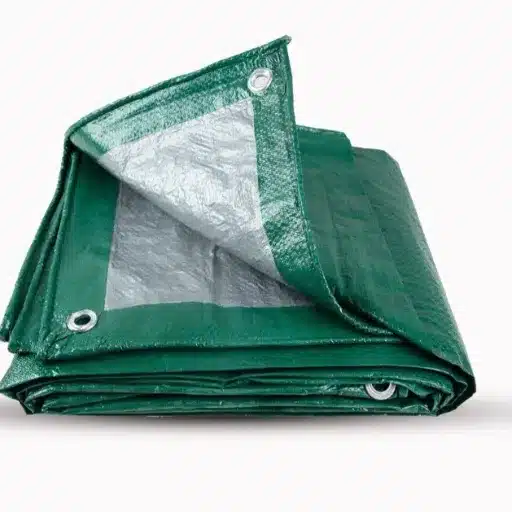
Sustainability is increasingly written into procurement policies, and the two materials diverge sharply here.
HDPE Recyclability
HDPE is classified as Type 2 plastic in global recycling systems. Used HDPE tarps can be shredded, re-extruded, and manufactured into new plastic products including drainage pipe, plastic lumber, and new woven fabrics. The established recycling infrastructure makes HDPE the lower-impact choice for single-use or short-term applications.
PVC Disposal Challenges
PVC recycling is limited by the variety of plasticizer formulations and the presence of chlorine in the polymer matrix. Most regions lack dedicated PVC recycling streams for used tarpaulin. Incineration releases hydrogen chloride gas, requiring specialized flue-gas treatment. Landfill disposal is the most common end-of-life path for PVC tarps.
The Longevity Trade-Off
However, PVC’s extended lifespan reduces total material consumption over time. A single PVC cover that lasts 10 years replaces three to five HDPE covers. For buyers calculating lifetime environmental impact, the reduced manufacturing and shipping footprint of fewer replacements can offset PVC’s disposal disadvantage.
Frequently Asked Questions
Is PVC tarpaulin better than HDPE?
PVC is better for heavy-duty, long-term, and safety-critical applications. HDPE is better for short-term, budget-sensitive, and lightweight needs. Neither is universally superior. The right choice depends on project duration, environmental exposure, and compliance requirements.
Is HDPE tarpaulin fully waterproof?
HDPE tarpaulin is highly water-resistant and performs well in rain and light moisture. However, under sustained hydrostatic pressure, such as ponded water or heavy saturation, PVC’s impermeable coating provides absolute waterproofing that HDPE cannot match.
How long does HDPE tarpaulin last outdoors?
Standard HDPE tarpaulin lasts 1 to 3 years when exposed directly to the elements. Heavy-duty woven grades with high UV stabilizer loading can reach 4 to 5 years in moderate climates. In tropical or desert conditions with intense UV, lifespan shortens toward the lower end of the range.
Can HDPE tarps match PVC strength?
No. Even the heaviest HDPE grades do not approach PVC’s tear strength or tensile strength. HDPE’s advantage is weight and cost, not structural performance. For applications where fabric failure would cause serious damage or safety risk, PVC is the appropriate specification.
Which lasts longer in direct sunlight?
PVC tarpaulin lasts longer in direct sunlight. UV-stabilized PVC formulations are engineered for 5 to 10+ years of continuous outdoor exposure. HDPE degrades faster under UV, with visible embrittlement and color fading typically appearing within 12 to 24 months.
Is PVC worth the extra cost for short projects?
For projects under 12 months, PVC is usually not worth the premium unless fire certification or extreme durability is required. HDPE delivers adequate protection at a much lower price point for temporary and seasonal use.
Which performs better in freezing temperatures?
PVC performs better in freezing temperatures. It remains flexible to -30°C, while HDPE becomes stiff and brittle below -15°C. In cold climates or refrigerated facilities, PVC is the safer choice to prevent cracking and seam failure.
Can I print logos on both HDPE and PVC?
Yes, both materials accept printing. PVC produces sharper, more durable prints because of its smooth surface. HDPE printing is suitable for basic logos and color blocks but cannot achieve the fine detail possible on PVC.
Conclusion
PVC vs HDPE tarpaulin is not a contest with one winner. It is a procurement decision that must match material properties to project requirements. PVC delivers the strength, longevity, and safety certifications that heavy-duty industrial applications demand. HDPE provides the cost efficiency, light weight, and recyclability that short-term and seasonal projects need.
The mistake most buyers make is choosing based on upfront price alone. When you calculate total cost of ownership, including replacement cycles, labor, and shipping, the cheaper material is not always the more economical one. For projects beyond three years, PVC typically pays for itself. For projects under two years, HDPE is the practical choice.
At Linyi Chenlai Plastic Products Co., Ltd., we manufacture both PVC and HDPE tarpaulin on dedicated production lines. Our team can help you evaluate your specific exposure conditions, timeline, and budget to specify the right material, GSM, and finish for your project. Tell us your requirements, and we will tailor a solution that fits your exact specifications.