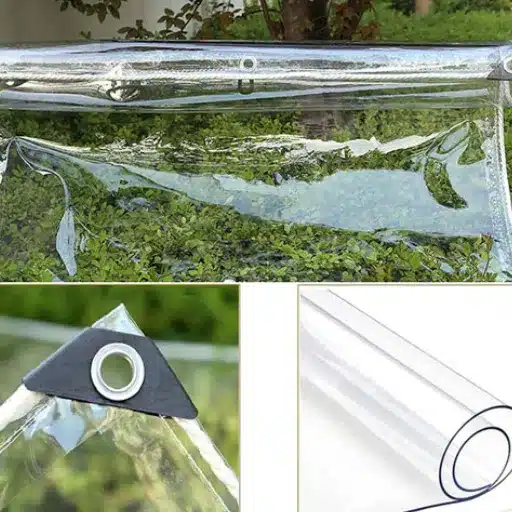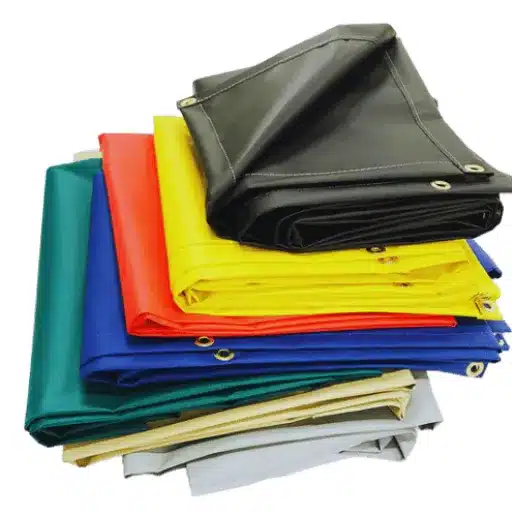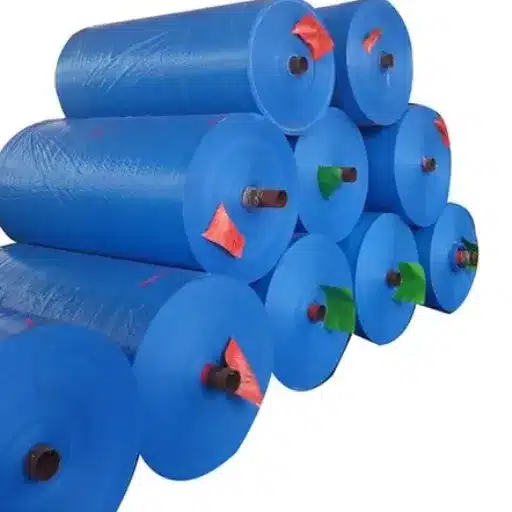
PVC coated fire retardant tarpaulin is a special fire-resistant fabric covered with PVC with additives that reduce flammability and ensure that in case of fire, it does not burn quickly and extinguishes when the ignition source is removed. This is one of the most important products used during construction, welding work, transport logistics, etc.
According to the estimates of U.S. authorities, about $10 billion are spent each year to fight fires at building sites in the USA only. In many cases, the fire starts due to small sparks falling on non-certified materials. Welding spark can set off burning of ordinary polyethylene tarpaulins almost immediately. Therefore, the use of proper protective tarpaulins is not an option, but a necessity.
If you manage procurement activities on the construction site, logistic operations involving dangerous cargoes, temporary facilities, etc., you definitely faced the problem of selecting fire-proof certification standard. NFPA 701, DIN 4102 B1, EN 13501-1, etc. Acronyms come thick and fast and selecting inappropriate certification standard can lead to serious complications including failure of safety inspection or even a delay of the whole project.
Here, we will give detailed explanation of what fire-retardant PVC tarpaulin is, its characteristics, necessary certification, how to make the right choice among available standards, as well as ways to store and maintain tarps.
Key Takeaways
- Fire retardant PVC tarpaulin self-extinguishes when the flame source is removed, but it is not fireproof.
- NFPA 701 is applicable to the United States, DIN 4102 B1 is used in Europe, while GB 8624 is used in China for testing and certification.
- Standard applications include construction scaffolding enclosures, welding protection, truck covers, event tents, and industrial warehouse partitions.
- GSM selection matters: 450-650 GSM suits most industrial uses, while 650-900 GSM handles heavy-duty and welding applications.
- The certification papers have to be up-to-date. In case of DIN 4102 B1 certificates, re-certification is done every five years.
What Is Fire Retardant PVC Tarpaulin?
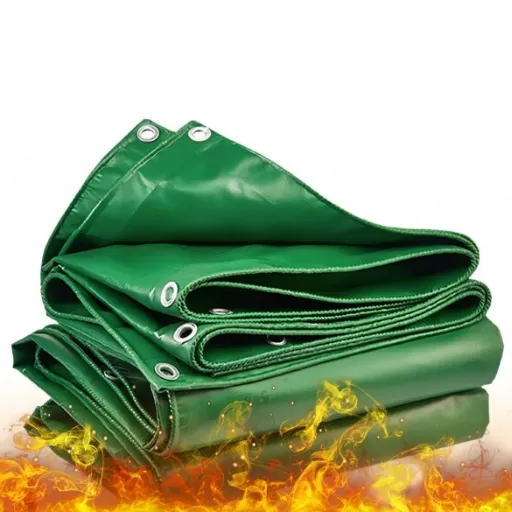
Fire retardant PVC tarpaulin is made from a strong polyester fabric, which is then covered by polyvinyl chloride paste containing fire retardants. The result is a heavy-duty material that resists ignition and limits how far flames can travel across its surface.
Unlike standard PE tarpaulin, which ignites easily and burns rapidly, treated PVC tarpaulin behaves differently when exposed to heat. These retardants produce either gases or a char layer. These two prevent the continuation of the chain reaction process. As soon as the ignition stops, the material stops burning.This self-extinguishing property buys critical time for evacuation and fire suppression.
The capabilities of these products should be known. Fire retardant PVC tarps cannot burn when exposed to open fire or other ignition sources under normal circumstances. However, they are not resistant to burning continuously under direct flames.
How Fire Retardancy Works in PVC Coated Fabric
The flame-retardant mechanism in PVC tarpaulin operates through two primary pathways.
One of the ways is that chemical compounds included in the PVC coating release steam or gases that are inert and do not support burning. When released, they decrease the level of oxygen surrounding the material, preventing further fire development.
In another case, the material formulation may allow developing a layer of charring on its surface, which acts as a heat shield and prevents the formation of gases that could contribute to the development of the fire.
Quality fire retardant PVC tarpaulin has these additives embedded throughout the PVC coating, not just applied to the surface. Surface treatments can wash off or wear away over time. Internal additives maintain their protective properties for the full lifespan of the material.
Fire Retardant vs. Flame Resistant vs. Fireproof
These three terms are often used interchangeably in marketing materials, but they mean different things technically.
| Term | Definition | How It Works | Durability |
|---|---|---|---|
| Fire Retardant | Chemically treated to slow burning and self-extinguish | Additives interrupt combustion cycle | Permanent if embedded in coating; may degrade if surface-treated only |
| Flame Resistant | Made from inherently non-flammable materials | Molecular structure naturally resists ignition | Permanent; does not degrade with exposure |
| Fireproof | Can withstand any fire exposure without damage | Not achievable with flexible fabric materials | N/A for tarpaulins |
As for the PVC tarpaulin material, according to common practice, it is referred to as fire-retardant. Although the material can burn under extremely intense heat treatment, it will not be self-supporting when the ignition source is eliminated.
When Marcus ordered standard PE tarps for a welding enclosure at his construction site in Texas, he assumed the heavy-duty label meant fire safety. During the first week, a welding spark landed on a cover protecting stacked lumber. The PE tarp ignited within seconds. The crew contained the fire quickly, but the incident triggered an OSHA inspection that shut down the site for two days. Marcus switched to NFPA 701 certified fire retardant PVC tarpaulin the following week. The cost difference was minor. The compliance peace of mind was not.
International Fire Safety Standards and Certifications
Fire safety regulations vary by country and region. Using the wrong certified material can result in failed inspections, insurance claims denial, or project shutdowns. Understanding which standard applies to your location and application is the first step in making the right purchase.
NFPA 701 (United States)
The National Fire Protection Association Standard 701 is the primary fire resistance test for textiles and films used in public spaces, construction sites, and temporary structures in the United States.
The test exposes a vertical fabric sample to a controlled flame for 12 seconds. To pass, the material must self-extinguish within a specified time after the flame is removed. The test also measures char length and whether flaming residue drips from the sample.
NFPA 701 certification is commonly required for:
- OSHA hot work permit compliance
- Construction site temporary enclosures
- Event tents and stage curtains
- Welding blankets and protective screens
Many local fire marshals and building inspectors require visible NFPA 701 documentation before approving temporary structures or hot work operations.
DIN 4102 B1 and B2 (Germany and Europe)
DIN 4102 is a German Standard of fire behavior of building products that include three main classifications of the materials:
- B1 (Schwer entflammbar): Low flammability. Self-extinguishes immediately or within seconds after flame removal. This is the industry-accepted benchmark for industrial tarpaulins.
- B2 (Normal entflammbar): Normally flammable. Self-extinguishes within a defined period but burns more readily than B1.
- B3 (Leicht entflammbar): Easily flammable. Not suitable for safety-critical applications.
The B1 test applies a 20 mm flame to the material for 15 seconds. Advanced fire retardant PVC tarpaulins often self-extinguish before the flame is even removed.
EN 13501-1 (European Union)
The EN 13501-1 is the fire reaction classification standard used in Europe. This classification system makes use of a more complex classification than DIN 4102.
For fire retardant PVC tarpaulin, the relevant classification is typically B-s1, d0:
- B: Very limited contribution to fire
- s1: Low smoke production
- d0: No flaming droplets or particles
This classification is particularly important for enclosed spaces, public buildings, and applications where smoke toxicity is a concern. The s1 and d0 classifications deal with fire safety concerns which the old standards, such as DIN 4102, fail to cover.
Unlike DIN 4102 B1 certificates, which must be renewed every five years, EN 13501-1 classifications do not expire unless the product formulation changes.
BS 7837 (United Kingdom)
BS 7837 specifies flammability requirements for large marquee and tent materials in the United Kingdom. It tests how coated fabrics perform when exposed to flame, measuring after-flame time, damaged length, and debris behavior.
This standard is especially important for companies involved in hosting events, rental businesses and those supplying temporary structures within the UK market.
GB 8624 (China)
The GB 8624 is the national fire classification standard for burning behavior of building materials and products in China. As regards fire retardant PVC tarpaulin, the relevant class is B1.
For materials to be classified under GB 8624 class B1, they need to meet certain requirements such as having oxygen index levels above 32%. Oxygen index is defined as the minimum level of oxygen required to enable ignition of the material.
Chinese manufacturers exporting to global markets should provide both GB 8624 documentation and the relevant international certification for the destination country.
Certification Equivalency at a Glance
| Standard | Region | Equivalent Class | Renewal Period | Best For |
|---|---|---|---|---|
| NFPA 701 | USA | , | Periodic recertification | Construction, events, public spaces |
| DIN 4102 B1 | Germany/EU | Approx. EN Class B | 5 years | Industrial, construction, Europe-wide projects |
| EN 13501-1 B-s1,d0 | EU | , | No expiry (unless formulation changes) | Enclosed spaces, public buildings, strict smoke requirements |
| BS 7837 | UK | , | Per batch/periodic | Marquees, tents, temporary structures |
| GB 8624 B1 | China | Approx. DIN B1 | Per batch | Chinese manufacturing, domestic projects |
If you are unsure which standard your project requires, check local building codes or ask your fire safety inspector before ordering. Supplying the wrong certificate can delay delivery and increase costs.
Want to see how different PVC tarpaulin specifications compare for your application? Contact our team for a personalized recommendation based on your project location and requirements.
Applications and Use Cases
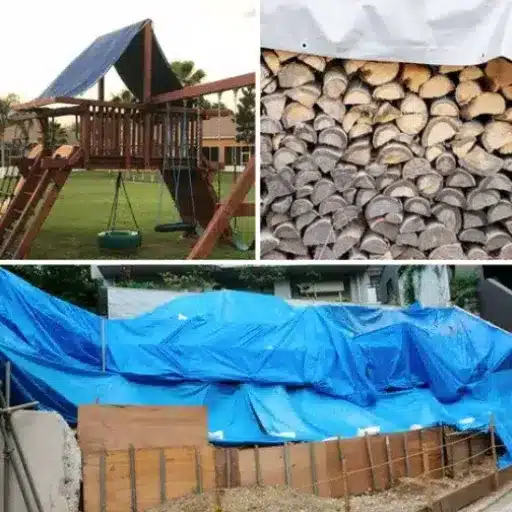
Fire retardant PVC tarpaulin serves a wide range of industries where fire safety is non-negotiable. The material combines flame resistance with waterproofing, UV stability, and tear strength. This makes it uniquely suited for demanding outdoor and industrial environments.
Construction Sites and Scaffolding Enclosures
Construction sites generate sparks from cutting, grinding, and welding operations. Standard PE tarps offer no protection against these ignition sources. A single spark can turn a weather cover into a fire hazard.
Fire retardant PVC tarpaulin is used for:
- Scaffolding wraps and facade enclosures
- Debris containment screens
- Temporary site shelters and partition walls
- Material storage covers for flammable building supplies
Many jurisdictions now require fire-rated materials for all temporary enclosures on commercial construction sites. Using certified tarps ensures compliance with local fire codes and OSHA regulations.
Welding and Hot Work Areas
Welding produces sparks and molten metal slag that travel significant distances. A welding curtain or enclosure made from certified fire retardant PVC tarpaulin creates a protected zone.
For welding applications, heavier GSM materials are typically required. Sparks and slag can penetrate lighter fabrics over time. A 650-900 GSM B1-rated or NFPA 701-certified tarp provides the necessary protection for high-amp welding operations.
Always verify that your welding protection meets both the fire standard and any additional requirements from your local workplace safety authority.
Truck Covers and Transportation
Transport companies that transport goods to locations with strict rules regarding fire safety should be using covers that are approved. Covers made out of fire-retardant PVC are both protective and meet insurance and other safety regulations.
The material used also does not allow ultraviolet light degradation, something very important during long journeys where the cover is constantly exposed to sunlight. While normal tarps become brittle and crack because of the sun, the fire-retardant ones keep their properties.
Global Freight Solutions, a mid-sized logistics operator based in Rotterdam, switched all their European route trucks to DIN 4102 B1 certified PVC covers in 2024. Their insurance provider had flagged standard PE covers as a compliance risk for cross-border chemical transport. After the switch, their annual insurance premium dropped by 8%. The certified tarps also lasted three years instead of the one-year lifespan they were getting from standard covers. The total cost savings exceeded the initial price difference within the first 18 months.
Event Tents and Temporary Structures
Public events, festivals, and outdoor exhibitions require structures that meet strict fire safety codes. CPAI-84 and NFPA 701 certifications are commonly required for tent fabrics in the United States. European events typically require B1 or M1-rated materials.
Fire retardant PVC tarpaulin is used for:
- Event tent walls and roofs
- Stage backdrops and curtains
- Vendor booth enclosures
- VIP area partitions
Event organizers who fail to provide certified materials risk venue permit cancellation and liability exposure.
Industrial Equipment and Warehouse Partitions
Fire-retardant PVC tarpaulin finds use in factories, chemical plants, and warehouses to cover equipment, act as partition curtains, and as containment barriers. Fire-retardant PVC tarpaulin is resistant to fire and many industrial chemicals, oils, and solvents.
In pharmaceutical and chemical facilities, fire-rated partition curtains help contain work areas without permanent wall construction. This flexibility allows facilities to reconfigure layouts as production needs change.
How to Choose the Right Fire Retardant PVC Tarpaulin
The selection of the right specification requires alignment of three criteria: certification, physical properties, and usage requirements. Misalignment of any one factor may lead to non-compliance with regulations and safety requirements.
Match Certification to Your Region and Application
Start by identifying which fire standard your project or jurisdiction requires.
- United States: NFPA 701 is the baseline. Some municipalities also require California Title 19 compliance.
- Europe: DIN 4102 B1 is broadly recognized. In enclosed public areas, specify EN 13501-1 B-s1,d0.
UK: BS 7837 for tents and marquees. EN 13501-1 for construction applications.
Middle East: Many tenders allow DIN 4102 B1 or equivalent. Confirm with relevant civil defense authorities. - China: GB 8624 B1 for domestic projects. Export orders should include destination-country certification.
Always request the actual test report or certificate, not just a supplier claim. Reputable manufacturers provide third-party documentation from accredited laboratories like SGS, TUV, or Intertek.
Select the Right GSM and Thickness
GSM (grams per square meter) indicates material weight and generally correlates with durability. The right choice depends on your application.
| GSM Range | Thickness | Best For | Typical Lifespan |
|---|---|---|---|
| 300-450 GSM | 0.3-0.45 mm | Light duty, temporary covers, indoor use | 2-4 years |
| 450-650 GSM | 0.45-0.65 mm | Standard industrial, truck covers, scaffolding | 4-7 years |
| 650-900 GSM | 0.65-0.9 mm | Heavy duty, welding protection, long-term structures | 7-10 years |
| 900+ GSM | 0.9+ mm | Extreme duty, high-temp welding, permanent installations | 10+ years |
For most construction and industrial applications, 450-650 GSM offers the best balance of protection, handling ease, and cost. Welding applications and permanent installations typically require 650 GSM or higher.
Verify Genuine Certification
Certificate fraud is a real problem in the tarpaulin industry. Some suppliers present outdated, forged, or unrelated certificates.
Before placing an order:
- Request the certificate number and issuing laboratory
- Verify the certificate covers the exact product specification you are ordering
- Check the issue date and expiry date (DIN 4102 B1 certificates expire after 5 years)
- Confirm the certificate scope includes your target market standard
A legitimate manufacturer will provide this documentation without hesitation.
Consider Additional Properties
Fire retardancy is just one requirement. Most applications also need:
- Waterproof rating: Look for materials rated 5,000 mmH2O or higher for reliable rain protection
- UV resistance: UV stabilizers extend outdoor lifespan. Ask for the UV retention rate after accelerated aging tests
- Tear strength: Reinforced edges and high tensile strength prevent damage during installation and use
- Temperature range: Standard fire retardant PVC tarpaulin performs from -30°C to +70°C. Confirm this range matches your climate
- Color options: White reflects heat for hot climates. Dark colors absorb heat, which can be useful in cold environments
Not sure which GSM and certification combination fits your project? Tell us your application, location, and coverage requirements. We will recommend the exact specification you need. Request a custom quote today.
Maintenance, Inspection and Re-Certification
Fire-retardant PVC tarpaulin is rugged, but regular maintenance keeps it functional during its lifespan.
Cleaning
Clean the fabric with mild soap and water. Do not use harsh cleaning chemicals, strong solvents, or abrasive scrubbing brushes. They may damage the PVC coating, compromising its fire retardancy and waterproofing.
In case of contact with oils, greases, or industrial chemicals, clean the tarpaulin immediately. The chemicals affect the surface chemistry of the material in the presence of flames.
Inspection
- Cuts, tears, or abrasion damage
- Grommet integrity and edge reinforcement condition
- Discoloration or surface degradation from UV exposure
- Chemical staining or contamination
Damaged areas should be repaired promptly or the section replaced. A tear in a fire-rated tarp creates a weak point that can compromise the entire safety system.
Storage
Store unused tarps in a cool, dry place away from direct sunlight. Avoid folding when wet. Moisture trapped in folds promotes mildew growth, which weakens fabric fibers over time.
In case of storage for an extended period, roll rather than fold the material. It minimizes creasing stress on the fabric and coating.
Re-Certification
This is the step that consumers ignore the most.
DIN 4102 B1 certifications need to be renewed every five years. Certifications of the EN 13501-1 category will not expire until the product formulation changes. NFPA 701 recertification frequency varies based on location.
If you are responsible for a long-term project or maintain a fleet of certified covers, monitor the expiration dates of the certifications. Ordering new tarps well before the certifications expire ensures compliance.
A construction firm in Dubai learned this lesson the hard way. They had purchased 200 B1-rated welding curtains for a three-year infrastructure project. In year two, a safety audit revealed the supplier’s DIN 4102 certificate had expired six months earlier. The site passed the following inspection only after emergency re-certification tests were conducted. Now, the organization monitors the expiration dates of their certifications, six months prior to expiration.
Why Choose Chenlai for Fire Retardant PVC Tarpaulin
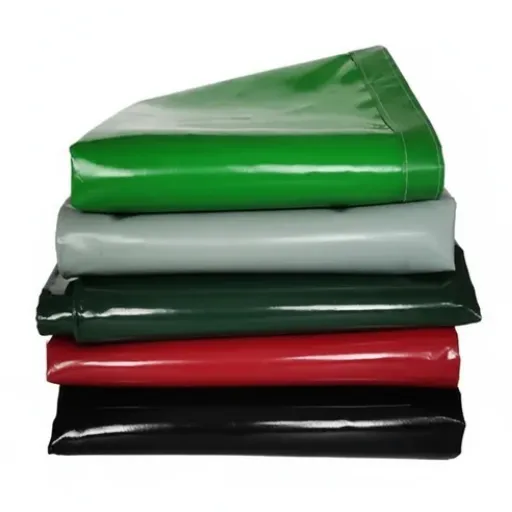
Linyi Chenlai Plastic Products Co., Ltd. produces fire retardant PVC tarpaulin under total quality control from the production stage till the final product. Our production capabilities include custom sizing, color matching, logo printing, and certification to major international standards.
Manufacturing Capability
Our company provides fire retardant PVC tarpaulin throughout all GSM options from 300 to 1,200 GSM. The unique feature of the technology used by us is that it contains fire-retardant additives mixed directly into the composition of the PVC paste.
Customization and OEM Support
Every project has different requirements. We offer:
- Custom dimensions cut to your exact specifications
- Color matching for brand consistency or visibility needs
- Logo and text printing for branded covers
- Reinforced edges, custom grommet spacing, and specialized fastening systems
- Packaging customization for retail or bulk distribution
Quality Assurance
Our quality control process inspects raw materials, coating consistency, tensile strength, waterproof performance, and fire retardancy at multiple production stages. Finished products ship with corresponding certification documentation for traceability.
Global Logistics
Ready to protect your project with certified fire retardant PVC tarpaulin? Contact our sales team to discuss your specifications, certification requirements, and delivery schedule.
Frequently Asked Questions
What is fire retardant PVC tarpaulin and its principle?
It is a polyester fabric with a PVC coating containing additives that produce an effect of interrupting combustion reaction upon contact with fire. The mechanism includes gas emission (suppressing the process of burning) and formation of a layer of char that covers the fabric from further influence of flames.
Is fire retardant PVC tarpaulin fireproof?
No, it is not. As any material, tarpaulin burns under conditions of continued fire action. However, the feature of this product is that it self-extinguishes immediately after removing the ignition source. Hence, it gives extra time to extinguish the flames.
Which certification should be met by fire retardant tarpaulins?
This may vary depending on the country and area. If you live in the USA, then NFPA 701 is the certification you should pay attention to. Otherwise, refer to your local fire safety inspector for the required standard – it can be DIN 4102 B1 or EN 13501-1 B-s1,d0 in Europe, BS 7837 in the UK.
How long can fire retardant tarpaulin last?
The lifespan ranges from 5 to 15 years, depending on the type of the product – standard duty (up to 10 years) or heavy-duty (up to 15 years). It is directly influenced by such factors as the intensity of sun radiation exposure, weather conditions, and the quality of maintenance.
Does the property of fire resistance decrease with time?
As mentioned above, it depends on multiple factors. The fire retardancy of Chenlai’s tarpaulin does not decrease over time, since the flame-retarding additives are distributed through all the PVC coating. However, mechanical damage or pollution can weaken the fire retardation effect.
Can I order customized fire retardant PVC tarpaulins?
Yes, you can. You are welcome to request custom tarpaulins from Chenlai at any GSM value, in your preferred color, and with additional reinforcement features. We provide customized manufacturing according to customers’ specifications.
What is the difference between fire retardant and flame-resistant tarpaulins?
Flame resistance means non-flammability of the material used for making a fabric. Fire retardance implies adding substances to the material, which cause slowing down the process of burning. As for PVC tarpaulin, the correct terminology would be fire retardant.
How can I take care of my fire retardant tarpaulin?
Cleaning should include rinsing with soap and water. No chemicals or abrasives should be used. It is recommended to inspect tarpaulin every three to six months for damage, grommets wear, etc. Storage requires keeping it in rolled condition in a dry place.
Conclusion
Fire retardant PVC tarpaulin is an important material used in construction, welding, transportation, events, and industries. Proper specifications guarantee safety. Improper specifications may lead to liabilities and risks of disasters.
Bear the following in mind when choosing the fire retardant PVC tarpaulin. First, choose the appropriate certification according to your location and application specifications. Second, choose the correct GSM value for your duty. Third, ensure your certification is recent and from accredited labs.
Fire retardant PVC tarpaulin is not only flame-resistant but also waterproof, UV-resistant, and tear-resistant. It is versatile and solves many practical problems of protection.
Linyi Chenlai Plastic Products Co., Ltd. manufactures fire retardant PVC tarpaulin in accordance with international standards, such as NFPA 701, DIN 4102 B1, EN 13501-1, and GB 8624. We can customize our products, provide global shipping services, and issue relevant documentation.
Request a custom quote today and get the certified fire retardant PVC tarpaulin your project demands.