Maximizing available space is crucial for driving the operation of modern warehouses, where productivity and cost efficiency are directly correlated with the effectiveness of the stored items. Even more so, creating partitions that can be effectively used for different purposes and are installed as required is understandably beneficial people with these kinds of warehouses. Today, industrial tarpaulin applications are more frequently adopted in such decorating tasks. Many warehousing industries have found the use of such materials such as contemporary buildings. The modern industrial tarps can be used to create specialized storage zones, climatic controlled facilities, or working areas where partition if needed and not fully. This post will analyze the benefits that such solutions offer and the operational drawbacks and practical solutions that they can offer that will help in restructuring normal warehouses.
Introduction to Warehouse Partitioning with Industrial Tarps

When considering ultraviolet radiation protective tarps, commonly used in agriculture and the construction industry, a number of unique benefits can be identified. Disaggregating and or distributing areas for every operation or activity such as heat and cold regulation, control of dust or air contamination and separation of stocks is primarily their purpose. Any modification of the activity can now be accomplished conveniently by using these tarps lined up in the warehouse without the cost or inconvenience of changing the architecture. Having a straightforward design and durable materials, industrial tarps stand as a ready remedy with the intent of enhancing a warehouse’s level of operational productivity in terms of space utilization.
What Are Industrial Tarps and Their Role in Space Management?
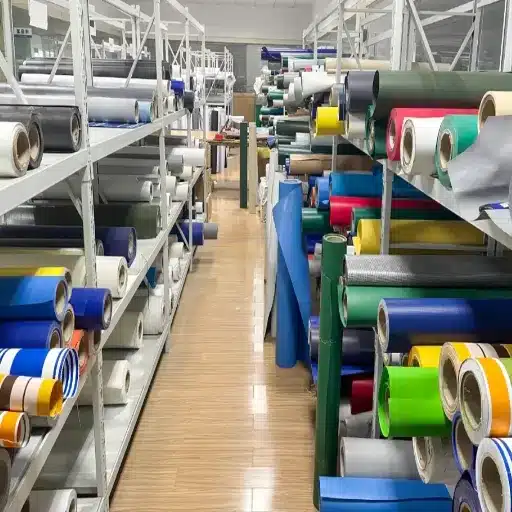
Modern warehousing systems cannot exclude industrial tarps as an essential component dedicated to satisfying the most crucial issues of space and environment within the warehouse, and industrial tarps do this highly effectively. These, mostly synthetic, sheets, more often than not made of polyethylene, vinyl, canvas, and the like, guarantee that one will get long-lasting materials with high levels of wear and tear or extreme weather resistance as well as different types of applications available. One of the primary applications of industrial tarps is the creation of temporary partitions, enabling warehouse management to adjust the space for different purposes including various temperature zones, and the supply and demand scheme.
Outside of these basic applications, improved industrial tarps have taken great strides and come with most recent properties such as fire-retardant, UV-resistant and anti-microbial coatings. These aid in safety and meeting all the stringent requirements of the industry. Also, their non-bulky make up makes assembly not only easier but also makes it possible to unroll and roll them up again for next use which is a true time saver and effort-cutting cost. The ability to make a tarp of a certain size, a certain color or made of a certain textile is also handy as it allows businesses to define their necessities quantifiably.
Key Benefits of Using Tarps for Warehouse Partitioning
- 01
Cost-Effective Solution
Drapes/tarps are far better than permanent walls when it comes to actual or semi-permanent installations between rooms in a warehouse. According to the experts, it could lop off around 40% of material and installation fees whenever these organic solutions are preferred as opposed to conventional building systems, quarantined layers, even so chemical companies or rather others from enforcement.
- 02
Flexibility and Adaptability
As earlier underlined, tarps may be used for a wide range of purposes, which quickly expands the possibilities and change the configuration of the rooms. All these are unique advantages of modern tarp systems that provide an opportunity for businesses to adjust and respond quickly to changes in spatial layout, like additional storage racks during certain seasons, or changes in the production flow.
- 03
Ease of Installation and Maintenance
Tarps, due to their lightweight, are very easy to install as they require no or very minimal trades and labour to put in place. Maintaining them is equally easy since most tarps are made from materials that are easy to clean and do not get dirty and are also stain resistant, thus saving time.
- 04
Enhanced Environmental Control
Tarps can help in sectioning off certain parts of a warehouse to control temperatures, humidity or to control dust. In the context of industrial building utilizations, it is reported that the air barriers made of these types of tarp material saved 30% of the energy used for heating, especially in places which are temperature-controlled.
- 05
Durability and Longevity
Nowadays, tarps are made with excellent materials and are constructed in a way that is advantageous to the user using high-quality materials in the form of high-density polyethylene (HDPE) and polyvinyl chloride (PVC) among others. The point barriers are created for withstanding even the most extreme weather conditions, heavy employment as well as numerous chemicals, which is why many industrial clothes are very durable.
- 06
Improved Safety Compliance
Owing to the fact that some tarps have fire-retardant and UV-resistant characteristics, some tarps are also antimicrobial agents; these properties are very essential for compliance with safety and health codes. Indeed, it is important to comply with these regulations when business is based on product or equipment due to the product non-invasiveness requirement, and sanitation and fire safety measures are strictly followed.
Comparing Industrial Tarps to Traditional Partitioning Methods
| Parameter | Industrial Tarps | Traditional Partitioning Methods |
|---|---|---|
| Installation Time | Quick and easy setup | Lengthy and labor-intensive |
| Cost | Affordable and cost-efficient | High initial and maintenance costs |
| Durability | Resistant to wear and harsh conditions | Prone to cracking or weakening over time |
| Flexibility | Adaptable to various spaces and shapes | Limited flexibility |
| Portability | Lightweight and easily movable | Fixed and heavy structures |
| Maintenance | Low maintenance requirements | Regular upkeep needed |
| Environmental Resistance | UV, fire, and moisture-resistant | Limited resistance to elements |
| Customization | Wide range of sizes and colors available | Minimal customization options |
| Space Efficiency | Saves space due to minimal framing | Requires significant structural support |
| Compliance | Meets health and safety regulations | May not meet modern standards |
Types of Industrial Tarps for Warehouse Applications

- Type 01
Polyethylene (PE) Tarps
These coverings are strong and resistant to water as well as not allowing any harmful UV light rays so it is possible to keep things stored outdoors or in partially open environments.
- Type 02
Vinyl Tarps
Vinyl tarps have gained popularity because they are substantial tear resistant and are best used in rugged activities like encasement of machinery or protecting items from weathered moments such as rainfall or direct sunlight.
- Type 03
Mesh Tarps
Breathable mesh tarps allow free passage of air and at the same time protect against polarization. Most often, they are used in areas such as climate controlled storage where one wants an efficient way of securing the goods without affecting their moisture content.
- Type 04
Canvas Tarps
Because canvas tarps are made of natural material, they are free of chemicals and do not cause any condensation. They are proven effective when it comes to the protection of equipment and materials that cannot be exposed to water.
- Type 05
PVC Tarps
These tarps are very weatherproof against hazardous chemicals in which they are used and they are also practical when dealing with extreme temperatures due to excessive workloads in both industrial and other settings.
Insulated Tarps for Temperature-Controlled Environments
This building cloth provides excellent functionality as a temperature-maintaining device in the place where the changes in the temperature regimes are possible. It is good for materials kept in the cold or affected by any ambient temperatures. This tarp is made of very good thermal insulation materials like polyethylene foam and aluminized material that even reflect incoming heat. For low conductivity, the tarp will prevent in the preserving of perishable products like foods, drugs and non-perishable industrial raw materials.
Insulated tarps have a distinct benefit of having the capacity to keep indoor temperatures stable even in harsh weather conditions that aids in their energy efficiency and a lower necessity for cooling or heating the premises. Research on the subject of thermal resistance shows that any effective thermal barrier can help in the reduction of heat transmit by 70% or more, making it possible to use less of the mechanical systems for atmospheric conditions purpose. Besides, such laminates come equipped to conceal known obstacles which include the dew point at the roof planes, which is liable to cause the deterioration of the stored goods as well as the building due to the actions of water and in extreme cases the spores of mildew, too, thus enabling the condition of the space for prolonged durations.
Many insulated tarps made in the present come equipped with extra elements like UV coating, flame retardant surface, and water resistance. These features go a long way to making them suitable for processing and consequent use, in different industries. Compared with other forms of cool room insulation, insulated tarps have a perfect effect on the edges. Unlike when using other cooling or insulation products, wearing it from the neck to the ankles or the soles.
70%
Research on thermal resistance shows that any effective thermal barrier can help in the reduction of heat transmit by 70% or more, making it possible to use less of the mechanical systems for atmospheric conditions purpose.
Heavy-Duty Tarps for Dust and Particle Control
Heavy plastic sheeting is crucial to any warehouse space to avoid hazards especially for health sensitive such as in the pharmaceutical and in certain food industry, as it helps prevent the dust and airborne particles from spreading or circulate thereby reducing the losses to hygiene. Heavy-duty tarps like these are commonly made of high-density polyethylene (HDPE), polyvinyl chloride (PVC), and others like the treated canvas that can be effective in resisting abrasion even in the heaviest of machinery or in high wear and tear situations. The close interlacing and the agent coatings enhance the protections by keeping the fine particles retained and not able to pass through.
Nowadays, tarps designed for anti-dust applications are not just cut to size, but rather they fulfill clients’ specific requirements. It has been well established that anti-dust tarps help maintain workplaces that have electrical devices running without the risk of any electric discharge. Similarly, tarps that incorporate state-of-the-art filters are able to control the air movement as well as arrest dust from escaping. Therefore, these features make tarps more prone to usage given that such areas are required to meet the health and safety standards, especially those that house medicines, food and beverage and delicate manufacturing activities.
Transparent and Opaque Tarps for Visibility and Privacy
Option A
Transparent Tarps
Clear and see-through tarps are mostly practical when used for clear and normal purposes, such as remote control of operations of the clear zone with the cover or hardtop installed contents and quick checks without removing the dust and debris-laden tarp in use. This is especially handy when running a warehouse that requires speed and precision.
Option B
Opaque Tarps
Opaque tarps, however, are zero-exposed material. They often offer satisfaction based on privacy and cannot be easily seen through. This could carry inventory or carry on business in any section of the warehouse, which has such goods for the public to know. It can also be used to suppress tall buildings, burnishes after exposure to light sensitive materials as well as introducing the borders between the functions.
All the types in question can be optimized in terms of the materials and layering to meet the needs of different temperature and operating conditions in the warehouse, emphasizing that they are useful in modern warehousing.
Practical Applications of Industrial Tarps in Warehouses

Industrial tarps enable warehouse goods to be protected from periodic deposition of dust, moisture and harsh gases. These can be best utilized to cover stock stored in the open or in temporary warehousing areas. In addition, they can help in dividing industrial spaces into several levels for precise work allocation, emptying and pre-charging. They are worn when giving shielding to goods that have to be stored while controlled conditions or within selected areas or equipment. Because they come equipped in tough and chemical resistant covers, Industrial Tarps come out as a very cost effective product in the maintenance of the products that are stored in the harsh warehouse conditions.
Creating Temporary Work Zones and Storage Areas
Industrial tarps are ultra-versatile in the sense that they allow for off-site working conditions to be created for a temporary period of time. Similarly, they also allow storage locations to be suited for the task within warehouse confines. These tarps are made of the latest materials such as polyethylene and PVC among others and precisely worked in a way that allows for high tear strength, water repellency and all-weather enhancement. The use of these tarps in warehouses allows accompaniment with the functional needs by act versioning those, for example putting barriers where are considered as such.
Tarps have been treated for that it can be used by warehouses with a lot of sunlight or having an element of shielding live a steel frame or cloth roof for protection of goods from elements. With the help of such advanced industrial development alternatives, it is possible to perform quick and under-minute configuration of premises without great expenses related with the engagement of additional labor force. Other features like customization of the tarp such as grommets, cut-outs of more than one color, reinforced edged and encapsulated zippers plus flame-retardant treatments, are ideal solutions for any industrial setting, fulfilling safety requirements as well as efficiency in operations.
Enhancing Safety by Separating High-Traffic Zones
Industrial tarps are effective in workplaces for the purpose of restricting allotment of high-traffic areas and other regions in the production process. Statistics show that division of pathways and operational spaces can drastically minimize the rate of workplace accidents which otherwise requires meeting strict safety regulations like OSHA. Well-developed industrial tarps are made using tough materials like PVC-coated polyesters giving remarkable tensile strength, abrasion/chemical/UV resistance. This allows for the deployment of movable divisions to suit different warehouse interiors, enhances easy circulation of traffic and reduces the number of forklift-induced accidents. Tarps also have vivid colors that don’t peel or fade, or reflective strips which they have been made in keeping in view low visibility environment. This leads to an effective and safe working environment in the warehouse even in low light conditions.
Managing Temperature and Humidity in Specific Areas
Expansion joints are used when two separate structures abut each other. They are used to manage the anticipated movement of the structures during various climatic conditions without causing any cracks due to the loads on the buildings. The simplest form of movement is caused by heat, which either increases or decreases the rate of expansion. This structure can be torch-down or stripped-in, considering the nature of the movement, that is, expansion or contraction. An expansion joint is thus made with connections linking the walls via beams, so they can freely expand or contract.
Moreover, in waterproofing structures, foil-based materials have shown to be one of the major sources which are expected to reduce the extent of water vapor entering the indoor spaces. Tablets have shown that there are controlled environments with tarps that have been engineered for various perishable goods such as food, working to increase the products shelf life and reduce the damages that can be linked to water condensation with ice effects. In enhancing best energy practices, it is good to install tarps in structures and be able to use an existing system to control the temperature within the given area so that least energy is used, and the structural materials are properly kept.
These all-purpose objects are now equipped with many advanced features such as immunity against UV and electric charges making them useful for a wide number of applications in various industries. Warehousing and other storage facilities can maintain healthier and greener environmental conditions by using custom solutions like specific protective tarpaulins.
Tips for Choosing and Installing Industrial Tarps

-
1
Assess Material Durability
If you wish for your tarps to last and remain looking good, purchase those made from the best materials. For example, the one coated with polyethylene or PVC. Such utensils can easily cope with severe work conditions.
-
2
Ensure Proper Sizing
It is also important to invariably calculate the requisite size of a tarp before buying it. When the tarp adorns the structure in a way that there is a massive opening, it curtails protection efforts.
-
3
Consider Special Features
Seek out and appreciate the tarps that have special features with regard to particular conditions such as flame retardant, UV resistant, antistatic capable, among others, as this leads to better performance in those environments.
-
4
Secure Proper Anchoring
For application of the tarp in public places with large human traffic, it is advisable to use the tarp with grommets and larger-than-usual fastening points, particularly in tear-away rafters or weak areas.
-
5
Inspect and Maintain Regularly
Check for less than evident damage and signs of overuse or dirt and if any, clean the tarp from time to time. Prevent the tarp from becoming thin due to wear and tear or by any other means; take early offsetting measures by replacing it.
Comparison of Industrial Tarp Materials Used in Warehouses
| Tarp Material | Durability | Water Resistance | UV Resistance | Tear Resistance | Cost Efficiency | Best Use Case |
|---|---|---|---|---|---|---|
| Polyethylene (PE) | High | Excellent | Moderate | High | Cost-Effective | General storage |
| Vinyl (PVC) | Very High | Superior | Excellent | Very High | Moderate | Heavy-duty protection |
| Canvas | Moderate | Treated options resist | Limited | Moderate | Expensive | Breathable cover |
| Mesh | Low | Minimal | Good | Low | Cost-Effective | Ventilation needs |
| Polypropylene (PP) | High | Very Good | Moderate | Moderate | Affordable | Short-term protection |
Proper Installation Techniques for Industrial Tarps
Installation for industrial tarpaulins is one that demands extra attention in terms of care practices so as to protect against damage and for the owner to enjoy desired benefits. At the very outset, a determination should be made concerning the fabric and the dimensions of the tarp selected for use, also taking into account the wind, ultraviolet light and rain. The tension of tarp being placed should be the same, i.e., neither too slack nor too tight so as to not incorporate creases or waving which may cause more harm than the good in the long run as regards the material’s life expectancy.
To avoid situations where the tarp will be blown off into the next county, make sure it is tightly tarpaulined, using grommets that are super imposed with stronger canvas and attach both if not all, a few for example, two, bungee cords to fasten the steel clasp or the ratchet strap. All of the above stated are some of the ways penance points can be evenly placed so as to prevent stress in specific spots hence decreasing the torsional ram capacity in case of most systems. In areas with strong wind, tarps should overlap at the joints and some added protection such as sandbags or weighted edges should be applied to prevent movement or rupture.
If one intends to use a tarp to cover up a machine or material, it has to permit free air circulation so that the moisture condensation can be minimized as it causes molds and rusts. There should be water ways that water will follow and not be allowed to accumulate in one place. Therefore, a regular overhauling and maintenance are suggested as a counteraction measure against the wearing out due to excessive utilization and unsuitable weather, thus enhancing overall productivity and realizing savings.
Maintenance and Longevity: Keeping Your Tarps in Top Condition
For the tarps to endure longevity and function as expected, it is good to have a maintenance plan and implement it. Start by cleaning the tarps regularly using soap and water to get rid of what is in form of dirt particles, rocks, and harmful edge particles. You are, however, advised not to use any tough detergents since they will weaken the fabric or change its color. In order to protect the cover and avoid UV related failure, a good tip would be to use a UV protection screen or paint provided for long term use tarps that will be used in the presence of a lot of sunlight. The other recommendation in the care of tarps on any site is to locate and seal any small tears or cuts that is likely to come with wearing by using the fabric patches as soon as they are noticed.
Before storing tarps it is important to clean and dry these to avoid possible occurrence of mold and mildew or rot. Fold tarps gently to prevent any harsh marks on the fold of the tarp and keep in cool, dust-free environment without direct sun or too much heat. Also, scientific findings have shown that heavy and higher durability tarps made from either poly or vinyl materials tend to have greater resistance to wear that is very necessary for use where there are very long term applications that require a high degree of stress. By following these practices not only is the extent of the tarp increased, but it also reduces the cost of replacing it thus helping one to make the most cost-benefit use of resources.
Future Trends in Warehouse Partitioning with Industrial Tarps

The development of enclosures in warehouses with industrial curtains is moving towards flexibility, effectiveness, environmental responsibility. Instead of such old methods of doing things, there is a trend in the incorporation of modular Tarp systems because of the ability to reshape office structures using just structures and the walls. Innovations in material science are also worth mentioning. New tensile fabrics and finishes have a low tendency of wearing out over the time when in use. Studies show that no matter the kind material used in construction in new generation tarp, fire resistant and antimicrobial properties improves the reliability of such materials within the food and medicine industry among others. Biodegradability is the main interest, with most curtain systems trending towards materials like recycled or green tarp. Such solutions will not only conserve the environment but will support the eco-efforts of the firms.
Innovations in Tarp Materials and Technology
Emerging technology in the area of tarp constructions and materials involves application of smart technology which is aimed at performance optimization as well as monitoring. Modern tarps have included built-in smart sensors, which are able to gather information about environmental conditions such as temperature, humidity, and stress. These sensors are able to transmit data in real-time which enhances the efficiency of various sectors a good example being industries like logistics as well as agriculture where optimal storage conditions of items and crops can be controlled. For example, temperature controlling technologies are used in the provision of transport of such food items as perishables in different climatic zones.
Another strand of research is concerned with advancements within engineered surfaces which play a crucial role in securing tarpaulins. Impregnation with ultraviolet resistance painting materials (UV paint) or self-healing paints enables semi-permanent or permanent usage in the market perspective of the tarp materials under severe visibility, mechanical, thermal, and chemical conditions. Moreover, the growing trend of easy-to-assemble tarpaulin constructions has influenced construction and crisis response practices and enabled more prompt and convenient set up of temporary shelters.
Application of energy conversion technology is also remarkable in tarp design which is using PV cells in the design of tarp to collect solar energy. These sun-lit tarpaulins or solar covers prove efficient especially in remote areas or areas of disaster where electricity is scarce as they alone will provide both shelter and ample power for lighting as well as charging small devices.
The Role of Sustainability in Tarp Manufacturing
This has resulted in an upward trend towards sustainability in the tarp models that are produced for a plethora of reasons, one among them being the emphasis that is now placed on the use of organic materials and practices. More and more modern tarps are fabricated using repurposed or biodegradable materials as against the need of using fresh resources and ultimately cutting on the environmental degradation. Thus, there is consideration for decreasing the concept of dumping again especially by resorting to the usage of recycled PE and PP for manufacturing strong tarps.
Besides, policies of manufacturing companies target decrease in volume of emission of green-house gases. The applied strategies include low-impact processes of dying and compact resource consumption during specific processes. However, a number of companies go a step further coming up with closed-loop recycling that seek to make old or used tarpaulin to be put back to use by developing new alternative components, promotion of circular economy principles and devising other means to elongate the life of the product.
Such advances do not simply diminish human-induced global warming; they also help in compliance to the law and satisfying public demand for such green products within the existing bounds remote from home, say in the production and service sectors. With transforming atmosphere, it will no longer be possible to put your thoughts and imagination into littering with designs that are not environmentally sound, as the current environment demands development that does not create harm to it.
Reference Sources
- [1]
“The impact of integrated cluster-based storage allocation on parts-to-picker warehouse performance”
- [2]
“Trends and new practical applications for warehouse allocation and layout design: a literature review”
Frequently Asked Questions (FAQs)
What are the primary benefits of using industrial tarps for warehouse partitioning?
Making use of industrial tarps allows the management of the facilities in question to have much more easier and more affordable ways to increase operating capacity as compared to permanent walls. These systems can be rolled out and dismantled quickly as they provide adaptable solutions to sustain fluctuating operational requirements. Without incurring the need to spend huge amounts of money constructing more rooms or shutting the facility down for if a longer period of time, floor area can consequently be improved as different spaces are discarded and these retractable hindrances can be used to cover that space.
How do heavy-duty curtains assist with environmental management in industrial facilities?
Crafted using industrial-grade materials, these sheets are meant to enclose specific areas in such a way that dust and other particles are absorbed especially with precision works. It would ensure that no specks of dust will get to the sensitive goods in the building or, say, equipment designed for very complex manufacturing tasks. This makes them ideal for managing multiple units of operations within the same structure and observing very strict standards on cleanliness and safety.
Can warehouse dividers be utilized for thermal regulation?
Climate cottages are specialized polyethylene tarps and films designed to be hung and managed in segments to control the environment temperatures more accurately in larger hanged structures such as open-plan storehouses. These modern temperature control barriers are highly efficient in preventing the air within some regions from being reheated than is necessary, a situation that can only be achieved through extensive feasibility and performance improvement measures in the HVAC industrial equipment. These are the means that warehouse managers employ in the control of required temperature to prevent spoilage of certain goods, chemicals, or materials.
What is the most efficient way to separate specialized tasks within a bustling distribution center?
There are the operational blinds that can be drawn if need arises which in essence will help control the working area in the industrial sector particularly welding, painting, and other heavy works on the floor. It concentrates on such operations as to permit the high traffic areas on either side of these activities sections to function normally for people or transport of materials. It controls the risk of hazards at workplaces and ensures that the warehouses operate effectively without any interruptions within the entire geographic location.