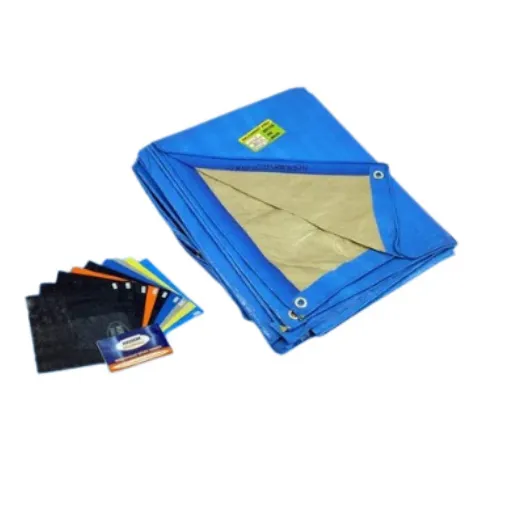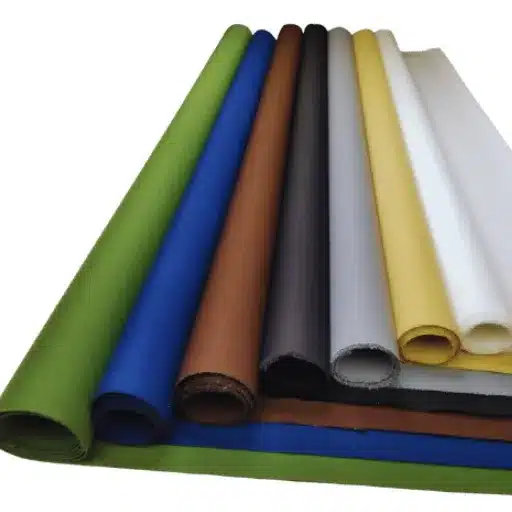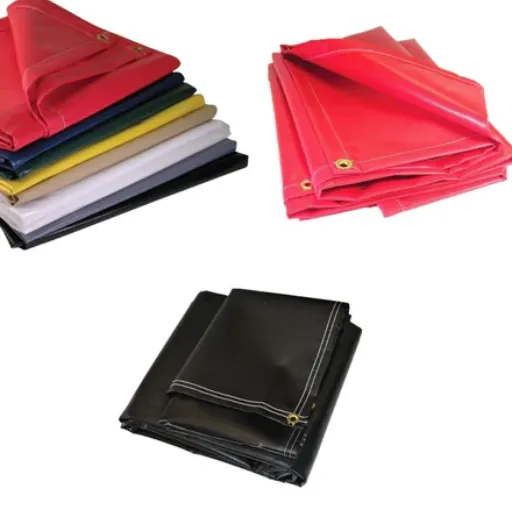
Dmitri Volkov stood in the midst of howling cold in Astana, Kazakhstan, and, even more appalled than anyone else – because that person was a construction foreman – watched a waran-like old grade PE tarp torn to tatters like a piece of glass under -22 degrees. The excavator left uncovered outside every hazard for three days waiting for new covers to be brought. That particular mishap caused much more loss from equipment than it would have required to purchase premium cold resistant tarpaulin for all the winter season.
As a construction worker in cold areas, considering the extent of the destruction during winter, the delicate wallpaper is already partially damaged, moreover, the capital investments employed within this sector tend not to focus on the winter aspects in the planning stages. The coverexposure requires that we use one of the types of covers containing cold acetate. The usual ones placed for example on stores, open parking lots, party tents and so on are not applicable.
This detailed and comprehensive user guide details all the materials with its weights, dimensions, and other properties required for adequate cold weather protection. It further describes the concepts and principles of cold crack resistance, the behavior of PVC, PE, and HDPE in subzero temperatures, and essential cold-weather performance components and characteristics relevant to an industrial setting. This allows you to understand the relevance of the winter protection structure and source materials or systems with tolerance and understanding.
What Makes a Tarpaulin Cold-Resistant?
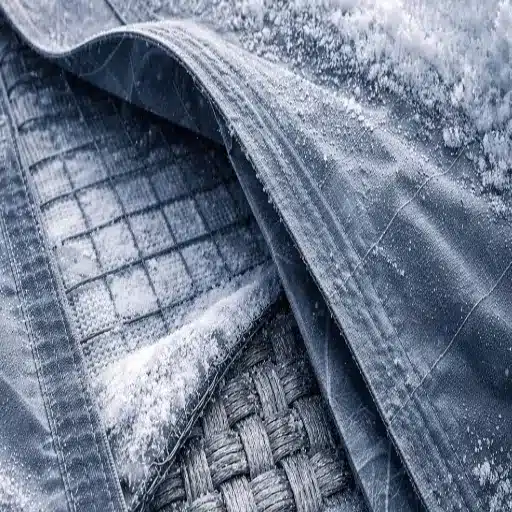
Cold resistance in tarpaulins is not about thickness alone. It is about material chemistry, molecular flexibility, and how a fabric responds when temperatures drop below the point where standard polymers begin to fail.
The Science of Cold Crack Resistance
In low temperatures, all plastic materials start to harden as the stiffness of the polymer drops to a level where the polymer chains do not flow. However, for ordinary PE tarpaulins, the beginning of this limitization occurs at about -10°C in the top polymer fabric. This is because the fabric’s properties in regard to resistance to bending also undergo change- the material turns rigid and stops absorbing shocks and does not bend in the wind. he entire strain is on the parts where the joint is abated. The holes are torn around the eyelets. The seams are split open. The tarp fabric has malfunction.
Specifications of antarctic tarpaulin are special. In the manufacture of PVC tarpaulins, there will be additives put so that the main chains can be modified and kept at -10 degrees celsius and still can be moved. If every small piece is given equal importance, there will be no draw-backs and the flexibility will remain around -20 degrees celsius or even lower. In case of HDPE woven tarps, their woven structure provides tropical mechanical flexibility separately from the coating’s stiffness. As the fabric does, it flows within the frame of reference. The outer layer, the coating, maintains this movement and action.
Cold weather performance of polyethylene tarpaulins can be enhanced by co-polymer compositions, such as them with LLDPE. Its physical properties are such that LLDPE features better low temperature performance than that of LDPE. On the whole, PE is usually the least cold resistant of the main three plastic materials.
Temperature Ratings Explained
Manufacturers often cite two temperatures: service temperature and cold crack temperature. Service temperature is the range where the material performs normally. Cold crack temperature is the point where a folded sample will crack when flexed. This is the critical number for winter applications.
A typical rating hierarchy looks like this:
- Standard PE tarpaulin: cold crack at -5°C to -10°C
- Cold-formulated PE: cold crack at -15°C to -20°C
- HDPE woven tarpaulin: cold crack at -20°C to -30°C
- Standard PVC tarpaulin: cold crack at -15°C to -20°C
- Cold-formulated PVC: cold crack at -25°C to -40°C
These numbers matter because they define the operational limit. A tarp rated to -10°C will likely fail at -20°C. Choosing the wrong rating is not a minor efficiency loss. It is a coverage failure.
PVC vs PE vs HDPE: Cold Weather Performance Comparison
Selecting the right material for cold climates requires understanding how each performs when temperatures drop. The best choice depends on your lowest expected temperature, duration of exposure, and mechanical demands.
| Feature | PVC Tarpaulin | PE Tarpaulin | HDPE Tarpaulin |
|---|---|---|---|
| Cold crack temperature | -20°C to -40°C (formulated) | -5°C to -20°C | -20°C to -30°C |
| Flexibility in cold | Excellent | Moderate to poor | Good |
| Weight (typical) | 450–900 gsm | 80–200 gsm | 80–250 gsm |
| Snow load capacity | Very high | Low to moderate | Moderate to high |
| Tear strength | Very high | Moderate | High |
| UV resistance | Excellent (with treatment) | Good (with stabilizers) | Excellent |
| Cost | Higher | Lowest | Low to moderate |
| Best for | Extreme cold, heavy snow, long-term | Mild winters, temporary use | Agriculture, moderate cold, value |
PVC Tarpaulin: The Extreme Cold Champion
PVC tarps are generally heavier and weigh more per unit compared to their plastic and canvas counterparts. As a rule they have higher density and elasticity values. The material consists of a polyester base which is first coated with a PVC polymer; this allows keeping flexibility even at deep temperature levels. An excellent formulation of plasticizers can make some PVC products go even lower than a fraction of minus 400/day without failure.
The weight of the tarpaulin is both a pro and a con. At 650–900 g/m2, PVC tarpaulins endure loads of snow and wind which can collapse and tear lighter tarpaulins. But when the tarpaulin is of this weight these will increase adding to the movement challenges. How they are folded or rolled and moved about will be what determines their bind because the knots can be achieved so easy as to be undone just as easy which will spring apart the edges of dig pvc tarps. When it comes to installation, it requires more man power than the rest. When it comes to storing this tarpaulin, it also requires more space.
In terms of construction sites, protection of heavy machinery, and transport operations under conditions of sub-zero temperature, PVC will often be the recommended choice. Even if more expensive when newly acquired, costs incurred pay off by extended life and sparing of replacements.
PE Tarpaulin: The Budget Option with Limits
The PE tarpaulin, as it is well known, is the Pe material that is very flexible, cost-friendly and is also available in many industries. In few cases where the lowest temperatures people experience in the parts of the construction do not go below -5°C, it also has good performance. However, when temperatures drop below -10°C, normal Pe tends to stiffen and cannot be used effectively. There are cases when it is extremely cold and so this material becomes fragile enough to begin tearing easily.
New formulations, such as cold crack formulations of PE, have been developed. With cold-formulated PE material, the damage of cracking at low temperatures is postponed to approximately -20°C. These may serve as reasonably good solutions for most people who have cool climates but are not too extreme. PVC will cost more than cold formulated PE, while the cold formula PE can withstand howls of wind than PVC can.
The most critical deficiency, however, is the fact that it is difficult to enhance the physical properties of this option. In other words, ‘cold PE’ still has no ability to deal with the gripping power of PVC or HDPE. Well, it can be used but not to be relied upon because of its temporary nature, light duvets, changes every season and for other surrounding covers that do not have longevity.
HDPE Tarpaulin: The Balanced Performer
A woven tarpaulin made of HDPE integrates a fabric made of high-density polyethylene with windows of coating. Strength and feasibility are provided by a pattern of channels into which blankets are rolled that is integral with the wound plastic sleeve. This is validated by the fact that beneath the coating in sub-zero temperatures, the material remains pliable and does not crack.
HDPE is therefore found to be especially useful in regions where there is moderate cold and there is a limitation of weight. Thanks to granular and thermal heavy add-on cure, a 200 gsm HDPE tarp is better than a 120 gsm PE tarp in terms of cold resistance and strength. In this case, the use of a pattern of weaving stresses within the fabric across the weave width of the fabric instead of delivering it at a particular point ensures the protection of the fabric from damage at that particular point.
HDPE at -15°C or -20°C is preferred for use for greenhouse covers, crop protection activities, and for storage of machinery because maintaining strength to weight ratio at these temperatures is always an issue.
Key Features to Look for in Winter Tarpaulins
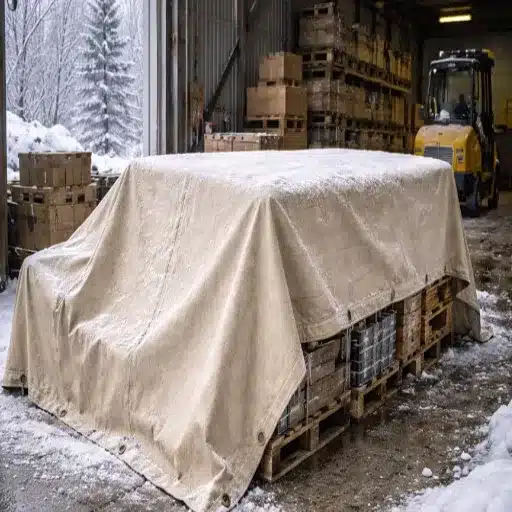
Material selection is the foundation. The right features determine whether that material performs under real winter conditions.
Material Weight for Snow Load
Snow load is measured in kilograms per square meter. Fresh powder might weigh 50 kg/m³. Wet snow can exceed 300 kg/m³. A tarp covering 10 square meters with 20 cm of wet snow could bear 600 kg.
Standard PE tarps at 100–120 gsm cannot handle this load. They sag, stress at grommets, and eventually tear. For snow-prone regions, minimum weights should be:
- Light snow regions: 180 gsm PE or 120 gsm HDPE
- Moderate snow regions: 250 gsm HDPE or 450 gsm PVC
- Heavy snow regions: 650+ gsm PVC
The weight must match the expected load. Underspecifying saves money initially. It costs far more when the cover fails mid-winter.
Reinforced Edges and Heat-Sealed Seams
A contrasting appearance in climate amplifies emotions at junctions. Cords with double folded edges at the edge alleviate stress. In freezing and thawing cycles, more strength is provided by the glued seam. Stitch holes are reservoirs that suck and hold moisture which is released once freezing starts.
When ordering during the cold season, request all tarps made of PVC fabrics to have heat-sealed seams. In the case of HDPE, reinforcement should consider rope inside the hem. This will not allow the wind to take the cover and tear the seam at the edge.
Grommet Strength and Spacing
Typically Winter tarp failures are prevented by reinforced effective grommets which are made but this eventually fails because the kind of standard brass grommets are in-herent in the tarp. The overall preference therefore shifts to the usage of Aluminum or stainless steel grommets as they are corrosion resistant and are strong as well. It matters greatly the distribution of force among a tarpaulin in case of strong winds. Five zero centimeters spacing work better than One zero zero centimeters spacing according to results of wind taring forces between the two.
Occasionally, for such exceptional applications as winter, heavy duty, the customer may be consulted to specify the details reinforced grommets with plastic water proofing washers. These backyard this issues such as extraction of soil and even detachment when snow does no more collect, thanks to the washer supporters.
UV and Cold Dual Resistance
In winter, when sunlight is intense, especially in alpine areas or on surfaces covered with snow that doubles the exposure of UV, the risk of exposure to high doses of sunlight is particularly acute. Ultraviolet irradiation has an adverse effect on the polymer structure. A tarp which can stay insulated against winter cold but loses mostly because of the effect of ultraviolet rays will be defeated by the time it is spring.
Mention even the cold well, and the addition of ultraviolet stabilizers is Justify these elements. Attention must be paid to UV in relation to the materials of PE and HDPE, where the primary factor of aging is exposure to UV rays. The shadow of PVC does not require wishes in the elimination of influences of UV, however it is also useful in the basis of such paints for the top coverings of universal action.
Waterproofing Under Freeze-Thaw Cycles
The freeze-thaw phenomenon poses a significant threat to any systems that rely on waterproofing as its functionality. Loads of water pass through micro-cracks in the system, freeze, further crack the surface then thaw causing more water to infiltrate the structure and this keeps happening in a loop. Fifty such cycles in a single winter, spells leakages for all standard coatings.
Even cold-resistant variants feature tough coatings that do not crack on exposure to the stress. PVC is particularly useful in that case since the polymer is inherently pliable. As for PE and HDPE, one has to use a composition of cross-laminated structures with flexible inner layers in order to compensate tensile stress caused by expansion.
Cold Resistant Tarpaulin Applications by Industry
Different industries face different winter challenges. The right specification depends on what you are covering, for how long, and under what conditions.
Construction: Protecting Equipment and Materials on Winter Sites
Developing into a winter construction site is beneficial in the sense that it exposes all gadgets and building materials to different threats at the same time. This is very clear by how Machinery is covered in the snow that is enough to erode some of its’ parts or spoil things that have been left uncovered. It is often harsh getting additives that are in other containers left outside in the snow. Hence they freeze and that exposes the rest of the components into dangers not forgetting the reduced space.
One of the people who experienced such troubles was Dmitri Volkov in Astana. When his standard tarp did not meet the requirements, he began to use 750 gsm prepaid PVC, which was cold-proof with every 50 cm reinforced aluminum grommets, the ice thickness, and snow line that accommodated low temperatures and heavy loads, and wind speeds of 40 km/h. As a result, his Winter tasted sweet since he incurred 60% less costs in equipment service.
For construction applications, specify:
- 650–900 gsm PVC for heavy machinery
- Reinforced grommets at 50 cm spacing
- Heat-sealed seams
- Flap closures that prevent wind entry
Agriculture: Crop Protection and Greenhouse Coverage
In Heilongjiang Province, Wang Lin has established a green house business despite the extremely low temperatures experienced there in the winters typically going as low as -25°C. In the beginning, green house cover was made out of the standard 120 gsm PE sheets. Each week, at least one complete sheet of was replaced. At times, two sheets were replaced because of a heavy snow that usually followed after one was involved.
However, three years back, she embraced the use of a 200 gsm HDPE tarpaulin with the borders are stabalized with UV protection. The snow load was more than manageable using the plaited fabric without any rips. The ultra violet rays treatment also helped to stop the fall/winter rot bearing in the case of the PE cloths. Interestingly, one HDPE cover lasted three full winters; for it is still in use today. Despite the higher price, expenses that would have been used in purchasing the covers were first economized in the very season they would otherwise be constructed.
Agricultural winter applications include:
- Greenhouse roofing and sidewalls
- Crop frost protection (low tunnel covers)
- Equipment and hay storage
- Livestock shelter windbreaks
For these applications, HDPE woven tarpaulin often offers the best value. It is lighter than PVC for easier handling, strong enough for moderate snow, and cost-effective for large coverage areas.
Logistics: Truck Covers and Cold-Chain Protection
Transportation in winter creates unique demands. Truck covers must maintain flexibility during loading and unloading in freezing temperatures. Cold-chain logistics require covers that insulate as well as protect. Cargo security demands tarps that resist wind at highway speeds.
Nordic Haulage, a Norwegian logistics company, operates routes through mountain passes where temperatures drop below -20°C. Their standard roll-back PE truck covers cracked at the folding points after two winters. They worked with their supplier to develop custom 550 gsm PVC truck tarpaulin with cold-formulated plasticizers and reinforced track mounting points.
The new covers maintained flexibility at -25°C. The reinforced mounting eliminated the track-point failures that had caused delays. After three winters, the tarps showed minimal wear. The company calculated a 40% total cost reduction compared to the previous replacement cycle.
For logistics applications, specify:
- PVC for extreme cold and high wind
- Reinforced mounting points for mechanical attachment
- Cold-flexible roll-back or fold systems
- Adequate overlap for load variation
Industrial and OEM Uses
When Developing for industrial purpose,customized equipments are mostly needed since the existing ones are usually limited to certain standards. Some equipment covers for the oilfields in the Arctic Region require materials that can withstand temperatures of -40⁰C. Therefore, large-span structures are needed to construct temporary insulated storage facilities in cold regions. These covers should cope with snow naturally without an internal support. Moreover, some other clients may need to have their logos or patterns on their tarps.
These requirements drive custom manufacturing. A standard product catalog cannot address every extreme climate need. Working with a tarpaulin manufacturer that offers custom formulation, size, and reinforcement options ensures the cover matches the application rather than forcing the application to match the cover.
How to Choose the Right Cold Resistant Tarpaulin
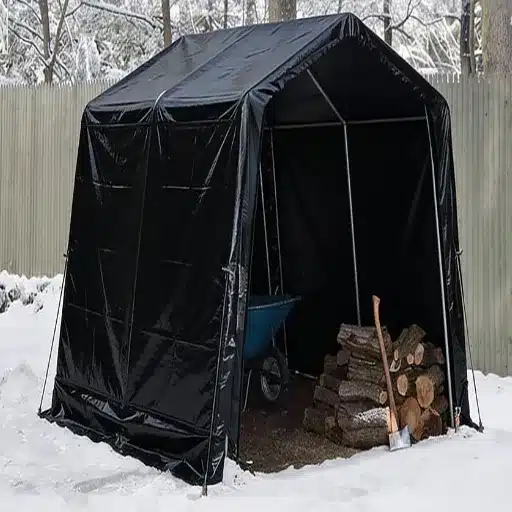
Selecting the right winter tarpaulin becomes straightforward when you follow a systematic evaluation process.
Step 1: Identify your lowest expected temperature
Do not use average winter temperature. Use the lowest temperature you expect to encounter, including night drops and cold snaps. Add a 5°C safety margin. If your region hits -20°C during extreme weather, specify for -25°C.
Step 2: Calculate coverage size and load requirements
Measure the area to cover. Add overlap for fastening. Estimate maximum snow load based on regional snowfall data. Consult local building codes or agricultural extension guidelines for snow load expectations in your area.
Step 3: Select material based on temperature and duration
For temperatures above -10°C and temporary use: cold-formulated PE may suffice.
For temperatures to -20°C and seasonal use: HDPE woven offers the best value.
For temperatures below -20°C or heavy snow: PVC is the reliable choice.
For permanent or critical installations: always specify PVC with appropriate weight.
Step 4: Specify reinforcements and fastening
Map out where grommets or mounting points must be. Consider wind exposure. Specify reinforced edges, appropriate grommet spacing, and corrosion-resistant hardware. For mechanical attachment systems, verify compatibility with your existing equipment.
Step 5: Request samples or specifications before bulk order
Before committing to a large order, request material samples. Test flexibility at your lowest expected temperature. A sample tested in a commercial freezer for 24 hours reveals more about real performance than any data sheet. Contact our team to request cold-resistant samples and discuss your project specifications.
Winter Tarpaulin Care and Maintenance Tips
Even the best cold resistant tarpaulin lasts longer with proper care.
Pre-Winter Inspection
Inspect all covers before the cold season begins. Check for UV damage, small tears, and grommet corrosion. Repair minor damage before it becomes major failure under winter stress. A small tear at 20°C becomes a rip under snow load at -15°C.
Proper Fastening in Wind and Snow
Secure all edges. Flapping creates fatigue. Snow accumulation creates point loads. Use rope or bungee systems that maintain tension as material expands and contracts with temperature changes. Avoid rigid fastening that concentrates stress at single points.
Storage Recommendations
When not in use, store tarpaulins clean and dry. Fold loosely rather than tightly to reduce crease stress. Store away from direct sunlight to prevent UV aging during off-seasons. For PVC tarps, avoid storing near heat sources that can drive off plasticizers.
Before storage, clean off salt, chemicals, and debris. Salt accelerates corrosion at grommets. Chemical residue can degrade coatings over time. A simple wash with water and mild detergent extends service life significantly.
When to Replace vs. Repair
Small tears in the field can be repaired with patch kits designed for the material type. However, replace the cover when you observe:
- Multiple tear points indicating material fatigue
- Coating cracks visible across large areas
- Grommet pull-out or edge fraying
- Significant UV degradation (chalking, color loss, surface cracking)
Repairs are cost-effective for isolated damage. They are false economy when the material itself has reached end of life.
Conclusion
Calling tarpaulin ‘resistant to cold’ does not make it in useable condition; but a certain Idea of technological progress that when a right plastic polymer mix and a good weight and reinforcement are used, prevents any makeshift even the weakest tarpaulin from resisting the unfavorable ambient conditions-backlash . In such a way, the distinction between a common PE Tarp and a PVC Tarp produced at -20 for cold weather is the difference between the quality of service and the nakedness of self.
Don’t forget about the aims. It is simply not acceptable to make it cold crack tarp, it is to design for its temperature oper- ating conditions of a tarp. Do not guess the weight of the material gauging it by the snow load and wind. Add some reinforcements that are likely to be functional with the imposed loads. And do not forget to check the sample before agreeing on a full production run.
Whether you are protecting construction equipment in Kazakhstan, greenhouses in Heilongjiang, or cargo trucks in Norway, the right winter tarpaulin pays for itself through reduced replacement, lower maintenance, and uninterrupted operations. Request a custom quote and tell us your project requirements. We will engineer a cold-resistant solution built for your exact climate and application.