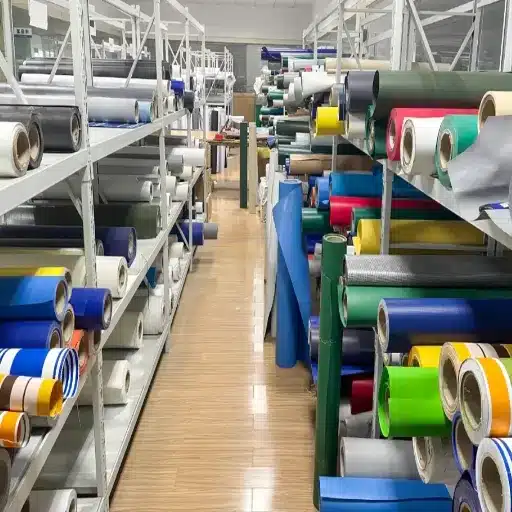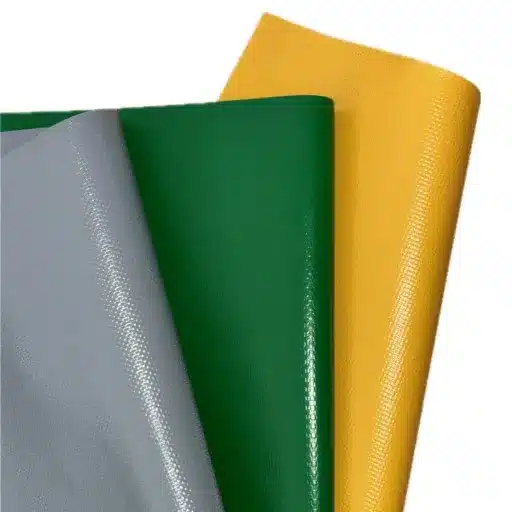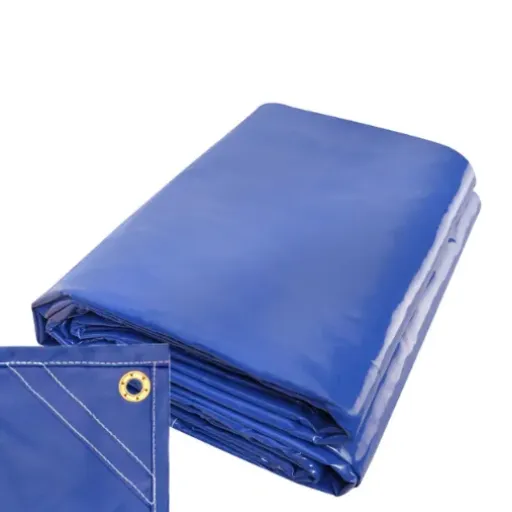
A reliable custom tarpaulin manufacturer provides OEM and made-to-measure production with flexible minimum order quantities, quality certifications, and established global logistics. The right partner helps you secure consistent product quality, competitive pricing, and dependable delivery schedules for your business.
But finding that partner is harder than it looks.
When Marcus Chen, a procurement manager for a construction firm in Melbourne, placed his first bulk order for custom truck covers, he assumed all manufacturers delivered the same standard. Six months later, the tarps started tearing at the reinforced edges. The UV coating faded within a season. And the supplier stopped responding to warranty claims. Marcus learned the hard way that not every factory that calls itself a custom tarpaulin manufacturer actually controls production, maintains quality standards, or stands behind its products.
This guide explains exactly how to evaluate, select, and partner with a custom tarpaulin manufacturer that delivers real value. You will learn what customization options exist, how to verify production capabilities, what MOQs and pricing to expect, and the critical questions every B2B buyer should ask before signing a contract.
Key Takeaways
- A true custom tarpaulin manufacturer controls in-house production, holds ISO 9001 certification, and offers full parameter customization including size, material, color, and printing.
- OEM manufacturing suits branding on proven specs with MOQs around 3,000 to 5,000 square meters. ODM development requires 10,000 to 15,000 square meters but allows custom formulations.
- Factory-direct sourcing from a custom tarpaulin manufacturer saves 15 to 30 percent compared to trading companies while ensuring full batch traceability.
- The complete production cycle from specification to delivery typically spans 18 to 45 days depending on customization depth and order volume.
- Every reliable supplier should provide technical data sheets, third-party test reports, and a clear quality control protocol before you place a deposit.
What Is a Custom Tarpaulin Manufacturer?
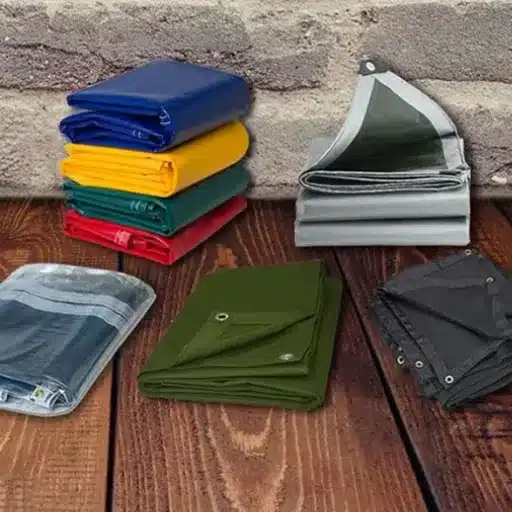
A custom tarpaulin manufacturer produces tarpaulins to specific buyer requirements rather than selling only standard stock sizes. This includes tailoring dimensions, material type, GSM weight, color, surface treatments, hardware installation, logo printing, and packaging to match the application.
The global tarpaulin market reached USD 5.8 billion in 2022 and is projected to grow to USD 8.5 billion by 2030, according to industry market research. Much of this demand comes from B2B buyers who need more than off-the-shelf products. Construction companies need fire-retardant covers. Agricultural distributors require UV-stabilized crop protection with branded logos. Logistics firms depend on heavy duty custom tarps that withstand highway speeds and weather extremes.
A genuine manufacturer owns production equipment, employs engineering staff, and manages quality control internally. Trading companies, by contrast, source from multiple factories and mark up prices without controlling consistency. Learn the fundamentals of material selection in our PE Tarpaulin Guide.
OEM vs ODM Manufacturing Models
Understanding the difference between OEM and ODM helps you set realistic expectations for customization depth and minimum order quantities.
OEM stands for Original Equipment Manufacturing. Under this model, you place your brand on a manufacturer’s existing product specifications. You select from available materials, sizes, colors, and treatments. The factory produces to your chosen parameters and packages with your branding. OEM orders typically require 3,000 to 5,000 square meters as a minimum. Lead times run 15 to 25 days.
ODM stands for Original Design Manufacturing. This model allows you to develop entirely custom specifications including unique polymer formulations, proprietary fabric weaves, specialized coatings, or novel hardware configurations. ODM requires 10,000 to 15,000 square meters minimum. Lead times extend to 25 to 45 days because the factory must develop and test new formulas.
Most B2B buyers start with OEM to verify quality and establish the relationship. They move to ODM only when their application demands performance that standard specifications cannot deliver.
When Custom Manufacturing Makes Sense
Custom manufacturing delivers value when standard products fail to match your operational requirements. Consider custom production when you need non-standard sizes that reduce waste and installation time. Custom tarp sizes matter for truck fleets where every centimeter of fit affects wind resistance and fuel consumption.
Custom manufacturing also makes sense when branding builds your market presence. Printed tarpaulin with your company logo transforms every covered load into a mobile advertisement. When you need application-specific treatments like enhanced fire retardancy for construction sites or anti-mildew additives for humid agricultural regions, custom formulation becomes essential.
Ready to explore custom specifications? Contact our team to discuss size, material, and treatment options tailored to your application.
Key Customization Options Available
Modern custom tarpaulin manufacturers offer extensive parameter control. Understanding each option helps you specify exactly what your application requires without paying for unnecessary features.
Size, Material, and Thickness
Custom sizes eliminate the compromise of cutting down standard rolls. You specify width, length, and shape including irregular cuts for equipment with protruding features. Standard widths range from 1 meter to over 5 meters depending on equipment capacity. Lengths extend to hundreds of meters for roll-based applications.
Material selection determines durability, weight, and cost. PE tarpaulin offers lightweight waterproofing at 60 to 200 GSM. It suits temporary covers and cost-sensitive applications. PVC tarpaulin delivers heavy duty performance at 300 to 1,200 GSM with superior tear resistance and longer lifespan. HDPE tarpaulin provides a middle ground with woven strength and recyclability. Canvas and cotton options serve breathable applications where moisture escape matters.
Thickness measured in GSM directly impacts tensile strength, tear resistance, and longevity. Construction site covers typically require 180 to 220 GSM PE or 500 to 700 GSM PVC. Truck covers for long-haul transport demand 600 to 900 GSM PVC with reinforced edges.
Compare PE and PVC specifications to choose the right material for your needs.
Color Matching and Logo Printing
Standard color options include blue, green, silver, and orange. Custom manufacturers offer Pantone or RAL color matching for brand consistency. Color development adds 10 to 20 percent to base pricing and requires 5,000 square meter minimums for custom dye batches.
Logo printing transforms functional covers into marketing assets. Screen printing supports up to four colors. Digital printing handles complex graphics and gradients. Printing applies to PE, PVC, and canvas materials. Typical applications include company logos on truck covers, safety warnings on construction tarps, and product branding for OEM distribution.
Elena Vasquez runs an agricultural supply business in Spain. She ordered 4,000 square meters of green PE tarpaulin with her company logo printed in white along one edge. The branding helped her distributors identify stock quickly at warehouse facilities. It also turned every covered hay bale into visible advertising at farms across three provinces. Within eight months, her reorder volume increased by 35 percent because end customers associated the branded covers with reliable quality.
Hardware and Reinforcement Features
Standard grommets install at 50 centimeter intervals along edges. Custom options include 25 or 75 centimeter spacing, brass versus aluminum eyelets, and reinforced corners with double-layer webbing.
Additional hardware options include D-rings for tie-down points, Velcro strips for quick access panels, zipper installations for compartmented covers, and reflective strips for nighttime visibility. Reinforced hems with UV-resistant thread extend seam strength under stress. Welded pockets accommodate support poles or ballast weights.
How to Evaluate a Custom Tarpaulin Manufacturer
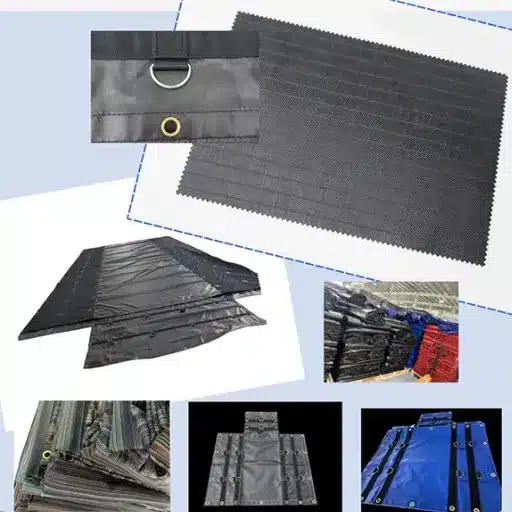
Choosing the right manufacturing partner requires systematic evaluation across multiple dimensions. Industry guides on supplier selection emphasize that the following criteria separate reliable producers from risky intermediaries.
Production Capacity and Equipment
A capable manufacturer operates sufficient equipment to handle your volume without subcontracting. Ask about the number of extrusion lines, water-jet looms, and coating machines. Established PE tarpaulin manufacturers typically run 50 or more water-jet looms and produce 50 to 100 tons daily.
For PVC production, inquire about lamination technology. Cold lamination offers high speed at lower cost. Hot lamination delivers better adhesion for demanding applications. Knife coating produces premium products with precise thickness control up to 2,700 GSM for architectural membranes.
Request production schedules from recent months. A factory that cannot show active production records may lack capacity or rely on subcontracting.
Quality Control and Certifications
Reliable manufacturers maintain documented quality control at every production stage. Incoming material testing verifies raw PE resin purity, PVC paste viscosity, and base fabric denier. In-process inspection checks GSM consistency, coating thickness, weave integrity, and color matching. Finished goods testing confirms tensile strength, tear resistance, waterproof performance, and dimensional accuracy.
Certifications signal commitment to standards. ISO 9001:2015 certification represents the baseline for quality management. Additional certifications include REACH and RoHS for European markets, NFPA 701 for fire retardancy in North America, and DIN 4102 B1 for German construction applications.
Always verify certificates on the issuing organization’s official website. Some trading companies present photocopied or expired documents from partner factories.
Customization Capabilities
Evaluate whether the manufacturer can accommodate your specific requirements. Can they produce custom sizes beyond standard roll widths? Do they offer Pantone color matching or only stock colors? Can they install non-standard grommet spacing or specialized hardware? Do they support private-label packaging for retail distribution?
A factory with dedicated engineering staff can discuss technical specifications in depth. They should explain coating formulations, additive options, and performance tradeoffs. Vague answers about customization indicate limited capability or subcontracting reliance.
Export Experience and Logistics Support
International shipping requires more than production capability. Your manufacturer should understand Incoterms including FOB, CIF, and DDP. They should provide complete export documentation such as certificates of origin, packing lists, commercial invoices, and bills of lading.
Experienced exporters arrange pre-shipment inspection by SGS or Bureau Veritas when requested. They understand container loading optimization, palletization standards, and moisture protection during ocean transit. Ask how many countries they currently export to and whether they have served your specific market before.
Global logistics support separates professional manufacturers from regional suppliers. A partner with established freight relationships can offer competitive shipping rates and reliable delivery schedules.
Warning Signs of Unreliable Suppliers
Several red flags indicate suppliers you should avoid. Pricing 20 percent or more below market average often signals recycled materials, underweight GSM, or omitted treatments like UV stabilization.
Other warning signs include refusal to provide third-party test reports, vague responses about material composition, communication gaps exceeding 48 hours during the quoting phase, and inability to conduct video factory tours. A legitimate manufacturer maintains a fixed facility address and welcomes virtual inspections.
No fixed factory address or refusal to provide video footage suggests a potential scam or trading company posing as a manufacturer.
Understanding MOQ, Pricing, and Lead Times
Minimum order quantities, pricing structures, and production timelines vary significantly based on customization depth and material type.
Typical MOQ Ranges
Stock color with custom size typically requires 3,000 square meters as an OEM minimum. Custom Pantone or RAL color matching raises the MOQ to 5,000 square meters because dye setup costs must be amortized across sufficient volume.
Custom polymer formulation under ODM requires 10,000 to 15,000 square meters. Some factories offer per-color minimums of 500 to 1,000 square meters for buyers who want multiple colorways within a single order.
Roll-based orders for industrial applications use linear meter minimums. Widths above 1.8 meters typically require 2,000 linear meters. Narrower rolls below 1.8 meters need 4,000 linear meters because setup time represents a larger proportion of production cost.
Trial orders for quality verification typically range from 50 to 200 square meters. These samples carry higher per-unit pricing but let you evaluate material performance before committing to volume.
Price Break Tiers
Most manufacturers offer volume discounts at specific thresholds. Typical price breaks activate at 1,000 square meters, 5,000 square meters, and 10,000 square meters. The per-unit cost at 10,000 square meters often runs 20 to 30 percent below the 1,000 square meter price.
Payment terms for B2B orders typically require 30 percent deposit via bank transfer with the remaining 70 percent due before shipment. Large orders may qualify for letter of credit arrangements that provide security for both parties.
Standard color options cost less than custom color matching. Standard grommet spacing avoids tooling charges. Combining multiple specifications within one order maximizes volume discounts. Filling container loads of 20-foot or 40-foot capacity achieves the lowest per-unit shipping cost.
Sample and Production Timelines
The complete order cycle from inquiry to delivery typically spans several phases. Initial consultation and quotation require 2 to 5 business days. Sample production for material verification takes 3 to 7 days. Lab dip color matching adds another 5 days for custom shades.
Full production after sample approval runs 15 to 30 days for OEM orders depending on order size and factory schedule. ODM development extends to 25 to 45 days because formulation testing adds time. Shipping by sea adds 15 to 35 days depending on destination. Air freight reduces transit to 5 to 10 days at significantly higher cost.
From order placement to delivery at your facility, expect 18 to 45 days for standard OEM production and 30 to 60 days for ODM development.
The Custom Manufacturing Process Step by Step
Understanding how custom tarpaulins move from specification to finished product helps you manage expectations and identify quality checkpoints. Detailed manufacturing process guides confirm that the following phases represent industry-standard production workflows.
Phase 1: Requirements and Specification
The process begins with a detailed requirements document. You specify material type, dimensions, GSM weight, color, surface treatments, hardware requirements, and intended application. The manufacturer reviews these requirements and may suggest optimizations based on their production experience and material science knowledge.
A thorough specification prevents costly revisions later. Ambiguous requirements cause delays, rejected batches, and disputes. Professional manufacturers ask clarifying questions about operating environment, expected lifespan, and compliance requirements before quoting.
Phase 2: Material Selection and Design
Engineers select base fabrics, coating formulations, and additives that match your performance requirements. For PVC tarpaulin, this includes choosing polyester scrim density, PVC plastisol weight per side, and additives such as UV inhibitors, flame retardants, or anti-mildew compounds.
For PE tarpaulin, material selection involves extruding flat tapes, stretching them for strength, and weaving the base fabric before lamination. The manufacturer confirms material specifications through technical data sheets that detail tensile strength, elongation, tear resistance, and coating adhesion values.
Design finalization includes engineering drawings for custom shapes, grommet placement maps, and reinforcement schedules for stress points.
Phase 3: Production Manufacturing
Raw material processing converts polymers into usable fabrics. Extrusion lines produce PE tapes or prepare PVC compounds. Weaving looms create the base fabric structure. Coating or lamination applies waterproof layers and surface treatments.
For PVC products, coating methods include cold lamination for economy applications, hot lamination for improved adhesion, and knife coating for premium products requiring precise thickness control. Color masterbatch incorporation happens during coating for consistent hue throughout the material.
Fabrication cuts panels to specified dimensions and joins them through heat-sealing, high-frequency welding, or industrial sewing. Hardware installation adds grommets, D-rings, Velcro, or other features at specified intervals.
Custom printing applies logos, safety markings, or instructions using screen printing or digital methods.
Learn more about our PVC tarpaulin manufacturing capabilities.
Phase 4: Quality Assurance and Delivery
Every batch undergoes standardized testing before release. Tensile strength verification checks both warp and weft directions. Tear resistance testing ensures the material withstands mechanical stress. Color matching compares production output against approved samples. Dimensional accuracy confirms cutting precision. Coating adhesion testing validates waterproof performance.
Optional third-party inspection by SGS or Bureau Veritas provides independent verification for critical applications. Pre-shipment inspection checks packaging integrity, label accuracy, and quantity confirmation.
Final packaging follows buyer specifications whether folded, rolled, or baled. Custom labeling includes product details, batch codes, and handling instructions. Export documentation accompanies every shipment for customs clearance and regulatory compliance.
Industry-Specific Custom Tarpaulin Solutions
Different industries demand different performance characteristics. Understanding these requirements helps you specify exactly what your application needs.
Construction and Industrial Protection
Construction sites expose tarpaulins to abrasion, wind loads, and chemical contact. Custom construction covers require reinforced edges, fire-retardant treatments, and high tensile strength to withstand lifting and repositioning. Typical specifications include 500 to 700 GSM PVC with NFPA 701 or DIN 4102 B1 fire ratings.
Industrial equipment covers need UV stabilization for outdoor storage and chemical resistance for manufacturing environments. Custom sizes fit specific machinery dimensions without excess material that catches wind or creates trip hazards.
James Okonkwo manages equipment protection for a mining operation in Ghana. His previous supplier delivered standard-sized covers that flapped in high winds and tore at contact points. After switching to a custom tarpaulin manufacturer, he specified 650 GSM PVC with reinforced corners, brass grommets at 25 centimeter intervals, and fire-retardant coating. The custom fit eliminated wind damage. Equipment corrosion dropped by 60 percent. And the covers lasted three years instead of one.
Agricultural Crop and Equipment Covering
Agricultural applications require UV-resistant materials that protect crops and equipment without trapping excessive heat. Green PE tarpaulin with UV stabilizers reflects sunlight while providing rain protection. Typical specifications range from 120 to 200 GSM for crop covers and 180 to 220 GSM for equipment protection.
Custom sizes fit greenhouse structures, hay storage configurations, and livestock shelter dimensions. Anti-mildew treatments prevent degradation in humid climates. Perforated options allow airflow while blocking rain and hail.
Truck and Logistics Cargo Protection
Truck covers face constant wind stress, road debris, and weather exposure during transport. Custom truck tarpaulin requires exact dimensional fit to prevent billowing that increases fuel consumption and tearing. Heavy duty PVC at 600 to 900 GSM provides the durability needed for long-haul routes.
Reinforced edges with double-stitched hems prevent tearing at tie-down points. Reflective strips improve nighttime visibility. Logo printing builds brand recognition at every delivery destination.
Read our complete guide to selecting truck tarpaulin covers.
OEM and Private Label Products
Distributors and retailers benefit from private-label tarpaulin products manufactured to their specifications. OEM partnerships include custom packaging, branded labels, and specification sheets that match your market positioning.
Volume commitments typically start at 5,000 square meters per order. Long-term supply contracts lock in pricing and production priority. Dedicated account management ensures consistent quality across multiple production runs.
Planning a private-label product line? Our OEM team handles everything from material selection to branded packaging for retail distribution.
Questions to Ask Before Placing an Order
The following questions help you evaluate potential manufacturing partners and protect your investment.
- Do you control production in-house or subcontract to other factories?
- What is your annual production capacity and current utilization rate?
- Can you provide batch traceability from raw materials to finished goods?
- What quality certifications do you hold and can I verify them independently?
- Can I request third-party pre-shipment inspection?
- How do you handle custom color matching and what are the associated costs?
- What is your sample policy and will sample costs credit against bulk orders?
- Do you retain production records for future reorder consistency?
- What is your standard lead time and how do you handle production delays?
- Can you provide references from buyers in my region or industry?
A manufacturer that answers these questions clearly and provides documentation demonstrates professionalism and reliability. Evasive answers or delayed responses indicate potential problems.
Conclusion
Choosing the right custom tarpaulin manufacturer protects your investment, ensures product quality, and builds a supply chain you can depend on. The best partners combine technical capability with transparent communication, documented quality control, and genuine customization expertise.
Start by defining your exact requirements including size, material, GSM, and treatments. Evaluate manufacturers against production capacity, certification status, and export experience. Request samples before committing to volume. And always verify that your partner controls production internally rather than relying on subcontracting.
The global tarpaulin market continues growing as construction, agriculture, and logistics industries expand. Businesses that establish relationships with reliable custom manufacturers gain competitive advantages through consistent quality, optimized specifications, and dependable delivery.
Contact our team to discuss your custom tarpaulin requirements. We provide OEM and custom manufacturing with flexible specifications, rigorous quality control, and global export support tailored to your business needs. Request a custom quote today and get tarpaulins engineered exactly for your application.