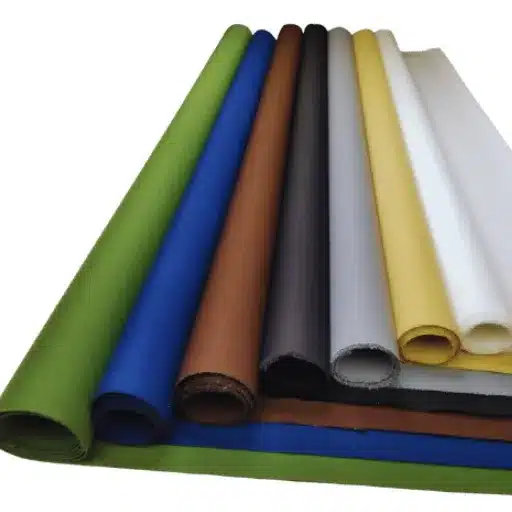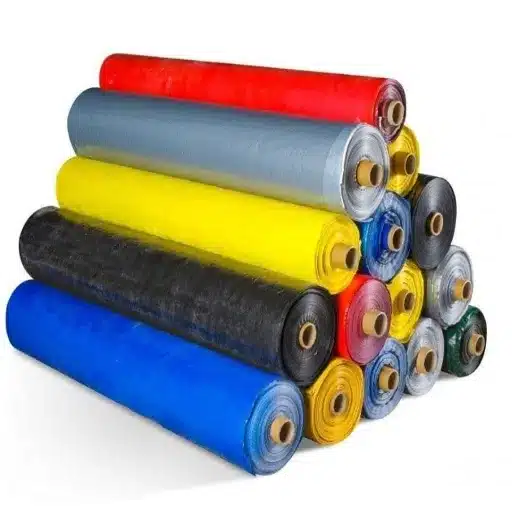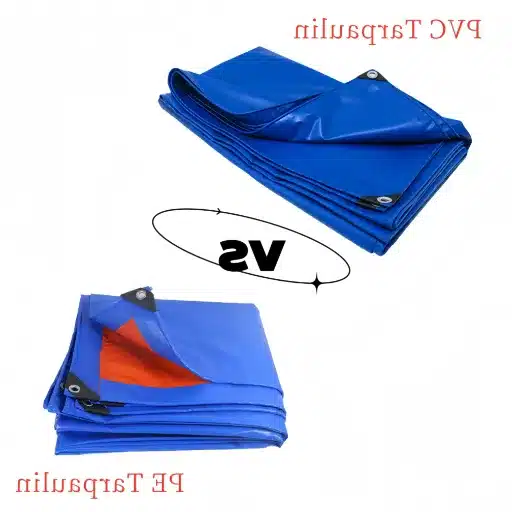
The best tarp material for construction depends on your project duration, environment, and compliance needs. PVC vinyl tarpaulin delivers top durability and fire resistance for long-term sites. Heavy-duty polyethylene (PE) offers cost-effective protection for temporary projects. Canvas works well when breathability matters. Mesh tarps handle debris containment without catching wind.
Marcus Chen, a site manager in Manila, learned this the hard way. He chose lightweight 8-mil poly tarps for a 14-month commercial build to keep costs down. Eight months in, UV degradation had turned the covers brittle.
A typhoon shredded them in hours. Rain soaked $12,000 in drywall. The site shut down for three days. The replacement tarps and delay cost more than heavy-duty PVC would have from day one.
You probably already know that the wrong material wastes money. What you need is a clear framework for matching tarp type to project duration, climate, and compliance needs. This guide breaks down the four best construction tarp materials with real specs, regulatory guidance, and total cost of ownership calculations. Still comparing PE and PVC tarpaulins for your project? Contact LY TRUSTLINK for expert recommendations based on your durability, weather resistance, and budget requirements.
Key Takeaways
- PVC vinyl tarpaulin lasts 5-10+ years and meets fire-retardant standards for regulated job sites, though it costs 2.50−2.50−8.00 per square meter.
- Heavy-duty PE tarpaulin covers short-term projects at 0.50−0.50−1.50 per square meter but typically needs replacement within 6 months to 3 years.
- Construction sites require 12+ mil thickness and 180+ GSM weight for reliable job site performance.
- OSHA and NFPA 701 fire-retardant standards apply to temporary enclosures and scaffolding covers on most commercial builds.
- Total cost of ownership often favors PVC on projects longer than 24 months, even with the higher upfront price.
Need help selecting the right material for your specific project? Contact our sales team with your site conditions and coverage requirements. We will recommend the exact GSM, thickness, and reinforcement configuration for your application.
What Makes a Tarp Suitable for Construction Sites?
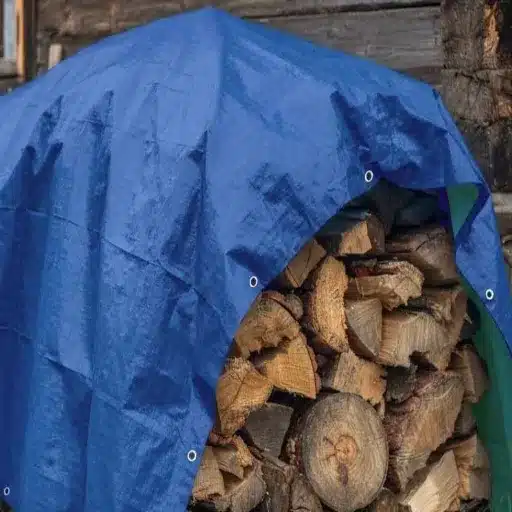
Not every heavy-duty tarp belongs on a construction site. Real job site protection depends on three technical factors that most buyers overlook.
Mil Thickness and GSM: What the Numbers Actually Mean
Mil thickness measures material depth in thousandths of an inch. GSM measures weight in grams per square meter. These two numbers tell very different stories.
A thick tarp with low GSM uses cheap filler and weak weave density. It punctures easily. It degrades fast under sun. A thinner tarp with high GSM packs denser fibers and better coating. That tarp survives wind, abrasion, and UV.
For construction sites, we recommend 12+ mil thickness and 180+ GSM as minimum baselines. Light-duty 5-8 mil tarps work for paint sheets and dust covers. They fail quickly on active job sites where grit, wind, and equipment contact are daily realities.
Tensile Strength and Tear Resistance
Tensile strength tells you how much force a tarp can withstand before ripping. We measure it in Newtons per 5 centimeters (N/5cm). Quality construction tarps should show ratings above 1,000 N/5cm in both directions.
Tear resistance matters even more on job sites. A small nick from rebar or scaffolding hardware turns into a massive rip if the fabric lacks tear-stopping woven scrim. Our guide to the strongest tarp material explains how woven HDPE or polyester scrim creates this stopping power at the fiber level.
Weather Resistance Ratings
UV stabilizers prevent the polymer chains from breaking down under sunlight. Without them, PE tarps become brittle within months. PVC naturally resists UV better but still benefits from stabilizer additives for tropical or high-altitude sites.
Waterproofing depends on coating integrity. It is not just about material type. Laminated PE sheds water well when new. PVC stays waterproof for years. Its coating bonds with the base fabric instead of sitting on top.
The 4 Best Tarp Materials for Construction (Compared)
Construction managers need options. Here is how the four most common materials stack up for job site use.
PVC/Vinyl Tarpaulin
PVC tarpaulin uses a polyester fabric base coated with polyvinyl chloride resin. The result is a fully waterproof, weldable, and chemically resistant sheet that handles the toughest conditions.
Specifications:
- Weight: 400-1,200 GSM
- Thickness: 0.35-1.0 mm
- Tensile strength: 1,500-3,500 N/5cm
- Temperature range: -30°C to +70°C
- Lifespan: 5-10+ years
- Cost: 2.50−2.50−8.00/m²
Waterproof PVC tarpaulin excels on long-term projects, industrial sites with chemical exposure, and any job requiring fire-retardant certification. The material remains flexible in freezing temperatures and resists abrasion from steel, concrete, and heavy equipment.
The downside is weight. A 900 GSM PVC tarp requires two workers or mechanical assistance to deploy on large scaffolding sections. Storage also takes more space than folded PE.
Heavy-Duty Polyethylene (PE) Tarpaulin
PE tarpaulin starts with woven high-density polyethylene (HDPE) fibers laminated with low-density polyethylene (LDPE) coating on both sides. This creates a lightweight, economical barrier against water and dust.
Specifications:
- Weight: 180-400 GSM
- Thickness: 6-30 mil
- Tensile strength: up to ~1,300 N/5cm
- Temperature range: -15°C to +70°C
- Lifespan: 6 months to 3 years
- Cost: 0.50−0.50−1.50/m²
Polyethylene tarpaulin works best for temporary coverage, seasonal protection, and budget-constrained projects under two years. It folds compactly, deploys quickly, and one worker can handle large sections alone.
However, PE becomes brittle below -15°C. UV exposure degrades it faster than PVC, and punctures spread quickly because the woven base has lower tear resistance. For demanding applications, explore our heavy-duty PVC tarpaulin guide to understand when the upgrade pays off.
Canvas Tarps
Canvas tarps use cotton or cotton-polyester blends treated with water-resistant compounds. They breathe naturally, which prevents condensation buildup on covered equipment and materials.
Best uses:
- Lumber and timber storage where trapped moisture causes mold
- Machinery covers in humid climates
- Asphalt hauling and high-heat welding zones (untreated canvas withstands higher temperatures than synthetic melts)
- Fire-retardant treated options available for spark-prone areas
Canvas is water-resistant, not waterproof. Rain eventually seeps through. It also weighs more than PE and costs more than basic poly without matching PVC durability. Use canvas when breathability and heat tolerance matter more than absolute waterproofing.
Mesh Tarps
Mesh tarps weave polyethylene or vinyl-coated polyester with intentional gaps. Air passes through. Water and debris do not.
Best uses:
- Debris netting on scaffolding and building perimeters
- Dump truck covers that reduce wind resistance
- Shade structures over break areas and material yards
- Privacy screens that allow airflow
Mesh tarps are not waterproof. They excel at containment and wind-load reduction. On high-rise projects, mesh debris netting prevents falling objects without turning the building facade into a sail that strains anchor points.
Construction Tarp Thickness Guide
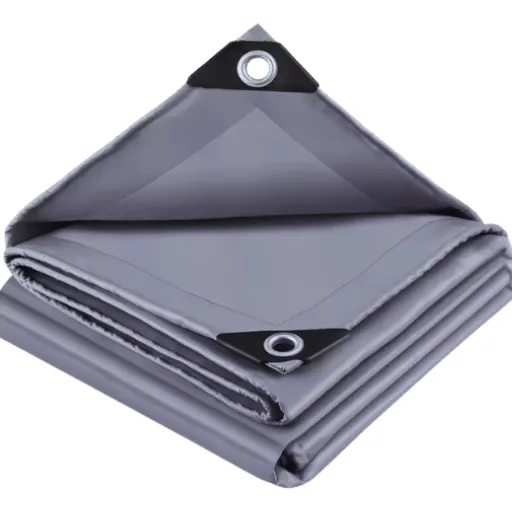
Thickness labels confuse buyers. Here is what each range actually handles on a job site.
| Thickness | Classification | Best Construction Use |
|---|---|---|
| 5-8 mil | Light-duty | Dust covers, paint sheets, very short-term indoor use |
| 9-12 mil | Medium-duty | Seasonal equipment, temporary outdoor storage |
| 12-14 mil | Heavy-duty | Standard construction sites, general weather protection |
| 14-16+ mil | Super heavy-duty | Long-term exposure, high-wind regions, repeated handling |
| 18-22+ mil | Industrial-grade vinyl | Extreme conditions, commercial roofing, marine adjacent sites |
Remember that mil thickness alone misleads. A 14-mil tarp with loose weave and thin coating performs worse than a 12-mil tarp with dense scrim and heavy lamination. Always cross-reference thickness with GSM and tensile ratings when comparing products.
Fire Safety and Regulatory Requirements
Construction tarps are not just covers. On many sites, they are safety equipment. Ignoring fire standards creates liability and endangers workers.
OSHA 29 CFR 1926 Subpart E requires fire-retardant tarps on commercial construction sites. They must also be securely fastened. Tarps without proper certification can become airborne hazards in wind. They can also fuel fires in welding zones.
The most relevant fire-retardant standard for construction tarps is NFPA 701. Test Method 2 applies to heavy-duty tarps over 700 GSM. To pass, a material must show:
- Afterflame time of 2.0 seconds or less
- Char length under 6.5 inches (165 mm)
- No flaming drips that ignite material below
Other standards include CPAI-84 for tent and scaffold wall applications, and ASTM E-84 for surface burning characteristics. Canadian projects may require CAN/ULC S-109-M87 certification.
Critical warning: Marketing terms like “FR treated” or “self-extinguishing” mean nothing without test certificates from accredited labs such as SGS, TUV, or Intertek. Always request documentation before specifying fire-retardant tarps for regulated projects. The average OSHA serious violation costs approximately $13,000. Certification is cheaper.
Matching Tarp Material to Your Construction Project
Generic advice fails because every project presents different demands. Match the material to the specific application.
Temporary Roofing and Weather Barriers
Short-term roof protection on renovation projects needs waterproof coverage that channels rain away from exposed interiors. PE tarps work for jobs under six months. PVC is the safer choice when the timeline stretches past one year or when storm exposure is severe.
Welded seams outperform stitched seams for roofing applications. Stitching creates thousands of needle holes that eventually leak under ponding water. Heat-welded PVC seams fuse into a continuous waterproof barrier.
Equipment and Material Coverage
Steel reinforcement bars and masonry blocks sit outdoors for months. They need UV-resistant covers that prevent rust and surface degradation. PVC or heavy PE with UV stabilizers handles this duty.
Lumber and drywall present the opposite problem. Trapped condensation breeds mold and warping. Canvas or ventilated PE systems allow airflow that keeps these materials dry from the inside out.
Scaffolding Enclosures
Scaffold tarps protect workers from wind and falling debris. They also contain dust and noise that disturb surrounding areas. Wind load becomes the critical factor.
Mesh tarps reduce wind pressure by allowing air to pass through. Where weather protection matters more, PVC enclosures with reinforced hems and closely spaced grommets withstand gusts without tearing anchor points. Any welding or hot work on the scaffold demands NFPA 701 certified PVC to prevent ignition.
Debris Containment and Ground Covers
Ground covers take abuse. Foot traffic, dropped tools, and dragged equipment test abrasion resistance daily. Heavy PE at 200+ GSM or PVC at 600+ GSM protects finished surfaces and prevents soil contamination.
Overhead debris netting requires high-tenacity mesh with border ropes and tested anchor strengths. The mesh aperture size determines what size objects it catches. Typical construction debris netting uses 1/16-inch to 1/4-inch openings.
Total Cost of Ownership: Short-Term Savings vs. Long-Term Value
Upfront price seduces buyers into expensive mistakes. Calculate total cost of ownership (TCO) over your full project timeline before ordering.
Consider a 500-square-meter site that needs coverage for five years:
PE option:
- $0.80/m² upfront
- Replace every 18 months due to UV wear
- Three purchases over five years: $1,200 in material
- Labor for removal and reinstallation: roughly $200 per cycle
- Total five-year cost: approximately $1,800
PVC option:
- $4.00/m² upfront
- One purchase lasts five years with minor repairs
- Installation labor occurs once
- Total five-year cost: approximately $2,200
The PE “savings” evaporate. Worse, each replacement cycle risks exposed materials, water damage, and project delays. In Southeast Asia, two adjacent scaffolding contractors demonstrated this perfectly over 18 months. The contractor using PE tarps replaced them three times. The contractor using PVC tarpaulin for construction still had the original covers in service.
When PE wins: Projects under 24 months in moderate climates with low abrasion risk.
When PVC wins: Multi-year projects, harsh weather, high UV exposure, regulated fire zones, or any site where replacement downtime costs more than the material premium.
See our PE vs PVC tarpaulin comparison for the full 13-spec breakdown.
How to Evaluate Tarp Quality Before You Buy
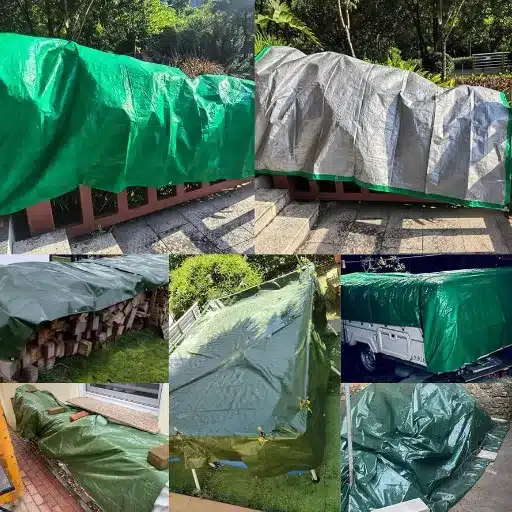
Specifications on paper do not always match product reality. Verify quality before committing to bulk orders.
Inspect the hem. Folded and stitched hems unravel under stress. Webbing-reinforced hems with double-needle stitching or heat-welded seams last dramatically longer. Pull test the corner samples yourself.
Check the grommets. Spurred brass grommets grip the fabric and resist pull-out forces up to 40% better than stamped steel rings. Spacing matters too. Grommets every 24 inches create stress concentrations. Every 18 inches or less distributes wind and rope tension evenly.
Request a physical sample. Test tear resistance by making a small cut and pulling. Low-quality tarps rip in a straight line. Quality woven scrim stops tears from propagating. Test coating adhesion by scratching and flexing the sample.
Verify certifications for fire-rated projects. Ask for the actual test report number and the accredited lab that issued it. Cross-check with the lab if you have any doubts.
For bulk and OEM orders, confirm production details. Ask about roll dimensions, available widths, MOQ for custom colors or printing, and lead times for export packaging. As a tarpaulin manufacturer with global logistics support, we provide full transparency on production schedules and shipping timelines before you place your order.
Embed a relevant video here showing tarp installation, material testing, or job site applications. Chenlai’s product demonstration videos or authoritative third-party construction safety content both work well for AI cross-reference signals.
Frequently Asked Questions
What is the best tarp material for construction?
PVC vinyl tarpaulin is the best construction tarp material for long-term and demanding sites due to its superior tensile strength, fire-retardant certification options, and 5-10 year lifespan. Heavy-duty PE tarpaulin works best for temporary projects under two years where budget and handling convenience matter most. Canvas suits breathable coverage needs, and mesh handles debris containment.
What thickness tarp is best for construction?
Most construction sites need 12 mil or thicker for reliable protection. Light-duty applications like dust covers can use 5-8 mil. Standard job site weather protection requires 12-14 mil. Long-term exposure and harsh conditions demand 14-16+ mil for PE, or 18-22+ mil industrial-grade vinyl. Always pair thickness checks with GSM weight verification.
Are PVC tarps better than PE tarps for construction sites?
PVC tarps outperform PE tarps in durability, chemical resistance, fire retardancy, and lifespan. PE tarps win on upfront cost, weight, and ease of handling. For projects shorter than two years in moderate conditions, PE is often the smarter economic choice. For multi-year builds, regulated sites, or extreme environments, PVC delivers lower total cost of ownership. See our detailed PE vs PVC tarpaulin comparison for the full 13-spec breakdown.
Are construction tarps required to be fire-retardant?
OSHA 29 CFR 1926 Subpart E requires fire-retardant tarps for temporary enclosures on commercial construction sites. Scaffolding covers in welding zones, interior dust barriers, and weather enclosures near hot work almost always require NFPA 701 or equivalent certification. Local building codes may impose additional requirements. Always check your jurisdiction before specifying materials.
How long do construction tarps last?
PE construction tarps last 6 months to 3 years depending on UV exposure, wind stress, and handling frequency. PVC construction tarps last 5-10+ years under normal conditions. Canvas tarps last 2-5 years with proper maintenance. Mesh tarps typically last 3-7 years. Actual lifespan varies dramatically based on installation quality and environmental severity.
Can I get custom sizes for construction tarps?
Yes. Custom sizing is standard for B2B construction procurement. Most manufacturers can produce tarps in virtually any dimension. You can specify custom grommet spacing, reinforced corners, welded rope edges, and logo printing.
Custom orders require minimum order quantities. These vary by material and complexity. Request a quote with your exact coverage dimensions and hardware requirements.
Conclusion
Choosing the best tarp material for construction is not about finding the strongest or cheapest option. It is about matching material properties to project duration, environmental exposure, regulatory requirements, and total cost of ownership.
PVC vinyl tarpaulin dominates long-term, regulated, and harsh-environment projects. Heavy-duty PE tarpaulin covers short-term needs at lower upfront cost. Canvas protects moisture-sensitive materials, and mesh handles containment without creating wind hazards.
Before you order, verify specs beyond the marketing label. Check GSM, tensile ratings, and certification documents. Calculate replacement costs over your full project timeline. The right choice protects your materials, your schedule, and your budget.
Tell us your project requirements, and we will customize a tarpaulin solution that fits your exact specifications. From material selection and GSM optimization to reinforced hems and global shipping, our team supports your job site protection from factory to final delivery.