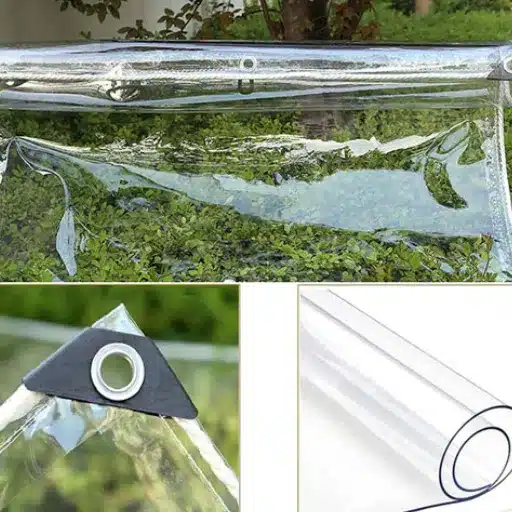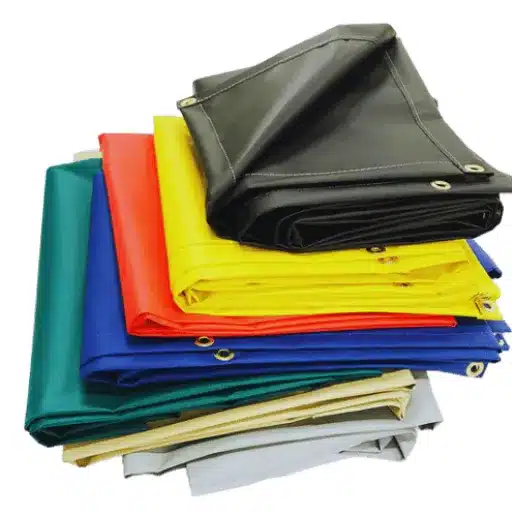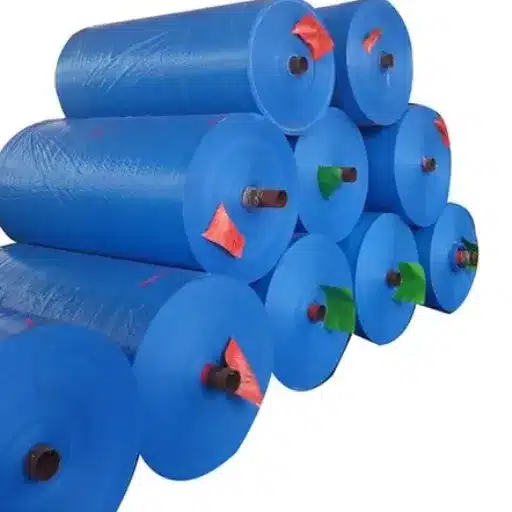
A PVC tarp, described as a tarpaulin weighing at least 650GSM of which both sides are coated with PVC resin, is created with a PVC film fully laminated and reinforced with a high-quality polyester structure. In such tails which were reinforced by PVC films, abrasion and tear properties are determined by the film side rather than the fabric side. These materials are primarily used in outdoor applications where greater tensile and impact strengths are required in addition to fire resistance.
When you put it like that, it seems so obvious. There is just one issue with that — everyone makes use of “heavy duty” in their advertising, and it may apply to a 600 GSM trucking cover as well as a 1200 GSM mining tarp. You will understand the danger of general specifications when you take out an advertised heavy duty cover and watch it disintegrate within 18 months.
This text offers solid professional advice in a no nonsense manner regarding heavy duty tarpaulins and for the kind of business. It explains what qualifies as heavy duty, what GSM values are presumably the most required, the technology of construction using a front and back coating, and distinguishing the real manufacturer from a re faktora. After reading it all, one will be armed with information on what they should pay attention to while designing the product, and what questions must be asked before ordering the product. For personalized assistance or more details, please contact us via our support page.
Key Takeaways
- Heavy duty PVC tarpaulin starts at 650 GSM. Genuine industrial grades run 850–1,200+ GSM with knife-coated construction.
- Knife coating outperforms hot lamination in adhesion, tear resistance, and lifespan. Hot lamination is acceptable for budget mid-cycle covers.
- Specifications that matter: GSM, base fabric denier (1000D 20×20 for 900+ GSM), tensile strength (1,500–3,500 N/5cm), and tear strength (200–500 N).
- Realistic lifespan: 3–5 years for standard heavy duty (650–750 GSM), 7–10+ years for premium 850–1,000 GSM with UV stabilizers.
- Verify before you buy: request a data sheet, demand a sample, weigh a 10×10 cm cut to confirm GSM, and confirm the coating method in writing.
What Qualifies as “Heavy Duty”?
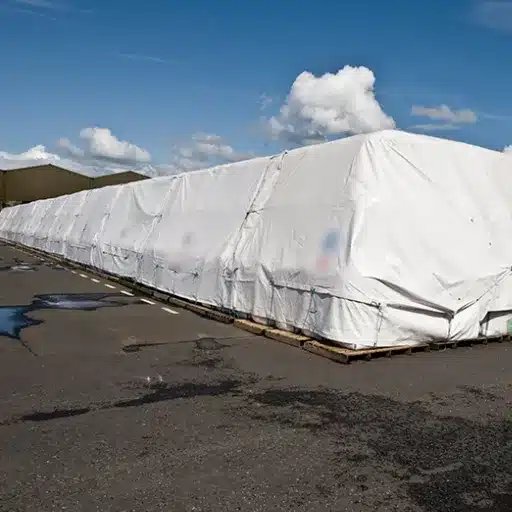
Ordinary PVC tarpaulin can be stretched to its limits under consistent industrial tension. This is the point that separates the standard grade products from those used in industries where real heavy duty work is carried out. In simple terms, this is about 650 grams per square meter (GSM) or more and for real industrial installations it may go further than 850 GSM and upwards.
These definitions of “heavy duty”, however there is no single regulatory body, are rather drawn by different suppliers and, as a result, may be no the same, so I different veins, and this is where two products which have to be called the same behave quite differently. Specifically, this is why the majority of industrial buyers have come up with a mechanism of the three-tier pricing:
| GSM Tier | Range | Typical Use |
|---|---|---|
| Light duty | 400–550 GSM | Temporary cover, light rain, indoor protection |
| Medium duty | 600–750 GSM | Standard truck covers, agricultural shelters, general construction |
| Heavy duty | 750–900 GSM | Industrial covers, prolonged transport use, scaffolding enclosures |
| Extra heavy duty | 900–1,200+ GSM | Mining covers, permanent membrane structures, extreme conditions |
The GSM measure of a tarp alone is a rather misleading figure. For instance, even a 900gsm hot laminated tarp and a knife coated version of the same gauge would exhibit a similar GSM in the specifications but yield a lifespan that is poles apart. The fabrics_polyester scrim strength, the denier of the base, the polyurethane, the polyvinylchloride etc continues in textiles and finishing as they are called continue to be a part of the general real functions of the fabric. For example, the choice of denier along with polyester gives the roof fabric the required reaching conditions.
Every tarp noteworthy does not rest on ASTM D378-19 but! The proactive approach calling for the use of corpporate security net with the use of the protective tarp that meets the dumb related specifications in every application. This applies to any requirements of mil spec grade that demands a fabric thickness above twenty thousandths (++) of an inch. The global polyvinyl chloride tarpaulin market has an acceptable range of PVC tarpaulin weighing ±10 gsm or g/m². Should any deviation from the range fall below -10 GSM, the buyer is supposed to use extra caution.
If you are still mapping out the broader product family, our complete PVC tarpaulin buyer’s guide covers the full GSM range, materials, and applications in one resource.
How Heavy Duty PVC Tarpaulin Is Made
The starting point is a high-tenacity polyester scrim — a woven base fabric that gives the tarp its tensile and tear strength. PVC resin is then applied to both sides of the scrim using one of two methods, and that choice shapes everything that follows.
Knife Coating (Premium Method)
In knife coating, liquid PVC is spread across the scrim under a precision blade that controls thickness and coverage. The resin penetrates the polyester weave and bonds chemically as it cures. The result is a fully integrated coated fabric with superior adhesion, tear resistance, and abrasion performance. Knife coating is the standard for genuine heavy duty work — transport, mining, scaffolding, and any application where the cover faces continuous stress.
Hot Lamination (Budget Method)
The hot lamination is a technique that is performed to create a pre formed flexible PVC film. The adhesive has a superior technical performance with polyester. The multiple-layered PVC film is exposed to heat and pressure. The bonded scrim to adhesive is finally, rolled and fused in a thin sheet. It is a quicker and cheaper process than knife coating. For a hot-laminated tarp of 900 GSM, the expected lifespan is 6-8 years under moderate conditions. The expected lifespan of a hot-laminated tarp of 900 GSM is 6-8 years under normal handling. Hot-lamination is suitable when there are funding limitations and it becomes necessary to replace the cover at intervals of 5-7 years.
Where knife coating is for permanent installations or does complement the sales strategy, this is better as buy once cry once. At other times, the options would include laminated hot and knife hot. In case a 5 year rotation time is adopted which provides short haul, such vehicles may not necessarily require knife coating. A mining operation that is a quick kill requiring only ten years of service on the other hand most certainly will need it.
For a wider material comparison, see our PVC vs PE tarpaulin breakdown, which covers when each material makes sense and when it does not.
Need a custom heavy duty spec for your project? Request a quote and our specifications team will recommend the right GSM, coating method, and reinforcement options for your application.
Specifications That Define a Heavy Duty PVC Tarpaulin
A real technical data sheet for heavy duty PVC tarpaulin should answer six questions clearly. If a supplier cannot provide all six in writing, treat that as a red flag.
- GSM (grams per square meter): The total weight of the coated fabric. Heavy duty starts at 650 GSM. Most industrial work uses 750–1,000 GSM. Extreme applications use 1,000–1,200+ GSM.
- Thickness: Typically 0.5–1.2 mm, or 14–35 mils. (Conversion: 1 mil equals 0.0254 mm. To convert GSM to oz/yd², divide by 33.906.)
- Base fabric denier and weave: A common heavy duty construction is 1000D 20×20 polyester for 900+ GSM products. Lighter heavy duty grades (650–750 GSM) often use 800D 9×9 scrims.
- Tensile strength: 1,500–3,500 N/5cm depending on grade. The higher the number, the more pull the tarp can absorb before it stretches or fails at the seam.
- Tear strength: 200–500 N. This is the tarp’s resistance to a tear that has already started. Reinforced edges depend on adequate tear strength to keep grommets and D-rings from ripping out.
- Operating temperature range: A standard heavy duty PVC tarp performs from –30°C to +70°C without losing flexibility or waterproof integrity.
Two more specifications matter for outdoor applications: UV resistance and optional fire retardancy. UV stabilizers are typically standard on outdoor-grade products. Fire retardancy is specified to a regional standard such as B1 or M2 (Europe) or NFPA 701 (North America), and you must confirm certification in writing.
Mini Case: Reading Specs in Practice
That year, Daniel bought as a procurement manager 8000 sq.m. of ‘heavy water resistant tarpaulin’ at below market prices from a fabricator. Only GSM was mentioned in the data sheet, no thread count, no tensile strength nor the coating process was revealed. This was later discovered to be 580 GSM as opposed to the 750 GSM Daniel had ordered and also outside the ±10 GSM tolerance range, after some 18 cycles of use. By the end of working life, the gains from the first purchase were so low, there were no leftover monies.
Everyone shall remember that ‘GSM’ found on the invoice is not a data sheet. Therefore first of all, a written tender will include a data sheet to which many vendors will pay greater attention, whom the procurement entity can believe. Don’t you know details of how steel core dimensioned rods are coated, electric bond/zinc galvanized? Having all these questions in mind, don’t get into one upmanship, make you and the whole transaction uncomfortable.
We’re here to help! Feel free to contact our team for more information or support.
Applications: Where Heavy Duty PVC Tarpaulin Earns Its Cost
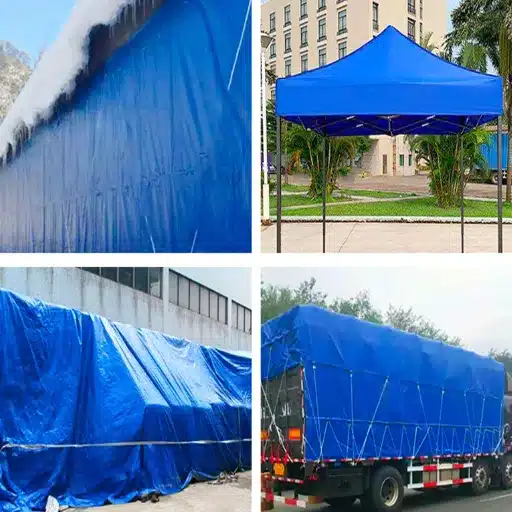
Heavy duty PVC tarpaulin is overspec for a backyard cover and underspec for a permanent stadium roof. The right choice sits in the middle, matched to the application’s stress profile.
Transport and Logistics (650–900 GSM)
Truck covers, trailer curtains, and container tops all face a number of challenges such as wind load, rough edges at tie-down fixing points, and continuous movement. It is an industry standard to make these items out of knife-coated 750 – 900 GSM PVC with reinforced hems of ropes and aluminum eyelets. When it comes to long-haul fleets, it becomes the less expensive option per kilometer for heavy-duty specs that stretches for a longer time before replacing. The truck tarpaulin guide discusses in depth the specifics of the operational requirements of a certain fleet and the specifics of how tarpaulins should be fastened to the truck.
Construction (700–900 GSM)
On construction sites around the world, all sorts of temporary structures, equipment protections, rubbish screens and roofing systems are found to remain for an average period of several weeks up to a year. Wind and wear due to friction of these components in contact with scaffolding tubes are one additional stressor that speeds up degradation. Most construction applications in the present day are scattered across the board and all of them observe fire-retardant requirements as per the prevailing building codes. A mainstay of construction practices in Europe and the Middle East is the requirements for a nine hundred gram per meter square tarpaulin of B1-compliant PVC.
Mining and Heavy Industry (1,000–1,200+ GSM)
Stockpile covers, conveyor protection, and equipment shrouds in mining environments face the worst conditions a tarp encounters: continuous UV, abrasive dust, chemical exposure, and high wind load. Extra heavy duty knife-coated PVC with UV stabilizers and chemical-resistant additives is the only credible option. Lifespans of 10–15 years are realistic when the spec is correct.
Agriculture (Heavy Applications, 750–900 GSM)
Grain stockpile covers, hay bale tarps, and equipment storage during off-seasons benefit from PVC’s combination of waterproofing and UV resistance. Lighter PE or HDPE products work for short-cycle uses, but multi-season grain storage and machinery housing reward heavier PVC.
Architectural and Permanent Structures (900–1,200 GSM)
Membrane buildings, air domes, tensioned fabric roofs, and outdoor event canopies use extra heavy duty PVC for both structural integrity and aesthetic finish. These applications demand consistent GSM, color stability, and a coating method that will not delaminate over a 10+ year service window.
Marine and Flood Protection (850–1,000 GSM)
Boat covers, dock enclosures, and emergency flood barriers need anti-mildew treatment in addition to standard heavy duty specs. Reinforced corners and heat-sealed seams keep water out at stress points.
Working on a project that does not fit a standard tier? Browse our heavy duty waterproof tarpaulin range or contact us with your application details for a tailored specification.
Construction Features That Separate Real Heavy Duty Tarps
Two tarps with the same GSM can perform very differently because of how they are finished. These five features are the difference between a 3-year cover and a 10-year cover.
- Reinforced perimeter: Nylon or polyester webbing hemming with bar-tacking at stress points spreads load across the edge instead of concentrating it on a single seam.
- Heat-sealed seams: High-frequency welding fuses overlapping panels into a continuous waterproof joint. Sewn seams leak under pressure; welded seams do not.
- Hardware: Rust-resistant aluminum or brass D-rings and grommets installed at 50–60 cm spacing, welded to material patches that distribute load instead of tearing through the fabric.
- Edge treatments: Rope-in hems handle high-load tie-downs. Double-folded hems resist abrasion. Both should be standard on any tarp described as heavy duty.
- Optional treatments: UV stabilizer (usually standard on outdoor grades), anti-mildew, fire retardant to B1 / M2 / NFPA 701, anti-static, and color-retention additives. Specify each one explicitly when ordering.
A heavy duty tarp without reinforced hems is not heavy duty. A heavy duty tarp with sewn rather than welded seams will leak inside three rainy seasons. The construction features are not optional details. They are the proof that the GSM number on the spec sheet translates into real-world performance.
Expected Lifespan and Cost-Per-Year-of-Service
Lifespan is the metric that turns a unit price into a value comparison. A cheaper cover that fails twice as fast is not actually cheaper.
| Grade | GSM Range | Construction | Realistic Service Life |
|---|---|---|---|
| Standard heavy duty | 650–750 GSM | Hot laminated or knife coated | 3–5 years (continuous use) |
| Premium heavy duty | 850–1,000 GSM | Knife coated, UV stabilized | 7–10+ years |
| Extra heavy duty | 1,000–1,200+ GSM | Knife coated, full additive package | 10–15 years (permanent install) |
Conditions shorten or extend these ranges. Continuous direct sun, abrasive surfaces, sharp folds during storage, and neglected cleaning all reduce service life. Indoor use, careful storage, and periodic cleaning extend it.
Calculate cost-per-year of service before you compare unit prices. A 900 GSM knife-coated cover at a 30% premium over a 700 GSM hot-laminated alternative often costs less per year of service because it lasts twice as long. For high-cycle applications like trucking and construction, the heavier spec almost always wins on total cost of ownership.
How to Verify a Heavy-Duty PVC Tarpaulin Before You Buy
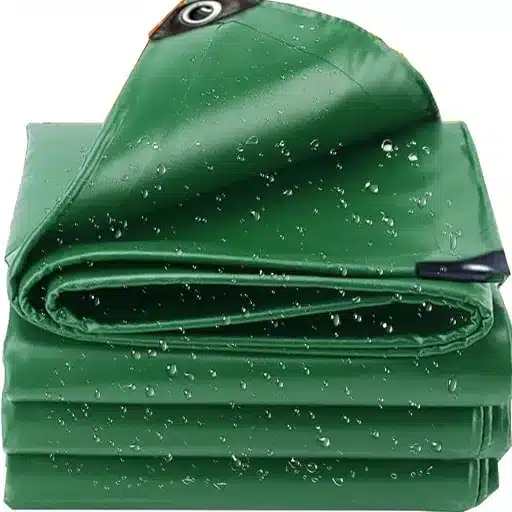
A real factory will welcome these requests. A re-seller or thin-spec supplier will deflect them. The way a supplier responds to verification questions tells you most of what you need to know about the product.
- Request a complete technical data sheet. GSM, base fabric denier, coating method, tensile strength, tear strength, operating temperature, and any certifications should all appear on a single document.
- Ask for a sample. A genuine manufacturer will provide one. The sample lets you inspect the coating, feel the weight, and run your own tests before committing to a full order.
- Weigh the sample. Cut a precise 10×10 cm piece and weigh it in grams. Multiply the weight by 100 to get GSM. Compare to the claimed specification. A result more than ±10 GSM off the spec is a problem.
- Confirm the coating method in writing. Knife coated and hot laminated are not interchangeable. Get the answer documented before the purchase order goes out.
- Verify GSM tolerance. ±10 GSM is the industry norm. Suppliers citing wider tolerances are signaling either inconsistent production or unwillingness to commit to a spec.
- Check certifications. For fire retardant or other regulated treatments, request the certificate from the testing body, not just a marketing claim.
Red flags are easy to spot once you know what to look for: refusal to share specs, “premium quality” claims without numbers, recycled material with no traceability, and inconsistent answers between sales staff and technical staff. If something feels evasive, it usually is.
For broader supplier evaluation criteria across all tarp materials, our tarpaulin manufacturer guide walks through factory capabilities, quality control, and export experience.
Frequently Asked Questions
What GSM is heavy duty PVC tarpaulin?
Heavy duty PVC tarpaulin starts at 650 GSM. Genuine industrial-grade work uses 750–900 GSM, and extra heavy duty applications such as mining or permanent membrane structures use 900–1,200+ GSM. GSM should always be paired with base fabric denier and coating method on a complete data sheet.
How long does heavy duty PVC tarpaulin last?
Service life ranges from 3–5 years for standard heavy duty (650–750 GSM) under continuous use, to 7–10+ years for premium 850–1,000 GSM grades with UV stabilizers, to 10–15 years for extra heavy duty installations in protected conditions. Storage practices and exposure conditions shift these ranges.
Is knife coating better than hot lamination?
For genuine heavy duty applications, yes. Knife coating produces stronger adhesion between PVC resin and polyester scrim, better tear and abrasion resistance, and longer service life. Hot lamination is acceptable for mid-budget applications where a 5–7 year replacement cycle is acceptable.
What is the strongest waterproof tarpaulin?
Knife-coated PVC tarpaulin at 1,000–1,200 GSM with UV stabilizers and reinforced hardware represents the strongest mainstream option. These specifications are used for mining covers, permanent membrane structures, and extreme-condition industrial applications.
What is the price of heavy duty PVC tarpaulin?
Pricing varies with GSM, coating method, base fabric, additives, hardware, and order volume. A meaningful quote requires the full specification, finished size, and quantity. Generic per-square-meter prices without spec context are not comparable across suppliers.
What is 1,000 GSM PVC tarp used for?
1,000 GSM PVC tarpaulin is used for mining stockpile covers, permanent membrane buildings, conveyor protection, heavy machinery shrouds, and any application where 10+ years of continuous outdoor service is required.
Match the Tarp to the Job
Heavy duty PVC tarpaulin is a category, not a guarantee. The label means very little until it is paired with a GSM threshold, a coating method, base fabric specifications, construction features, and a supplier willing to put all of it in writing.
The decision framework is straightforward once the marketing language is set aside:
- Identify your application and the conditions the cover will face.
- Set the minimum GSM based on the tier table — typically 750–900 GSM for industrial use, 900–1,200+ GSM for mining or permanent installations.
- Demand knife coating for prolonged or extreme use; accept hot lamination only for planned mid-cycle replacement.
- Specify construction features in writing — reinforced hems, welded seams, hardware spacing, additives.
- Verify the spec with a sample and a 10×10 cm weight test before you commit to a full order.
A thick PVC tarp to the point it’s not only cost effect for the consumer than on-thinner versions expected to replaced on each schedule will last equipment, load and building for additional years, if not decades . This extra cost will be justified whenever the absence of downtime is more crucial than the price of the new equipment or service outlined in the initial sales order.
Ready to specify the right heavy duty cover? Request a quote from Chenlai — share your application, dimensions, and required certifications, and our specifications team will recommend a knife-coated or laminated build that fits your budget and your service life expectations.