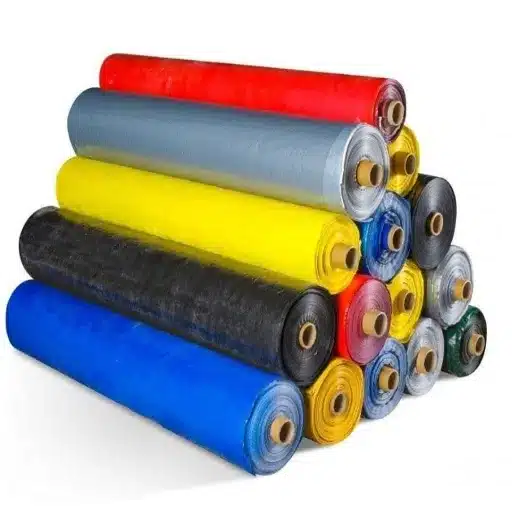
A tarp supplier with low MOQ is a manufacturer or distributor willing to accept smaller minimum orders, typically 500 to 2,000 pieces for stock sizes, or as few as 100 to 500 units for sample and trial runs. Finding one can mean the difference between testing a new product line and committing capital you are not ready to risk.
Last year, a procurement manager named Elena in Warsaw needed 300 custom-printed PVC tarps for a regional outdoor events company. Every factory she contacted demanded 5,000 pieces minimum. She almost gave up. Then she learned that MOQ is not a fixed wall. It is a starting point shaped by material type, production setup, and negotiation strategy. Within three weeks, she secured a trial order at one-tenth the standard volume.
If you are a small business buyer, first-time importer, or contractor who needs tarpaulins without ordering a full container, this guide is for you. You will learn how minimum order quantities work in the tarp industry, what realistic thresholds look like for PE, PVC, and HDPE materials, and how to approach suppliers so both sides win. We will also show you the warning signs that separate flexible partners from factories cutting corners to hit a low number.
Key Takeaways
- Low MOQ tarp suppliers typically accept 500–2,000 pieces for stock sizes and 100–500 for trial orders, depending on material and customization.
- PE tarpaulin usually carries the lowest MOQ, followed by HDPE, then PVC; custom printing and special sizing raise minimums significantly.
- You can often negotiate lower MOQ by accepting stock colors, combining sizes, paying a small per-unit premium, or committing to a larger follow-up order.
- Suppliers offering MOQs far below market rate without clear explanations often sacrifice material quality or skip quality control steps.
- Always start with a sample order, verify specifications with pre-shipment testing, and choose shipping methods matched to your order volume.
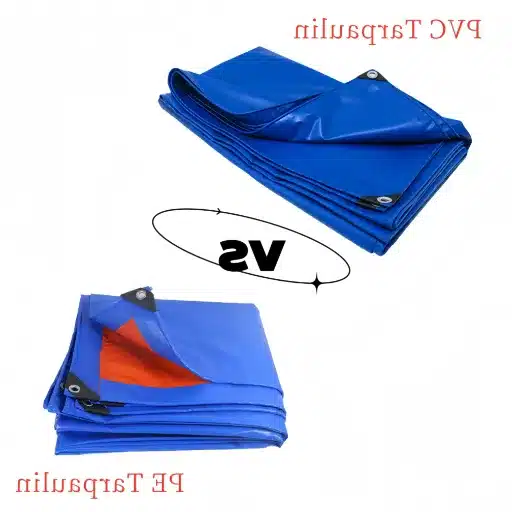
If you are unsure which tarp material fits your application, start with our PE vs PVC tarpaulin comparison. Choosing the right material first makes MOQ negotiation far simpler.
What Is MOQ and Why Does It Matter for Tarpaulin Orders?
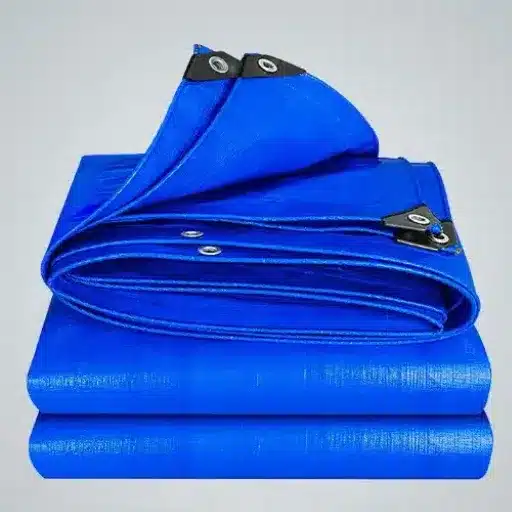
MOQ stands for minimum order quantity. In manufacturing, it is the smallest number of units a supplier will produce in a single production run. Understanding minimum order quantity tarpaulin standards helps buyers set realistic expectations when contacting a tarpaulin supplier with low MOQ options. For tarpaulins, MOQ exists because coated fabrics are produced on wide looms and coating lines designed for continuous runs. Stopping and starting equipment for tiny batches wastes material, time, and labor.
However, not all MOQs are created equal. A stock-size PE tarp in a standard blue color might have an MOQ of 1,000 pieces. A custom-sized PVC truck cover with logo printing and reinforced edges might require 3,000 pieces or more. The gap between those numbers confuses many buyers. Understanding why the gap exists is the first step toward finding a tarp supplier with low MOQ who can still deliver reliable quality.
For small businesses, contractors, and distributors testing a new market, high MOQs create a cash-flow problem. Working with a low MOQ tarp supplier requires understanding why those minimums exist in the first place. Tying up capital in 5,000 tarps you have never sold is risky. That is why flexible minimums matter. They let you validate demand, inspect quality, and build a relationship before scaling up.
Typical MOQ Requirements by Tarpaulin Type
MOQ varies sharply depending on the material and level of customization. Below is a practical breakdown of what buyers typically encounter when sourcing from established manufacturers.
PE Tarpaulin MOQ
PE tarpaulin is manufactured from woven polyethylene fabric laminated with waterproof coating. Because the raw material is widely available and the coating process is highly automated, PE tarps generally carry the lowest minimums.
- Stock sizes and colors: 500 to 2,000 pieces
- Custom sizes: 1,000 to 3,000 pieces
- Custom colors: 2,000 to 5,000 pieces (due to color-matching and coating setup)
If you need a standard 4×6 meter PE tarp for construction or agriculture cover, you can often find a tarpaulin manufacturer willing to start at the lower end of that range.
PVC Tarpaulin MOQ
PVC tarpaulin uses a polyester base fabric coated with polyvinyl chloride. The material is heavier, more durable, and more expensive to produce. Coating lines for PVC run at different speeds and temperatures, and setup costs are higher.
- Stock rolls or standard sizes: 1,000 to 2,000 pieces
- Custom thickness or colors: 2,000 to 5,000 pieces
- Special finishes (fire retardant, anti-static): 3,000+ pieces
Buyers looking for heavy-duty PVC tarpaulin for truck covers or industrial use should expect higher thresholds than PE, but trial orders are still possible with the right supplier.
HDPE Tarpaulin MOQ
HDPE tarpaulin is woven from high-density polyethylene tape and offers excellent strength-to-weight ratio. It is popular in agriculture and logistics.
- Standard agricultural grades: 1,000 to 2,500 pieces
- Greenhouse or specialized weave patterns: 2,000 to 4,000 pieces
HDPE sits between PE and PVC in terms of typical MOQ. Its woven structure requires loom setup, which adds a fixed cost to each production run.
Custom and OEM Tarpaulin MOQ
Customization layers add up quickly. Each modification requires a separate production step:
- Logo printing: +500 to 1,000 pieces
- Custom grommet spacing or reinforced edges: +300 to 500 pieces
- Special packaging or labeling: +200 to 1,000 pieces
A fully custom OEM tarp with private-label packaging can push MOQ to 5,000 pieces or more. However, some OEM tarpaulin manufacturers hold flexible policies for buyers who demonstrate a clear growth plan.
| Tarpaulin Type | Stock Size MOQ | Custom Size/Color MOQ | Fully Custom/OEM MOQ |
|---|---|---|---|
| PE Tarpaulin | 500–2,000 pcs | 1,000–3,000 pcs | 2,000–5,000 pcs |
| PVC Tarpaulin | 1,000–2,000 pcs | 2,000–5,000 pcs | 3,000–5,000+ pcs |
| HDPE Tarpaulin | 1,000–2,500 pcs | 2,000–4,000 pcs | 3,000–5,000 pcs |
Want to explore which material fits your project before worrying about order size? Browse our PE tarpaulin guide and compare specifications by application.
[Embed YouTube video: “Tarpaulin Manufacturing Process” or similar authoritative industry video,placeholder for production embed]
5 Factors That Determine Tarp Supplier MOQ
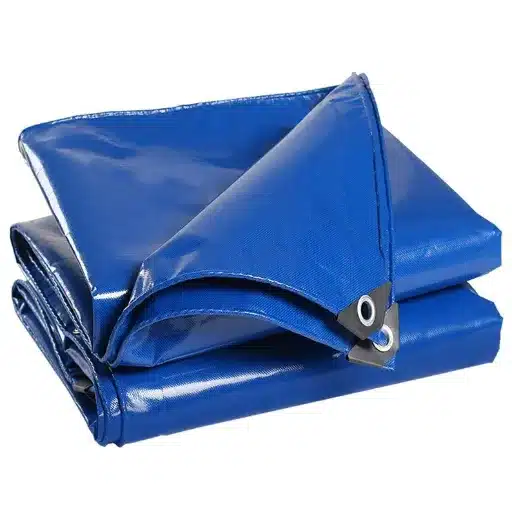
Manufacturers do not pull MOQ numbers from thin air. Every tarpaulin factory minimum order is calculated from real production constraints. When you understand these five factors, you can negotiate from a position of knowledge rather than frustration.
- Material roll width and yield. Tarpaulin fabric is produced in wide rolls, often 1.5 to 3 meters. A factory must run an entire roll to avoid wasting the remaining material. If your order size does not match the yield from one or two rolls, the supplier either absorbs waste or raises the price.
- Coating or lamination run size. PE lamination and PVC coating require chemical mixing, machine heating, and calibration. A coating line might need 1,000 meters minimum just to reach stable output. Shorter runs create uneven coating and higher defect rates.
- Cutting and sewing setup. Custom sizes need dies or programmed cutting tables. Changing dimensions means stopping production, adjusting equipment, and running test pieces. Each setup has a fixed labor cost.
- Customization complexity. Every added feature, heat-sealed seams, aluminum eyelets, printed logos, introduces a separate workstation. Each station needs minimum throughput to justify activation.
- Packaging and shipping consolidation. Small orders cost more per unit to pack and ship. A factory might accept a low piece count but require air freight or express courier, which shifts cost from production to logistics.
Understanding these five factors helps you evaluate any tarp supplier low MOQ claim with confidence. A buyer who walks into negotiation with this knowledge earns respect. More importantly, they can propose solutions, like grouping multiple sizes into one roll width, that genuinely reduce waste and cost.
How to Negotiate Lower MOQ with Tarp Manufacturers
You do not need a massive budget to secure a lower minimum. You need a reasonable request backed by a clear plan. Successful tarp supplier MOQ negotiation starts with understanding production constraints, not just asking for a lower number. Here are six tactics that work in practice.
Start with a sample order. Pay for 5 to 10 pieces upfront. This proves you are serious, lets you test quality, and establishes a relationship before discussing volume.
Accept stock specifications. If you can use a standard color like blue or silver instead of a custom Pantone match, the factory can slot your order into an existing production run. That alone can drop MOQ by 30 to 50 percent.
Pay a small per-unit premium. Factories often accept lower volume if the price per piece covers their setup cost. A 10 to 20 percent premium on a trial order is usually cheaper than over-ordering 3,000 units you cannot sell.
Combine multiple sizes or SKUs. Instead of ordering 500 pieces of one size, ask for 250 pieces each of two sizes that share the same material width. The total roll yield stays efficient.
Request overrun or surplus stock. Some manufacturers hold excess inventory from previous large orders. They may sell it at lower MOQ just to clear warehouse space. B2B marketplaces like Alibaba list suppliers who openly advertise low-MOQ and stock-product terms.
Commit to a follow-up order. If you can sign a letter of intent for a larger repeat order within 90 days, many suppliers will treat your first run as a pilot and relax the minimum.
Marcus, an events coordinator in Lisbon, used two of these tactics last spring. He needed 200 branded PVC tarps for a summer festival series. The factory’s standard MOQ was 3,000. Marcus agreed to a stock gray color and paid a 15 percent premium per unit. The factory accepted the order at 250 pieces, just enough to cover the summer season. After the festival’s success, he placed a 2,000-piece reorder at standard pricing.
Ready to discuss your specific quantity and specifications? Contact our sales team for a project review and flexible quote.
Red Flags to Watch for in Low MOQ Suppliers
Flexibility is valuable, but extreme deviation from standard MOQ should raise questions. A factory promising 100-piece custom orders at half the market price is usually cutting something. Not every tarp supplier low MOQ offer is legitimate. Watch for these warning signs.
Prices far below market rate. If a quote seems too good, the supplier may be using recycled resin, thinner coating, or lower GSM than specified. Always request a material data sheet.
No factory audit or production photos. Legitimate manufacturers welcome video calls and share photos of their coating lines, cutting tables, and quality stations. Refusal to show facilities is a warning sign.
Vague material specifications. A trustworthy supplier states GSM, denier, coating weight, and tensile strength clearly. Evasive answers like “standard quality” or “same as market” signal inconsistency.
Refusal to provide pre-shipment samples. Even for small orders, you should receive a production sample or inspection report before the balance payment. Skipping this step invites unpleasant surprises.
No quality certification or testing records. Reputable factories maintain internal test results for waterproofing, UV resistance, and seam strength. Ask for documentation.
Inconsistent communication. If responses are slow, templated, or evasive during the sales process, expect worse after payment. A reliable partner assigns a dedicated contact and answers technical questions directly. For additional guidance on vetting overseas suppliers, see the U.S. Trade.gov supplier due diligence checklist.
A distributor in Nairobi learned this the hard way. He found a supplier online offering 500 custom PE tarps at 40 percent below the next quote. The tarps arrived with coating that peeled after two weeks of sun exposure. The GSM was 20 percent below specification, and the eyelets pulled out under moderate tension. He saved on the order but lost a retail client. The lesson: low MOQ should not mean low standards.
Small Order Logistics and Quality Assurance
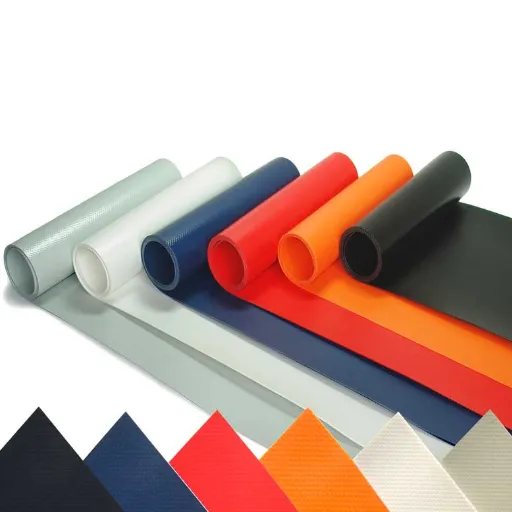
Ordering below standard MOQ changes how you manage shipping and inspection. Small batch tarpaulin orders require different logistics and inspection strategies than container loads. Plan for these differences so your small batch delivers the same quality as a full container load. Even a tarp supplier low MOQ order deserves the same quality checks as a full container load.
Sample orders (5–20 pieces). Use express courier like DHL or FedEx. Transit time is 3 to 7 days. Cost per piece is high, but the goal is validation, not margin.
Trial orders (100–1,000 pieces). Air freight or LCL (less-than-container-load) sea shipping makes sense. LCL takes longer, 20 to 35 days, but costs significantly less per unit than air freight for orders over one cubic meter.
Quality checks on small batches. Do not skip inspection just because the order is small. Test waterproofing with a controlled water spray. Check grommet pull strength with a calibrated scale. Measure GSM with a simple scale and tape measure. Document any deviation from specification immediately.
Shipping method guide by volume:
| Order Volume | Recommended Method | Typical Transit | Best For |
|---|---|---|---|
| Under 1 CBM | Air freight / courier | 3–7 days | Samples, urgent trials |
| 1–15 CBM | LCL sea freight | 20–35 days | Trial orders, seasonal stock |
| 15+ CBM | FCL sea freight | 20–35 days | Standard bulk production |
A construction firm in Vietnam recently ordered 400 PE tarps for a new site. The project manager chose a small order tarp supplier who offered LCL shipping instead of requiring a full container. The tarps arrived in 24 days, passed a simple on-site waterproof test, and the project started on schedule. The slightly higher per-unit shipping cost was negligible compared to the delay of accumulating a full container.
Frequently Asked Questions
What is a good MOQ for a first tarp order?
A good first order depends on your material. For PE tarps, 500 to 1,000 pieces is a reasonable trial volume. For PVC, expect 1,000 to 2,000 for stock specifications. If you only need samples, 5 to 20 pieces is standard. Always confirm the factory can produce your exact GSM and dimensions before committing.
Can I order custom tarps with no minimum?
True zero-MOQ custom tarps do not exist in factory-direct manufacturing. Customization requires machine setup, material mixing, and labor allocation. However, some suppliers offer very low minimums, 100 to 300 pieces, for simple custom sizes in stock colors. For fully branded OEM tarps with custom packaging, 2,000 to 5,000 pieces is typical.
Why do some tarp suppliers refuse small orders?
Suppliers refuse small orders when the production setup cost exceeds the revenue from the batch. Coating lines, loom configuration, and cutting dies all have fixed costs. A factory running at capacity may also prioritize larger clients with stable reorder history. Smaller or specialized manufacturers are often more willing to accommodate trial orders.
How do I verify quality on a low-MOQ order?
Request pre-shipment samples from the production batch. Test waterproofing, measure GSM, and inspect seam stitching and grommet reinforcement. If possible, use a third-party inspection service for orders over 1,000 pieces. Document everything with photos and written records so you have a baseline for future orders.
Conclusion
Finding a tarp supplier with low MOQ is not about searching for the factory with the lowest number on a website. It is about understanding why minimums exist, knowing what realistic thresholds look like for each material, and approaching negotiation with solutions that respect both sides.
PE tarpaulin offers the most accessible entry point for small orders. PVC and HDPE require higher minimums but deliver longer service life for demanding applications. Customization raises the bar, but creative negotiation, stock colors, combined sizes, trial premiums, can bring it back down.
The right partner balances flexible order sizes with transparent quality processes. They explain their constraints, offer sample programs, and treat a 500-piece trial with the same care as a 50,000-piece contract.
At Linyi Chenlai Plastic Products Co., Ltd., we supply waterproof PVC tarpaulin, PE, and HDPE solutions to buyers across construction, agriculture, logistics, and events. Whether you are a distributor seeking a wholesale tarp supplier or a contractor needing project-specific coverage, we work with you to find an order structure that fits your project. Tell us your requirements, and we will tailor a solution that matches your timeline and volume.
Request a Custom Quote and start with the order size that makes sense for your business.