A reliable tarpaulin manufacturer with global shipping handles international delivery through sea freight, air freight, or rail freight, depending on your order volume, budget, and timeline. The right shipping method and Incoterm can cut your logistics costs by 20% or more and prevent costly customs delays.
Most international buyers worry about the same thing. You have found a supplier with competitive pricing and solid product quality. Now you need to know whether your order will arrive on time, intact, and without surprise fees. That uncertainty stops many buyers from placing their first bulk order.
This guide explains exactly how a tarpaulin manufacturer with global shipping manages export logistics. You will learn which shipping method fits your order, how Incoterms affect your responsibilities, what packaging protects your products, and how long delivery takes to your region. By the end, you will have a clear logistics plan for your next order. At LY TRUSTLINK, we focus on producing durable tarpaulin materials that offer excellent waterproof performance, UV resistance, and lasting durability.
Key Takeaways
- Sea freight moves over 80% of bulk tarpaulin exports and offers the lowest cost per square meter for large orders.
- CIF and DDP Incoterms reduce risk for first-time importers by placing shipping responsibility on the manufacturer.
- Proper roll and bale packaging cuts damage rates from 8% to under 2% during international transit.
- Delivery timelines range from 7 days (Asia air freight) to 40 days (East Coast North America sea freight).
- Manufacturers with direct export experience prevent delays through accurate documentation and established freight relationships.
How Tarpaulin Manufacturers Ship Globally: 3 Primary Methods
Tarpaulin manufacturers with global shipping rely on three main transport modes. Each method suits different order sizes, urgency levels, and budget constraints.
Sea Freight (FCL and LCL)
Sea freight remains the dominant method for global tarpaulin shipping. Over 80% of bulk tarpaulin exports move by container ship because the cost per unit drops sharply at volume. A full container load (FCL) gives you exclusive use of a 20-foot or 40-foot container. Less than container load (LCL) lets you share container space with other shippers when your order does not fill a full box.
FCL works best for orders above 15,000 square meters of material or roughly 15 tons. You avoid consolidation delays and reduce handling damage because your cargo stays sealed from factory to destination port. LCL suits smaller test orders or mixed product shipments, though transit times run 5 to 10 days longer due to consolidation at origin and deconsolidation at destination.
When Klaus, a German distributor, placed his first 5,000-square-meter PE tarpaulin order, he chose LCL to limit risk. The shipment arrived intact in Hamburg after 32 days. Six months later, confident in the product quality, he scaled to a 40-foot FCL order. His landed cost per square meter dropped 18% because the fixed ocean freight spread across more material.
Air Freight
Air freight costs significantly more than sea freight, but it solves urgent deadlines. Most air freight tarpaulin orders fall into two categories: sample shipments for quality approval and emergency replenishment for distributors who underestimated demand.
A 2,000-square-meter PVC tarpaulin shipment by air from China to Europe typically delivers in 5 to 7 days versus 25 to 35 days by sea. The trade-off is price. Air freight can cost 8 to 12 times more per kilogram than ocean transport. For lightweight PE tarps or small sample rolls, the premium becomes manageable. For heavy PVC rolls above 500 GSM, the cost often outweighs the speed benefit.
Need a sample delivered quickly for quality verification? Contact our export team to arrange air freight sampling with your specifications.
Rail Freight
Rail freight from China to Europe has grown more than 30% annually over the past five years. The China-Europe rail corridor now offers a middle path between sea and air. Transit times run 12 to 18 days, roughly half the ocean voyage, at a cost about 60% lower than air freight.
Rail works well for medium-volume orders from 5 to 15 tons headed to European inland destinations. The cargo travels in standard shipping containers, so packaging requirements match sea freight. However, rail capacity tightens during peak shipping seasons before Chinese New Year and Q4 holiday demand. Booking 2 to 3 weeks ahead secures space.
Incoterms Explained for Tarpaulin Buyers
Incoterms define who pays for transport, insurance, and customs clearance at each stage. Choosing the wrong term can add unexpected costs or create legal confusion when problems arise.
FOB (Free On Board)
Under FOB, the tarpaulin manufacturer delivers your cargo to the port of departure and loads it onto the vessel. From that point, responsibility shifts to you. You arrange and pay for ocean freight, marine insurance, destination port fees, customs clearance, and final delivery.
FOB suits experienced importers who maintain relationships with freight forwarders and customs brokers. It gives you full control over shipping lines and routing. If you already import regularly from China, FOB often delivers the lowest total landed cost. First-time buyers, however, sometimes underestimate the complexity of managing ocean freight and import documentation.
CIF (Cost, Insurance and Freight)
CIF places more responsibility on the manufacturer. The supplier pays for production, local transport, ocean freight, and basic marine insurance to your destination port. You handle import customs clearance, port unloading, and local delivery.
CIF offers a practical balance for buyers who want predictable shipping costs without managing the ocean leg. The manufacturer negotiates freight rates with their trusted forwarder, and you receive a single all-in price to the destination port. Note that CIF insurance typically covers minimum liability. High-value orders may need supplemental coverage.
DDP (Delivered Duty Paid)
DDP represents the simplest option for the buyer. The tarpaulin manufacturer with global shipping manages everything from factory production through customs clearance to your door. You pay one price and receive the goods at your warehouse.
This convenience comes at a premium. DDP requires the manufacturer to maintain import licenses and tax registration in your country, which not all factories can support. When available, DDP removes all logistics burden and prevents surprise customs bills. It works especially well for buyers in the Middle East, Africa, and Southeast Asia who prefer turnkey delivery.
EXW (Ex Works)
EXW places maximum responsibility on the buyer. You collect the cargo directly from the factory and manage every leg of the journey. EXW can deliver the lowest quoted product price, but the total cost often exceeds FOB once you add domestic transport, export clearance, and ocean freight.
Most international tarpaulin buyers avoid EXW unless they operate a dedicated procurement office in China with established logistics relationships.
Quick Comparison Table
| Incoterm | Manufacturer Handles | Buyer Handles | Best For |
|---|---|---|---|
| FOB | Production + local transport | Ocean freight + import | Experienced buyers with forwarders |
| CIF | Production + ocean freight | Import clearance + local delivery | Buyers who want predictable port costs |
| DDP | Everything | Nothing | Buyers who want turnkey delivery |
| EXW | Nothing | Everything | Buyers with China-based logistics teams |
For a deeper look at how factory-direct pricing works alongside shipping terms, read our guide on China tarp factory direct pricing.
Packaging Tarpaulins for International Transport

Proper packaging determines whether your tarpaulins arrive ready for sale or damaged by moisture, compression, or rough handling.
Roll Packaging for PVC Tarpaulin
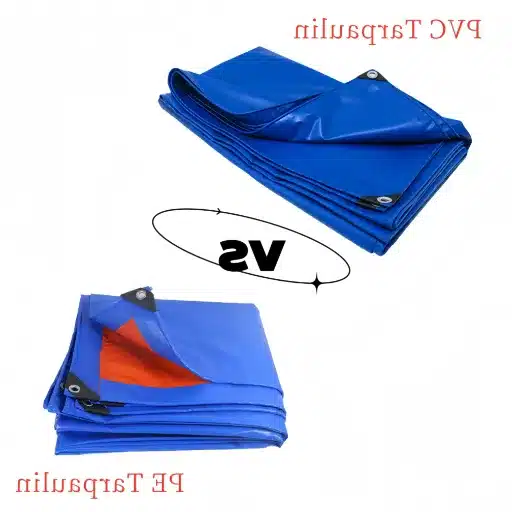
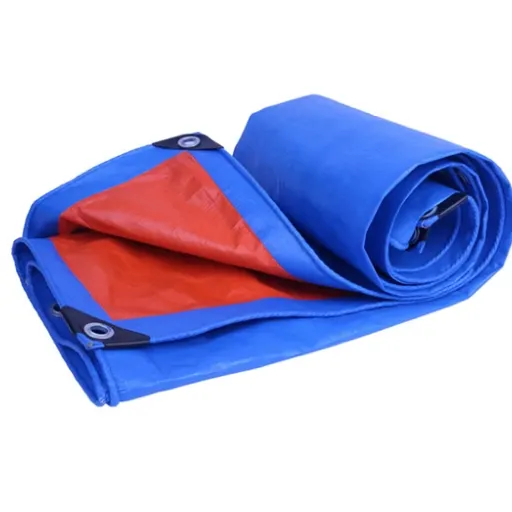
PVC tarpaulin typically ships in rolls wrapped with heavy-duty polyethylene film. Standard roll diameters range from 30 to 60 centimeters depending on ordered length. Each roll receives a cardboard core to prevent collapsing during stacking. The outer film layer blocks moisture and UV exposure during weeks at sea.
For heavy-duty PVC tarpaulin with high GSM, rolls become heavy and dense. Manufacturers often add woven polypropylene outer bags for tear protection during crane loading and unloading.
Bale Packaging for PE and HDPE Sheets
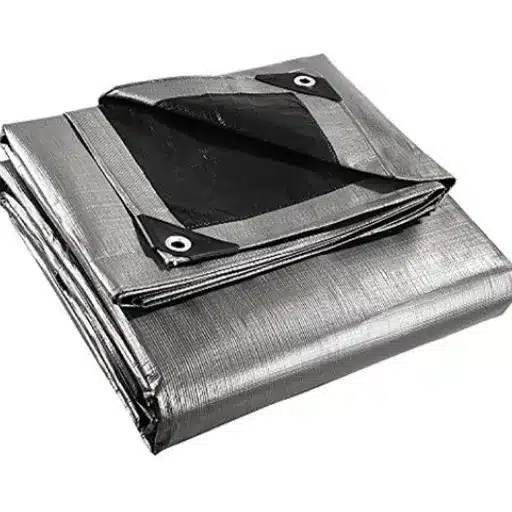
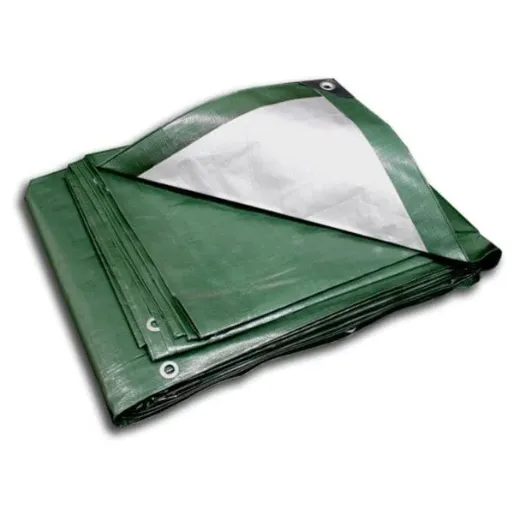
PE and HDPE tarpaulins usually ship as folded bales rather than rolls. Workers fold the sheets to standard bale dimensions, typically 1 meter by 1 meter by 0.8 meters, then compress and strap the bundle with polypropylene bands. Each bale carries a waterproof outer cover.
Bale packaging maximizes container space because the rectangular shape eliminates the air gaps that round rolls create. A 40-foot high-cube container loaded with PE bales can hold 18 to 22 tons of material depending on GSM and fold pattern.
Palletization and Labeling
For air freight or LCL shipments, manufacturers often palletize cargo to simplify handling. Standard wooden pallets measure 1.2 meters by 1.0 meters. Each pallet carries a stack of rolls or bales wrapped in stretch film and corner boards to prevent strap damage.
Every package requires clear labeling: product description, roll or bale dimensions, gross and net weight, destination port, and consignee details. Accurate labels prevent misrouting at transshipment hubs and speed customs inspection.
Container Loading Optimization for Tarpaulin Orders
Smart container loading reduces freight cost per unit and prevents in-transit damage.
20-Foot Versus 40-Foot Containers
A 20-foot container holds roughly 10 to 12 tons of tarpaulin material, while a 40-foot high-cube unit accommodates 18 to 22 tons. If your order exceeds 12 tons, the 40-foot container almost always delivers lower cost per square meter because the ocean freight premium is small relative to the additional volume.
Weight Versus Volume Considerations
Tarpaulins are dense cargo. A 40-foot container filled with 600 GSM PVC rolls reaches maximum weight capacity before it runs out of physical space. In contrast, lightweight 80 GSM PE tarps might cube out the container at only 15 tons. Your manufacturer should calculate the optimal load plan based on your specific GSM and product mix.
Loading Patterns
Experienced loaders place heavier rolls on the container floor and lighter bales on top to maintain stability. They use dunnage bags or timber bracing to prevent shifting during ocean swell. Proper load distribution also ensures the container remains within axle weight limits for truck transport from the destination port.
For buyers managing bulk tarpaulin orders, container loading optimization is one of the easiest ways to reduce landed cost without changing product specifications.
Customs, Documentation, and Import Requirements
Incomplete paperwork causes more shipping delays than storms at sea. A prepared tarpaulin manufacturer with global shipping submits accurate documentation before the cargo ever reaches the port.
Common HS Codes
Tarpaulins typically fall under HS code 3921.90 for plastic sheeting or 6306.12 for textile tarpaulins, depending on material composition and coating type. Correct classification matters because duty rates differ between codes. Misclassification can trigger customs holds, fines, or forced reclassification at higher duty rates.
Required Documents
Every international shipment needs at least five documents:
- Commercial invoice: States product description, quantity, unit price, and total value.
- Packing list: Details each package’s contents, dimensions, and weight.
- Bill of lading: Serves as the contract of carriage and title document.
- Certificate of origin: Confirms manufacturing country for duty calculations under trade agreements.
- Quality inspection certificate: Verifies that goods meet agreed specifications (often required for industrial buyers).
Import Duties and Tariffs
Import duty on tarpaulins ranges from 0% to 12.5% depending on destination country and active trade agreements. The EU generally applies 6.5% on plastic tarpaulins under HS 3921.90. The United States levies duties based on HTS subheading with rates from 3% to 7.5%. Many Middle Eastern and African countries offer duty exemptions for industrial raw materials. Your manufacturer or freight forwarder can confirm the exact rate for your country.
When Amara, a procurement manager for a Nigerian construction firm, imported her first 40-foot container of PVC tarps, she assumed duty would apply at the standard rate. Her manufacturer pointed out that Nigeria exempts construction materials from import duty under current industrial policy. The certificate of origin she received from the factory saved her over $4,200 in unexpected costs. Contact LY TRUSTLINK to discover premium tarpaulin manufacturing solutions built for strength, weather resistance, and long-term industrial use.
Delivery Timelines by Region
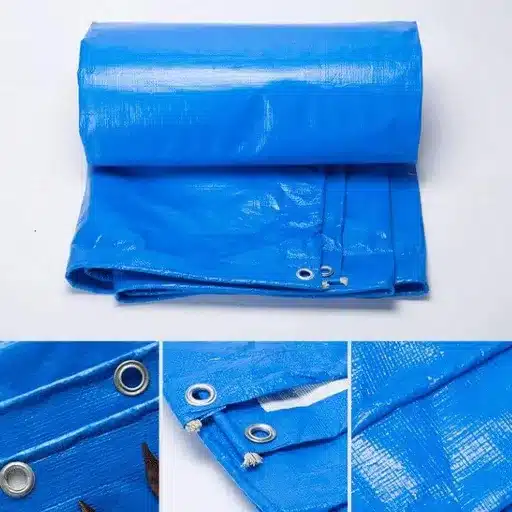
Accurate timeline planning helps you schedule inventory arrivals and avoid stockouts.
| Region | Sea Freight | Rail Freight | Air Freight |
|---|---|---|---|
| Asia | 7–14 days | Not typical | 3–5 days |
| Europe | 25–35 days | 12–18 days | 5–7 days |
| North America (West Coast) | 20–30 days | Not typical | 5–7 days |
| North America (East Coast) | 30–40 days | Not typical | 6–8 days |
| Middle East | 15–25 days | Not typical | 4–6 days |
| Africa | 25–40 days | Not typical | 5–8 days |
| Australia and Oceania | 20–30 days | Not typical | 5–7 days |
These timelines start from the day the cargo departs the origin port, not from order placement. Add 7 to 14 days for production and factory-to-port transport when planning your total lead time.
Factors That Affect Timelines
Port congestion can add 3 to 10 days at major hubs like Los Angeles, Rotterdam, or Singapore. Customs inspections, though random, delay clearance by 2 to 5 days when triggered. Peak season congestion before Chinese New Year (January to February) and Q4 holiday demand (October to December) often extends transit by 5 to 14 days. Booking production and shipping 4 to 6 weeks ahead of peak periods keeps your delivery on schedule.
Tracking, Communication, and Handling Delays
Transparency during transit separates reliable manufacturers from suppliers who disappear after dispatch.
Shipment Tracking
Most ocean carriers provide container tracking through their websites using the bill of lading number or container ID. Rail shipments offer similar tracking through China Railway Express portals. Air freight tracking updates more frequently through airline cargo systems.
Your manufacturer should proactively share tracking numbers and carrier contact details within 24 hours of departure.
Communication During Transit
A professional tarpaulin manufacturer with global shipping sends updates at three milestones: cargo loaded on vessel, vessel departure confirmed, and cargo approaching destination port. If transshipment occurs at a hub port, they should notify you of the connecting vessel.
Handling Damaged or Delayed Shipments
Despite careful packaging, damage occasionally happens. Properly packaged tarpaulin rolls experience less than 2% damage rate during international transit. Improper packaging pushes this above 8%. If rolls arrive wet, torn, or crushed, document the damage immediately with photos and notify the carrier and manufacturer within 48 hours.
Marine insurance, included under CIF and DDP terms, covers most physical loss. Under FOB, your forwarder’s insurance or your own policy handles claims. A manufacturer with export experience will guide you through the claims process and arrange replacement production if needed.
Why Shipping Experience Matters in a Tarpaulin Manufacturer
Production quality means little if your order arrives late, damaged, or stuck in customs. Logistics competence is a core capability that many buyers overlook when vetting a manufacturer.
Manufacturers who handle their own exports daily understand how to package rolls so they survive crane drops and ocean humidity. They know which HS codes minimize duty exposure in your country. They maintain relationships with freight forwarders who reserve container space even during peak season. They prepare documentation accurately the first time, preventing the customs delays that plague inexperienced exporters.
At Linyi Chenlai Plastic Products Co., Ltd., we have exported tarpaulins to Europe, North America, the Middle East, Africa, and Southeast Asia for over 20 years. We have shipped PE, PVC, and HDPE tarpaulins by sea, air, and rail. We know that reliable logistics support is not an afterthought. It is part of the product promise.
Ready to plan your international tarpaulin shipment? Request a shipping-inclusive quote and our export team will recommend the best method, Incoterm, and timeline for your order.
Conclusion
Choosing a tarpaulin manufacturer with global shipping means more than checking a box on a supplier profile. It means understanding how sea, air, and rail freight fit different order profiles. It means selecting the right Incoterm so you neither overpay for convenience nor underestimate your responsibilities. It means demanding proper packaging that protects your investment across thousands of kilometers.
The formula is straightforward. Match your shipping method to your volume and urgency. Choose an Incoterm that fits your logistics experience. Plan timelines around real regional data, not optimistic guesses. Then select a manufacturing partner who treats delivery reliability with the same rigor as product quality.
For a complete overview of what to look for in a manufacturing partner beyond logistics, see our tarpaulin manufacturer guide. If you are ready to discuss your specific order, contact our team for a customized export and delivery plan.