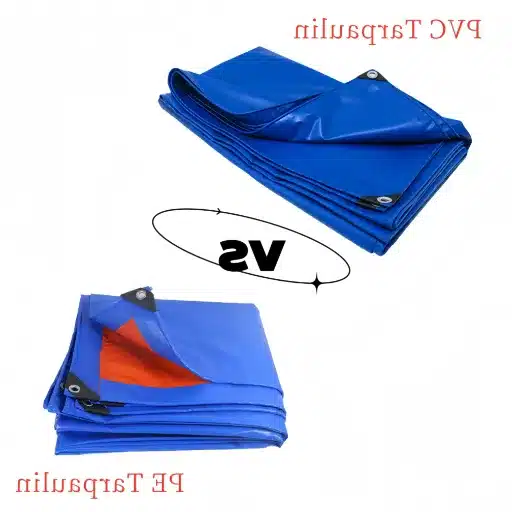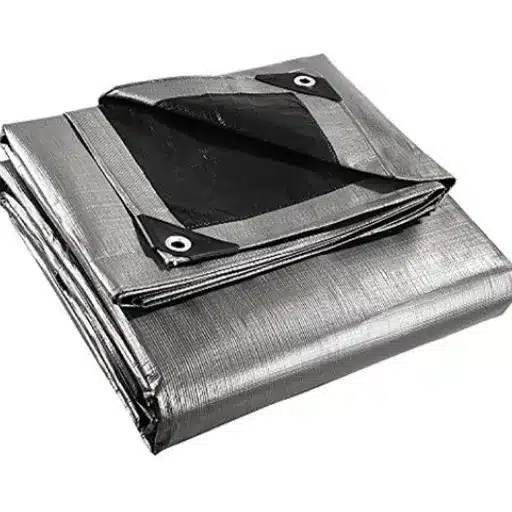
The best industrial tarp suppliers offer heavy-duty PVC, PE, and HDPE tarpaulins with verified quality certifications, custom sizing, and the production capacity to handle large-volume orders consistently. Here’s how to find one that meets your project requirements.
When a construction firm in Dubai lost $47,000 worth of steel reinforcement to unexpected desert rainstorms in 2024, the root cause wasn’t the weather. It was the tarp. The supplier had shipped standard-grade covers marketed as “heavy duty” — but the material had a GSM rating far below what industrial applications demand. The tarps failed within three months.
This scenario plays out across industries every year. Mining operations, logistics companies, and manufacturers all depend on tarpaulins that can withstand extreme conditions. Yet many buyers struggle to distinguish a true industrial tarp supplier from a general seller that simply applies “heavy duty” labels to consumer-grade products. Choosing the right industrial tarpaulin supplier means understanding material specifications, certifications, and production capabilities before committing to an order.
This guide explains what defines industrial-grade tarpaulins, which materials perform best in demanding environments, and how to evaluate a supplier before placing an order. At LY TRUSTLINK, we focus on producing durable tarpaulin materials that offer excellent waterproof performance, UV resistance, and lasting durability.
Key Takeaways
- Industrial-grade tarps start at 200+ GSM with reinforced coatings, far exceeding standard consumer products in tensile strength and weather resistance
- PVC tarpaulins dominate industrial applications requiring fire retardancy and chemical resistance, while PE/HDPE suits construction and agricultural protection
- Fire retardant certifications (NFPA 701, CPAI-84) are legally required on 80%+ of commercial construction sites
- The cheapest industrial tarp typically costs 2-3x more over its lifespan due to frequent replacement and equipment damage
- A reliable industrial tarp supplier should offer custom sizes, verified quality control, and export logistics support
What Defines an Industrial-Grade Tarpaulin?
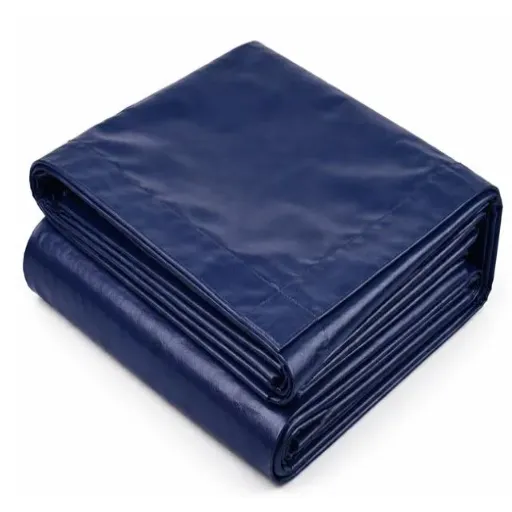
Not every tarp sold as “industrial” meets the specifications that demanding applications require. Understanding the technical benchmarks helps you separate genuine industrial-grade products from marketing claims.
Material Specifications That Matter
Industrial tarpaulins are built to handle mechanical stress, chemical exposure, and prolonged outdoor deployment. The key specifications include:
- Tensile strength: Measured in N/5cm (Newtons per 5 centimeters). Industrial PVC tarps typically exceed 2000 N/5cm in both warp and weft directions, compared to 800-1200 N/5cm for standard consumer products.
- Tear resistance: The force required to propagate a tear. Industrial-grade materials resist tears above 250 N, while consumer tarps often fail at 100-150 N.
- Temperature tolerance: Industrial tarps function reliably from -30 degrees C to +70 degrees C, depending on material type. PVC performs better in cold environments, while PE handles heat well.
- Chemical resistance: PVC tarpaulins resist oils, acids, and alkalis, making them essential for manufacturing and oil/gas applications.
Key Differences: Industrial vs. Consumer Tarps
| Specification | Consumer Grade | Industrial Grade |
|---|---|---|
| GSM (weight) | 60-120 g/m2 | 200-900 g/m2 |
| Coating thickness | Single layer, thin | Multi-layer laminated |
| Grommets | Plastic, widely spaced | Brass/stainless steel, reinforced |
| UV resistance | Basic | Advanced UV stabilizers |
| Expected lifespan | 6-18 months | 3-7 years |
| Fire retardant | No | Optional/standard |
The GSM rating alone tells you a lot. A 200 GSM PE tarp handles construction site duties. A 500+ GSM PVC tarp withstands welding sparks and oil exposure. At 700-900 GSM, you’re looking at heavy-duty covers for mining and long-haul transport.
Industrial Tarp Materials: Choosing the Right Protection
The material you select determines how well a tarp performs in your specific environment. Each type offers distinct advantages for different industrial scenarios.
PVC Tarpaulins for Industrial Use
PVC (polyvinyl chloride) tarpaulins are the workhorses of industrial protection. The polyester fabric base is coated with PVC on both sides, creating a dense, waterproof barrier that resists fire, chemicals, and abrasion.
Key advantages for industrial buyers:
- Fire retardant properties: PVC tarps meet NFPA 701 and CPAI-84 fire safety standards, making them mandatory on most commercial construction sites. Explore our PVC tarpaulin specifications for detailed technical data.
- Chemical and oil resistance: Essential for manufacturing plants, oil refineries, and chemical storage areas where spills are a risk.
- Heavy-duty waterproofing: The laminated PVC coating provides complete moisture barrier protection, even under prolonged rain exposure.
- Long lifespan: Industrial PVC tarps last 5-7 years with proper maintenance, far outlasting PE alternatives in harsh conditions.
PVC tarpaulins range from 500 GSM (standard industrial) to 900+ GSM (extreme heavy duty). Thicker materials suit mining, construction, and long-term outdoor storage.
PE and HDPE Tarpaulins for Industrial Applications
Polyethylene (PE) and high-density polyethylene (HDPE) tarpaulins offer a lighter, more cost-effective alternative for applications that don’t require fire retardancy.
Key advantages:
- UV resistance: HDPE woven tarps include UV stabilizers that prevent degradation under prolonged sunlight exposure. Learn more about HDPE tarpaulin capabilities for agricultural and construction uses.
- Lightweight handling: At 30-50% lighter than PVC of equivalent GSM, PE tarps are easier to deploy and reposition on job sites.
- Cost-effective bulk supply: PE tarps cost significantly less per square meter, making them ideal for large-area coverage needs.
- Recyclable material: HDPE is fully recyclable, supporting sustainability goals for environmentally conscious operations.
PE/HDPE tarps work well for construction site covering, agricultural protection, warehouse storage, and temporary shelters. See our PE tarpaulin options for specifications and customization details.
Material Comparison: PVC vs PE vs HDPE
| Feature | PVC | PE | HDPE |
|---|---|---|---|
| Weight | Heavy | Light | Medium |
| Waterproof | Excellent | Good | Good |
| Fire retardant | Yes | No | No |
| Chemical resistance | High | Moderate | Moderate |
| UV resistance | Good | Moderate | Excellent |
| Typical GSM range | 500-900 | 80-200 | 100-300 |
| Lifespan | 5-7 years | 1-3 years | 2-5 years |
| Best for | Manufacturing, oil/gas, welding | General construction, temporary covers | Agriculture, long-term outdoor storage |
| Cost per m2 | Higher | Lower | Medium |
Industrial Applications: Where Heavy-Duty Tarps Are Essential
Different industries place different demands on tarpaulin materials. Matching the tarp to the application prevents premature failure and protects valuable assets.
Construction and Infrastructure
Construction sites are among the most demanding environments for tarpaulins. Covers must handle wind, rain, UV exposure, and in many cases, fire safety regulations.
Common uses:
- Scaffolding sheeting and enclosure systems
- Debris containment and dust barriers
- Weather protection for concrete curing
- Equipment and material storage covers
Fire-retardant tarps are required on most commercial construction sites by local building codes. A reliable industrial tarp supplier provides documentation proving compliance with NFPA 701 or equivalent standards. Explore fire-retardant PVC tarpaulin options for construction site protection.
Mining and Oil/Gas
Mining and petroleum operations expose tarps to extreme conditions: abrasive dust, chemical spills, temperature swings, and constant mechanical stress.
Requirements for this sector:
- High chemical resistance (oils, solvents, drilling fluids)
- Tear strength above 300 N to handle sharp mineral edges
- Temperature tolerance for both extreme heat and cold
- UV resistance for prolonged desert or high-altitude exposure
PVC tarpaulins are the standard choice for these environments due to their chemical resistance and durability.
Manufacturing and Warehousing
Factory floors and warehouses need tarps for machine covers, dust barriers, paint booth enclosures, and storage protection. The key requirement here is consistent quality across large orders — a single warehouse might need 50+ identical covers.
Industrial tarp supplier capabilities that matter:
- Custom sizing to fit specific equipment dimensions
- Consistent GSM and coating thickness across production runs
- Reinforced edges and D-ring attachment points
- Anti-static options for electronics manufacturing areas
Logistics and Transportation
Flatbed truck covers, container linings, and cargo protection tarps face constant wind stress, rain exposure, and loading abrasion. Explore truck tarpaulin covers designed for fleet protection.
Key specifications:
- High tear resistance at stress points (grommets, corners)
- Wind resistance rated for highway speeds
- Secure fastening systems (D-rings, webbing, ratchet straps)
- Waterproofing for multi-day transit in adverse weather
Marine and Port Operations
Port environments combine saltwater corrosion, intense UV exposure, and heavy mechanical loads. Standard tarps degrade rapidly in marine conditions.
Marine-grade requirements:
- Saltwater-resistant coatings
- UV stabilizers rated for tropical or high-altitude exposure
- Anti-mildew treatments for humid environments
- Reinforced grommets that resist corrosion
Certifications and Standards for Industrial Tarps
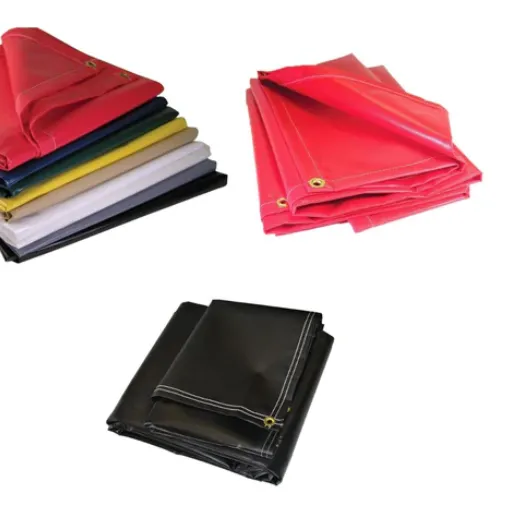
Industrial buyers face compliance requirements that consumer purchasers never encounter. Understanding the relevant certifications protects you from liability and ensures your tarps perform as specified.
Fire Retardant Standards
Fire retardant tarpaulins are not optional in many industrial settings. The key standards include:
- NFPA 701: The National Fire Protection Association standard for flame propagation of textiles and films. Required in most U.S. jurisdictions for construction site covers, event tents, and temporary structures.
- CPAI-84: The Canvas Products Association International standard for flame resistance of camping tents and canopies. Often referenced in industrial specifications.
- BS 5867: The British Standard for flame retardant fabrics used in curtains and drapes. Relevant for international projects requiring European compliance.
A qualified industrial tarp supplier provides test certificates for each batch, not just general compliance claims.
Quality Management Certifications
- ISO 9001: Verifies that the manufacturer follows documented quality management processes. This certification covers everything from raw material inspection to final product testing.
- Material testing: Third-party lab reports confirming GSM, tensile strength, tear resistance, and coating adhesion.
Industry-Specific Requirements
Different sectors impose additional requirements:
- Construction: Local fire codes, OSHA safety regulations
- Transportation: Cargo securing standards (EN 12642 for European logistics)
- Agriculture: Food-safety compliance for tarps used near crops or livestock
- Mining: Explosion-proof and anti-static requirements in certain zones
How to Evaluate an Industrial Tarp Supplier
Choosing the right industrial tarp supplier requires looking beyond price sheets and product catalogs. These evaluation criteria help you identify partners who deliver consistent quality at scale.
1. Verify Actual Manufacturing Capability
Many companies that present themselves as industrial tarp suppliers are actually trading companies or resellers. The difference matters: trading companies add markup, have limited quality control, and cannot customize production.
How to verify:
- Request factory photos and video tours
- Ask for production equipment specifications
- Check for ISO 9001 certification (manufacturing standard, not trading)
- Verify export licenses and customs documentation capabilities
Learn more about choosing the right tarpaulin manufacturer for a detailed factory vetting framework.
2. Assess Production Capacity and Consistency
Industrial buyers often need hundreds or thousands of identical tarpaulins. A supplier that handles small custom orders well may struggle with large-volume production runs.
Questions to ask:
- What is your monthly production capacity in square meters?
- How do you ensure GSM consistency across a 5,000-piece order?
- What is your defect rate, and how do you handle replacements?
- Can you provide sample production runs before full orders?
3. Review Quality Control Processes
A credible industrial tarp supplier documents their quality control at every stage:
- Raw material inspection: Testing incoming PVC resin, PE pellets, and fabric for GSM and composition
- In-process checks: Monitoring coating thickness, lamination adhesion, and stitching quality during production
- Final product testing: Random sampling for tensile strength, tear resistance, waterproofing, and grommet strength
- Packaging inspection: Verifying correct sizing, labeling, and protective packaging for export
4. Evaluate Customization Capabilities
Industrial applications rarely fit standard catalog sizes. Look for suppliers offering:
- Custom dimensions (length, width, and shape)
- Variable GSM and coating options
- Reinforced edges, D-rings, webbing, and custom grommet placement
- Logo printing and color matching
- Custom packaging for retail or distribution
Experienced industrial tarp manufacturers offer these customization options as standard for bulk orders.
5. Confirm Export Experience and Logistics
International industrial buyers need suppliers who understand shipping documentation, customs requirements, and container optimization.
Key capabilities:
- Experience shipping to your destination country
- Familiarity with FOB, CIF, and DDP terms
- Proper export packaging to prevent transit damage
- Container loading optimization for cost efficiency
- Documentation support (commercial invoices, packing lists, certificates of origin)
6. Test Communication and Technical Support
Pre-sale consultation quality predicts after-sale support. A strong industrial tarp supplier:
- Responds to technical inquiries within 24 hours
- Provides material samples before order confirmation
- Offers specification sheets and test reports proactively
- Assigns dedicated account managers for large orders
Total Cost of Ownership: Beyond the Purchase Price
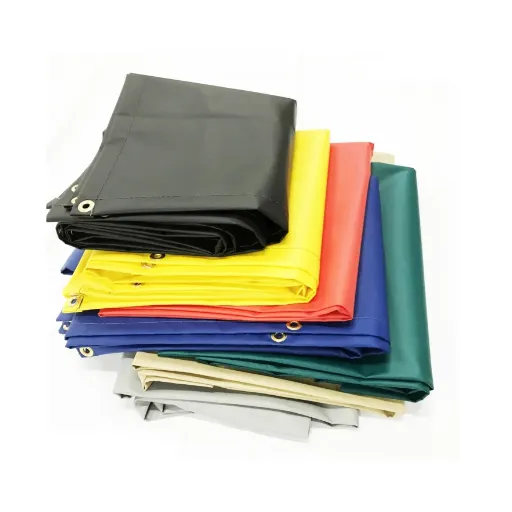
The cheapest industrial tarp is rarely the most economical choice. Total cost of ownership accounts for replacement frequency, protection effectiveness, and operational disruption.
Why the Cheapest Tarp Costs More
Consider a warehouse operation covering $200,000 in stored materials:
| Factor | Low-Cost Tarp | Quality Industrial Tarp |
|---|---|---|
| Purchase price | $3 per m2 | $5 per m2 |
| Expected lifespan | 12 months | 48 months |
| Replacements over 4 years | 4 | 1 |
| Total material cost (per m2, 4 years) | $12 | $5 |
| Equipment damage incidents | 2-3 per year | <1 per year |
| Estimated damage cost per incident | 2,000−2,000−10,000 | N/A |
The initial savings of $2 per square meter disappear after the first tarp failure. Over four years, the low-cost option costs 2-3x more when you factor in replacements and damage.
Calculating Long-Term Value
To compare suppliers accurately, calculate:
Cost per year of protection = (Purchase price + Installation cost) / Expected lifespan in years
Risk-adjusted cost = Cost per year + (Probability of failure x Average damage cost)
A quality industrial tarp at 5/m2witha4−yearlifespancosts5/m2witha4−yearlifespancosts1.25 per year of protection. A 3/m2tarplasting12monthscosts3/m2tarplasting12monthscosts3.00 per year — and carries significantly higher failure risk.
FAQ: Industrial Tarp Supplier Questions
What GSM is considered industrial grade?
Industrial-grade tarpaulins typically start at 200 GSM for PE materials and 500 GSM for PVC. Heavy-duty applications like mining, oil/gas, and long-haul transport require 500-900 GSM PVC. The right GSM depends on your specific application — construction site covers work well at 200-300 GSM (PE/HDPE), while manufacturing environments need 500+ GSM PVC for chemical and fire resistance.
How long do industrial tarps typically last?
Industrial PVC tarpaulins last 5-7 years with proper maintenance. PE tarps last 1-3 years depending on UV exposure and weather conditions. HDPE tarps fall in between at 2-5 years. Lifespan depends on material quality, GSM rating, environmental exposure, and how well the tarp is maintained. UV-stabilized materials last significantly longer in outdoor applications.
Can industrial tarps withstand extreme temperatures?
Yes. Industrial PVC tarpaulins function reliably from -30 degrees C to +70 degrees C. PE tarps handle -20 degrees C to +60 degrees C. For extreme cold environments (arctic operations), specialized cold-resistant PVC formulations are available. For extreme heat (steel mills, foundries), high-temperature PVC coatings provide additional protection.
What is the MOQ for industrial tarp orders?
Minimum order quantities vary by supplier and product type. Standard industrial tarps often have MOQs of 500-1,000 square meters. Custom specifications (non-standard sizes, colors, or coatings) may require 2,000-5,000 square meters. Some suppliers offer lower MOQs for sample orders or trial runs before committing to full production.
Do you offer fire retardant industrial tarps?
Yes. Fire retardant PVC tarpaulins are a core industrial product. These tarps meet NFPA 701 and CPAI-84 standards, which are required on most commercial construction sites and many industrial installations. Fire retardant certification comes with batch-specific test reports from accredited laboratories.
Can I get custom sizes for industrial applications?
Custom sizing is standard for industrial orders. You can specify exact length, width, and shape, along with custom grommet placement, reinforced edges, D-rings, webbing, and logo printing. Custom orders typically require 2-4 weeks of production time depending on specifications and volume.
Conclusion: Choose a Supplier Built for Industrial Demands
Industrial applications demand more from tarpaulins than standard commercial or residential uses. The right industrial tarp supplier understands the difference and delivers products built to handle extreme conditions consistently.
When evaluating suppliers, focus on five criteria: verified manufacturing capability, documented quality control, material expertise across PVC/PE/HDPE, customization flexibility, and reliable export logistics. A supplier that meets all five becomes a long-term partner, not just a vendor.
The lowest purchase price rarely delivers the best value. Calculate total cost of ownership including replacement frequency, protection reliability, and operational risk. A quality industrial tarp that costs 40% more upfront often saves 60% over its full lifespan.
Ready to discuss your industrial tarp requirements? Contact our team for a custom quote, or explore our manufacturing capabilities to see how we serve industrial buyers worldwide.