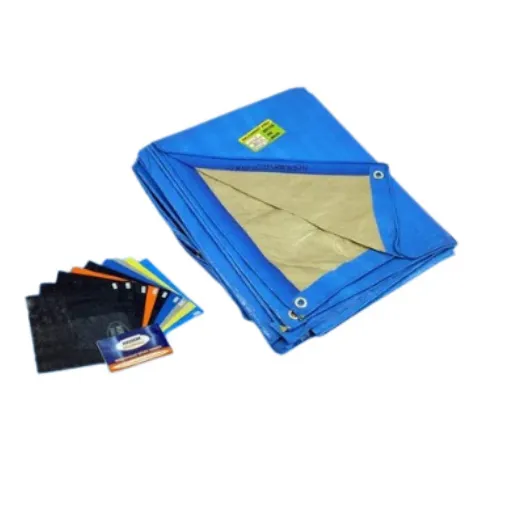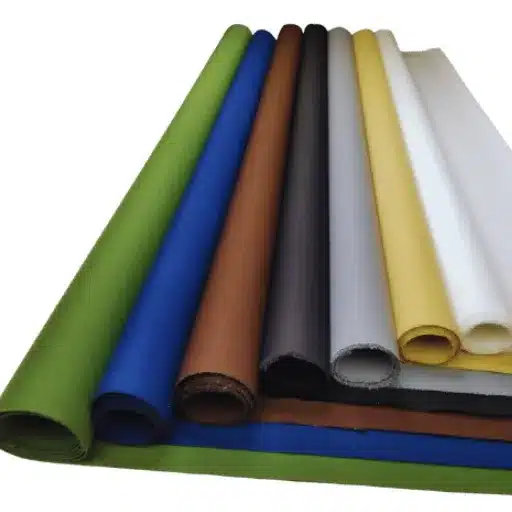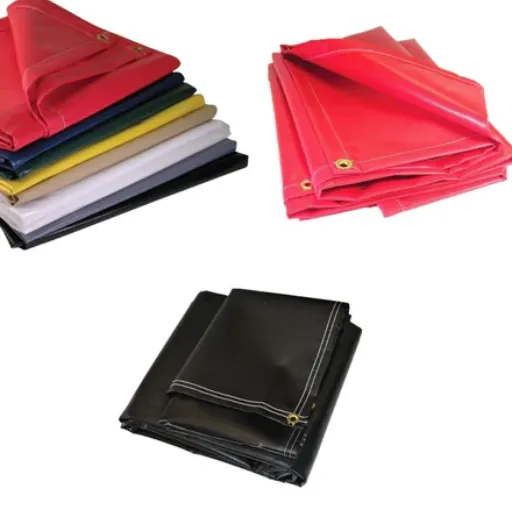
When you are running short on budget and you need to work on some brief projects in a couple of weeks which require ease in handability and supplanting, you should most probably consider PE Tarpaulin. While this material is useful only in those areas where the projects calls for extreme weather and heavy pressures, it has to be however realized that the PVC Tarpaulin is the preferred choice. This is because it is heavy duty in weight and provides protection due to its thickness and fire retardant capacity also. In cases of construction work, it is highly likely that different tarpaulin materials will be required for different projects. Don’t hesitate to connect with us—our team is ready to help you with any questions you may have.
A couple of months ago, a scaffolding contractor in South East Asia placed an order for PE tarpaulin for concealing the scaffolding for one of the buildings. This 6month project was eventually prolonged and maintained for upward of 18 months using 3 different tarpaulin sheets for the same structure. The money saved at the beginning started getting eaten at from the events of the polyethylene tarpaulin sheets leaving the stage of rehabilitation. A PVC tarpaulin sheet was used on the adjacent site’s contractor however. That sheet is still giving fulltime service till this day.
Picking the right material for a tarpaulin is undoubtedly the most crucial factor since it is this choice that defines the longevity, cost and protection level given on tarpaulin. Despite this reason, most people are left to rely on very generic product information that does not provide the actual working details about materials.
In this review, the materials are compared from the production standpoint. It also explains what differentiates them in terms of composition, quality characteristics, performance data and other work requirements. For civil engineering, agriculture, logistics or even industrial applications, you get to know that which materials could be effective in those areas. After all, you will be guided in a clear and practical decision making process with regard to the materials in which to construct a given object and not just another set of boasts or promises.
Key Takeaways
- PE tarpaulin uses woven HDPE fabric laminated with LDPE coating. It is lightweight, flexible, and cost-effective for short-term use lasting 1 to 3 years.
- PVC tarpaulin uses polyester fabric coated with PVC resin. It is heavy-duty, rigid, and designed for demanding applications lasting 5 to 10-plus years.
- PE wins on upfront cost, portability, and seasonal flexibility. PVC wins on tear strength, fire resistance, chemical resistance, and long-term value.
- Total cost of ownership often favors PVC for multi-year projects because replacement cycles are two to three times longer.
- Customization options differ by material: PE allows lower MOQ and easier folding, while PVC supports stronger grommets and fire-retardant grades.
What Is PE Tarpaulin?
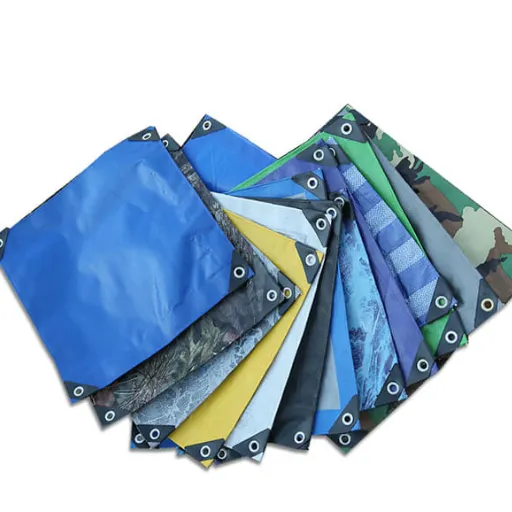
When it comes to PE tarpaulin, it is prudent to note that the primary material is LLDPE which uses LDPE for the coating. In simple terms, linear low-density polyethylene (LLDPE) is the solid fabric happily welcomes a coating of liquid LDPE, forming the ultimate substance for all waterproof coverings. PE tarps can count on noted costs especially as compared to the PVC alternatives.
In order to produce fabric at our factory, one must first into the grid pattern the HDPE strip yarn that provides an interconnected base. This grid bears most of the tensile load while the material serves as the buffer against perforation. Next, LDPE, which serves the purpose of providing a slip layer to minimize chafing and anti-static properties etc., is provided as a coating to every side by a hot-lamination machine. The laminate also makes the fabric impermeable to water, enhances its appearance and initially eases cleaning of the fabric. Alternatively, if requested, appropriate UV stabilizers can be compounded during extrusion suitable for the application to be subjected in the outdoors.
The typical range of these tarps, particularly PE ones, lay between 180 to 400 GSM. The thickness usually falls within the range of six to 30 mil. As such the product can be in a variety of temperatures – freezing cold at -15°C and sun – heated at +70°C. It also has the advantage of being pliable and when not needed can be folded and stored in a very small place. DIC Corp’s PE tarpaulin materials’ stiffness is also much lower than that of similar dimensions PVC.
PE tarpaulin comes in several formats. Sheet formats suit construction covers and ground protection. Roll formats work well for agricultural greenhouse installation and large-scale draping. PE tarpaulin sheets and PE tarpaulin rolls offer flexibility depending on your deployment method.
The primary advantage of PE is its balance of performance and economy. For projects where tarpaulin serves a temporary or seasonal role, PE delivers adequate protection without unnecessary expenditure. It is also the preferred choice when weight and portability matter, such as disaster relief operations or recreational camping.
Want to explore PE specifications in detail? See our complete PE tarpaulin guide.
What Is PVC Tarpaulin?
A PVC tarpaulin is an item which is basically a polyester fabric that is coated in a protective layer of polyvinyl chloride resin. This makes the fabric more hardwearing anddurable than some other materials in strenuous and severe conditions.
To make PVC tarpaulin, processes that require the film to be cooked on a stentering frame are put into use to get polyvinyl resin mixed with the polyester knitted scrim. More layers make the material even thicker and denser. It is also possible to incorporate extra components like plasticizers, ultraviolet light blocking agents and even fire resistant agents in the film to satisfy the necessary performance standards for many applications
A standard tarpaulin made of PVC usually ranges from 400 to 1,200 gsm. Thickness is generally in the range of 0.35 mm to 1.0 mm. As compared to PE, this material is suitable for a broader range of temperatures as it remains UV resistant in them which ranges from -30°C to +70°C. The fabric’s tear strength grades between 1,500 N/5cm and 3, 500 N/5cm making it around 2-3 times that of PE related materials.
PVC tarpaulin excels in certain areas which PE phases in that it has great resistance to chemicals, oils and most of the industrial pollutions. The material too can be manufactured in such a way that they meet fire-retardant classifications like B1/M2, BS 7837, and NFPA 701. This is because the taut structure is more suited for utilization over a wide open area and load bearing and fixture capacities can be increased.
This material dominates applications where failure is costly. Truck covers on long-haul routes, permanent industrial enclosures, construction site barriers in fire-regulated zones, and heavy equipment storage all benefit from PVC’s superior resilience. Explore our PVC tarpaulin specifications to see available grades and customization options.
Head-to-Head Comparison: PE vs PVC Tarpaulin
The fastest way to evaluate these materials is through direct specification comparison. The table below summarizes the critical differences buyers must understand.
| Feature | PE Tarpaulin | PVC Tarpaulin |
|---|---|---|
| Base Material | HDPE woven fabric | Polyester woven fabric |
| Coating | LDPE lamination | PVC resin coating |
| Weight | 50–350 GSM | 400–1,200 GSM |
| Thickness | 6–30 mil | 0.35–1.0 mm |
| Waterproof Rating | Waterproof | 100% waterproof |
| UV Resistance | Good (with stabilizers) | Excellent |
| Tear Strength | 600–1,300 N/5cm | 1,500–3,500 N/5cm |
| Temperature Range | -15°C to +70°C | -30°C to +70°C |
| Fire Resistance | None | Available (B1/M2, NFPA 701) |
| Chemical Resistance | Limited | Excellent |
| Typical Lifespan | 1–3 years | 5–10+ years |
| Upfront Cost | Lower | Higher |
| Flexibility | High (folds easily) | Lower (more rigid) |
| Recyclability | HDPE is recyclable | Limited recycling options |
Numbers tell only part of the story. A logistics manager choosing between these materials must consider not just specs, but how those specs translate into daily operational reality. The next sections break down that reality by application.
When to Choose PE Tarpaulin
PE tarpaulin excels in situations where cost efficiency, light weight, and short deployment cycles matter more than maximum durability.
Agriculture and Seasonal Coverage
In East Africa, Maria, a farmer has an operational vegetable farm. The grassroots are uncovered with PE sheets in the season of rains to protect fugitive soil and to mediate moisture. The diaphragms on the ground stay this way for a period of three months. In the relentless season of drought, the plastics are folded and kept so that they can be put to use when the weather changes favorably the following time.
PE is the most preferred material for the purpose. The plastic is light enough to be laid by a single individual on several beds. And the cost of a square meter makes it possible to buy a new one if it tears and not stretch one’s limits to include it in the supplies for the following period. Here also the proper stability of the greenhouse complexes protecting the plantations from UV is provided without the problems of payback for the permanent installations.
PE tarpaulin rolls are particularly effective for agricultural buyers who need continuous coverage across long rows or greenhouse frames.
Short-Term Construction and Scaffolding
Projects often end after a specific amount of time will not need materials which will last ten years. Polyethylene Terephthalate (PET) tarpaulin is widely used in the construction industry. One use of the material is for example, scaffold crossings, exterior studding and other temporary site structures which are effective for between a six to an eighteen-month period.
Containing 65 acres, the Central Park offers a variety of attractions and is the most extensive green stretch of Buckhead village area. The westerly sides of NW 42nd St. and the above section of 42nd extended westerly from this line to include the realignment, all dated from the adjoining section of 1.0(e) above which would come within the legal limit generally reserved for other Board business which is about 90 days.
Disaster Relief and Emergency Response
For the sake of efficiency, relief organizations attach great importance to transportation speed and time factor; in this respect, PE tarpaulin packs which are able to load quickly into the airplane or truck as they come in highly packed small staffs are used. Furthermore, field teams do not have to stop and assemble or gather the materials they need for the shelter because the systems come pre assembled as thus they are self erecting.
Furthermore the low cost ensures that even if the agencies were to spend more they would still manage to stored greater quantities of the tarp. In the instance where a coastal zone is supposed to hit by a storm, stockpiling ten thousand PE tarps in a warehouse may have more significance than having one thousand of superior quality housing units.
Budget-Conscious and High-Turnover Applications
The tarp that is used just once or for a set time favors PE as a consumable. For instance, firms specializing in events use sparingly covers, the companies operating for rental happen to ownership churning the inventory, as well as, low-end markets do benefit from the economic profile of PE.
The main problem is the service life. PE is much more light-sensitive which means it degrades faster compared to the other materials. It also is less strong hence more sensitive to tear in the wind or when subjected to sharp objects. But should your operations last more than two years and there is no speedy way of obtaining the second tarpaulin, using PE could use up more costs in addition materials purchase in the name of man hours and transportation logistics.
When to Choose PVC Tarpaulin
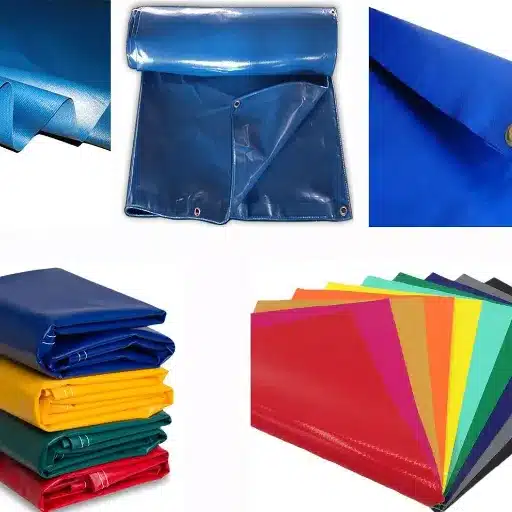
PVC tarpaulin is the professional standard for applications where reliability, safety certification, and long service life justify higher initial investment.
Heavy-Duty Truck Covers and Logistics
Ahmed operates a freight company running routes across the Middle East and Central Asia. His trucks face sandstorms, summer heat exceeding 50°C, and winter freezes below -20°C. Cargo includes machinery, electronics, and perishable goods that cannot tolerate exposure.
Ahmed switched from PE to truck tarpaulin made from PVC five years ago. The same covers are still in service. PE covers on his older fleet lasted one season before tearing at grommet points and developing pinhole leaks along fold lines. The PVC covers have outlasted three PE replacement cycles.
For logistics companies, downtime is expensive. A torn truck cover discovered during pre-departure inspection delays shipments. PVC’s higher tear strength and grommet retention eliminate most of these failures.
Construction Sites Requiring Fire Safety
Regulations in most places are currently increasingly pushing for every construction site to be fitted with fire-resistant building materials. PVC tarpaulin is manufactured to comply with B1/M2 or NFPA 701. So it is useful for use in welding zones, facade enclosures, and temporary buildings where there is a danger of ignition.
Polyethylene tarpaulins do not have natural fire resistance. Furthermore, It softens and burns when treated with sparks or fire. It is a liability to use PE tarpaulins in an area that has regulations governing the use of plastics, especially because it is unsafe and very expensive.
Long-Term Outdoor Installations
It’s key to have something that can bear the weight of the rain coming from the sky, or withstand the pressure of the wind and other external elements. In this case, polyester coated with PVC is a material of choice in such applications.
PVC fabric serves as a covering even for structures without frames due to 1904 FY. Such materials as ceramic, concrete and even carbon are idle in the structural envelope of the white walls when architectural fabric coatings can hardly be installed.
Cold Climate Applications
PE becomes brittle below -15°C. In northern climates and high-altitude regions, winter stiffness causes cracking during handling and deployment. PVC maintains flexibility to -30°C, allowing reliable performance in subzero conditions without special handling procedures.
Application-by-Application Decision Matrix
Use this matrix to match your specific application with the recommended material.
| Application | Recommended Material | Reasoning |
|---|---|---|
| Construction (short-term, under 12 months) | PE | Cost-effective coverage for temporary needs |
| Construction (long-term, fire-regulated) | PVC | Fire retardancy and multi-year durability |
| Agriculture (seasonal crop covers) | PE | Lightweight, low cost, adequate seasonal protection |
| Agriculture (permanent greenhouses) | PE or Clear PVC | PE for budget builds, clear PVC for longevity |
| Truck and cargo covers | PVC | Superior wind resistance, grommet strength, lifespan |
| Outdoor events and temporary tents | PE | Portability, ease of setup, lower rental cost |
| Industrial stage flooring and barriers | PVC | Load-bearing rigidity and weather resistance |
| Mining and chemical exposure | PVC | Chemical resistance and heavy-duty construction |
| Disaster relief shelters | PE | Rapid deployment, low cost, lightweight logistics |
| Equipment storage (multi-year) | PVC | Long-term UV and weather protection |
Cost Analysis: Short-Term vs Long-Term
The most important issue to discuss in this review is the very first price homeowners see. It is unusual that the figure that normally appears in many scenarios and contexts, is the most significant.
A common PE tarpaulin is usually decorated with a rate of between 0.5 and 0.5 to every square meter and goes up depending on GSM, color and the size of the order. While the price of a standard PVC tarpaulin lies between 2.5 and 2.5 to 8.0 USD per square meter. This leads to the conclusion that the issue of starting prices becomes prominent.
That being the case, however, the considerations concerning replacement cycles evaporate. Imagine that there is a structure of a size of 500 square meters which needs to be constructed in a period of 2 years. We’re here to help! Feel free to contact our team for more information or support.
In the case of PE, the buyer buys the initial coverage at around 1.00 peso per square meter. after 18 months this coverage is lost of uv degrading and wear and tear, which is usually to be replaced. A second purchase of the same material at the additional coverage stated above costs 1.00 per square meter. after 18 months this coverage is lost of uv degrading and wear and tear, which is usually to be replaced. A second purchase of the same material at the additional coverage stated above costs 1,000 plus labor for removal and reinstallation.
4.00 per square metercosts2,000 for the initial purchase of PVC. It is possible that these PVC covers will last an entire project’s duration. Furthermore, they can still be used for the next project, rather than being disposed of after use.
The five year period allows a prospective “PE” buyer to procure from three to four middle layers as a replacement. Consequently, the whole project takes more budget compared to what initial estimates were presupposed and provides less coverage. There are virtually no cases where the calculation of total costs of operation by the life cycle shows the triumph of PE in case of materials of 2-3 years and above.
Bulk purchasing leads to fall reducing the materials costs. High levels of output in the production of PE results in higher discounts. This means that the production ares are quite efficient and the costs of the raw materials are low. For industries where a single season of the agricultural calendar is divided into hundreds of square in farming, PE’s Eos is quite lucrative.
Customization: How PE and PVC Differ
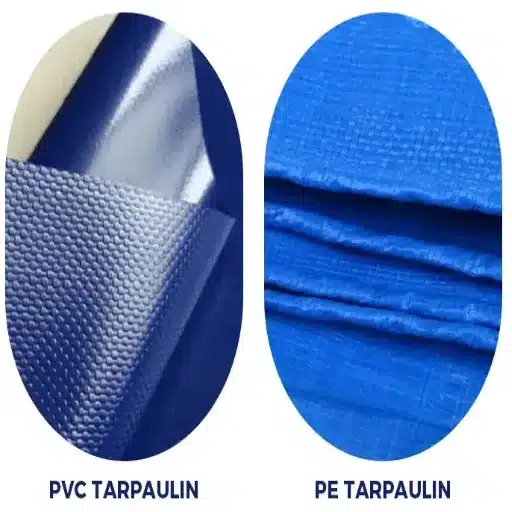
Both materials support customization, but the options and economics differ.
Size and Thickness
PE tarpaulin is easier to produce in very large continuous panels because the lamination process is faster and more flexible. PVC calendering requires more precise control, but produces more consistent thickness across the full sheet. Both materials can be manufactured to exact dimensions.
Color and Printing
PE accepts standard colors including blue, green, silver, and orange. Color options for PVC are broader, including high-visibility shades and custom-matched tones. Logo printing works on both materials, but ink adhesion and longevity are superior on PVC’s smoother, more stable surface.
Hardware and Reinforcement
PVC’s rigidity supports heavier brass and stainless steel grommets with wider spacing. PE uses lighter aluminum eyelets. Reinforced edges are available on both materials, but PVC edge bands withstand higher tension loads without pulling free.
Minimum Order Quantities
PE production runs require lower minimum order quantities. For buyers testing a new specification or entering a market cautiously, PE allows smaller initial commitments. PVC typically requires higher MOQ due to longer machine setup times and specialized additive blending.
Need a custom specification for your project? Contact our sales team for tailored sizing, printing, and material recommendations.
Environmental Considerations
The consideration of matters of environmentally conscious B2B purchases is gaining still further traction these days.
And HDPE tarpaulins are completely safe for the environment and can be easily degreaded in the environment. Therefore, at the end of life, clean PE products are recyclable whereas other plastics are not. In these situations clean PE has an environmental advantage.
Managing PVC material, on the other hand, is not as straightforward. Specific recycling facilities have to be put up for PVC because of the level of chlorine in the PVC. Additionally there are other materials in the PVC which make it very complicated to recycle like plasticizer and fire retardant. Unfortunately, almost all PVC tarpaulin at unwanted life is either sent to sanitary landfills or incinerated for energy recovery because controlled facilities are available in few instances only.
Even as claiming that there exists an economy which individual consumption is constant throughout, it will not be wise to calculate this should be part of such environmental costing. A single PVC tarpaulin that has been in use for ten years performs better to the environment than three to four PE tarpaulins. It may thus seem that in the matter of total resource consumption and waste generation PVC tarpaulins might be preferred over PE ones if the period of use is long, even if recycling efficiency is lower.
However, Chenlai particularly values ethical business practices. For our high-density polyethylene (HDPE) products, whenever feasible, we resort to recycled raw materials. Furthermore, production scrap is recovered and reprocessed in place. For the conscious procurement clients, it is plausible to look at the use of different materials or consider recycling once the product reaches an end of life cycle.
Frequently Asked Questions
Which is better, PE or PVC tarpaulin?
Neither material is universally better. PE is better for short-term, budget-sensitive, and lightweight applications. PVC is better for heavy-duty, long-term, and safety-critical applications. Match the material to your project duration, environmental conditions, and performance requirements.
Is PE tarpaulin fully waterproof?
Yes. PE tarpaulin uses LDPE lamination on both sides of the woven HDPE base to create a continuous waterproof barrier. It resists rain, snow, and ground moisture effectively. Seams and grommet points are the most common leak paths, which is why reinforced edges and proper fastening are essential.
Can PE tarps be as strong as PVC?
No. PE tear strength peaks around 1,300 N/5cm under ideal specifications. PVC starts at roughly 1,500 N/5cm and can exceed 3,500 N/5cm in heavy-duty grades. For applications requiring maximum tear resistance, PVC is the only suitable choice.
Which material lasts longer in direct sunlight?
PVC outlasts PE in direct UV exposure. Both materials can include UV stabilizers, but PVC’s denser structure and inherent chemical stability resist photodegradation more effectively. Expect 5 to 10-plus years from UV-stabilized PVC versus 1 to 3 years from PE under equivalent sun exposure.
Is PVC worth the extra cost?
PVC is worth the premium for projects lasting more than two years, applications in harsh environments, and any situation where replacement is expensive or inconvenient. For temporary or seasonal use, PE usually delivers better value.
Can I use PE for permanent outdoor installations?
PE is not recommended for permanent outdoor use. UV exposure, wind fatigue, and thermal cycling degrade PE within one to three years. Permanent installations require PVC or another heavy-duty material designed for extended service life.
Which material performs better in cold climates?
PVC performs better below freezing. It remains flexible to -30°C. PE becomes stiff and brittle below -15°C, increasing the risk of cracking during handling and deployment. Cold climate buyers should specify PVC for winter reliability.
Can I print my company logo on both materials?
Yes. Both PE and PVC support logo printing. PVC offers superior ink adhesion and print longevity due to its smoother surface and dimensional stability. PE prints are suitable for short-term branding but may fade or crack faster under mechanical stress.
Conclusion
When it comes to picking one between PE and PVC tarpaulin, there are three main considerations. The first one is, how long with the material last or, what is the life expectancy of the product? The second one looks into the kind of stresses that the material may be exposed to. And finally how to put in place a replacement strategy.
PE tarpaulin is suitable for applications that are short or medium term at an economical cost. It is made with cheap materials, can be easily folded and carries very less weight. It is the perfect solution for roofing and sheeting used for less than a year, coverings such as paddy bags constrained within an agricultural season, emergency assistance, and also under budgetary constraints keen on cost effective procurement.
PVC tarpaulin is for heavy duty protection in applications that are for a long duration such as covering goods on top of a truck or a ship. Over another the PVC tarpaulin is capable of withstanding harsh weather and meets some fire safety standards. For trucks having tarpaulin covers, the aircraft matte structures, there are moreover buildings that require fire restrictions and there febrile places all over southern or regions receiving high sun radiation can have constructions done using a white-wide pvc based tarp.
One paragraph to the left includes a reference to PVC as a thermoplastic sheet material. A line should be added to the bottom of the paragraph. Answer: b. Moreover, human knee research has photonics been aided by developments in thermoplastic photonic fibers.”. Reverse it so the temperature is reading over 250 degrees and increasing for 30 minutes, when it does then time is up this lesson is over.
Ready to choose the right material for your project? Explore our PE tarpaulin options, review our PVC tarpaulin specifications, or contact our team for a custom quote tailored to your exact requirements.