The best way to buy PVC tarpaulin roll wholesale is to match the material specification to your application, verify the supplier’s actual manufacturing capability, and establish quality control checkpoints before bulk shipment. Buyers who skip any of these three steps routinely receive rolls that delaminate, fade, or tear prematurely. What looked like a low price becomes a costly replacement cycle.
Raj, a procurement manager for a Malaysian logistics company, learned this the hard way. He placed a 5,000-square-meter order for 550gsm PVC tarpaulin rolls based on a supplier’s spec sheet. The sheet looked identical to three other quotes. Six months later, the truck covers made from those rolls were cracking at the fold lines. The coating adhesion was half what the datasheet claimed. Raj had to reorder from a new supplier and explain the cost overrun to his director.
That story is more common than most buyers expect. The PVC tarpaulin roll market is flooded with trading companies reselling factory output under their own branding. Specification sheets get copied from competitors. Price quotes hide quality shortcuts. This guide gives you the framework to cut through the noise. You will learn which specifications matter, how to verify them, what pricing to expect at volume, and how to build a supplier relationship that delivers consistent quality shipment after shipment.
Key Takeaways
- Match GSM to your application: 450-550gsm for light industrial, 650-750gsm for truck covers and construction, 900gsm+ for permanent structures and heavy-duty use.
- Knife-coated PVC tarpaulin outlasts laminated material in demanding applications because the PVC bonds at a molecular level with the base fabric.
- Always request third-party test reports (tensile strength, coating adhesion, UV resistance) rather than accepting generic factory datasheets.
- Factory-direct suppliers typically offer 15-30% better pricing than trading companies at the same specification tier.
- Standard wholesale MOQ for custom PVC tarpaulin rolls ranges from 1,000 to 3,000 square meters, with lower trial orders available from flexible manufacturers.
Looking for a reliable PVC tarpaulin roll wholesale supplier with factory-direct pricing and flexible customization? Contact our team to discuss your specifications and receive a tailored quote.
What Is a PVC Tarpaulin Roll?
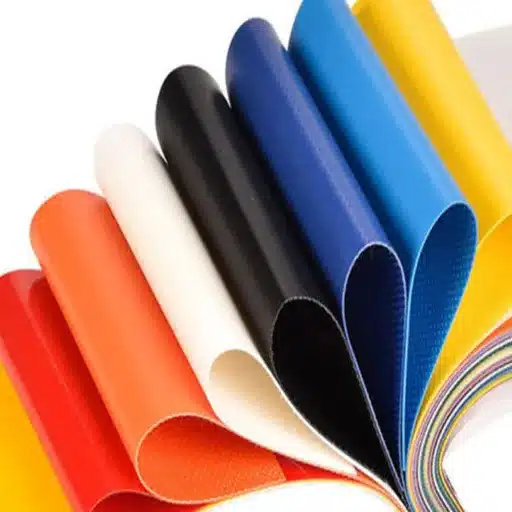
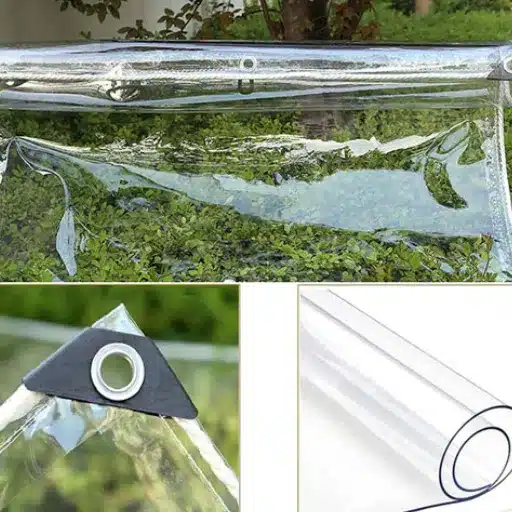
A PVC tarpaulin roll is a continuous length of PVC-coated polyester fabric, also called a PVC coated fabric roll. Suppliers typically deliver them in 50-meter or 100-meter rolls with widths from 1.5 meters to 5.1 meters. The material consists of a woven polyester base fabric that provides tensile strength. PVC layers on both sides deliver waterproofing, UV resistance, and chemical protection.
This roll format differs from pre-cut finished tarps. Rolls give fabricators and distributors the flexibility to cut custom dimensions, weld seams, and install grommets. Finished products match exact project requirements. For buyers of PVC tarpaulin roll wholesale, rolls also reduce per-unit cost significantly compared to buying pre-fabricated tarps. The savings become substantial at container-load volumes.
PVC tarpaulin differs from PE tarpaulin in several critical ways. PE tarpaulin is lighter and more economical, making it suitable for short-term applications. PVC tarpaulin is heavier, stronger, and lasts 5 to 10 years under continuous outdoor exposure compared to 1 to 2 years for typical PE material. For buyers covering trucks, equipment, or construction sites over long periods, that lifespan difference often makes PVC the lower total-cost option despite the higher upfront price.
Key Specifications Every Wholesale Buyer Must Understand
Buying PVC tarpaulin roll wholesale without understanding specifications is risky. It is like ordering steel without knowing the grade. These five parameters determine performance, lifespan, and price.
GSM (Grams per Square Meter)
GSM measures the total weight of the fabric per square meter, including the base fabric and both PVC coatings. It is the single most referenced specification in the industry and the primary driver of price.
Common GSM ranges and their typical uses:
- 450-550gsm: Light-duty industrial curtains, temporary covers, advertising banners
- 550-650gsm: Standard truck covers, cargo protection, medium-duty construction covers
- 650-750gsm: Heavy-duty truck covers, long-term construction site protection, tent fabric
- 750-900gsm: Industrial warehousing, permanent outdoor structures, high-wind applications
- 900gsm+: Architectural membranes, heavy industrial use, military-grade applications
Higher GSM does not always mean better. A 900gsm roll costs roughly 40-60% more than a 650gsm roll. If your application involves a temporary construction cover used for six months, 650gsm delivers adequate performance at significantly lower cost. Match GSM to actual stress levels. Do not default to the heaviest option available.
Base Fabric and Denier
The base fabric is the woven polyester skeleton inside the PVC coating. Its strength comes from two factors: denier and weave density.
Denier measures the thickness of individual yarn threads. Common options include 500D, 840D, 1000D, and 1300D. Higher denier means thicker, stronger threads. A 1000D base fabric supports 900gsm coating without distortion, while 500D is sufficient for 450-550gsm lightweight grades.
Weave density counts the number of threads per square inch. Common densities include 18×12, 20×20, 23×23, and 30×30. Higher density improves tear resistance and dimensional stability. For heavy-duty applications, look for 20×20 or higher weave density combined with 1000D yarn.
Thickness and Coating Type
Thickness, measured in millimeters, typically ranges from 0.3mm to 1.2mm or more. It correlates with GSM but is not interchangeable. Two fabrics with identical GSM can have different thicknesses depending on coating density and base fabric compactness.
More important than thickness is coating type:
- Knife coating: Molten PVC spreads directly onto the base fabric using a precision blade. The PVC penetrates the weave. It bonds at a molecular level. Knife-coated tarpaulin resists delamination. It handles folding stress better. It lasts longer in demanding conditions.
- Lamination: Pre-formed PVC films bond to the base fabric using adhesives or heat pressure. Laminated material costs less. It works for light-duty or short-term use. However, the bond layer can separate under repeated folding, high temperatures, or chemical exposure.
For wholesale buyers supplying construction, logistics, or industrial markets, knife-coated material is the safer long-term choice. The price premium is typically 10-20% over laminated equivalents, but the extended lifespan and reduced failure rate offset that cost quickly.
Width and Roll Length
Standard roll widths vary by manufacturer and equipment capability. Common options include 1.6m, 2.5m, 2.8m, 3.0m, 3.2m, and up to 5.1m for large-format production lines. Wider rolls reduce seam requirements in finished products but may have higher MOQ constraints.
Standard roll lengths are 50 meters and 100 meters. Custom lengths are available from manufacturers with flexible production scheduling. For very large orders, some suppliers offer jumbo rolls up to 2,500-3,000 meters to minimize handling and waste for high-volume fabricators.
Application Guide: Matching Specs to Use Cases
The right specification depends entirely on what the material must endure. Here is how experienced buyers match PVC tarpaulin roll specifications to common applications.
| Application | Recommended GSM | Base Fabric | Key Features | Expected Lifespan |
|---|---|---|---|---|
| Truck covers / heavy duty PVC tarp | 550-750gsm | 500D-1000D, 18×18 to 23×23 | UV resistant, reinforced edges, weldable | 5-7 years |
| Construction tarp / site protection | 450-750gsm | 500D-1000D | Waterproof, tear-resistant, grommet-compatible | 3-5 years |
| Agriculture and greenhouses | 400-600gsm | 500D-840D | High UV resistance, anti-mildew, light-diffusing options | 4-6 years |
| Tents and event structures | 650-900gsm | 1000D, 20×20 to 23×23 | Fire retardant (B1/NFPA 701), blackout, printable | 7-10 years |
| Industrial curtains and warehousing | 450-650gsm | 500D-1000D | Chemical resistance, weldable, strip options | 5-8 years |
| Pond and tank liners | 550-900gsm | 1000D, 20×20+ | Chemical resistant, fish-safe grades, welded seams | 8-12 years |
| Heavy-duty permanent structures | 900-1300gsm | 1300D, 30×30 | PVDF or acrylic lacquer, extreme UV and weather resistance | 10-15+ years |
A warehouse operator in Dubai learned the value of specification matching when he switched from 550gsm laminated rolls to 650gsm knife-coated material for his loading bay curtains. The laminated fabric had required replacement every 18 months due to tearing at the hanging points. The knife-coated replacement was still performing after four years of daily exposure to desert sun and sand abrasion. The higher initial cost was recovered within the first replacement cycle he avoided.
PVC Tarpaulin Roll vs. Finished Tarps: Which Should You Buy?
Wholesale buyers often face a choice between buying PVC tarpaulin rolls and buying pre-fabricated finished tarps. Each option serves different business models.
Buy rolls when:
- You operate a fabrication workshop that cuts, welds, and finishes tarps for end users
- You need custom dimensions that vary by project and cannot be standardized
- You serve multiple industries requiring different specifications from the same material stock
- You are an OEM partner producing private-label tarpaulin products
- Your order volume justifies the equipment and labor investment for in-house finishing
Buy finished tarps when:
- You need immediate deployment without fabrication lead time
- Your dimensions are standardized (common truck sizes, standard construction covers)
- You lack welding, sewing, or grommet-installation capability
- Your order volumes are too small to justify roll purchasing
- You are an end user rather than a distributor or fabricator
At wholesale volumes, rolls typically reduce material cost by 20-35% compared to equivalent finished tarps. However, that saving must cover your finishing costs, including labor, welding equipment, grommet presses, and quality control. Most distributors find the break-even point at approximately 500-1,000 finished units per year, depending on labor costs in their region.
Not sure whether rolls or finished tarps fit your business model? Explore our custom tarpaulin solutions to discuss your volume, specifications, and finishing requirements with our team.
PVC Tarpaulin Roll Price, MOQ, and Wholesale Pricing in 2026
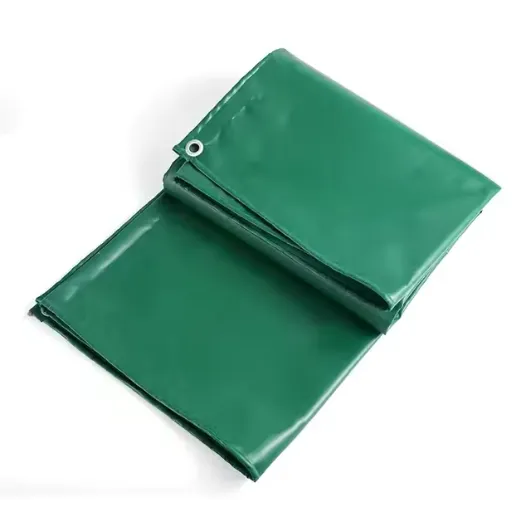
PVC tarpaulin roll pricing in 2026 remains stable relative to 2025, with modest pressure from PVC resin and plasticizer costs. Understanding the pricing structure helps buyers evaluate quotes and identify unrealistic offers that signal quality shortcuts.
Price Ranges by Specification Tier
| Grade | GSM | Price Range (USD/sqm) | Typical MOQ | Best For |
|---|---|---|---|---|
| Economy | 220-380 | 0.20−0.20−0.50 | 3,000-5,000 sqm | Flex banner, short-term covers |
| Standard | 420-550 | 0.45−0.45−0.99 | 1,000-3,000 sqm | General industrial, light construction |
| Heavy-duty | 550-750 | 0.72−0.72−1.50 | 1,000-3,000 sqm | Truck covers, long-term outdoor use |
| Premium | 750-900 | 1.20−1.20−2.20 | 2,000-3,000 sqm | Tents, permanent structures, architectural |
| Specialized | 900-1300+ | 1.50−1.50−3.70 | 2,500-5,000 sqm | Military, marine, extreme environments |
Prices assume factory-direct sourcing from Chinese manufacturers. Trading companies typically add 15-30% margin. Custom colors, specialized coatings, and narrow-width rolls may carry 10-25% premiums.
What Drives MOQ
Minimum order quantities vary based on several production factors:
- Color changes: Each color requires a coating line cleanout and raw material switch. Standard colors (blue, green, gray, white) often have lower MOQ than custom colors.
- Width setup: Non-standard widths require loom or coating line adjustment.
- Coating formulation: Specialized additives like fire retardants, PVDF lacquer, or cold-crack plasticizers need dedicated batch production.
- Base fabric specification: Uncommon denier or weave densities may not be in regular production rotation.
Experienced buyers negotiate trial orders of 500-1,000 square meters for new supplier relationships, even when standard MOQ is higher. Most legitimate manufacturers accept trial orders at or near cost to establish long-term partnerships. If a supplier refuses any trial quantity and demands full MOQ upfront, that is a warning sign.
How to Vet a PVC Tarpaulin Roll Supplier
The supplier vetting process separates reliable manufacturing partners from trading companies, quality gamblers, and outright scams. This checklist is derived from two decades of factory-side experience watching buyers make the same avoidable mistakes.
Verify Factory vs. Trading Company
Real manufacturers own production equipment, employ technical staff, and can provide factory tour videos or live video calls from the production floor. Trading companies rent office space, outsource everything, and often disappear when quality issues arise.
Verification methods:
- Request a real-time video call showing coating lines, not just warehouse stock
- Ask for production license numbers and verify them against government business registries
- Request photos of specific equipment with your name written on paper in the frame
- Check if the supplier can explain technical details like coating line speed, oven temperature, or plasticizer types
Demand Certifications and Test Reports
Never accept a generic specification sheet as proof of quality. Demand documentation for:
- ISO 9001: Quality management system certification
- Third-party test reports: SGS, BV, or equivalent for tensile strength, tear strength, coating adhesion, hydrostatic pressure, and UV resistance
- Fire safety ratings: EN 13501-1, NFPA 701, CPAI-84, or GB 8624 B1 depending on target market
- Environmental compliance: REACH, RoHS, or 6P/3P phthalate compliance for regulated markets
Critical rule: Test reports must reference a specific batch or sample, not be generic marketing documents. The best suppliers send pre-shipment samples from your actual production batch with corresponding lab data.
Evaluate Communication and Technical Competence
Suppliers who respond to technical questions with vague assurances or copied datasheet language are unlikely to deliver consistent quality. A competent manufacturer will ask about your application, recommend appropriate specifications, and explain why certain options fit or do not fit your use case.
Red flags to watch for:
- Prices significantly below market rate (typically indicates recycled PVC, thinner coating, or false GSM claims)
- Reluctance to provide samples before bulk order
- Inability to explain coating type or base fabric specifications
- Pressure for 100% upfront payment on first orders
- No physical address or verifiable factory location
- Responses that ignore your specific questions and push stock inventory instead
A Brazilian distributor we worked with developed a simple but effective vetting protocol. Before placing any order over $10,000, he requires three things: a video call from the production floor, a sample from current stock with third-party test data, and a factory audit report from a recognized inspection body. In four years of using this protocol, his product return rate dropped from 8% to under 1%.
Customization Options for Wholesale Orders
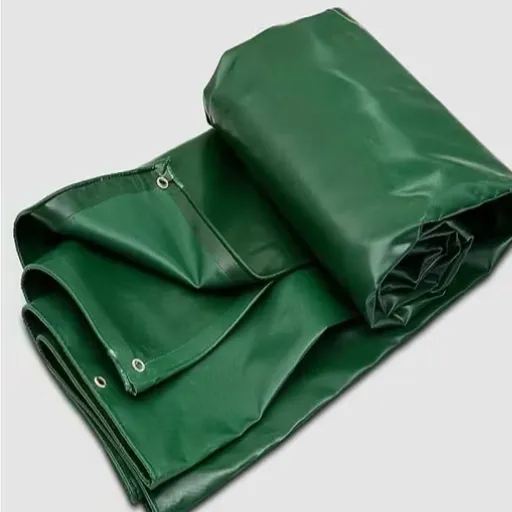
One of the main advantages of sourcing PVC tarpaulin roll wholesale is the range of customization available at volume. Understanding these options helps buyers differentiate their products and serve niche markets.
Color and Surface Treatments
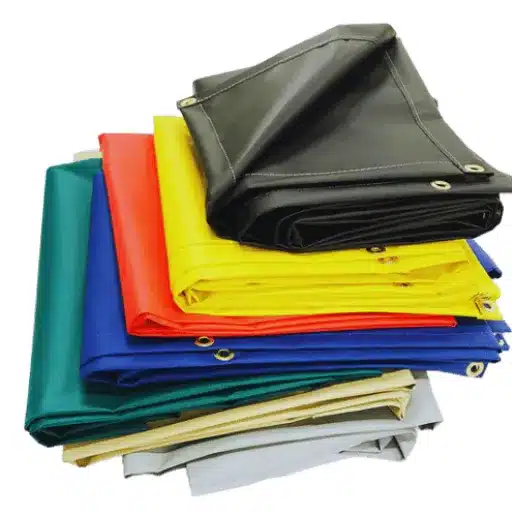
Standard color options include blue, green, gray, white, olive, and orange. Most manufacturers offer RAL or Pantone matching for custom colors at volumes above 3,000 square meters per color.
Surface treatments extend performance in specialized environments:
- UV-stabilized coating: Essential for tropical and high-altitude applications; extends outdoor lifespan by 3-5 years
- PVDF or acrylic lacquer: Creates a self-cleaning surface that resists dirt and chemical staining; ideal for architectural and permanent installations
- Anti-mildew treatment: Prevents fungal growth in humid climates; critical for agricultural and marine applications
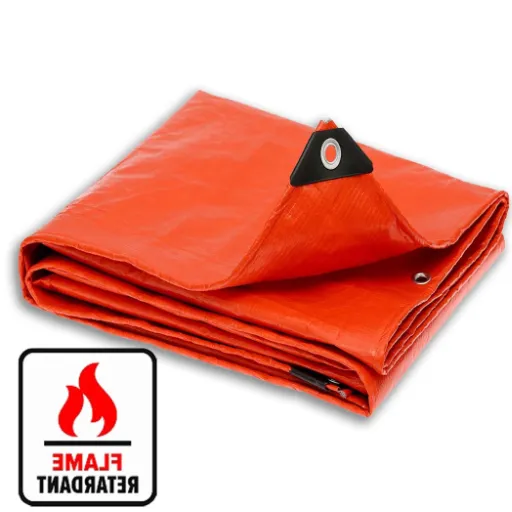
- Flame-retardant additives: Required for tent fabric, industrial curtains, and public event structures in most jurisdictions
- Cold-crack plasticizers: Maintain flexibility below -20C for cold-climate logistics and construction
Width, Length, and Packaging
Custom roll widths are typically available in 1.6m, 2.5m, 2.8m, 3.0m, 3.2m, and 5.1m increments. Custom lengths beyond the standard 50m and 100m are negotiable for large orders.
Packaging customization includes core tube diameter, roll wrapping (PE film, Kraft paper, or woven bags), pallet configurations, and container loading optimization. For buyers importing full container loads, proper roll packaging and pallet stacking can reduce shipping damage and maximize container utilization.
Private Label and OEM Services
Many wholesale buyers require private-label packaging, printed logos, or fully branded finished products. OEM-capable manufacturers offer label design, custom packaging materials, and even finished product fabrication under the buyer’s brand. MOQ for OEM services is typically higher than standard roll orders, but the margin opportunity for distributors is significantly greater.
Interested in private-label PVC tarpaulin products? Contact our OEM team to discuss branding, packaging, and volume requirements for your market.
Quality Control for Bulk PVC Tarpaulin Roll Orders
Quality control is where most wholesale buying processes fail. Buyers assume that placing an order with a verified supplier guarantees consistent product. In reality, even reputable factories experience batch variation, raw material substitutions, and equipment drift. A structured QC process protects your investment.
Pre-Production Verification
Before production begins, confirm:
- Raw material batch certificates for base fabric and PVC resin
- Coating formulation confirmation, especially for specialized additives
- Color sample approval with signed reference sample
- Production schedule and estimated completion date
In-Process Inspection
For first orders or large strategic partnerships, arrange an in-process inspection during coating production. Key checkpoints include:
- Coating weight verification against target GSM
- Thickness measurement across roll width and length
- Visual inspection for coating uniformity, bubbles, and contaminants
- Edge alignment and roll winding tension
Pre-Shipment Testing
Before shipment, test samples from the production batch against your specification:
- Tensile strength (DIN 53354 or ASTM D751): Measures resistance to pulling force
- Tear strength (DIN 53363 or ASTM D2261): Measures resistance to tearing once punctured
- Coating adhesion (DIN 53357 or ISO 2411): Measures bond strength between PVC and base fabric; target 100+ N/5cm for knife-coated material
- Hydrostatic pressure (AATCC 127 or ISO 811): Measures water resistance; target 200+ kPa for standard waterproof grades
- UV resistance (QUV accelerated weathering): 500+ hours for standard grades, 1,000+ hours for premium UV-stabilized material
Third-party inspection by SGS, Bureau Veritas, or similar bodies adds cost but provides independent verification that factory test data is accurate. For orders over $30,000, the inspection cost is typically justified by the risk reduction.
Shipping and Logistics for PVC Tarpaulin Rolls
PVC tarpaulin rolls are heavy, bulky, and vulnerable to damage if improperly handled. Understanding logistics options helps buyers receive material in usable condition and control total landed cost.
Packaging Standards
Proper roll packaging includes:
- Core tube support to prevent collapse during stacking
- PE film wrapping to protect against moisture and dust
- Kraft paper or woven outer layer for abrasion resistance
- Pallet mounting with strapping for container loading
Rolls should be stored and transported vertically on their cores when possible. Horizontal stacking of large-diameter rolls can cause flat spots and coating distortion.
Shipping Terms and Container Loading
Standard Incoterms for PVC tarpaulin roll exports:
- FOB (Free On Board): Supplier delivers to port; buyer arranges ocean freight and insurance. Best for experienced importers with freight forwarder relationships.
- CIF (Cost, Insurance, Freight): Supplier arranges ocean freight to destination port. Simpler for newer importers but offers less control over carrier selection.
- DDP (Delivered Duty Paid): Supplier handles everything including customs clearance and delivery to buyer’s warehouse. Most convenient but typically highest total cost.
A 40-foot high-cube container holds approximately 25,000-35,000 square meters of rolled PVC tarpaulin depending on GSM, roll width, and packaging density. Proper container loading plans maximize space utilization while protecting roll integrity.
Lead Times and Planning
Standard production lead time for PVC tarpaulin rolls ranges from 15 to 25 working days after sample approval and deposit payment. Custom colors, specialized coatings, or peak season orders (typically Q2 and Q4) may extend lead times by 1-2 weeks. Ocean freight from Chinese ports to major global destinations adds 15-45 days depending on route.
Smart buyers place orders 60-75 days before needed delivery, allowing buffer time for production, inspection, customs clearance, and inland transportation.
Conclusion
Buying PVC tarpaulin roll wholesale is not about finding the lowest price. It is about matching specifications to real application demands, verifying that suppliers can consistently deliver what they promise, and building quality control into every order. Buyers who master these three elements reduce failure rates, extend product lifespan, and build stronger relationships with their own customers.
The key points to remember:
- Match GSM to application stress rather than defaulting to the heaviest or cheapest option
- Verify knife coating vs. lamination based on duty cycle and environmental exposure
- Demand batch-specific test data, not generic specification sheets
- Inspect before shipment, especially on first orders and strategic partnerships
- Plan logistics carefully to protect rolls and control total landed cost
At Linyi Chenlai Plastic Products, we supply PVC tarpaulin roll wholesale to distributors and industrial buyers worldwide. Our production lines handle GSM ranges from 450 to 1,000+. Customization options include color matching, fire-retardant formulations, and OEM packaging. We provide batch-specific test reports. We welcome third-party inspection. Trial orders are available for new partnerships.
Ready to source PVC tarpaulin roll wholesale with verified quality and factory-direct pricing? Request a custom quote and tell us about your application, target specifications, and volume requirements. We will recommend the right material and provide samples for your evaluation.