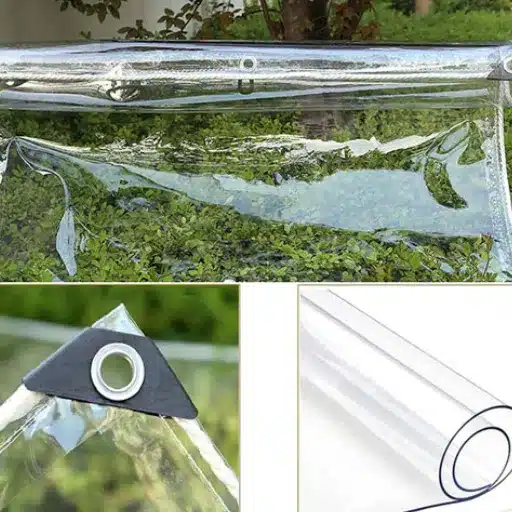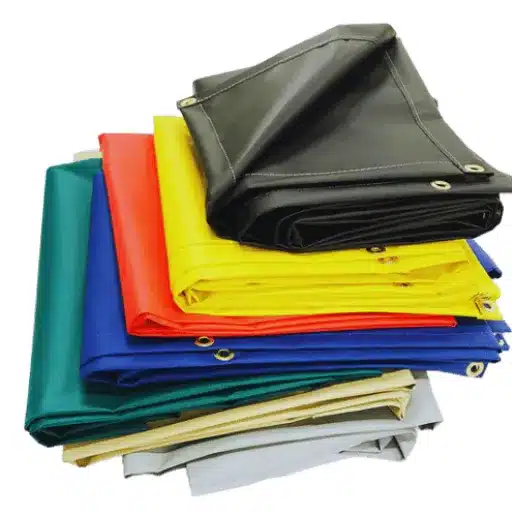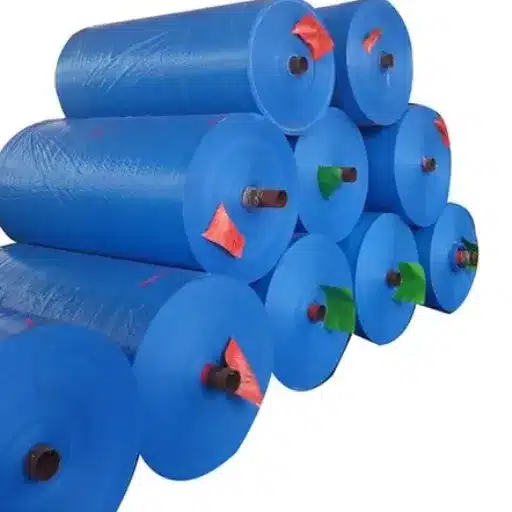
The correct GSM range of Truck Tarpaulin material to be used as a truck cover is between 600 and 750 and usually in the former range, produced by using knife coated PVC on one side of a 1000D woven, compared to many truck tarpaulins are made from PE. After the hems are sewn in, ropes are fused into the hem. Grommets are made of brass, for better strength. And the fabric has UV treatment. This provides the optimum solution for many long distance fleets and is expected to last 5 or 10 years in average house operation.
Not every piece of information and methodology is important and relevant. It is possible to forget about even 20,000 dollars miss calculation for five years in fleet’s operation, only due to improper selection of appropriate materials or manufacturing methods. A wrong GSM grade, the incorrect manufacturing procedures or the wrong specification for the metal in use will not be available in the comparison. It is only after some distance that we can see the corner of the tarp tearing off and material falling off into the highway resulting in a mess.
This guide addresses the people preparing the tender specifications. We will review the logical evaluations of GSM, denier and reinforcing methods to be undertaken in order to achieve obsolescence, the tarp compliance requirements of all the governing instructions of DOT and FMCSA. The last part contains a sample of the tarp specification for inclusion in an RFQ.
If you have any questions or need further assistance, don’t hesitate to get in touch with us.
Key Takeaways
- For most fleet long-haul applications, specify 600 to 750 GSM PVC on a 1000D polyester base fabric. Knife-coated, not hot-laminated.
- The single biggest quality variable is manufacturing method. Knife-coated PVC outlasts hot-laminated by 2 to 3 times under daily fleet use.
- Service life is 3 to 6 years under daily fleet duty, and 5 to 10 years for occasional or static use.
- DOT compliance under 49 CFR 393.100 requires that cargo cannot leak, spill, blow, or fall. Inspectors check both tarp integrity and securement.
- Reinforcement features (rope-reinforced hems, brass grommets, heat-welded seams) prevent roughly 80% of in-service failures.
Why PVC Dominates the Trucking Industry
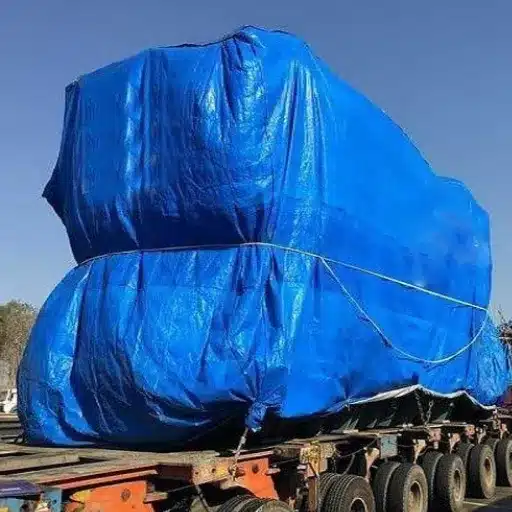
After a PE truck cover gets blown away in the first heavy wind, most of the fleet owners have no choice but to accept PVC tarps. The PE tarpaulins weigh less and are less expensive, but none last as long as PVC under the combined stress of strong winds on the long haul, load-rider iteration pressure, and any exposure to sunlight. ;
PVC tarpaulin is a polyester woven fabric that has been laminated to a sheet of PVC by a method of either coating or calendering. This very fabric is used to hold the structural elements of the tarp together, i.e., every one of the shed-strength and stress-related aspects. The PVC covering, on the other hand, ensures water resistance to the elements; impact and abrasion as well as UV resistance. Both components offered meet walls that can be manipulated with no teats and an ambient temperature as low as -30°C or as high as +70°C. This indeed is an aspect that is of importance in transportation. Whereas for trucking, both extremes of the above-mentioned temperatures in a year in the two instances are considered to be within the working temperature limits.
The trade-off is weight. A 650 GSM PVC tarp weighs roughly three times more than a comparable PE tarp. For long-haul fleets, that’s a worthwhile cost. For one-time storage covers, it isn’t. If you’re weighing both materials, our PE vs PVC tarpaulin comparison breaks down where each one wins.
A quick reality check on service life: a well-specified PVC truck tarp lasts 5 to 10 years in static or occasional use. Under daily fleet duty (load, unload, fold, redeploy, repeat), expect 3 to 6 years. The difference is mechanical fatigue, not material quality.
Want to skip ahead to specs? You can explore our PVC tarpaulin product range, but read the spec sections below first so you know what to compare.
PVC Truck Tarp Specifications That Actually Matter
Three specifications drive 80% of how a tarp performs: GSM, base fabric denier, and thickness. Get these right and the rest of the spec sheet is detail work.
GSM Weight by Use Case
GSM (grams per square meter) is the simplest proxy for durability. Here’s the working chart we use with fleet customers:
- 500 to 600 GSM: Regional, light-duty, occasional cover use. Acceptable for protected loads and short hauls.
- 600 to 750 GSM: Standard fleet long-haul truck covers. The most common spec we ship. Balances durability with handling weight.
- 750 to 900 GSM: Heavy-duty long-haul, curtain-side, and high-cycle fleet operations. Better wind buffeting resistance.
- 900+ GSM: Mining, marine routes, extreme environments. Diminishing returns above 1,000 GSM for most fleet use.
One important point: the relationship between GSM and durability is not linear. A 900 GSM tarp isn’t 1.5 times as durable as a 600 GSM tarp. In real-world fleet testing, it’s closer to 2 to 3 times as durable for high-stress applications.
Base Fabric Denier: Why 1000D Is the Trucking Standard
Denier measures the thickness of the polyester yarn in the base fabric. Higher denier means thicker fibers, which translates to better tear strength and dimensional stability under load.
For trucking, 1000D is the industry standard. Specifically:
- 800D 9×9 weave for 600 to 750 GSM tarps (regional, standard long-haul)
- 1000D 18×16 weave for 700+ GSM heavy-duty fleet tarps
- 1000D 20×20 weave for 900+ GSM extreme-duty applications
The “9×9” or “20×20” refers to threads per inch in the warp and weft directions. Higher numbers mean denser weave, which means better tear resistance once a small cut starts.
Thickness Range (0.5mm to 1.0mm)
As we have discussed thickness and GSM are not exactly the same thing. In practicality, a 600 GSM fabric usually has thickness ranging from 0.45-0.55 mm. A 900 GSM tarp has thickness of 0.85-1.0 mm.
Anything less than 0.7 starts failing on high cyclic applications. On the other hand, anything more than 0.9 increases handling penalties. In such cases, the tarp has a firm outer structure, and it takes more time to fold/open reducing the turnaround at the wharf. In terms of fleet buyers, many of them prefer the Ultra-Heavy Duty Tarps produced in the 0.7mm to 0.8mm thickness range.
Knife-Coated vs Hot-Laminated PVC: The Quality Divide
This is the spec line that fleet buyers tend to forget about. Among two similar GSM and denier PVC tarps, the durability can be surprisingly different.
Knife-coated PVC: In this case, molten PVC is link-coated with a precision knife blade on the substrate and cured at elevated temperatures. A chemically-bonded coating is created and the surface remains coherent and secure. Knife-coated PVC is much more resistant to flexural stress, bending and wear. These characteristics make it the specs that should be mandatory for long-distance carriers to have fitted.
Hot-laminated PVC: it is a PVC film that is pre-treated and is joined to the substrate under high pressure and temperature. Easier on the pocket to produce, a mechanical bond, not a chemical one, is present. With the aging, heat cycling, and mechanical loads, the film will eventually turn out a separation layer.
We’re here to help! Feel free to contact our team for more information or support.
| Feature | Knife-Coated | Hot-Laminated |
|---|---|---|
| Bond type | Chemical | Mechanical (heat-pressed) |
| Delamination risk | Very low | Moderate over time |
| Typical lifespan (fleet duty) | 5 to 7 years | 2 to 4 years |
| Cost premium | 15 to 25% higher | Lower |
| Best use | Long-haul fleet, daily duty | Static storage, occasional use |
For long-haul fleet truck covers, specify knife-coated PVC every time. The cost difference pays itself back inside 24 months on most duty cycles.
Considering an upgrade for your fleet? Browse our heavy-duty waterproof tarpaulin range for knife-coated specs ready to quote.
Reinforcement Features That Prevent Tarp Failures
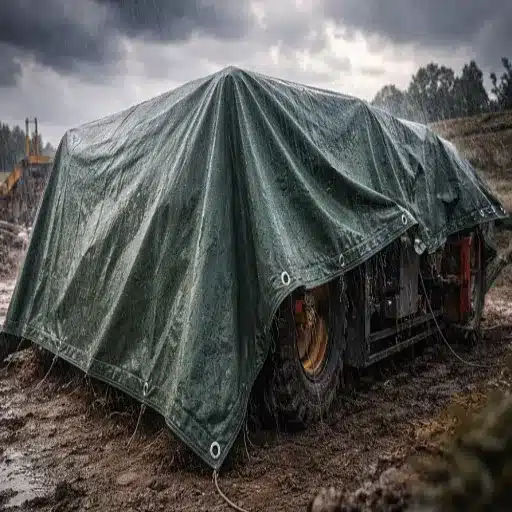
Most often the fabric continues to survive; typically the load-transfer trouble appears elsewhere, at a grommet, in a hem, on a nerge and at a seam. When extending the operation of structures, the enhancement of the high stress points also needs serious consideration.
Attaching ropes into the double hem folds mentioned above: A polyester rope is threaded into the hem while creating it. Whenever there is an uplift under the wind forces, the rope brings an even load force rise on an extended area in the hem instead of focusing at one point which thus pulls the fabric or structure off the frame. As for no such strengthening, it should be noted that this kind of wind can even rip off the grommet through the fabric.
Bends made up of one or two pieces of material and welded together: Seams, as seams can be designed for phthalic bonding, creating a bond stronger than the material they join, compared however to higher frequency welds such as those during heat welding, whether LDF or BDF where seamless joins can be achieved with minimal interference to the strength of the original material being joined, high frequency welding creates joints of the same strength as the base material with no holes. Sewn seams should be avoided on load bearing edges. Each main seam in a truck tarp should be high frequency welded or glued.
Brass or stainless grommets: Corrode-free numerous grommets made of aluminium never fail to tarnish within 12 to 18 months on ocean going routes or at any places where there is exposure to road salt. In comparison, brass grommets outlast the ones made of aluminium by as much as 5 times. For marine ports or any location where the air is loaded with salt sea spray, stainless steel is a material of choice.
Reinforced corners: At fabric corners, several layers of the same or different material have grommets or D-rings bonded into it. This is a point where the wind effect is felt most and it is no surprise that the weakest point of any low grade tarp is a single layer corner.
Grommet spacing: The normal separation for truck covers is 500mm (about 20 inches). Areas with strong winds or uses of curtain side trailers might have a 300mm spacing, that would also need to be specified in the bid. If you have any questions or need further assistance, don’t hesitate to get in touch with us.
Specifications by Truck Application
The stress profiles vary according to different truck applications. “Do not attach a universal specification that is called a “truck tarp”. Pair the tarp with the job.
Flatbed cover tarps: Flatbeds are the most loaded sides with wind on the road. Make it 650 to 750 GSM, knife-coated base made of 1000D, reinforced corners and rope-in-hem. Add grommet spacing of 400 to 500mm. For the areas near the sea, use stainless brass whereas for the inland parts, brass hardware uses standard.
Curtain side and side wall tarps: For curtain sides, it goes up and down every day and tear strength will normally be insufficient. Please, assure 680 – 720. There is a need for additional details focusing on crease curing and flex life. Avoid hot-laminate totally.
Dump truck covers: With their working conditions dump truck tarpaulins get dirty fast lest with the wears of wear particularly the abrasive ones gravel, sand and those of aggregatenature and normal to occasional retraction. It is recommended to use 450-500GSM with A/R top side coating finished Tarp weight. In the higher weight range 700 to 850 GSM. Most parts of US require truck to be covered before they start their journey.
Roof tarps for trailers are usually exposed to sunlight longer than those used for side enclosures, yet their material should not necessarily be as strong. Nevertheless, I recommend you to choose the fabric in the range of approximately 600-650 gsm with UV reinforcement of the material. More importantly, the color of the fabric is very essential for this application. Dark colors take in more energy leading to higher temperatures in the compartment. On the other hand, white or any other lighter color is advisable if you want to maintain a less and more comfortable cargo compartment in summer.
A Real-World Spec Decision
In the state of Texas, a company with a fleet of 40 vehicles was operating trucks with a total of 550 GSM hot-laminated covers and the same were being replaced once a year or once every two years. Approximate annual financial spent on these activities is $32,000. After introducing K. A. T. M. 680 GSM knife-coated covers with roped edge, the frequency of these replacements is extended to 4-5 year. There were the savings over the period of five years, which were around 32,000. The net savings were 32,000 over the five year period. However, after the change to K. A. T. M. 680GSM knife-coated covers with a tion of net savings ropes around the intact edges, the next repeat was after 4-5 years. In fact, these kind of savings were around 80,000 even at triple the cost of a one tarp with a higher cost per unit. The good strategy of changing specifications and implementing it was defiately a winning one in the first year.
DOT and FMCSA Compliance: What Inspectors Look For
A tarp isn’t just a cover. Under FMCSA cargo securement rules, it’s part of your cargo containment system, and roadside inspectors will check both the tarp and how it’s secured.
The core rule, 49 CFR 393.100, is short and absolute: cargo cannot leak, spill, blow, or fall from a commercial vehicle during transport. Practical implications:
- Visible damage: A tarp with holes, tears, or worn-through areas can trigger an unsecured load violation, even if no cargo has fallen yet.
- Tarp containment vs load securement: These are separate requirements. The tarp covers the load. Straps, chains, and tiedowns secure it. Inspectors check both.
- Edge protection: When a strap or chain passes over a sharp load edge, FMCSA requires edge protection. This isn’t optional.
- In-transit inspections: Drivers must inspect securement within the first 50 miles and after rest stops.
State-level tarping laws add another layer. Arizona, Washington, Hawaii, and Arkansas all have specific covering requirements for loose materials. Washington classifies non-compliance as a gross misdemeanor. Fines range from 100to100to5,000. Verduyn Tarps maintains a state-by-state guide for US operators.
With TIR Carnet and ADR, the carriage carried by the vehicle is accelerated in a similar way with the cars and heavy duty vehicles of other European fleets. Australians standards are specified to NHVR Load Restraint Guide.
Precise compliance standards are determined for a cover tarp prospectively. When undertaking a relationship with a supplier for bulk purchases, pull-out tensile strength-test certificates ISO 1421, tear strength-test certificates ISO 4674-1, and Coating adhesion test certificates DIN 53357.
Lifespan, Maintenance, and Total Cost of Ownership
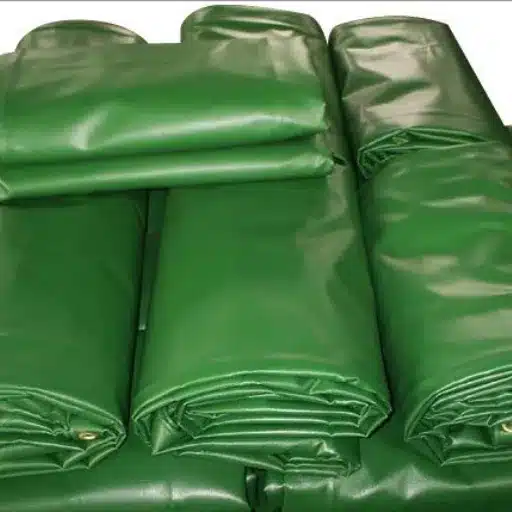
Specifying a quality tarp is half the equation. How you maintain it determines whether you hit the upper or lower end of the service life range.
Service life expectations:
- Daily fleet duty, well-maintained: 4 to 6 years
- Daily fleet duty, poor maintenance: 18 to 30 months
- Occasional or static use: 7 to 10 years
Maintenance basics that actually move the needle:
- Rinse with a garden hose only. High-pressure washers strip the surface coating.
- Never use bleach, ammonia, or petroleum solvents. They destroy the PVC bond.
- Store rolled, not folded, when off the truck.
- Fix small tears immediately with PVC patch material. One 5patchpreventsa5patchpreventsa400 replacement.
- Replace bent or pulled grommets before they tear through the hem.
The TCO Math
Assume a 100-truck company, for instance, where the organization is constantly using 750 GSM knife-coated tarps, it should consider the average cost of the tarps if they are typically replaced for every five year period. This results to an annual tarp cost of about $450 for each tarp used for a period of five years.
In the same company with the aforementioned 100-truck company,they will mostly use 550 GSM hot-laminated tarps which are sold at a price of $280 per tarp since they always acquire these tarps every two years. As a consequence, the annual tarp cost per truck is 280 at every 2 year cycle for a period of 14000 in a year, as well as labor for the event; which is double for the cost for the subsequent replacements and the costs for service interruption due of e.g. malfunction of these tarpaulins at the last minute.
For companies which entail medium to long-haul driving requirements for the fleets, it is logical that the hot-laminated quality tarpaulin is more often than not cheaper throughout its useful life.
Your Specification Checklist for Ordering Truck Tarps
Copy this into your next RFQ. A complete spec eliminates ambiguity and gives every supplier the same baseline to quote against.
Required specifications:
- Application: flatbed, curtain-side, dump, trailer roof, or other
- Cut size (length x width) or roll dimensions (width x linear meters)
- GSM weight (typically 600 to 900)
- Manufacturing method: knife-coated (specify it, don’t accept “or equivalent”)
- Base fabric: denier and weave (for example, 1000D 18×16)
- Reinforcement: rope-in-hem, heat-welded seams, reinforced corners
- Hardware: brass grommets (or stainless for marine), 400 to 500mm spacing
- D-ring placement: corners plus every 1,500mm along long edges
- Color: specify RAL code if matching to fleet livery
- Additives: UV stabilizer (standard), flame retardant if required (B1/M2/NFPA 701)
- Test certificates required: ISO 1421, ISO 4674-1, DIN 53357
Optional but worth asking:
- Anti-mildew treatment
- Surface lacquer (improves cleanability)
- Custom logo printing (specify ink type for outdoor durability)
- Packaging: rolled vs folded, individual bagging vs bulk
Linyi Chenlai Plastic Products manufactures to all of these specifications direct from factory. Submit your spec sheet and we’ll quote within 48 hours. No minimum order required for sample testing.
Frequently Asked Questions
What GSM should a PVC tarpaulin for truck cover be?
For most fleet long-haul applications, specify 600 to 750 GSM. Light-duty regional and occasional use can drop to 500 to 600 GSM. Heavy-duty long-haul, curtain-side, and dump truck applications need 750 to 900 GSM. Above 1,000 GSM is rarely necessary outside mining or marine routes.
How long does a PVC truck tarp last?
A well-specified knife-coated PVC truck tarp lasts 5 to 10 years in static or occasional use. Under daily fleet duty, expect 3 to 6 years. Maintenance habits make the biggest difference. Tarps that get rinsed clean, dried before storage, and patched promptly often double the lifespan of neglected ones.
Is PVC or PE better for truck covers?
PVC for any operation involving daily use, long-haul, or sustained UV exposure. PE for short-term, light-duty, or budget-constrained applications. PE is roughly one-third the cost but typically lasts one-quarter as long under fleet duty. The full PE vs PVC comparison covers the trade-offs in more detail.
Do truck tarps need to be fire retardant?
For most cargo, no. For hazardous materials, certain industrial loads, and tents or event covers where fire codes apply, yes. Common certifications are NFPA 701 (US), DIN 4102 B1 (Germany), and NF P 92-503 M2 (France). Specify the standard you need in your RFQ.
What’s the minimum order quantity for custom truck tarps?
This varies by manufacturer. Chenlai accepts low-MOQ orders for sample testing and works flexibly on bulk pricing tiers. Factory-direct buyers typically see meaningful price breaks starting at 500 sqm of any single specification.
Bottom Line
In evaluating a tarp’s longevity, three aspects warrant the utmost focus as they shape its longevity which are such as: GSM match with a particular duty cycle on the job, always been knife-coated in the process of its manufacturing with fleet use never permits hot-lamination and relating to wear and tear, reinforcement of edges, eyelets and corners. Get these correct and the balance of the technical spec sheet becomes the C student’s homework (i.e. very easy).
A Purchasing Officer that seeks a 680 GSM knife-coated PVC with 1000D base fabric and hems having rope reinforcement will incur a higher cost compared to another who prefers the cheapest priced tarp on the quotation sheet. However, over five years, the former will spend less in total. Usually significantly less.
If busily engaged in sourcing PVC tarpaulin for truck cover production in vast quantities, we urge you to send us the requirements below. Our company will respond within 2 business days, attach the enclosed third-party test certificates to the cosmetic proposal and prepare a few generics for trial prior to waving the MOQ.