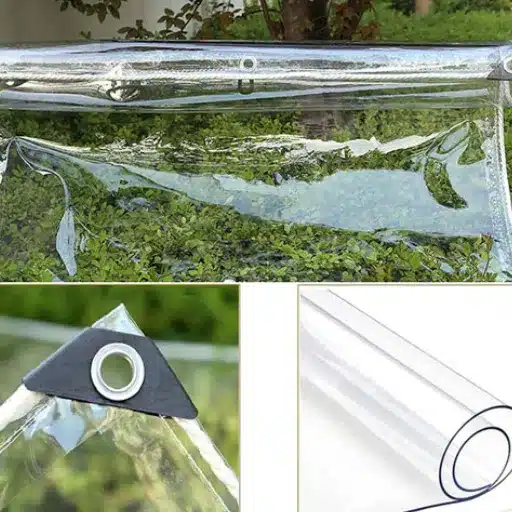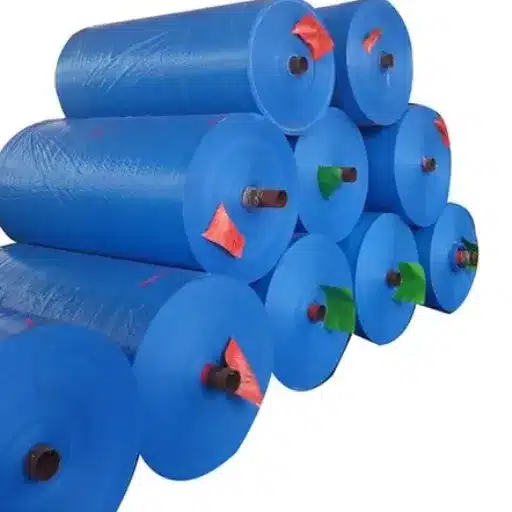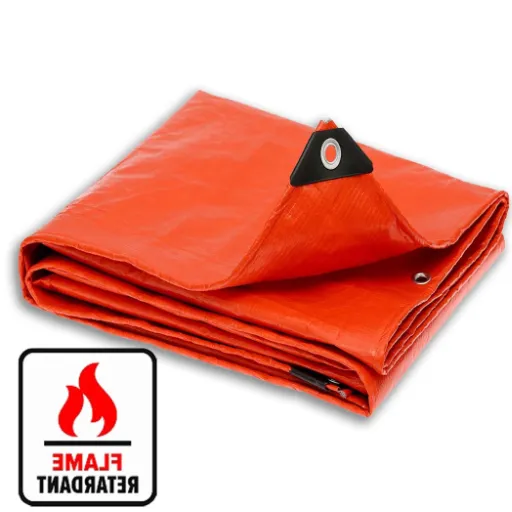
A genuine UV resistant PVC tarpaulin is a polyester-reinforced fabric coated with PVC that contains 3 to 5 percent UV stabilizers, typically Hindered Amine Light Stabilizers (HALS) and UV absorbers, engineered to deliver 5 to 10 years of outdoor service life. The term covers a wide quality spectrum, however, and not every product marketed as “UV resistant” performs the same way.
Untreated PVC tarpaulin can lose up to 50 percent of its tensile strength within months of direct sun exposure in tropical or desert climates. That single fact changes how serious buyers should approach this purchase. If you are sourcing tarps for outdoor use, the difference between a UV-treated surface coating and a properly UV-stabilized compound can mean the difference between an 18-month replacement cycle and a decade of reliable protection.
This guide breaks down the chemistry, the specifications, the lifespan figures by application, and the verification steps that separate marketing claims from factory-grade UV performance. If you have any questions or need further assistance, don’t hesitate to get in touch with us.
Key Takeaways
- True UV resistance comes from stabilizers compounded into the PVC at 3 to 5 percent concentration, not a surface spray.
- UV-stabilized PVC tarpaulin typically lasts 5 to 10 years outdoors, compared to 2 to 5 years for untreated PE alternatives.
- HALS and UV absorbers work together to neutralize the free radicals that cause photodegradation.
- Heavy-duty outdoor applications need 600 to 900 GSM with 1000D base fabric and a UPF rating of 50.
- Before ordering, request the inhibitor concentration spec, accelerated weathering test results, and a physical sample.
What Is UV Resistant PVC Tarpaulin?
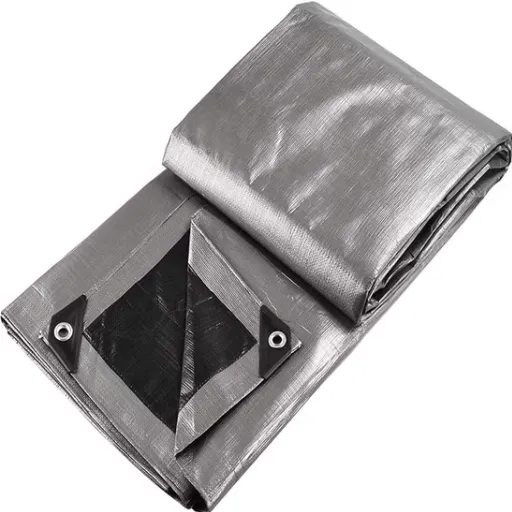
UV resistant PVC tarpaulin is a heavy-duty fabric built around a woven polyester base, coated with polyvinyl chloride (PVC) that has been compounded with UV-blocking additives during manufacture. The additives, working together with the PVC coating, protect both the polymer layer and the load-bearing polyester scrim from sun-driven degradation.
The result is a tarpaulin that holds its tensile strength, color, and flexibility through years of outdoor exposure. Standard PVC tarpaulin offers natural advantages over PE tarpaulin for outdoor work, but only the UV-stabilized grade delivers the long-term performance that industrial buyers expect.
This matters most in transport, agriculture, construction, and event-shelter applications where the tarp lives outside year-round.
How UV Damages Tarpaulin (and Why It Matters)
Ultraviolet radiation breaks the chemical bonds inside plastic polymer chains. This process, called photodegradation, is the single biggest reason outdoor tarps fail before their time. The early signs are easy to spot once you know what to look for:
- Chalking: A powdery white residue forms on the surface as the top layer of PVC breaks down.
- Color fading: Pigments lose intensity, and dark colors gradually shift toward gray.
- Embrittlement: The fabric loses flexibility and starts to crack when folded.
- Tensile strength loss: Untreated PVC can shed up to 50 percent of its load-bearing capacity inside the first year of high-UV exposure.
- Seam failure: Welds and stitching weaken as the surrounding fabric becomes brittle.
A logistics manager named Tomas runs a 40-truck fleet that hauls produce across northern Australia. He bought a budget batch of “UV treated” PVC truck covers in early 2024. By the following summer, six covers had split along the fold lines, and the once-deep blue color had bleached to a washed-out gray. The replacement cost erased the savings from the cheaper supplier in a single season. The lesson: surface treatments delay damage; compound-level stabilization prevents it.
The polyester base fabric is just as vulnerable as the PVC coating. Once UV penetrates the surface layer, the load-bearing scrim degrades silently. The tarp may still look acceptable on the outside while losing its structural integrity underneath. We’re here to help! Feel free to contact our team for more information or support.
UV-Treated vs UV-Stabilized vs UV-Proof: Know the Difference
The terminology around UV resistance is loose, and that ambiguity costs buyers money. Three distinct grades exist on the market, and they perform very differently.
| Treatment Type | What It Means | Typical Lifespan | Best Use |
|---|---|---|---|
| UV-treated | Surface coating or minimal additive package | 6 to 12 months | Short-term, budget-driven applications |
| UV-stabilized | HALS and UV absorbers compounded into the PVC at 3 to 5 percent | 5 to 10 years | Long-term outdoor use, industrial applications |
| UV-proof | Marketing language with no technical definition | Varies wildly | Use with skepticism, ask for actual specs |
UV-treated tarps rely on a thin protective layer applied to the surface. These products are cost-effective when you need short-term cover, but the protective layer wears off through abrasion and weathering. A UV-treated 120 GSM PE tarp may show brittleness within 6 to 12 months of direct sun.
UV-stabilized PVC tarpaulin is the industrial standard. The additives are bonded into the PVC during compounding, so the protection lasts as long as the coating itself. This is the grade specified for fleet covers, agricultural shelters, and long-term construction protection.
UV-proof is not a technical term. No material is fully immune to ultraviolet radiation. When a supplier uses this language, the right response is a request for the actual inhibitor concentration and accelerated weathering data.
Ready to compare grades? Browse our UV-stabilized PVC tarpaulin range or request a spec sheet that lists the exact additive package and base fabric specifications.
How UV Stabilizers Work in PVC
The chemistry behind UV resistance is straightforward once you break it down. Three protective mechanisms work together inside a quality PVC tarpaulin coating:
Hindered Amine Light Stabilizers (HALS)
HALS are the workhorses of long-term UV protection. They do not absorb UV directly. Instead, they hunt down the free radicals that form when ultraviolet light strikes the polymer, neutralizing the chain reaction before it can break apart the PVC molecules. HALS regenerate as they work, which is why their protection lasts for years rather than months.
UV Absorbers
Compounds like benzotriazoles and benzophenones absorb ultraviolet radiation and convert it into harmless thermal energy. They act as the first line of defense, intercepting UV photons before they reach the polymer chains. UV absorbers work especially well in combination with HALS.
Inorganic Pigments and Top Coats
Inorganic pigments such as titanium dioxide scatter UV before it penetrates the coating. They are inherently more stable under sunlight than organic dyes, which is why premium tarps in light colors hold up better than cheap dyed alternatives. Some advanced products add a clear PVDF (polyvinylidene fluoride) or acrylic top coat, which acts like a transparent sunscreen over the colored PVC.
A quality UV-stabilized PVC tarpaulin combines HALS, UV absorbers, and stable pigments at an inhibitor concentration of 3 to 5 percent by weight in the coating. Below that range, the tarp may carry a UV-resistant label but will not deliver the lifespan of a true industrial-grade product.
Specifications That Determine UV Performance
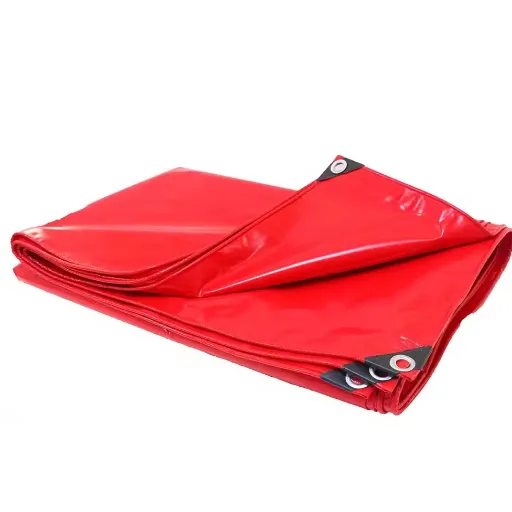
Six specifications drive how well a PVC tarpaulin handles long-term sun exposure. Use these as your buyer’s checklist:
| Specification | Target Range | Why It Matters |
|---|---|---|
| GSM (weight) | 600 to 900 g/m² | Higher GSM means more PVC coating and longer UV barrier life |
| Base fabric denier | 1000D × 1000D | Heavier yarn protects the load-bearing scrim |
| Inhibitor concentration | 3 to 5 percent | The chemistry threshold for genuine UV protection |
| UPF rating | UPF 50 (blocks 98 percent of UV) | Industry benchmark for sun protection |
| Color fastness | Blue Wool Scale 6 or higher | AATCC 16 / ISO 105-B02 lightfastness performance |
| Coating method | Knife-coated or lacquered | Knife coating bonds the PVC into the scrim for stronger UV resistance |
The cluster strategy article on PVC tarpaulin thickness and GSM selection goes deeper on weight grades, but for UV-exposed applications you should not drop below 600 GSM. Below that threshold, the PVC layer is too thin to support enough stabilizer to deliver multi-year service.
Expected Lifespan by Climate and Application
Service life depends on two factors: how much UV the tarp absorbs, and how the product is built. Below is a realistic lifespan matrix for a quality UV-stabilized PVC tarpaulin (600 to 900 GSM, 3 to 5 percent inhibitor concentration):
By Climate Zone
- Tropical and desert regions (high UV intensity): 3 to 5 years
- Temperate climates (moderate UV intensity): 5 to 10 years
- Cool northern climates (lower UV intensity): 8 to 15 years
By Application
- Truck and trailer covers: 5 to 8 years of daily service
- Agricultural shelters and crop covers: 5 to 10 years
- Event tents (intermittent exposure): 8 to 15 years
- Marine and dockside equipment covers: 3 to 7 years (UV plus salt exposure)
- Construction site enclosures: 3 to 6 years (UV plus mechanical wear)
A construction firm operating across the Middle East compared two cover suppliers in 2023. The first delivered “UV resistant” PVC tarps at a 22 percent lower unit cost. Eighteen months later, those covers were chalking and tearing along stress points, while a competitor’s UV-stabilized batch from the same period still looked nearly new. When the project manager calculated total cost over five years, the cheaper batch came out 60 percent more expensive after replacement and labor.
The lesson holds across industries: cost per year, not unit price, is the metric that matters for outdoor PVC tarpaulin.
How to Verify UV Resistance Before Buying
Specifications on a brochure are easy to write. Verification is harder, which is exactly why doing the work pays off. Use these seven steps before placing an order:
- Request the inhibitor concentration spec. A genuine UV-stabilized product lists 3 to 5 percent HALS and UV absorber content in the coating.
- Ask for accelerated weathering test results. Reference standards include ASTM G154 and ISO 4892, both of which simulate years of sun exposure in a controlled lab environment.
- Confirm the UPF rating. UPF 50 is the industry standard for serious outdoor service.
- Verify color fastness. Blue Wool Scale 6 or higher on AATCC 16 or ISO 105-B02 indicates a coating that resists fading.
- Request physical samples. A fingertip test reveals coating thickness and flexibility, and a fold test exposes brittleness that data sheets hide.
- Cross-check pigment type. Inorganic pigments such as titanium dioxide outlast organic dyes by years under sun exposure.
- Ask whether a UV-resistant top coat is included. A PVDF or acrylic top layer adds noticeable lifespan to colored tarps.
A supplier who answers these questions clearly is a supplier worth trusting. A supplier who deflects or refuses to share specs is sending you a signal you should heed.
Want a verified UV-stabilized PVC tarpaulin built for your climate? Request a custom quote and our team will match GSM, inhibitor concentration, and finish to your application.
Common Applications for UV Resistant PVC Tarpaulin
UV-stabilized PVC tarpaulin earns its keep wherever the sun is a constant adversary. The most common buyer profiles include:
- Logistics and fleet operators who need long-life truck and trailer covers that resist road sun and high-altitude UV.
- Agricultural businesses sheltering hay, grain, livestock, and equipment under year-round outdoor cover.
- Construction contractors running multi-season jobs with heavy-duty waterproof tarpaulin on scaffolding, machinery, and material stockpiles.
- Event and tent manufacturers producing structures that have to look new across multiple seasons.
- Marine operators protecting boats, dock equipment, and waterfront infrastructure from combined UV and saltwater exposure.
The unifying need across these segments is the same: long service life, predictable performance, and a tarp that holds together when it is most needed.
Maintenance Tips to Extend UV Resistance
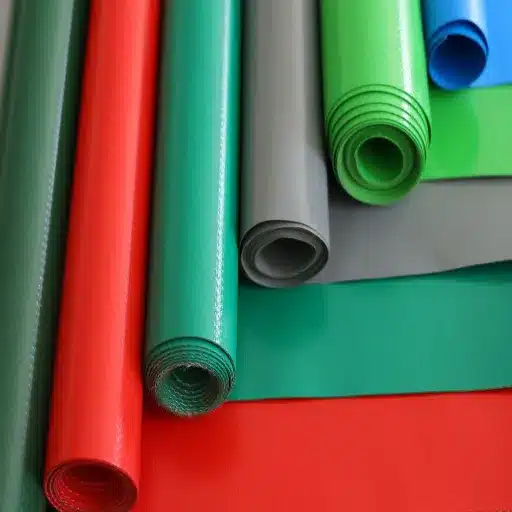
Even the best UV-stabilized PVC tarpaulin lasts longer with sensible care. Three practices protect your investment:
- Clean regularly with mild detergent. Dirt blocks pigment reflection and accelerates surface heating, which speeds UV degradation. A quarterly wash extends usable life significantly.
- Apply UV protectant sprays where exposure is extreme. Topical sprays add a sacrificial barrier on top of the engineered protection in the coating.
- Inspect annually for early chalking. Catching the first signs of UV wear lets you rotate the tarp to less-exposed duty before it fails completely.
- Store dry when not in use. Moisture trapped against a folded tarp accelerates microbial growth and weakens the coating.
These habits are simple, but they routinely add years to outdoor tarp service life.
Choosing the Right UV Resistant Tarpaulin Supplier
The supplier choice matters as much as the product specification. A factory-direct manufacturer like Chenlai with over 20 years of production experience offers three advantages that distributors and trading companies cannot match:
- Climate-zone matching: Inhibitor concentration, GSM, and pigment selection can be tuned to your specific market, whether tropical, temperate, or cold-northern.
- Quality control at the source: Raw material testing, in-line inspection, and finished goods QC happen under one roof, which is the only way to guarantee consistent UV performance batch after batch.
- Customization at scale: Size, color, fire rating, finish, and packaging all flex to your project requirements without prohibitive minimum order quantities.
For OEM buyers, private-label production, and bulk distributors, factory direct also means competitive pricing without the markup that intermediaries add to every roll.
Frequently Asked Questions
How long does PVC tarpaulin last in the sun?
A quality UV-stabilized PVC tarpaulin (600 to 900 GSM, 3 to 5 percent inhibitor concentration) lasts 5 to 10 years in temperate climates and 3 to 5 years in tropical or desert conditions. Untreated PE tarpaulin lasts only 2 to 5 years in the same environments.
Is UV-stabilized the same as UV-resistant?
Not always. UV-resistant is a broad marketing label that may cover anything from a thin surface coating to a fully compounded stabilizer package. UV-stabilized refers specifically to tarps with HALS and UV absorbers compounded into the PVC at industrial concentration levels.
What is the best PVC tarpaulin for outdoor use?
For long-term outdoor service, look for 600 to 900 GSM, 1000D × 1000D base fabric, 3 to 5 percent inhibitor concentration, and a UPF 50 rating. Knife-coated PVC with a PVDF or acrylic top coat delivers the longest lifespan.
Can UV protection be added to an existing tarpaulin?
Topical UV protectant sprays can extend the life of an aging tarp, but they cannot match the protection of a tarp that was engineered with stabilizers from the start. Treat sprays as a maintenance tool, not a replacement for the right initial specification.
What color of PVC tarpaulin holds up best to UV?
Lighter colors such as white, beige, and pale gray reflect more sunlight and run cooler, both of which extend service life. Dark colors absorb more heat and UV energy and tend to fade faster unless protected by an inorganic pigment package and a top coat.
Conclusion: Build Your Order on Verified Specs
A UV resistant PVC tarpaulin is only as good as the chemistry, fabric, and quality control behind it. The right product can serve outdoors for a decade. The wrong one will fail in a single high-UV season and force you to pay twice.
Three questions guide every smart purchase:
- What is the inhibitor concentration, and is the test data available?
- Does the GSM, base fabric, and finish match the climate zone where the tarp will live?
- Is the supplier willing to send samples, share certifications, and stand behind warranty terms?
If the answers are clear, your order is on solid ground. If they are vague, keep looking.
Chenlai manufactures UV-stabilized PVC tarpaulin to factory specifications that hold up across climates, applications, and order volumes. With more than 20 years of production experience and a global logistics network, we deliver tarps that match the specs we publish.
Ready to build your order? Request a custom quote with your climate, application, and dimensions, and our team will recommend the right grade for the job. For an overview of the full PVC tarpaulin range, browse our PVC tarpaulin product page.