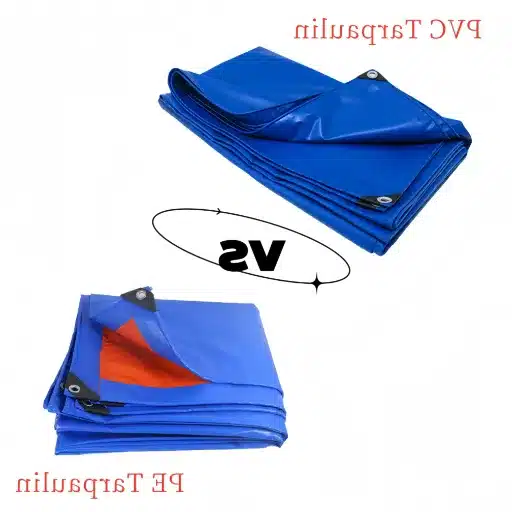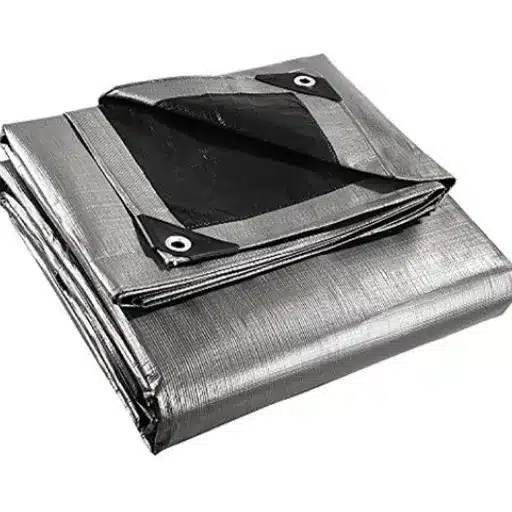
Factory-direct sourcing works best for bulk, custom, and long-term tarpaulin orders. Distributors win on speed, flexibility, and small volumes. The right choice depends on your order size, customization needs, and import logistics capability.
Last spring, Marcus, a procurement manager for a mid-sized construction supply company in Germany, placed a 2,000-unit order for custom-branded PE tarps. His supplier claimed to be a factory. Three weeks after delivery, his field teams reported inconsistent GSM readings and color variation between batches. A background check revealed the truth. The “manufacturer” was a trading company that had subcontracted to two different facilities without telling him.
Marcus learned an expensive lesson. Price alone does not define value in tarpaulin sourcing. The model you choose, factory-direct or distributor, shapes your cost structure, quality control, lead times, and risk exposure in fundamentally different ways.
This article provides an objective comparison of tarpaulin factory vs distributor sourcing. You will see real cost breakdowns, MOQ thresholds by material type, and specific scenarios where each model delivers the better outcome. We will also cover how to verify that your “factory” is actually a factory. Choose LY TRUSTLINK as your trusted tarpaulin manufacturing partner and experience dependable quality, responsive service, and innovative textile solutions.
Key Takeaways
- Factory-direct sourcing typically reduces unit costs by 15-40% for bulk orders above factory MOQ, but freight and import handling can erase savings on small volumes.
- Distributors add 20-35% markup on standard stock tarps, yet they deliver local inventory, smaller minimum orders, and faster fulfillment.
- Custom sizes, colors, GSM specifications, and logo printing almost always require factory-direct production.
- A 20-foot container holds roughly 8,000-12,000 square meters of rolled PE tarpaulin. Order volumes below container-load thresholds often favor distributor sourcing.
- Verification matters: ask tarp-specific technical questions about coating line width, lamination methods, and GSM tolerance control before committing.
What Is a Tarpaulin Factory vs a Distributor?
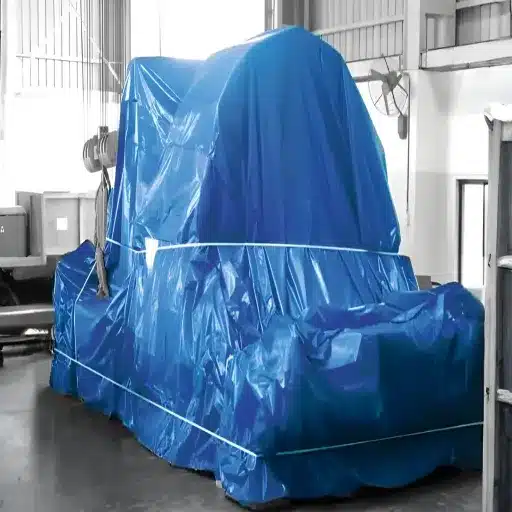
A tarpaulin factory owns production equipment, controls raw material procurement, manages in-process quality checks, and sets minimum order quantities based on production line efficiency. When you buy factory-direct, you communicate specifications to the team that physically manufactures the product.
A distributor holds inventory, aggregates demand from multiple buyers, and provides local support. Distributors do not manufacture. They purchase from factories in bulk, warehouse stock, and resell in smaller quantities. Their value is accessibility, not production control.
A trading company sits between these two models and often creates the most confusion. Trading companies source from factories but present themselves as manufacturers. They control neither production nor inventory. They add margin without adding transparency.
| Factor | Factory | Distributor | Trading Company |
|---|---|---|---|
| Owns production equipment | Yes | No | No |
| Holds local inventory | Sometimes | Yes | Rarely |
| Sets MOQ | Yes (higher) | No (splits factory MOQ) | Varies |
| Customization capability | Full | Limited to stock items | Limited |
| Quality process visibility | Direct | Indirect | Opaque |
| Price structure | Factory price + freight | Factory price + markup | Factory price + hidden markup |
| After-sales support | Factory-managed | Local support | Often minimal |
Some manufacturers maintain hybrid models. They operate their own factory while also running a distribution arm for smaller orders. This can blur the lines, but the production asset itself remains the critical differentiator.
Want to understand how manufacturers evaluate quality from raw materials to finished goods? Explore our complete guide to choosing a tarpaulin manufacturing partner.
What You Get From Factory-Direct Sourcing
Price Advantage: But It Depends on Volume
Direct procurement from manufacturers can reduce unit costs by 15-40% for bulk orders. That range sounds attractive, yet it only materializes when you cross certain volume thresholds. A factory selling PE tarpaulin at 0.85persquaremetermayquoteanLCLshipmentthatadds0.85persquaremetermayquoteanLCLshipmentthatadds0.22 in freight per unit. Suddenly your “factory price” looks less compelling.
Container shipping is where factory-direct economics shine. A 20-foot container holds approximately 8,000-12,000 square meters of rolled PE tarpaulin. At full container load (FCL), freight costs per unit drop sharply. Below that threshold, less-than-container load (LCL) shipping can inflate per-unit freight by 25-40%.
Customization Control
Factory-direct sourcing is the only path to meaningful customization. You specify exact GSM, dimensions, color matching, reinforced hem styles, grommet spacing, and logo printing. For buyers who need PVC tarpaulin specifications tailored to truck-cover applications, or HDPE woven tarpaulin with custom UV-stabilizer percentages, the factory floor is where those decisions happen.
Direct Communication and Specification Ownership
When you work with a factory, your technical requirements travel directly to the production team. No intermediary is filtering your instructions or merging your specs with another buyer’s order. You own the specification. You approve the sample. You sign off on the batch.
Quality Process Visibility
Factories with structured quality systems, such as ISO 9001:2015 certified operations, provide documented checkpoints. You can request raw material certificates, in-process inspection reports, and finished-goods testing data. This visibility is nearly impossible to achieve through a distributor or trading company.
What You Get From a Distributor
Local Stock and Faster Fulfillment
Distributors warehouse inventory in or near your market. If you need 200 standard blue PE tarps delivered within a week, a distributor can often fulfill from local stock. A factory in China needs 20-30 days production plus 15-25 days ocean freight. Urgency favors the distributor model.
Lower Effective MOQ
Factory MOQs for PE tarpaulin typically start at 3,000-5,000 pieces for standard sizes. PVC tarpaulin MOQs often run higher due to coating line setup costs. Distributors split these factory minimums across many buyers. You can purchase 100 units without penalty.
Simplified Logistics and Import Handling
Importing involves customs clearance, duty calculation, freight forwarding, and documentation. Distributors absorb this complexity. You receive a local delivery with a domestic invoice. For buyers without established import infrastructure, this simplification alone can justify the markup.
After-Sales Support and Returns
Defective stock from a distributor can often be returned or exchanged quickly. Factory-direct claims require international communication, photographic documentation, and negotiated resolution across time zones. Distributor markup partially funds this local service layer.
Distributor economics are straightforward. They typically apply a 20-35% markup on standard stock tarps. That margin covers warehousing, financing, logistics management, and local support. For small or infrequent buyers, the markup is often less than the cost of building an import operation.
Price Comparison: Factory Direct vs Distributor for Tarpaulins
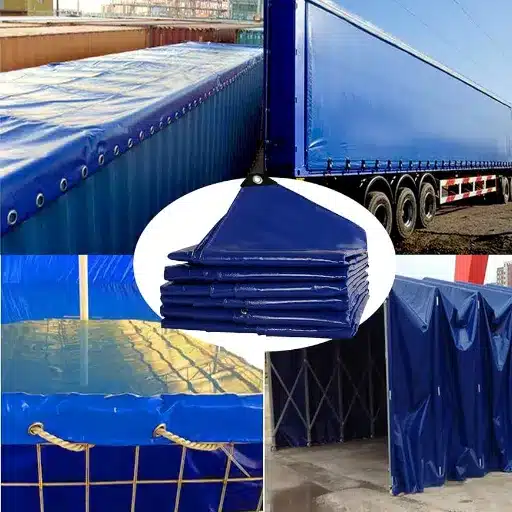
Understanding real cost differences requires looking at specific materials and volumes. Below are representative scenarios for PE and PVC tarpaulin sourcing. Actual prices vary by GSM, dimensions, and destination.
PE Tarpaulin Cost Example
Consider a standard 4×6 meter PE tarp, 120gsm, with reinforced corners and aluminum eyelets.
At 500 units:
- Factory unit price: ~$2.10
- LCL freight per unit: ~$0.55
- Import duties and clearance: ~$0.20
- Landed factory-direct cost: ~$2.85
- Distributor delivered price: ~$3.20
- Difference: Factory-direct saves 11%
At 5,000 units (FCL):
- Factory unit price: ~$1.85
- FCL freight per unit: ~$0.22
- Import duties and clearance: ~$0.18
- Landed factory-direct cost: ~$2.25
- Distributor delivered price: ~$2.90
- Difference: Factory-direct saves 22%
PVC Tarpaulin Cost Example
Consider a heavy-duty 3×5 meter PVC truck tarp, 500gsm, with welded seams and D-rings.
At 200 units:
- Factory unit price: ~$18.50
- LCL freight per unit: ~$3.80
- Import duties and clearance: ~$1.60
- Landed factory-direct cost: ~$23.90
- Distributor delivered price: ~$26.00
- Difference: Factory-direct saves 8%
At 2,000 units (FCL):
- Factory unit price: ~$16.20
- FCL freight per unit: ~$1.40
- Import duties and clearance: ~$1.40
- Landed factory-direct cost: ~$19.00
- Distributor delivered price: ~$24.50
- Difference: Factory-direct saves 22%
Hidden Costs to Factor
Freight is only one variable. Payment terms matter too. Factories often require 30% deposit and 70% against bill of lading. Distributors may offer net-30 terms. Currency fluctuation between order and payment can shift costs by 3-5%.
Quality failure cost is another hidden factor. Material inconsistencies cause 15-20% of premature tarp failure incidents. When a factory-direct batch fails, you bear the replacement freight. A distributor typically replaces defective stock locally.
In March 2025, an agricultural cooperative in Spain needed 120 standard PE tarps for an unexpected early harvest. Rain was forecast in ten days. Their usual factory contact quoted 25 days production plus shipping. A local distributor delivered stock tarps in three days at a 28% premium over factory price. The co-op avoided crop damage worth 40 times the tarp cost. For them, the distributor markup was the most cost-effective choice.
When to Choose Factory Direct
Factory-direct sourcing fits specific buyer profiles and project types.
Bulk recurring orders. If your annual volume justifies container shipments, factory-direct pricing creates measurable savings. Construction firms covering multi-year projects, logistics fleets replacing truck tarps on schedule, and agricultural operations with predictable seasonal demand all fit this profile.
Custom specifications. Any requirement beyond standard stock sizes favors the factory. Custom colors, printed logos, specific GSM tolerances, non-standard grommet spacing, or reinforced hems for industrial applications require production-line control.
Long-term supply partnerships. Buyers who want annual pricing agreements, dedicated production slots, and batch-to-batch consistency need a direct factory relationship. Distributors rotate suppliers based on availability.
Private-label and OEM requirements. If you are building your own brand of tarpaulins, factory-direct is non-negotiable. You need specification ownership, packaging control, and quality documentation under your brand name.
Buyers with import experience. Companies that already work with freight forwarders, understand Incoterms 2020 (FOB, CIF, DDP), and have customs clearance processes can capture the full factory-direct advantage without friction.
Ready to explore factory-direct pricing for your volume? Request a custom quote and compare landed costs against your current sourcing model.
When to Choose a Distributor
Distributors are not a compromise. They are the right tool for specific jobs.
Urgent or spot-buy needs. When weather, project delays, or supply chain gaps create immediate demand, local stock wins. A distributor with warehouse inventory can ship within days.
Small volumes below factory MOQ. If you need 50 tarps for a one-time event, paying factory MOQ for 5,000 units is irrational. Distributors exist to solve this mismatch.
First-time buyers testing quality. Before committing to a factory partnership with deposits and container planning, a small distributor purchase lets you evaluate product quality in your actual application.
Buyers without import infrastructure. If your organization lacks experience with international shipping, customs documentation, and cross-border payment structures, the learning curve is expensive. A distributor handles this layer.
Seasonal demand with unpredictable timing. Harvest seasons, construction cycles, and event schedules shift. Distributors buffer demand fluctuations by holding inventory. Factory direct requires advance planning that may not match unpredictable seasonal spikes.
Sarah runs a small rental equipment company in Florida. She needs 80 tarps each spring for outdoor event coverage. The volume is too small for factory MOQ. The timing is unpredictable based on weather. Her local distributor stocks standard sizes and delivers within 48 hours. She pays more per unit than a factory quote, but she avoids import complexity, warehouse space, and the risk of holding dead stock. For Sarah, the distributor is the logical partner.
How to Verify You Are Dealing With a Real Factory
The tarpaulin industry has a transparency problem. Trading companies frequently pose as manufacturers on websites, directory listings, and video calls. Verification protects your margin and your quality.
Documentation Checks
Request a business license and check the scope of business. A legitimate manufacturing enterprise will include production, processing, or manufacturing in its registered activities. Ask for ISO 9001:2015 or equivalent quality system certification. Verify the certificate number through the issuing body’s online database.
Technical Questions Only a Factory Can Answer
Trading companies struggle with production-level detail. Ask specific questions:
- What is your coating line width and maximum roll diameter?
- Do you use knife-over-roll or dip coating for PVC lamination?
- What is your GSM tolerance control range, plus or minus what percentage?
- How do you manage batch color consistency, and do you use spectrophotometer testing?
- What is your typical coating adhesion test method and pass threshold?
A factory engineer or production manager will answer confidently. A trading company representative will deflect, delay, or give vague responses.
Video Verification and Virtual Tours
Request a live video call from the production floor, not a conference room. Ask to see raw material storage, the coating or lamination line, the cutting and hemming station, and the finished goods warehouse. Ask the guide to walk to a specific machine and show the control panel settings. Pre-recorded videos can be rented or borrowed. Live, interactive tours are harder to fake.
Red Flags That Signal a Trading Company
- The supplier offers every material and product type under the sun. Real factories specialize.
- They refuse live video from the production area.
- Their quotation turnaround is suspiciously fast for complex custom specs.
- They cannot explain their quality control checkpoints in technical detail.
- The company name on the invoice differs from the website or Alibaba profile.
In 2024, a European importer named Henrik negotiated what he believed was a factory-direct deal for 3,000 PVC truck tarps. The supplier sent professional photos and a polished website. Henrik placed his 30% deposit. After delivery, the tarps showed delamination at the seams. He demanded a root cause analysis. The supplier went silent for two weeks, then admitted they had outsourced production to a subcontractor without oversight. Henrik’s “factory” was a one-person trading office with no coating line. His recovery took eight months.
The lesson is simple. Verification costs a few hours. Getting it wrong costs months and margin.
Learn more about how our factory capabilities support direct partnerships with verified production control and batch traceability.
Conclusion
The tarpaulin factory vs distributor decision is not about finding the “best” sourcing model. It is about matching the right model to your volume, timeline, customization needs, and logistics capability.
Factory-direct sourcing delivers cost control, customization, and quality visibility for buyers who operate at scale. Distributors deliver speed, flexibility, and local support for buyers who prioritize accessibility over unit price. Trading companies pretending to be factories deliver risk.
Evaluate your annual volume honestly. Calculate landed cost, not just factory price. Ask technical questions before you commit. And choose the partner structure that actually fits your business, not the one that simply quotes the lowest number.
If you are evaluating factory-direct sourcing for bulk or custom tarpaulins, request a quote to compare real landed pricing for your specifications and volume.