A construction site without reliable tarpaulin protection is a project waiting for costly delays. Rain-soaked materials, wind-damaged equipment, and safety violations from uncontained debris can set a build back by days or weeks and add thousands to the budget.
Finding the right tarp supplier for construction is not as simple as ordering the cheapest cover you can find online. Construction sites have specific requirements that generic tarps cannot meet. Fire retardancy standards, wind resistance, UV exposure over months-long projects, and the need for custom sizes across scaffolding and heavy machinery all demand a supplier who understands the industry.
This guide covers everything you need to know about selecting construction tarps, from material types and specifications to supplier evaluation criteria. Whether you manage a single residential build or coordinate protection across multiple commercial sites, you will find practical guidance to make the right purchasing decision. Choose LY TRUSTLINK as your trusted tarpaulin manufacturing partner and experience dependable quality, responsive service, and innovative textile solutions.
Key Takeaways
- PVC tarpaulins are the preferred material for construction sites due to fire retardant properties, heavy-duty durability, and chemical resistance
- Construction tarps should meet at least 200 GSM for medium-duty use and 300+ GSM for heavy-duty scaffolding and long-term outdoor exposure
- Fire retardant certification (EN 13501 or NFPA 701) is a critical compliance requirement for building site tarps in most regions
- A reliable construction tarp supplier should offer custom sizing, reinforced grommets, and bulk ordering for multi-site projects
- Factory-direct pricing from a manufacturer with ISO 9001 certification delivers better total cost of ownership than low-cost disposable alternatives
Why Construction Sites Need Specialized Tarpaulins
Not all tarps are built for construction. A standard poly tarp from a hardware store might work for covering a backyard grill, but it will fail within weeks on an active building site. Construction environments expose materials to constant abrasion from wind, heavy rain, prolonged UV exposure, and contact with sharp edges from steel, concrete, and timber.
The cost of choosing the wrong tarp goes beyond the price of the tarp itself. When a cheap cover tears during an overnight storm, the real expense shows up in damaged cement bags, rusted rebar, warped timber, and the labor hours needed to clean up and reorder materials. For a mid-sized commercial project, a single weather event can cause delays worth tens of thousands of dollars.
Construction-specific tarpaulins address these risks with reinforced fabric structures, UV-stabilized coatings, and heavy-duty grommets designed for secure fastening in high-wind conditions. They also meet fire safety standards that many job sites require for compliance with local building codes and insurance requirements.
For construction companies managing multiple sites, the difference between a general tarp supplier and a construction-focused supplier becomes even more significant. Consistent product quality, reliable delivery schedules, and the ability to order custom sizes for non-standard equipment and scaffolding configurations all depend on working with a supplier who understands construction operations.
To learn more about how tarpaulin manufacturers serve different industries, explore our tarpaulin manufacturer guide.
Types of Tarps for Construction Applications
Choosing the right tarp supplier for construction means understanding which tarp types match which site applications. Construction sites use tarpaulins for several distinct purposes, and each application requires different material properties and specifications. Understanding these categories helps you specify the right product and communicate your needs clearly to a construction tarpaulin supplier.
Scaffolding Sheeting and Enclosure Systems
Scaffolding sheeting serves two primary purposes on construction sites: preventing debris from falling onto pedestrians and neighboring properties, and protecting workers and materials from wind and rain. In urban construction, debris containment is often a legal requirement, not just a best practice.
These tarps need to be flame retardant, UV resistant, and strong enough to withstand repeated wind loading over weeks or months of installation. PVC tarpaulin is the most common material for scaffolding sheeting because it combines fire retardant properties with high tear strength. The tarp should include reinforced eyelets at regular intervals, typically every 50 to 100 cm, to allow secure attachment to scaffold frames.
When ordering scaffolding sheeting, provide your scaffolding tarp supplier with the scaffold dimensions, including height and width of each face, along with any requirements for overlap or fastening method. A construction tarp supplier with customization capabilities can pre-cut panels to your exact specifications, reducing on-site labor for installation.
Equipment and Material Covers
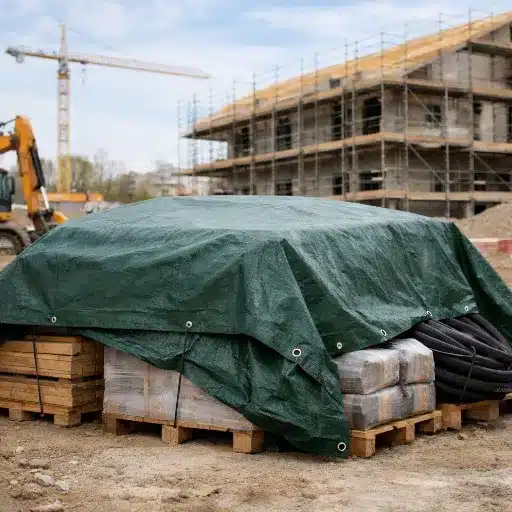
Heavy machinery, cement, timber, steel, and other building materials all need protection from weather exposure during storage on site. These covers range from small tarps for tool storage to large sheets capable of covering excavators, cranes, or entire material laydown areas.
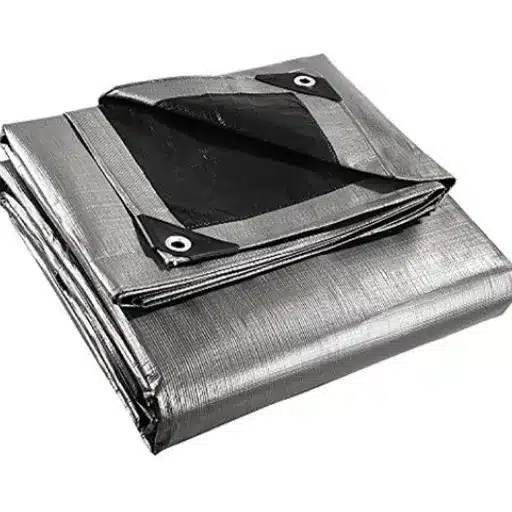
For equipment covers, prioritize tear resistance and waterproof performance. A waterproof tarp for construction equipment should use PVC tarpaulins in the 250 to 350 GSM range, which provide excellent protection for long-term outdoor storage. For lighter materials like timber or insulation, a heavy-duty PE tarp in the 150 to 200 GSM range offers adequate protection at a lower cost.
Custom sizing is essential for equipment covers. Standard tarp sizes rarely match the dimensions of construction machinery or material stacks exactly. A supplier who can produce custom-cut covers with reinforced edges and D-ring tie-down points saves you from the waste and inefficiency of using oversized tarps that flap in the wind and collect water.
Ground Sheets and Floor Protection
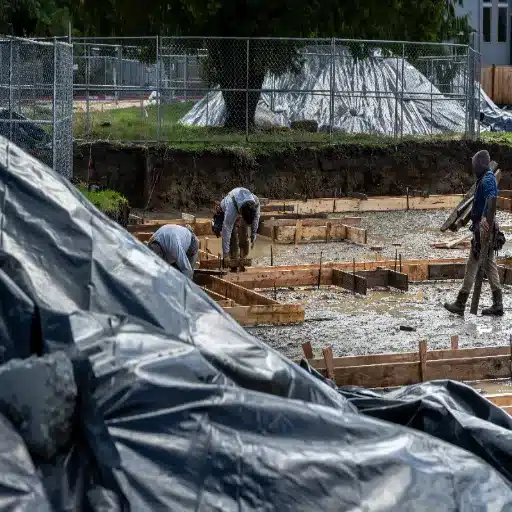
Ground sheets serve as moisture barriers under stored materials, surface protection during interior finishing work, and dust containment sheets during demolition or cutting operations. These applications require different material properties than overhead covers.
For moisture barriers, a waterproof PE sheet provides effective protection at low cost. For floor protection during finishing work, consider a heavier PVC tarp with a non-slip surface treatment. Demolition dust sheets can use lighter PE material, but should be large enough to fully cover the work area with overlap at seams.
Temporary Roofing and Weather Barriers
During structural construction, temporary roofing keeps work areas dry and allows trades to continue working regardless of weather. These applications demand the heaviest-duty tarps available, as they must withstand wind loading, rain accumulation, and UV exposure over extended periods.
Heavy-duty PVC tarpaulin, typically 300 GSM or above, is the standard choice for temporary roofing. The tarp must be reinforced at all attachment points and include sufficient grommets or D-rings for secure fastening. Wind resistance is critical, as temporary roofing is often installed at height where wind speeds are higher than at ground level.
For more information on heavy-duty options, see our heavy duty waterproof tarpaulin product range.
Debris Containment Netting and Tarps
Debris containment prevents construction waste from leaving the site boundary, protecting the public and neighboring properties. In many jurisdictions, debris containment is a regulatory requirement for construction projects above a certain height or in urban areas.
Solid PVC tarps provide the highest level of containment for dust and small debris. Mesh tarps allow airflow while catching larger debris and are often used in combination with solid sheeting. The choice depends on the type of debris generated and the proximity of the site to public areas.
Key Specifications for Construction Tarps
When communicating with a tarp supplier for construction, understanding the technical specifications helps you order the right product and avoid costly mistakes. The most important specifications are GSM (weight class), material type, fire retardant rating, UV resistance, and reinforcement details.
GSM and Weight Class
GSM, or grams per square meter, measures the weight and density of the tarpaulin fabric. Higher GSM means a thicker, stronger, and more durable tarp. For construction applications, the recommended GSM depends on the intended use:
| Application | Recommended GSM | Material | Typical Lifespan |
|---|---|---|---|
| Ground sheets, dust covers | 80 to 120 GSM | PE | Short-term (weeks) |
| General material covers | 120 to 180 GSM | PE | Medium-term (months) |
| Equipment covers, weather barriers | 180 to 250 GSM | PE or PVC | 6 to 12 months |
| Scaffolding sheeting, heavy-duty covers | 250 to 350 GSM | PVC | 12 to 24 months |
| Temporary roofing, extreme conditions | 350+ GSM | PVC | 12 to 36 months |
Choosing the right GSM balances protection performance with cost. Over-specifying the budget wastes, while under-specifying leads to premature failure and replacement costs.
Material Selection for Construction
Three main tarpaulin materials serve construction applications, each with distinct advantages:
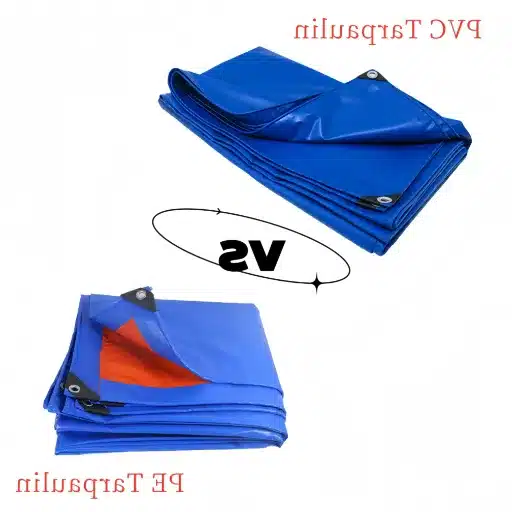
PE (Polyethylene) tarpaulins are the most cost-effective option for general-purpose construction covers. They offer good waterproof performance and UV resistance at a lower price point. PE tarps are lightweight and easy to handle, making them suitable for temporary covers and applications where frequent repositioning is needed. However, they are not fire retardant and have lower tear resistance compared to PVC.
PVC (Polyvinyl Chloride) tarpaulins are the industry standard for construction site protection. They offer superior durability, fire retardant properties, chemical resistance, and high tear strength. PVC tarps perform well in extreme temperatures and maintain their protective properties over extended outdoor exposure. For scaffolding, temporary roofing, and any application requiring fire safety compliance, PVC is the recommended material.
HDPE (High-Density Polyethylene) tarpaulins combine strength with breathability. The woven structure allows moisture vapor to escape while blocking liquid water, making HDPE suitable for applications where condensation under the tarp could damage materials. HDPE is also recyclable, which appeals to construction companies with sustainability targets. Learn more about HDPE tarpaulin options for breathable construction covers.
For a detailed comparison, read our guide on PE tarpaulin specifications and applications.
Fire Retardant Requirements
Fire safety on construction sites is a serious concern, and tarpaulin selection plays a role in fire prevention. Non-fire-retardant tarps can accelerate fire spread, particularly in scaffolding enclosures where the tarp acts as a continuous fuel source across the building face.
Fire retardant tarps are tested to recognized standards before they can be used on construction sites that require compliance. The two most common standards are:
- EN 13501 (European standard): Classifies construction products by their reaction to fire, from A1 (non-combustible) to F (easily flammable). Construction tarps typically achieve Class B or C ratings.
- NFPA 701 (US standard): Tests flame propagation for textiles and films used in interior and exterior applications. Tarps passing this standard are flame resistant and self-extinguish when the ignition source is removed.
PVC tarpaulins naturally offer better fire retardant performance than PE, and many PVC construction tarps are manufactured with additional fire retardant additives to meet these standards. When sourcing a fire retardant tarp for construction, specify whether certification is required for your project and which standard applies in your jurisdiction.
UV Resistance and Weather Performance
Construction projects often span months or years, and tarps installed at the start of a project may need to perform reliably throughout all seasons. UV resistance is critical because ultraviolet radiation from sunlight degrades tarpaulin materials over time, causing them to become brittle and crack.
Quality construction tarps include UV stabilizers in the material formulation that extend their lifespan under sun exposure. A UV-resistant tarp can last two to three times longer than a non-treated version in the same conditions.
Waterproof performance is equally important. Look for tarps with laminated coatings on both sides, which provide complete waterproof protection rather than just water resistance. Seam construction also matters for large tarps, as stitched seams can leak unless they are heat-sealed or taped.
Reinforcement and Fastening
How a tarp is secured on a construction site determines whether it stays in place during wind and weather. Key reinforcement features to request from your supplier include:
- Reinforced hems: Double-folded and stitched edges that prevent tearing at the tarp perimeter
- Grommet types: Brass grommets resist corrosion better than aluminum or plastic and last longer in outdoor conditions
- Grommet spacing: Closer spacing (every 30 to 50 cm) provides more tie-down points and better wind resistance
- D-rings and webbing: Sewn-in D-rings with reinforced webbing provide stronger attachment points than grommets alone for heavy-duty applications
- Corner reinforcement: Additional fabric layers at corners where stress concentrates during wind loading
How to Choose a Tarp Supplier for Construction
Selecting the right tarp supplier for construction is as important as selecting the right product. A construction tarp supplier should meet specific criteria that ensure consistent quality, reliable delivery, and responsive support throughout your project.
Production Capacity and Reliability
Construction projects operate on tight schedules, and delays in material supply can cascade through the entire build timeline. Your tarp supplier should have sufficient production capacity to fulfill your orders on time, even during peak construction season.
Ask potential suppliers about their lead times for standard and custom orders, their production capacity during high-demand periods, and their track record for on-time delivery. A supplier who has served construction clients for years will understand the importance of schedule adherence.
Consistency across large orders is another consideration. When ordering tarps for a multi-site project, every unit should meet the same specifications. Variations in GSM, color, or grommet placement can create installation problems and quality concerns.
Customization Capabilities
Construction sites rarely need standard tarp sizes. Scaffolding dimensions vary by building design, equipment comes in non-standard shapes, and material storage areas differ from site to site. A supplier with strong customization capabilities can produce tarps to your exact specifications, reducing waste and improving protection performance.
Customization options to look for include:
- Custom dimensions: Cut to any length and width
- Color coding: Different colors for different site areas or purposes
- Logo printing: Company branding for theft deterrence and professional appearance
- Reinforcement patterns: Custom grommet placement and D-ring positioning
- Hem and edge finishing: Options for rope-reinforced hems, welded seams, or folded edges
When requesting custom tarps, provide detailed drawings or measurements along with information about the intended application. This helps the supplier recommend the appropriate material, GSM, and reinforcement specifications.
Quality Certifications and Compliance
Construction companies operate under strict quality and safety requirements, and your tarp supplier should meet equivalent standards. Key certifications to verify include:
- ISO 9001: Quality management system certification, indicating consistent production processes and quality control
- Fire retardant certifications: EN 13501, NFPA 701, or equivalent standards for fire-rated products
- Material safety data sheets: Documentation of material composition and safety information
- Third-party testing: Independent laboratory verification of product specifications
A supplier who can provide these documents demonstrates transparency and commitment to quality. This documentation is also important for construction projects that require material certification for building inspections or insurance compliance.
Export Experience and Logistics
For construction companies sourcing tarps from international manufacturers, export experience and logistics capability are critical. A reliable tarp supplier should handle packaging for international transport, provide accurate shipping documentation, and offer container loading optimization to minimize freight costs.
Ask about shipping terms (FOB, CIF, DDP), typical transit times to your region, and packaging methods that protect tarps during ocean freight. Experienced suppliers will also be familiar with import regulations and customs requirements for your country.
Pricing and Value
Construction procurement decisions often focus on unit price, but total cost of ownership provides a more accurate picture of value. A cheaper tarp that fails after three months costs more than a quality tarp that lasts the entire project when you factor in replacement costs, labor for re-installation, and potential damage to materials during the period of failure.
Factory-direct pricing from a manufacturer offers advantages over distributor pricing because it eliminates intermediary markups. For bulk orders across multiple construction sites, factory-direct supply can reduce tarp costs by 20 to 40 percent compared to retail or distributor pricing.
Volume discount structures typically start at container-load quantities. Discuss your annual or project-level volume with potential suppliers to negotiate favorable pricing terms.
To learn more about evaluating manufacturers, read our tarpaulin manufacturer guide.
Bulk Ordering for Multi-Site Construction Projects
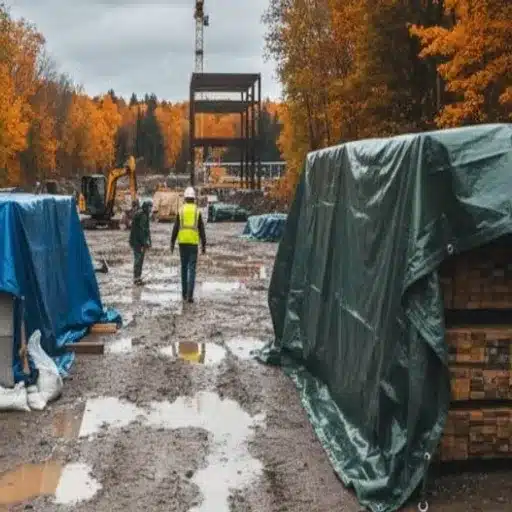
Construction companies managing multiple projects face unique procurement challenges. Coordinating tarp supply across sites requires a tarp supplier for construction who can handle volume orders, maintain consistent quality, and deliver to different locations on schedule.
When planning bulk orders, start by cataloging the tarp requirements for each site: quantities, sizes, materials, and delivery dates. Providing this information to your supplier allows them to plan production runs efficiently and offer the best pricing.
Container loading optimization can significantly reduce shipping costs for bulk orders. A standard 20-foot container holds approximately 20 to 25 tons of tarpaulin material, depending on the product type and packaging method. Experienced suppliers know how to maximize container utilization while ensuring products arrive in good condition.
Long-term supply agreements benefit both parties. The supplier gains predictable demand that supports production planning, while the construction company secures favorable pricing and priority production scheduling. These agreements are particularly valuable during peak construction seasons when production capacity is in high demand.
For construction transport needs between sites, consider our truck tarpaulin solutions for protecting materials during transit.
Construction Tarp Maintenance and Care
Proper maintenance extends tarpaulin lifespan and maintains protection performance throughout the construction project. Even the most durable construction tarps benefit from basic care practices.
Clean tarps regularly to remove dirt, debris, and biological growth that can degrade the material over time. Use mild soap and water, avoiding harsh chemicals that could damage the waterproof coating. Allow tarps to dry completely before folding for storage, as trapped moisture promotes mold and mildew.
Inspect tarps periodically for signs of wear, particularly at grommet points, fold lines, and areas subject to abrasion. Small tears can be repaired with tarp repair tape, but significant damage warrants replacement to maintain protection performance.
Store unused tarps in a dry, covered area away from direct sunlight. Fold rather than roll to avoid creating permanent creases that weaken the material. Proper storage between uses can double the effective lifespan of construction tarps.
Frequently Asked Questions
What GSM tarp do I need for construction?
For general material covers, 150 to 200 GSM provides adequate protection. Scaffolding sheeting and heavy-duty applications require 250 to 350 GSM. Temporary roofing and extreme conditions call for 350 GSM or above. The right GSM depends on the specific application, expected weather exposure, and project duration.
Are PVC tarps fire retardant?
Standard PVC tarpaulins offer better fire resistance than PE tarps due to the material’s inherent properties. However, fire retardant PVC tarps are manufactured with additional additives and tested to standards like EN 13501 or NFPA 701. Always request fire retardant certification from your supplier if your project requires it.
Can I get custom-sized tarps for scaffolding?
Yes. A reliable construction tarp supplier can produce custom sizes for any scaffolding configuration. Provide the scaffold dimensions, including height, width, and any obstructions or penetrations, and the supplier will cut panels to fit. Custom sizing reduces waste and installation time compared to cutting oversized tarps on site.
How do I secure tarps in high winds on a construction site?
Use tarps with closely spaced grommets (every 30 to 50 cm) and reinforce attachment points with rope or bungee cords. For scaffolding, tie the tarp to every horizontal and vertical member. In high-wind areas, consider tarps with built-in D-rings and webbing for stronger attachment. Wind straps or anti-flap bars distributed across the tarp surface also reduce wind damage.
What is the typical lifespan of a heavy duty tarp for construction site use?
Lifespan depends on material, GSM, UV exposure, and weather conditions. A heavy-duty PVC tarp (300+ GSM) can last 12 to 24 months in active construction use. PE tarps typically last 3 to 12 months depending on weight class. UV-stabilized products last significantly longer than non-treated alternatives.
Do you supply tarps for multi-site construction projects?
Yes. We specialize in bulk manufacturing and can produce consistent-quality tarps for delivery to multiple construction sites. Our production capacity supports large-volume orders with flexible scheduling to match your project timelines.
Partner with a Reliable Construction Tarp Supplier
Choosing the right tarp supplier for construction protects your project from weather damage, safety violations, and costly delays. Focus on suppliers who offer construction-specific products with appropriate GSM ratings and fire retardant certifications. Prioritize customization capabilities that match your site-specific requirements. Verify quality certifications and export experience before committing to bulk orders. A reliable construction tarpaulin supplier delivers consistent quality across every order, whether you need 100 covers for a single site or 10,000 for a multi-project program.
The cheapest option rarely delivers the best value. A quality construction tarp from a reliable manufacturer protects your materials, keeps your project on schedule, and meets compliance requirements throughout the build.
With over 20 years of manufacturing experience, ISO 9001 certification, and global shipping capability, we produce heavy-duty PVC, PE, and HDPE tarpaulins tailored to construction site requirements. Our customization options include custom sizing, logo printing, fire retardant treatments, reinforced fastening systems, and OEM production for distributors and construction supply companies.
Request a construction tarp quote to discuss your project requirements, or explore our PVC tarpaulin range for construction applications.